





The small and beautiful state of Sikkim has remarkable art, craft and vibrant traditions. The various art forms have been deeply influenced by the places of workship, festivals and eight lucky signs of Buddhism.
Religion as an extremely significant system of belief or faith has always been instrumental in maintaining and sustaining a strong blend of communal harmony and tranquility in the Sikkim situation. The state’s magnificent places of worship, even those situated in far flung and remote corners, reverberate with unusual spiritual energy. Apart from keeping the people of three main communities (Lepcha, Bhutia and Nepali) together, these also have their own unique influence on art and craft forms and practices.
The architecture and façade of most of the places of worship, therefore, hold a rather magnetic appeal for visitors and tourists. One can also see exquisite workmanship, intricate carving, uncommon colour combinations and painting in them. Needless to say, most of the religious institutions abound in colour and festivity
The monasteries or the Gumpas hold an extremely significant position in the life of a follower of the Buddhist religion. ‘Gumpa’, literally means, a solitary place. It is believed that isolation from the world is needed, not as an art of self punishment but to escape worldly temptations and weaknesses. A monastery is built in such a way that it should look out towards the east direction to catch the first rays of the rising sun. Sikkim, due to its unique heritage is a land of very old and deep-rooted handicraft and handloom traditions. The art and craft forms which have emerged from, or are linked to the monasteries, are Thanka paintings, mask-making, wood carving, metal craft, etc.
The thankas are the religious scrolls found hanging in the monasteries or in Buddhist houses. Considered very Sacred and auspicious, these are supposed to drive away evil spirits. Primarily, life stories or sketches of gods and goddesses in different forms are shown in them. They may depict Lord Buddha, Goddess Dolma, God Manjushree, Goddess Saraswati, the Goddess of learning, the Goddess Tara, an embodiment of compassion, Guru Padmasambhava, God Chana Dorji or for that matter, any Tibetan Saint, the Wheel of Life or some other deity, surrounded by deities of lesser significance. With the passage of time, a sort of secular touch has been witnessed in these unique painting. No wonder, nowadays, they also show Hindu gods and goddesses, such as Lord Ganesh, Goddess,Saraswati, Lord Balaji, Lord Venkateshwara, etc.
The Wheel of life, one of the purest Buddhist emblems, is prominently found on the Thankas. The circular form of this Wheel signifies wordly existence and the hub of the wheel as a cock, a snake and a pig. The cock shows lust or desire, the snake, anger, and
the pig signifies ignorance, as also stupidity. Placed in the centre of the wheel, these are supposed to be the root causes of the disturbances on earth. While the white portion on the wheel signifies good deeds of human beings, the black portion represents bad or evil deeds. In the same way, individuals shown in the white portion are those who perform good deeds in life and are, therefore, eligible for a rebirth in the world of gods. On the other hand, human beings figuring in the black portion indicate hell or the world of animals.
The Thankas are made, or painted by religious artisans, popularly known as Lharipas. In view of the fact that these are made by referring to religious texts, it is necessary for the artist to know the Tibetan language. These are not mere objects or pieces of decoration for the artist, but a powerful aid to the Tantric meditation. Stone colours and vegetable dyes are used in plenty while making such scroll paintings. Two primary colours namely, red yellow, highlight the difference between fire and life, between the material and the immaterial. The orange colour symbolizes the knowledge of the highest form of spirituality. Blue suggests depth, purity and infinity, while green is supposed to represent the vegetable aspects.
The value of a Thanka depends on the intricacy of its drawing, the quantum of gold dust prevalent in the painting material and the amount of gold thread used in the tapestry.
On an average, a Thanka takes about a month or two to make, though the larger and more detailed Thankas may take a longer time. Consequently, these are somewhat expensive paintings but at the same time, worth keeping and worth presenting to dignitaries or one’s near or dear ones. In addition to occupying a place of importance or prominence in a monastery or a home, these age-old attractive paintings are also required during special occasions, such as, birth, death, marriage, house-warming, etc. When a Buddhist expires, as a part of ritual on the forty-ninth day, a Thanka depicting a particular god or goddess is worshipped. The selection of such a Thanka is decided upon the perusal of the horoscope of the deceased person.
The wealth possessed by a particular individual or a monastery is reflected in terms of the icons and Thankas possessed by them. For instance, the important monasteries of Sikkim, such as, Dubdi, Pemayangtse, Tashiding, Ralong, Rumtek, Enchey and Pal Zurmang have huge and priceless Thankas.
It is a matter of concern that the art of Thanka painting is witnessing a diminishing trend on account of various factors, such as, lack of interest in the younger generation of artisan families, rapid urbanization and rising materialism as well as the declining patronage of artists by art lovers and the monasteries, To date, barely 25 Thanka painters are active in the state. Only four or five of them have been successful in getting National, State or other Awards, while a majority of them live in isolation. A few like Gyanden Lharipa, Khandu Wangchuk, Nima Tshering and Pema Wangyal are in a position to not only leave an impact but also to sell their products well. Thanks to the telecommunication revolution in this part of the country, they can avail of cell phones and the much needed access to the internet. In addition to making his own products, Pema Wangyal has been teaching 20-25 students of Loyala University, California, USA, twice a year. Such an exercise initiated in 2005, has transformed 60 foreign students into Thanka painters. To sum up in the words of Pema Wangyal, winner of the Kala Mani Award (Suraj Kund Mela-2002), “the ancient art of Thanka painting badly needs financial and marketing support from the government and financial institutions, failing which, the art may be swept away be rapidly changing technological innovations.”
Monday, March 23, 2009


THE HEE- BERMIOK EXPERIENCE
One cold morning when it was still dark and the sky was partly overcast, I began my journey from Gangtok to the western part of Sikkim. It was a real delight to see the first rays of sun falling over the summit of Mount Khanchendzonga. Soon, I saw the mountain turning from golden to pink. After crossing Ranipool, the gradient of the road was smooth and manageable and we covered a good distance in a relatively short span of time. From Singtam (28 km from Gangtok) to Rangpo and Meli, the greenish blue water of the mighty Teesta river was a delightful sight.
The sky cleared once we re-entered Sikkim from Melli. The drive from Melli to Jorethang was
soothing as we were passing through thick sub-tropical forests. The clear and green water of Rangeet river to our left presented a stunning sight. We could not resist the temptation to drive down to a safe bank of the river and have a ‘break’ for breakfast. After a non-stop drive of two-and-a- half hours, the homemade breakfast, though, cold, gave, us the necessary energy to move forward. By this time it was bright sunshine. Within no time, we hit the road again and had an unusual feel of the silence of the jungle. It was nice to see shocking red ‘Lalpati’ in bloom and a few other wild winter flowers. Occasionally, a few monkeys and birds appeared on the road. In a short while, from Jorethang we took a right turn towards Reshi, Boom Reshi, Rinchenpong, Kaluk and thereafter to our final destination of Bermiok and Hee. Before we reached Rinchenpong, it was a pleasure to see a few snow-clad peaks, large cardamom plantations and marigold flowers, off the highway. While driving, I was reminded of my mountain biking experience here barely six month ago. The tiny yet tidy houses, cowsheds, public buildings and shops wore a festive look as a VIP was to visit the locality during the course of the day. As we came close to the main venue, there was an increase in the number of smartly dressed people walking along the road.
After completing 145 km of a thrilling journey, we were advised to take a diversion further up seven kms in order to reach the first venue of the official function. Though the sky was blue and crystal clear by now, the first sign of snow over one of the peaks of Mount Khanchendzonga range was visible as we climbed up four kms of newly dug up road. The villagers in their bright dresses were seen walking up even though they had to occasionally inhale dust blown by the speeding vehicles.
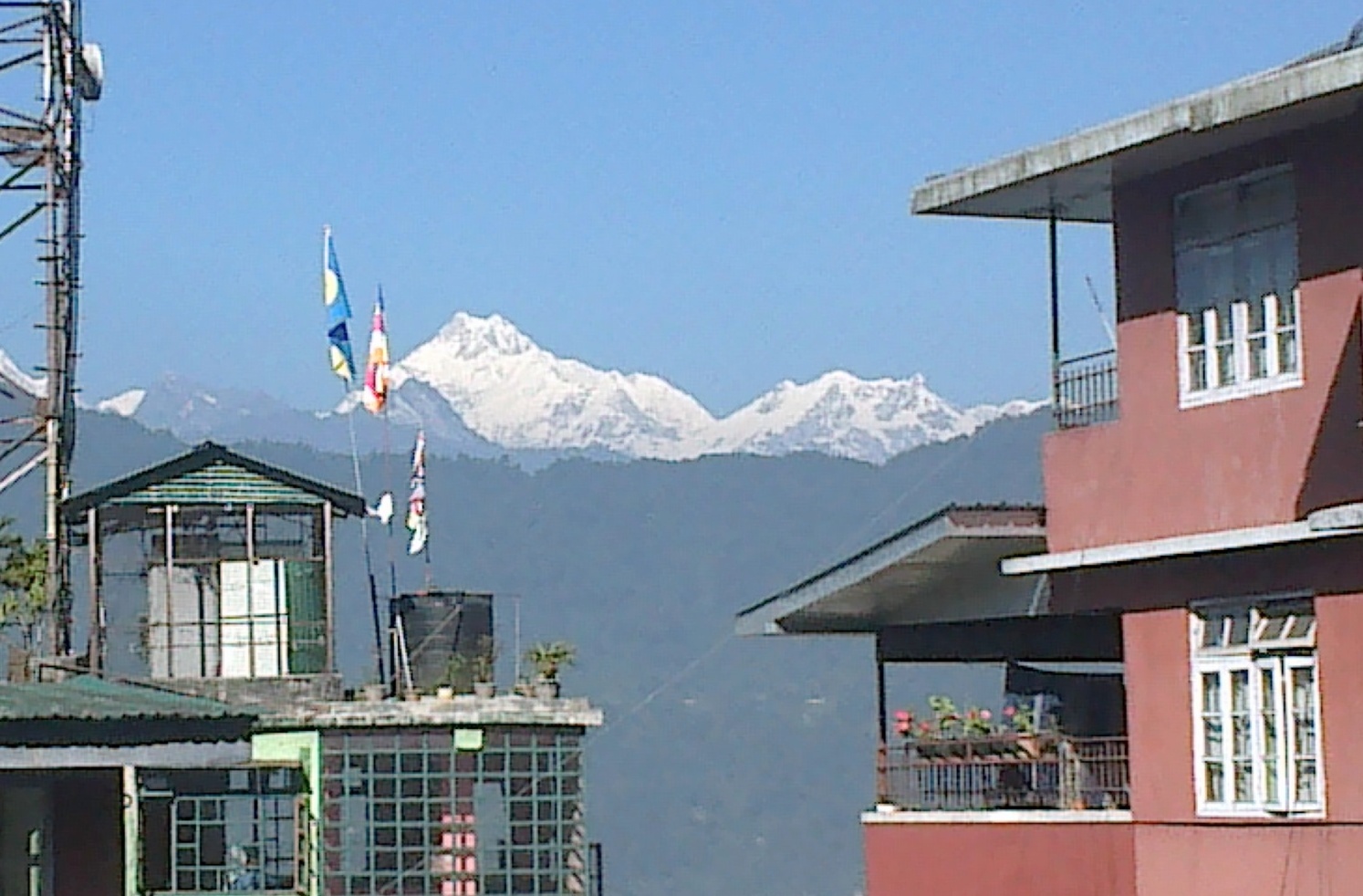
By the time we reached the newly constructed Village Guest House at Dara- Hee, more vehicles and people were visible and the whole Mount Khanchendzonga range against the background of blue sky presented a very breathtaking sight. Many of us captured this beautiful moment in our cameras. Before we began walking down towards the Guest House built in a traditional Limboo style, we saw a wetland being transformed into an artificial lake. The upper and the surrounding area had a good forest cover. A stay over here is bound to provide the tourist with a peace of mind and solitude in the setting of a typical Limboo village.
After an hour of the official inauguration, we trekked about 400 feet to a flat piece of land known as Gufa Dara to witness the foundation stone laying ceremony of a 56 feet high statue of the Mahatma Sirijunga and a Limboo Study Centre. The ceremony was organized and attended by a huge gathering with considerable fanfare to mark the 302nd birth anniversary of the Mahatma.
Next in our itinerary was the newly-constructed 14 km long Hee-Patal-Varsey trekking trail. It was a comfortable walk. Though the sun had begun setting and the temperature had started plummeting, our walk through the thick forests full of wild orchids revitalized us to carry forward our journey. Seeing the snow over Mount Khanchendzonga range once again lifted our spirits. We trekked for about five kms before the visibility reduced.
The next morning we saw the unveiling of a bust of the Mahatma Sirijunga at Yaktung Manghim (Limboo temple), at Martam, about four kms down the main road. Apart from a colourful assembly of people to pay homage to the Mahatma, one could see a display of ethnic food and crafts. The grand finale was provided by a variety of Limboo dances and the beating of drums by the artists in their colourful attire.
Finally, while leaving the place on yet another sunny day, I got the impression that Hee-Bermiok is indeed going to be a vibrant and happening tourist destination.
The sky cleared once we re-entered Sikkim from Melli. The drive from Melli to Jorethang was
soothing as we were passing through thick sub-tropical forests. The clear and green water of Rangeet river to our left presented a stunning sight. We could not resist the temptation to drive down to a safe bank of the river and have a ‘break’ for breakfast. After a non-stop drive of two-and-a- half hours, the homemade breakfast, though, cold, gave, us the necessary energy to move forward. By this time it was bright sunshine. Within no time, we hit the road again and had an unusual feel of the silence of the jungle. It was nice to see shocking red ‘Lalpati’ in bloom and a few other wild winter flowers. Occasionally, a few monkeys and birds appeared on the road. In a short while, from Jorethang we took a right turn towards Reshi, Boom Reshi, Rinchenpong, Kaluk and thereafter to our final destination of Bermiok and Hee. Before we reached Rinchenpong, it was a pleasure to see a few snow-clad peaks, large cardamom plantations and marigold flowers, off the highway. While driving, I was reminded of my mountain biking experience here barely six month ago. The tiny yet tidy houses, cowsheds, public buildings and shops wore a festive look as a VIP was to visit the locality during the course of the day. As we came close to the main venue, there was an increase in the number of smartly dressed people walking along the road.
After completing 145 km of a thrilling journey, we were advised to take a diversion further up seven kms in order to reach the first venue of the official function. Though the sky was blue and crystal clear by now, the first sign of snow over one of the peaks of Mount Khanchendzonga range was visible as we climbed up four kms of newly dug up road. The villagers in their bright dresses were seen walking up even though they had to occasionally inhale dust blown by the speeding vehicles.
By the time we reached the newly constructed Village Guest House at Dara- Hee, more vehicles and people were visible and the whole Mount Khanchendzonga range against the background of blue sky presented a very breathtaking sight. Many of us captured this beautiful moment in our cameras. Before we began walking down towards the Guest House built in a traditional Limboo style, we saw a wetland being transformed into an artificial lake. The upper and the surrounding area had a good forest cover. A stay over here is bound to provide the tourist with a peace of mind and solitude in the setting of a typical Limboo village.
After an hour of the official inauguration, we trekked about 400 feet to a flat piece of land known as Gufa Dara to witness the foundation stone laying ceremony of a 56 feet high statue of the Mahatma Sirijunga and a Limboo Study Centre. The ceremony was organized and attended by a huge gathering with considerable fanfare to mark the 302nd birth anniversary of the Mahatma.
Next in our itinerary was the newly-constructed 14 km long Hee-Patal-Varsey trekking trail. It was a comfortable walk. Though the sun had begun setting and the temperature had started plummeting, our walk through the thick forests full of wild orchids revitalized us to carry forward our journey. Seeing the snow over Mount Khanchendzonga range once again lifted our spirits. We trekked for about five kms before the visibility reduced.
The next morning we saw the unveiling of a bust of the Mahatma Sirijunga at Yaktung Manghim (Limboo temple), at Martam, about four kms down the main road. Apart from a colourful assembly of people to pay homage to the Mahatma, one could see a display of ethnic food and crafts. The grand finale was provided by a variety of Limboo dances and the beating of drums by the artists in their colourful attire.
Finally, while leaving the place on yet another sunny day, I got the impression that Hee-Bermiok is indeed going to be a vibrant and happening tourist destination.
Mahesh, the K.B.K.
They say memories are golden. They provide a fresh lease and succor to life. Not only they enable us to keep in touch but provide possibly, a kind of therapy as well, which has no side effects. While painful experiences deserve to be forgotten, good and soothing episodes keep coming back to one’s mind and they should also.
Certain old associates could be compared to huge and perennial rivers, as there is no dearth of water or shall we say, no dearth of emotion in them? In order to renew and recharge old contacts, egos and self- proclaimed prestige have to be set aside. No confluence is possible if there is no common ground or level field. Also the past and present hierarchies need to be ignored.
With this prescription or frame of mind, I began a hectic search for Mahesh, our old Bungalow Peon. One was looking for him and was hearing as well about him from Sharmaji but no telephonic conversation was materializing.
On a relatively gloomy morning, I was bestowed with some optimism to have a contact. Without losing time, I grabbed it. Sarla, the State Guest House Caretaker managed to call Mahesh within less than a minute. His unique short stature, frail, yet, strong body and fair face, otherwise also makes him a distinct entity. One of my old friends was fond of calling him a ‘heritage product’.
When we got closer on receiver, both addressed each other simultaneously in the old, familiar and affectionate tone. I inquired about his welfare, family members, friends, place of work and present wages. He replied to everything in a smiling and positive tone. Before I could convey our fond memories of him, apt came the query” How are Memsaheb and Ankoor?” I gave him the required information. I did add that we were eager to send some presents to him upon being informed of his present place of work. He did inquire, if I was planning to visit his place in near future. Not only I mentioned about some characteristic features of his three year association with us, but I also reminded him about his delicious Chinese preparations and the nice, round and hot chapattis he would make especially for me. Those would be made at a time when the whole of Gangtok would be in deep slumber.
He smiled, laughed and reciprocated his emotions. I could understand him, so could he. Afterall, he would often share my joys and sorrows without any malice, whenever my family won’t be around. While I promised to contact him regularly, in turn, he managed very innocently to persuade me to let my wife and son call him soon. He could not believe that latter was now a tall, young man, religiously pursuing his Second Year of B.A Hons. He felt overjoyed on my positive response. Before disconnecting, a sigh of relief came to his face when I requested Sarla to take good care of him in view of what she heard.
Upon this pleasant drive down the memory lane, I suppose, my level of stress vanished into thin air. I received the therapy I was looking for. This is how life goes on and the foundations of future are laid on some of the past happenings and acquaintances.
Certain old associates could be compared to huge and perennial rivers, as there is no dearth of water or shall we say, no dearth of emotion in them? In order to renew and recharge old contacts, egos and self- proclaimed prestige have to be set aside. No confluence is possible if there is no common ground or level field. Also the past and present hierarchies need to be ignored.
With this prescription or frame of mind, I began a hectic search for Mahesh, our old Bungalow Peon. One was looking for him and was hearing as well about him from Sharmaji but no telephonic conversation was materializing.
On a relatively gloomy morning, I was bestowed with some optimism to have a contact. Without losing time, I grabbed it. Sarla, the State Guest House Caretaker managed to call Mahesh within less than a minute. His unique short stature, frail, yet, strong body and fair face, otherwise also makes him a distinct entity. One of my old friends was fond of calling him a ‘heritage product’.
When we got closer on receiver, both addressed each other simultaneously in the old, familiar and affectionate tone. I inquired about his welfare, family members, friends, place of work and present wages. He replied to everything in a smiling and positive tone. Before I could convey our fond memories of him, apt came the query” How are Memsaheb and Ankoor?” I gave him the required information. I did add that we were eager to send some presents to him upon being informed of his present place of work. He did inquire, if I was planning to visit his place in near future. Not only I mentioned about some characteristic features of his three year association with us, but I also reminded him about his delicious Chinese preparations and the nice, round and hot chapattis he would make especially for me. Those would be made at a time when the whole of Gangtok would be in deep slumber.
He smiled, laughed and reciprocated his emotions. I could understand him, so could he. Afterall, he would often share my joys and sorrows without any malice, whenever my family won’t be around. While I promised to contact him regularly, in turn, he managed very innocently to persuade me to let my wife and son call him soon. He could not believe that latter was now a tall, young man, religiously pursuing his Second Year of B.A Hons. He felt overjoyed on my positive response. Before disconnecting, a sigh of relief came to his face when I requested Sarla to take good care of him in view of what she heard.
Upon this pleasant drive down the memory lane, I suppose, my level of stress vanished into thin air. I received the therapy I was looking for. This is how life goes on and the foundations of future are laid on some of the past happenings and acquaintances.
Sunday, March 1, 2009
NATHULA, Where The Clouds Dwell
The biting chill was freezing my bones. This is madness….’screeched Puri, who accompanied me,jumping up and down to keep up his circulation. The rest of the group stared balefully at me from behind tightly shut windows of our two sturdy Gypsies. But most infuriating of all was the tardiness of the check post policeman who refused to accept the one set of pass that we had in our possession. Well, visiting a high altitude location in winter may not be everyone’s hot cup of tea, but I was enjoying myself thoroughly.
It all began when a group of seven dare devils, I being in charge, not only planned such an adventure but executed it too. After a somewhat hectic but memorable day of romping around the famous Rumtek Monastery,the seat of his Holiness Gyalwa Karmapa, we started packing for our final destination- Nathula. The next day–Sunday was true to its name. We woke up to brilliant sunlight and deep azure cloudless skies. Armed with passes and a song or two on our lips we at last began to ascend huddled tightly together in our two Gypsies.
We had not even covered five of the fifty-five kilometer stretch that realization struck us that we had in our possession only one set of passes. When all attempts to persuade the check post policeman failed,I relented. Securing a second set, that too on a non-working day was going to be tough!
‘Let’s grab a cup of tea’ pleaded NL.I urged him and the rest of the group to carry on while I spent a good hour and a half struggling against time and scuttling up and down to secure that elusive second set of pass. When at last I got back I found my friends had not only devoured cup loads of tea but snacked heartily on piping hot omlettes. Amidst the rattle of cutlery and swishes of the several poly packs that my conscientious friends refuse to degrade the environment with, I realized that I had missed more than a just delicious meal – it was the splendid snow smattered scenery around the check post.
On the Way to Tsomgo Lake
Now with all the permits in order, we resumed our ascent to Tsomgo Lake and NathuLa pass. The cold clear air caught every rustle of the fir, pine and juniper that swooshed past us along the meandering road. Fair weather was a gift in itself as it ensured a breath taking view of nature’s different hues. Snow-clad peaks peeked now and then from behind a curtain of blotched brown and green, innumerable ferns and wild plants nodded gently as the burden of snow softly fell to their feet and even the chattering springs seemed to be ambling lazily in their frosty beds. Snow covered houses dotted the gentler slopes and added life to the wintry beauty of the mountains. Tiny gaily coloured flags were strung together and placed all around the courtyards of the delightful cottages adding a distinctive charm and festivity to the surroundings. ‘What to these flags mean?’ asked Singh. ‘These flags are unique to Buddhism. The red, yellow, orange, blue and green are used for happy and joyous occasions, while the white ones indicate mourning. The coloured flags may be placed around the house, but the white ones are invariably strung around bamboos in a distant glen’ replied our driver. Although tempted at each turn to get down to touch every fragile structure and run the ice through our fingers, words of caution from the drivers determined to show us places in our itinerary in time and return to Gangtok before the weather finally ‘packed up’ deterred us successfully.
Enroute to Tsomogo Lake we stopped by at Kyongnosla Alpine Sanctuary (26 kms from Gangtok),a place famous for being home to Red Panda, the state animal and the Blood Pheasant,the state Bird of Sikkim. Although we were unable to spot any of these creatures as they were possibly hibernating, we promised to be back next summer, fuelled by the desire to behold the abundant bloom of the exotic varieties of rhododendrons. As of now we had to be content with the twitter of an odd bird and the dark mystical and snowy view of the dream forest.
Leaving the enchanted frost forest behind we embarked on a twelve thousand feet climb. As the lofty mountains moved away a glittering sapphire studded lake emerged. The huge water body blissfully basking in the winter sun-filled our hearts with an unbridled joy that brought lumps to our throats. Croaking in delight we ached to touch its clear icy blue waters. The silence was overwhelming, intensified as it was with the little tinkles of the bells that Yaks sported, loitering placidly in the adjoining slopes. With cameras clicking in unison we cleansed our souls and captured the moment.
Destination Nathula
The terrain turned hostile with rugged mountains emerging jubilant over sparse vegetation. Dwellings were indeed few and far between with tough-looking GREF labourers undertaking road repairs off and on. Sweating through a swathe of warm clothes these poor men were toiling hard, amidst the acrid smoke of the burning koltar, to ensure essential supplies to the army men perched high up in lonesome mountain posts along the Indo-China border. Well, it was getting colder and colder and shiver here and a chatter there escaped unintentionally. But the brightness of the day and scenic beauty kept us all in commendable high spirits.
Frolicking Encumberants
At one sharp turn, one of the vehicles began making strange noise. The driver was compelled to cut down on speed. When nothing succeeded, we were more than delighted to settle for an unwanted (by our drivers of course), yet welcome break. Landing on ankle deep soft and crunchy snow we discovered a roadside benchmark declaring an altitude of 13000 feet. A little beyond was an open plain ahead of which the craggy mountains rose steeply. While the driver were engrossed in repairing the vehicle, we sneaked away to get a feel of all the snow and ice. Squishing through the white blanket of knee deep snow we tumbled around, made snow battalions and used snowballs for ammunition. It was perhaps the purest from of fun that we had enjoyed for a long long time. With no sign of inhabitation or the fragile fluttering flags we felt somehow removed from reality. But that moment was broken when a bellow ‘saab ho gaya’ from the driver shattered the peace. Our ultimate destination was barely ten to twelve kilometers away.
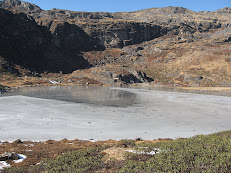
Our journey was resumed. The final milestone at Sherathang read Delhi 1780 kms on the one side and Lhasa 500 km on the other. We were drawing closer to the historic NathuLa pass located amidst a stark alpine landscape, which served as a significant transit point in the pre-1962 silk trade route between Sikkim and Chumbi valley of Tibet. As we left behind a magnificent set of twin partly frozen lakes, we grew impatient to make that ‘final touchdown’.
At last we were there- 14,500 feet above sea level. I was feeling a little light- maybe it was the rarified atmosphere, or maybe it was sheer delight. Few of my friends found it difficult to breathe, imagine being stationed here unendingly all though the wintry months. The sun had by now begun to play hide and seek. Taking small steps as advised by the army jawans, we reached the spot visited by Pandit Jawaharlal Nehru in 1958. A commemorating plaque nearby, thus describes his visit-‘ Jawaharlal Nehru, PM of India accompanied by Maharajakumar Col. P.T. Namgyal arrived at Nathula by motor vehicle on 1.9.1958.’ On our left was the highest conference hall in the world, while to our right, was an unhindered view of the road that runs through the Chumbi valley of Tibet leading to nearest commercial centre of Yatung (25kms.),a place accessible to and frequented by Indian traders before 1962 war. As the clouds descended and the wintry winds buffeted and creeped into the chinks of our woolen armour, we decided it was time to beat a hasty retreat from this historic pass.
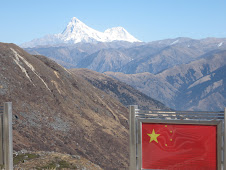
Walking back through the chilly and wet haze we touched the barbed wires that indicated the border. I bent down to scoop out snow from the Chinese soil. It felt the same. Some of the Chinese troops marked the movement but raised no objections. It was a welcome wind of change from the early sixties when they would regularly hurl abuses at Indians in Hindi over their public address system. A warm handshake with one of the Chinese officers drew a momentary thaw in the ‘coldness’ of our relations.
Spending a few moments huddled together with the jawans we gained a useful insight into their dedicated lives and discovered that there was a traditional swapping of mail between the two sides twice a week- Sunday and Thursday. Fortified with hot jalebis,pakoras and compulsory celine tablets we found enough warmth in us to brave the deteriorating weather conditions.
As the sun hovering around slowly disappeared we had no choice but to leave the splendid gap, the famous NathLa –abode of the clouds.
Soon, packed comfortably in our two gypsies, we began losing height. Our request to stop by Tsomgo lake to enjoy its beauty in the fading light evoked guttural responses from our irate drivers. But when we mentioned a free snack at the home-joints around the lake, their toothy grins confirmed our stoppage plans. Delicious hot momos and thukpa served to us were more than awesome to put it mildly. By now Tsomgo was silhouetted against the deep inky glow of the evening. As the colours slowly faded from its bosom, another vibrant hue from young embracing couples filled the air. Desent from Tsomgo to Gangtok was slow and uneventful. It did snow a bit on the way. By and large, the clouds dictated the terms all through. All that we had gasped at while going uphill were now shrouded in a delicate veil. It was only when a sparkle or two broke the cloud barrier did we realize that Gangtok was right ahead.
At the end of this beautiful day, all I pledged to do was to return once again!
It all began when a group of seven dare devils, I being in charge, not only planned such an adventure but executed it too. After a somewhat hectic but memorable day of romping around the famous Rumtek Monastery,the seat of his Holiness Gyalwa Karmapa, we started packing for our final destination- Nathula. The next day–Sunday was true to its name. We woke up to brilliant sunlight and deep azure cloudless skies. Armed with passes and a song or two on our lips we at last began to ascend huddled tightly together in our two Gypsies.
We had not even covered five of the fifty-five kilometer stretch that realization struck us that we had in our possession only one set of passes. When all attempts to persuade the check post policeman failed,I relented. Securing a second set, that too on a non-working day was going to be tough!
‘Let’s grab a cup of tea’ pleaded NL.I urged him and the rest of the group to carry on while I spent a good hour and a half struggling against time and scuttling up and down to secure that elusive second set of pass. When at last I got back I found my friends had not only devoured cup loads of tea but snacked heartily on piping hot omlettes. Amidst the rattle of cutlery and swishes of the several poly packs that my conscientious friends refuse to degrade the environment with, I realized that I had missed more than a just delicious meal – it was the splendid snow smattered scenery around the check post.
On the Way to Tsomgo Lake
Now with all the permits in order, we resumed our ascent to Tsomgo Lake and NathuLa pass. The cold clear air caught every rustle of the fir, pine and juniper that swooshed past us along the meandering road. Fair weather was a gift in itself as it ensured a breath taking view of nature’s different hues. Snow-clad peaks peeked now and then from behind a curtain of blotched brown and green, innumerable ferns and wild plants nodded gently as the burden of snow softly fell to their feet and even the chattering springs seemed to be ambling lazily in their frosty beds. Snow covered houses dotted the gentler slopes and added life to the wintry beauty of the mountains. Tiny gaily coloured flags were strung together and placed all around the courtyards of the delightful cottages adding a distinctive charm and festivity to the surroundings. ‘What to these flags mean?’ asked Singh. ‘These flags are unique to Buddhism. The red, yellow, orange, blue and green are used for happy and joyous occasions, while the white ones indicate mourning. The coloured flags may be placed around the house, but the white ones are invariably strung around bamboos in a distant glen’ replied our driver. Although tempted at each turn to get down to touch every fragile structure and run the ice through our fingers, words of caution from the drivers determined to show us places in our itinerary in time and return to Gangtok before the weather finally ‘packed up’ deterred us successfully.
Enroute to Tsomogo Lake we stopped by at Kyongnosla Alpine Sanctuary (26 kms from Gangtok),a place famous for being home to Red Panda, the state animal and the Blood Pheasant,the state Bird of Sikkim. Although we were unable to spot any of these creatures as they were possibly hibernating, we promised to be back next summer, fuelled by the desire to behold the abundant bloom of the exotic varieties of rhododendrons. As of now we had to be content with the twitter of an odd bird and the dark mystical and snowy view of the dream forest.
Leaving the enchanted frost forest behind we embarked on a twelve thousand feet climb. As the lofty mountains moved away a glittering sapphire studded lake emerged. The huge water body blissfully basking in the winter sun-filled our hearts with an unbridled joy that brought lumps to our throats. Croaking in delight we ached to touch its clear icy blue waters. The silence was overwhelming, intensified as it was with the little tinkles of the bells that Yaks sported, loitering placidly in the adjoining slopes. With cameras clicking in unison we cleansed our souls and captured the moment.
Destination Nathula
The terrain turned hostile with rugged mountains emerging jubilant over sparse vegetation. Dwellings were indeed few and far between with tough-looking GREF labourers undertaking road repairs off and on. Sweating through a swathe of warm clothes these poor men were toiling hard, amidst the acrid smoke of the burning koltar, to ensure essential supplies to the army men perched high up in lonesome mountain posts along the Indo-China border. Well, it was getting colder and colder and shiver here and a chatter there escaped unintentionally. But the brightness of the day and scenic beauty kept us all in commendable high spirits.
Frolicking Encumberants
At one sharp turn, one of the vehicles began making strange noise. The driver was compelled to cut down on speed. When nothing succeeded, we were more than delighted to settle for an unwanted (by our drivers of course), yet welcome break. Landing on ankle deep soft and crunchy snow we discovered a roadside benchmark declaring an altitude of 13000 feet. A little beyond was an open plain ahead of which the craggy mountains rose steeply. While the driver were engrossed in repairing the vehicle, we sneaked away to get a feel of all the snow and ice. Squishing through the white blanket of knee deep snow we tumbled around, made snow battalions and used snowballs for ammunition. It was perhaps the purest from of fun that we had enjoyed for a long long time. With no sign of inhabitation or the fragile fluttering flags we felt somehow removed from reality. But that moment was broken when a bellow ‘saab ho gaya’ from the driver shattered the peace. Our ultimate destination was barely ten to twelve kilometers away.
Our journey was resumed. The final milestone at Sherathang read Delhi 1780 kms on the one side and Lhasa 500 km on the other. We were drawing closer to the historic NathuLa pass located amidst a stark alpine landscape, which served as a significant transit point in the pre-1962 silk trade route between Sikkim and Chumbi valley of Tibet. As we left behind a magnificent set of twin partly frozen lakes, we grew impatient to make that ‘final touchdown’.
At last we were there- 14,500 feet above sea level. I was feeling a little light- maybe it was the rarified atmosphere, or maybe it was sheer delight. Few of my friends found it difficult to breathe, imagine being stationed here unendingly all though the wintry months. The sun had by now begun to play hide and seek. Taking small steps as advised by the army jawans, we reached the spot visited by Pandit Jawaharlal Nehru in 1958. A commemorating plaque nearby, thus describes his visit-‘ Jawaharlal Nehru, PM of India accompanied by Maharajakumar Col. P.T. Namgyal arrived at Nathula by motor vehicle on 1.9.1958.’ On our left was the highest conference hall in the world, while to our right, was an unhindered view of the road that runs through the Chumbi valley of Tibet leading to nearest commercial centre of Yatung (25kms.),a place accessible to and frequented by Indian traders before 1962 war. As the clouds descended and the wintry winds buffeted and creeped into the chinks of our woolen armour, we decided it was time to beat a hasty retreat from this historic pass.
Walking back through the chilly and wet haze we touched the barbed wires that indicated the border. I bent down to scoop out snow from the Chinese soil. It felt the same. Some of the Chinese troops marked the movement but raised no objections. It was a welcome wind of change from the early sixties when they would regularly hurl abuses at Indians in Hindi over their public address system. A warm handshake with one of the Chinese officers drew a momentary thaw in the ‘coldness’ of our relations.
Spending a few moments huddled together with the jawans we gained a useful insight into their dedicated lives and discovered that there was a traditional swapping of mail between the two sides twice a week- Sunday and Thursday. Fortified with hot jalebis,pakoras and compulsory celine tablets we found enough warmth in us to brave the deteriorating weather conditions.
As the sun hovering around slowly disappeared we had no choice but to leave the splendid gap, the famous NathLa –abode of the clouds.
Soon, packed comfortably in our two gypsies, we began losing height. Our request to stop by Tsomgo lake to enjoy its beauty in the fading light evoked guttural responses from our irate drivers. But when we mentioned a free snack at the home-joints around the lake, their toothy grins confirmed our stoppage plans. Delicious hot momos and thukpa served to us were more than awesome to put it mildly. By now Tsomgo was silhouetted against the deep inky glow of the evening. As the colours slowly faded from its bosom, another vibrant hue from young embracing couples filled the air. Desent from Tsomgo to Gangtok was slow and uneventful. It did snow a bit on the way. By and large, the clouds dictated the terms all through. All that we had gasped at while going uphill were now shrouded in a delicate veil. It was only when a sparkle or two broke the cloud barrier did we realize that Gangtok was right ahead.
At the end of this beautiful day, all I pledged to do was to return once again!
The Enchanting Valley of Flowers
The Enchanting Valley of Flowers
Widely known as Valley of Flowers or the Switzerland of India, Yumthang, situated at a distance of 140 kilometres from Gangtok, attracts and captivates all and sundry. Located at a height of 11.800 feet, it is a repository of huge bio-diversity for the adventure loving populace. Be it summer or winter, this huge meadow has a remarkable charm. Having collected basic information, we embarked upon the journey. To begin with, it was a rather long train journey upto New Jalpaiguri, followed by a refreshing jeep journey from Siliguri to Gangtok. Once we crossed a distance of ten kilometers the road made a quiet entry into the famous Mahananda Elephant Sanctuary. While we were not lucky enough in encountering any elephant, the driver did give us a graphic description of some of his nail-biting experiences of the dense, lush green, rain forest. At Sevoke, a narrow gauge railway line going to Assam separates the plains from the hills. What a sight it was to see the super fast, meandering Teesta river finding a completely flat setting to cool its tempers before proceeding ahead to its ultimate destination of Bay of Bengal.
Gentle Slope
As soon as we entered the hills, it was a fascinating world. Sweat of the body, heat and dust began disappearing and a soothing feeling came in. the speed of the vehicle was reduced considerably on account of gentle slope. One after another, waterfalls, streams, and rivulets kept appearing. The whole scenario was so irresistible that a number of times a few of us got down to have a direct feel of the bounty of nature. Apart from thick vegetation and occasional glance of wildlife, we did notice some sinking and sliding points. During the course of further journey, we were informed of the perils of getting stuck for hours and sometimes days, due to heavy landslides over the highway. No wonder, some of the vulnerable points had tiny places of worship and memorials built in the memory of departed souls.
At Teesta Bazaar, we crossed over to the other side of the wide and mighty Teesta river. Within a kilometer, the highway branched off to famous hill resort of Kalimpong. Thereafter, we came across Melli, the entry point for Sikkim from South District. Slightly before was the confluence point of Teesta and Rangeet river, the view of which was simply eye-catching. Like the famous Sangam at Allahabad, two rivers do not actually meet, rather they flow down on their own. Same is apparent from the colour of their water if one follows their courses closely.
Gateway to Sikkim
While driving up to Rangpo one is treated to an exemplary visual delight-thick lush green rain forest, bluish water of Teesta, beautiful rock formations etc. Huge multi-coloured gate at Rangpo welcomes the visitors to Sikkim, the land of mystic splendour, the hidden paradise and the heavenly abode on earth. Rangpo, the gateway to Sikkim, is a tiny but lively and developed township. Comparison with West Bengal becomes but obvious, if one follows the flurry of activities along the road leading to Singtam, and thereafter Ranipool. In the West Bengal stretch of the highway, one saw water all over but there was no sign of harnessing. On the Sikkim side,in contrast, a large number of micro and mini hydel plants were not only visible but they appeared having a decisive bearing on the life of a common man, if electricity coverage of far flung villages was any indication. At dusk, when we began the steepest climb from Ranipool, the whole landscape was bathing in light. It appeared as if stars had descended on the mountain slopes to extend a warm and hearty welcome to us at Gangtok. With the rise in altitude, the temperature outside began falling. It was time to hurriedly grab the woolens. The members, who came under the mystic influence of ‘natural air-conditioning,’ were found coughing and sneezing while taking a stroll on the beautiful Mall-the M.G.Marg. Past dinner at neat and clean Tibet Hotel, we heaved a sigh of relief when our travel agent confirmed arrangements on way to Yumthang, the much heard of and panoramic Valley of Flowers.
Mystical Peak
The fatigue accumulated ensured that not only we hit the pillow quickly but fell asleep fast as well. There was a desperate knock around 4.00 a.m. to wake us up to receive the blessings of Mount Kanchenjunga, the mountain deity of Sikkim. The early morning glow gradually bathing this mystical peak (at 28.199 feet, it is the world’s third highest) was simply breathtaking and otherworldly. It was something to be seen and felt from within, difficult to describe and elaborate. Change of colours over the peak kept us mesmerized for long. By half past five, it was a bright, sunny morning. Upon getting a taste of marvellous Temi tea, we began packing our bags, our packed breakfast included.
Panoramic View
In a slow motion the jeep began traversing the North Sikkim Highway. It was nice to get a view of health conscious people of Gangtok, jogging up and down the NH-31A. Turning towards Baluwakhani, one got a bird’s eye view of the sprawling city. While proceeding towards Black Cat Institute and Burtuk, one could see noticeable change in the thickness of vegetation. Tall pine trees and cascading waterfalls gave us good company. On account of late night showers, the hills looked fresh and green with streaks of clouds hovering over the highway every now and then. After a journey of ten kilometers, Gangtok disappeared from our view at Tashi Viewpoint. The impressive viewpoint provided another panoramic view of Mount Kanchenjunga, however. We were amazed once again.
Bluish Green Water
The vehicle began its slow descent towards B-1 or Bridge I, an unimpressive but sturdy bailey bridge. The driver added to our information that there were altogether ten bridges between Gangtok and Mangan, over a distance of barely 67 kilometres. From B-1, we began moving swiftly towards B-2, the dividing line between the East and North Districts. A waterfall of medium height greeted us right on the highway, a welcome sign to enchanting North. Our driver was more than amused at the experience, as he did not have enough time at dawn to clean the vehicle. We had’nt finished admiring the first waterfall that we came across another one within a few seconds. We attempted to click but were prevented from doing so on being told about much more beautiful scenario ahead.
Upon some gradual climb one reached the historic village of Kabi Longtsok, wherein the Lepchas (earliest inhabitants of Sikkim) had entered into a Blood Brotherhood Treaty with the Bhutias in the year 1641. A stone amidst the shadows of dense vegetation marks the spot. At B-3, the beautiful Bagcha Chu was crossed over by another bailey bridge. The bluish green water gently flowing from the nearby Indo-China border (ten kms by crow flight) attracted us to such an extent that we decided to break for breakfast. Consumption of neat, and clean water of the ‘chu ‘gave us more satisfaction than the nicely packed breakfast of Hotel Tibet. Soon we hit the road, driving through most spectacular terrain. It was good to be away from the maddening city life and move to the depths of nature. From the hill’s edge at a sharp turn, we got another glance of the mighty Teesta. It was flowing with rapid force through the steep mountains. Subsequent to a drive of about an hour, we reached the famous Phodong Monastery. Belonging to the Kargyutpa sect of Buddhism, it was founded in 1740 during the reign of the Fourth Chogyal. Its significance can be understood from the fact that the First and the Second Chogyal were installed as the Chief Lamas. The monastery decorated with colourful prayer flags had its rectangular courtyard full of followers. The scene inside was infinitely colourful like the Thankas, depicting Lord Buddha and Guru Padmasambhava in the background. In no tome, the cymbals crash, drums roll and the lamas dressed in their ceremonial gear mime episodes from the holy scriptures.
Landslide Prone
Having cleansed ourselves, we drove past remaining bridges on way to Mangan, the headquarters of North District. After crossing Namok, Mangshila and Tingchim, we came across B-10, once highest motorable
river suspension bridge over Rangrang river. Once a beautiful area, it gave a rather devastating look due to perpetual landslides. The road became dusty and slow due to sinking stretches of land. Entry into Mangan was a quiet affair as the town road had very little traffic. Dzongu, the habitat of the Lepchas was very close by. For want of time we had to resist the temptation of visiting Namprikdang, the enchanting confluence point of rivers Kanaka and Teesta. The unhindered view of Mt. Kanchenjunga from Singhik, however, provided us adequate compensation. At Meyong. We had to indulge in a tough battle with nature. Our jeep had to literally swim through the river over a distance of half a kilometer. We were told that in 1991 a cloudburst had swept away a bailey-bridge below lovely Meyong Falls. The entire area had since been landslide prone. For days together, during the monsoons, people and the materials have to be trans-shipped. Next addition to our visual delight was the mighty Railkhola Waterfalls. We had to be satisfied by our view from the vehicle as the time was running out. At Tong check-post, we not only came very close to the Teesta river but also crossed it smoothly through a long suspension bridge. As evening approached, we reached Tsungthang, a Lepcha region. The sub-divisional township is located at the confluence of Lachen Chu and Lachung Chu. Together they form Teesta river from here. While we were having steaming hot momos and thukpa for dinner at the well kept SPWD guest house, rains came pouring down. Soon it was torrential, replete with lightening and thunder. Intensity of cold registered a rise. We had no option but to cover ourselves with quilts.
Direct Democracy
The following day. We set off early for the 24 kms drive to Lachung. While gaining height, lush green paddy fields of the Tsungthang Gurudwara were visible. According to a legend, Paddy was grown at this height due to the blessings of Guru Nanak, who is reported to have visited the place and left his footprint atop a rock. While driving though hard rock area, many waterfalls were seen. Gradually we attained height and reached the beautiful Lachung valley by 8.00 a.m. At an altitude of 8500 feet, it was definitely cold. Little rest and a cup of hot tea was not only necessary from the point of view of having a break but most essential was to follow a proper acclimatization protocol. The Bhutia village spread on both sides of the Lachung Chu still retains its unique culture and tradition, most notable being its self-governing body known as Dzumsa, wherein direct democracy on the pattern of ancient Greek city states is still practiced.
Curative Properties
By 10 a.m. we resumed our journey. Fortunately, it was once again a bright day. At the outskirts, community demarcated fields were visible. On to our left was an army helipad. Every now and then herds of yak and sheep would be seen. Upon reaching an altitude of 10.000 feet, first signs of primulae and rhododendron flowers were noticeable. Wild flowers were carpeting the floor all over. A drive of few more kilometres took us inside the Shingba Rhododendron Sanctuary. If was simply a riot of colours-red, pink, white and purple. We learnt from the tourist brochure that of the 36 species of rhododendrons,24 were found here: from the giant Rhododendron Crande (over 40 feet) to the Rhododendron Nivale (a few inches off the ground).We halted for a few minutes to see everything from close angles and to capture these brilliant moments in our cameras. The slow drive through the sanctuary was without any strain as the gradient was gradual. There were flowers and flowers. At the end of the sanctuary, we were taken to the twin sulphur springs. The approach was through an attractive arch-shaped wooden bridge over Yumthang Chu. There was a virtual beeline of tourists. At last, our turn came. Upon getting a feel of warm waters of the spring, our fatigue was almost forgotten. No wonder, these springs are immensely popular for their curative properties and healing powers. Soon, we were driving through the final leg of the spectacular valley of flowers.
After a drive of a kilometer, the driver halted. He pointed ahead to the vast, flat and lush green meadow of Yumthang. The mere glance of it lifted our spirits further. Our joy knew no bounds, we looked left, we looked right, we looked up-wards. The beauty of the whole place appeared simply irresistible. We decided to have a close look of the attractive snow clad mountain peak behind the valley. Baby yaks could be seen coming out of tiny huts, jumping up and down. As we get down the vehicle to spread our carpets at the base of Yumthang Glacier, the sky is ablaze with a cloudburst of sunset colours. A group of villagers graze their herds of yaks nearby and very politely but hesitatingly offer us thick, soothing and satisfying yak milk and tea. Within no time, we begin strolling, jogging and running towards the breathtaking Yumthang Chu. The complete round of the place takes nearly two hours. Though tiring, it was worth it. The terrain was picture perfect. Some of us dared to touch the icy cold water of the stream, still others tried angling. By the time our late lunch was laid, we were totally exhausted. Soon sky became overcast. It was time to bid good bye to the enchanting Valley of Flowers, a real paradise for the nature lovers, having marvellous scenic grandeur.
Flora and fauna
As evening approached, we looked back at the mountains, picturesque spots and exotic flora and fauna. What a delight it was to wander in the rhododendron sanctuary. These images will ever remain in our mind and in the years to come, they will become the source of our imagination. They will, perhaps, guide us in our search for peace, amity and tranquility.
Widely known as Valley of Flowers or the Switzerland of India, Yumthang, situated at a distance of 140 kilometres from Gangtok, attracts and captivates all and sundry. Located at a height of 11.800 feet, it is a repository of huge bio-diversity for the adventure loving populace. Be it summer or winter, this huge meadow has a remarkable charm. Having collected basic information, we embarked upon the journey. To begin with, it was a rather long train journey upto New Jalpaiguri, followed by a refreshing jeep journey from Siliguri to Gangtok. Once we crossed a distance of ten kilometers the road made a quiet entry into the famous Mahananda Elephant Sanctuary. While we were not lucky enough in encountering any elephant, the driver did give us a graphic description of some of his nail-biting experiences of the dense, lush green, rain forest. At Sevoke, a narrow gauge railway line going to Assam separates the plains from the hills. What a sight it was to see the super fast, meandering Teesta river finding a completely flat setting to cool its tempers before proceeding ahead to its ultimate destination of Bay of Bengal.
Gentle Slope
As soon as we entered the hills, it was a fascinating world. Sweat of the body, heat and dust began disappearing and a soothing feeling came in. the speed of the vehicle was reduced considerably on account of gentle slope. One after another, waterfalls, streams, and rivulets kept appearing. The whole scenario was so irresistible that a number of times a few of us got down to have a direct feel of the bounty of nature. Apart from thick vegetation and occasional glance of wildlife, we did notice some sinking and sliding points. During the course of further journey, we were informed of the perils of getting stuck for hours and sometimes days, due to heavy landslides over the highway. No wonder, some of the vulnerable points had tiny places of worship and memorials built in the memory of departed souls.
At Teesta Bazaar, we crossed over to the other side of the wide and mighty Teesta river. Within a kilometer, the highway branched off to famous hill resort of Kalimpong. Thereafter, we came across Melli, the entry point for Sikkim from South District. Slightly before was the confluence point of Teesta and Rangeet river, the view of which was simply eye-catching. Like the famous Sangam at Allahabad, two rivers do not actually meet, rather they flow down on their own. Same is apparent from the colour of their water if one follows their courses closely.
Gateway to Sikkim
While driving up to Rangpo one is treated to an exemplary visual delight-thick lush green rain forest, bluish water of Teesta, beautiful rock formations etc. Huge multi-coloured gate at Rangpo welcomes the visitors to Sikkim, the land of mystic splendour, the hidden paradise and the heavenly abode on earth. Rangpo, the gateway to Sikkim, is a tiny but lively and developed township. Comparison with West Bengal becomes but obvious, if one follows the flurry of activities along the road leading to Singtam, and thereafter Ranipool. In the West Bengal stretch of the highway, one saw water all over but there was no sign of harnessing. On the Sikkim side,in contrast, a large number of micro and mini hydel plants were not only visible but they appeared having a decisive bearing on the life of a common man, if electricity coverage of far flung villages was any indication. At dusk, when we began the steepest climb from Ranipool, the whole landscape was bathing in light. It appeared as if stars had descended on the mountain slopes to extend a warm and hearty welcome to us at Gangtok. With the rise in altitude, the temperature outside began falling. It was time to hurriedly grab the woolens. The members, who came under the mystic influence of ‘natural air-conditioning,’ were found coughing and sneezing while taking a stroll on the beautiful Mall-the M.G.Marg. Past dinner at neat and clean Tibet Hotel, we heaved a sigh of relief when our travel agent confirmed arrangements on way to Yumthang, the much heard of and panoramic Valley of Flowers.
Mystical Peak
The fatigue accumulated ensured that not only we hit the pillow quickly but fell asleep fast as well. There was a desperate knock around 4.00 a.m. to wake us up to receive the blessings of Mount Kanchenjunga, the mountain deity of Sikkim. The early morning glow gradually bathing this mystical peak (at 28.199 feet, it is the world’s third highest) was simply breathtaking and otherworldly. It was something to be seen and felt from within, difficult to describe and elaborate. Change of colours over the peak kept us mesmerized for long. By half past five, it was a bright, sunny morning. Upon getting a taste of marvellous Temi tea, we began packing our bags, our packed breakfast included.
Panoramic View
In a slow motion the jeep began traversing the North Sikkim Highway. It was nice to get a view of health conscious people of Gangtok, jogging up and down the NH-31A. Turning towards Baluwakhani, one got a bird’s eye view of the sprawling city. While proceeding towards Black Cat Institute and Burtuk, one could see noticeable change in the thickness of vegetation. Tall pine trees and cascading waterfalls gave us good company. On account of late night showers, the hills looked fresh and green with streaks of clouds hovering over the highway every now and then. After a journey of ten kilometers, Gangtok disappeared from our view at Tashi Viewpoint. The impressive viewpoint provided another panoramic view of Mount Kanchenjunga, however. We were amazed once again.
Bluish Green Water
The vehicle began its slow descent towards B-1 or Bridge I, an unimpressive but sturdy bailey bridge. The driver added to our information that there were altogether ten bridges between Gangtok and Mangan, over a distance of barely 67 kilometres. From B-1, we began moving swiftly towards B-2, the dividing line between the East and North Districts. A waterfall of medium height greeted us right on the highway, a welcome sign to enchanting North. Our driver was more than amused at the experience, as he did not have enough time at dawn to clean the vehicle. We had’nt finished admiring the first waterfall that we came across another one within a few seconds. We attempted to click but were prevented from doing so on being told about much more beautiful scenario ahead.
Upon some gradual climb one reached the historic village of Kabi Longtsok, wherein the Lepchas (earliest inhabitants of Sikkim) had entered into a Blood Brotherhood Treaty with the Bhutias in the year 1641. A stone amidst the shadows of dense vegetation marks the spot. At B-3, the beautiful Bagcha Chu was crossed over by another bailey bridge. The bluish green water gently flowing from the nearby Indo-China border (ten kms by crow flight) attracted us to such an extent that we decided to break for breakfast. Consumption of neat, and clean water of the ‘chu ‘gave us more satisfaction than the nicely packed breakfast of Hotel Tibet. Soon we hit the road, driving through most spectacular terrain. It was good to be away from the maddening city life and move to the depths of nature. From the hill’s edge at a sharp turn, we got another glance of the mighty Teesta. It was flowing with rapid force through the steep mountains. Subsequent to a drive of about an hour, we reached the famous Phodong Monastery. Belonging to the Kargyutpa sect of Buddhism, it was founded in 1740 during the reign of the Fourth Chogyal. Its significance can be understood from the fact that the First and the Second Chogyal were installed as the Chief Lamas. The monastery decorated with colourful prayer flags had its rectangular courtyard full of followers. The scene inside was infinitely colourful like the Thankas, depicting Lord Buddha and Guru Padmasambhava in the background. In no tome, the cymbals crash, drums roll and the lamas dressed in their ceremonial gear mime episodes from the holy scriptures.
Landslide Prone
Having cleansed ourselves, we drove past remaining bridges on way to Mangan, the headquarters of North District. After crossing Namok, Mangshila and Tingchim, we came across B-10, once highest motorable
river suspension bridge over Rangrang river. Once a beautiful area, it gave a rather devastating look due to perpetual landslides. The road became dusty and slow due to sinking stretches of land. Entry into Mangan was a quiet affair as the town road had very little traffic. Dzongu, the habitat of the Lepchas was very close by. For want of time we had to resist the temptation of visiting Namprikdang, the enchanting confluence point of rivers Kanaka and Teesta. The unhindered view of Mt. Kanchenjunga from Singhik, however, provided us adequate compensation. At Meyong. We had to indulge in a tough battle with nature. Our jeep had to literally swim through the river over a distance of half a kilometer. We were told that in 1991 a cloudburst had swept away a bailey-bridge below lovely Meyong Falls. The entire area had since been landslide prone. For days together, during the monsoons, people and the materials have to be trans-shipped. Next addition to our visual delight was the mighty Railkhola Waterfalls. We had to be satisfied by our view from the vehicle as the time was running out. At Tong check-post, we not only came very close to the Teesta river but also crossed it smoothly through a long suspension bridge. As evening approached, we reached Tsungthang, a Lepcha region. The sub-divisional township is located at the confluence of Lachen Chu and Lachung Chu. Together they form Teesta river from here. While we were having steaming hot momos and thukpa for dinner at the well kept SPWD guest house, rains came pouring down. Soon it was torrential, replete with lightening and thunder. Intensity of cold registered a rise. We had no option but to cover ourselves with quilts.
Direct Democracy
The following day. We set off early for the 24 kms drive to Lachung. While gaining height, lush green paddy fields of the Tsungthang Gurudwara were visible. According to a legend, Paddy was grown at this height due to the blessings of Guru Nanak, who is reported to have visited the place and left his footprint atop a rock. While driving though hard rock area, many waterfalls were seen. Gradually we attained height and reached the beautiful Lachung valley by 8.00 a.m. At an altitude of 8500 feet, it was definitely cold. Little rest and a cup of hot tea was not only necessary from the point of view of having a break but most essential was to follow a proper acclimatization protocol. The Bhutia village spread on both sides of the Lachung Chu still retains its unique culture and tradition, most notable being its self-governing body known as Dzumsa, wherein direct democracy on the pattern of ancient Greek city states is still practiced.
Curative Properties
By 10 a.m. we resumed our journey. Fortunately, it was once again a bright day. At the outskirts, community demarcated fields were visible. On to our left was an army helipad. Every now and then herds of yak and sheep would be seen. Upon reaching an altitude of 10.000 feet, first signs of primulae and rhododendron flowers were noticeable. Wild flowers were carpeting the floor all over. A drive of few more kilometres took us inside the Shingba Rhododendron Sanctuary. If was simply a riot of colours-red, pink, white and purple. We learnt from the tourist brochure that of the 36 species of rhododendrons,24 were found here: from the giant Rhododendron Crande (over 40 feet) to the Rhododendron Nivale (a few inches off the ground).We halted for a few minutes to see everything from close angles and to capture these brilliant moments in our cameras. The slow drive through the sanctuary was without any strain as the gradient was gradual. There were flowers and flowers. At the end of the sanctuary, we were taken to the twin sulphur springs. The approach was through an attractive arch-shaped wooden bridge over Yumthang Chu. There was a virtual beeline of tourists. At last, our turn came. Upon getting a feel of warm waters of the spring, our fatigue was almost forgotten. No wonder, these springs are immensely popular for their curative properties and healing powers. Soon, we were driving through the final leg of the spectacular valley of flowers.

After a drive of a kilometer, the driver halted. He pointed ahead to the vast, flat and lush green meadow of Yumthang. The mere glance of it lifted our spirits further. Our joy knew no bounds, we looked left, we looked right, we looked up-wards. The beauty of the whole place appeared simply irresistible. We decided to have a close look of the attractive snow clad mountain peak behind the valley. Baby yaks could be seen coming out of tiny huts, jumping up and down. As we get down the vehicle to spread our carpets at the base of Yumthang Glacier, the sky is ablaze with a cloudburst of sunset colours. A group of villagers graze their herds of yaks nearby and very politely but hesitatingly offer us thick, soothing and satisfying yak milk and tea. Within no time, we begin strolling, jogging and running towards the breathtaking Yumthang Chu. The complete round of the place takes nearly two hours. Though tiring, it was worth it. The terrain was picture perfect. Some of us dared to touch the icy cold water of the stream, still others tried angling. By the time our late lunch was laid, we were totally exhausted. Soon sky became overcast. It was time to bid good bye to the enchanting Valley of Flowers, a real paradise for the nature lovers, having marvellous scenic grandeur.
Flora and fauna
As evening approached, we looked back at the mountains, picturesque spots and exotic flora and fauna. What a delight it was to wander in the rhododendron sanctuary. These images will ever remain in our mind and in the years to come, they will become the source of our imagination. They will, perhaps, guide us in our search for peace, amity and tranquility.
Saturday, February 21, 2009
CHARM OF ZIRO
Though I am associated with the North East for over twenty three years, I had the fortune of seeing only Assam & Meghalaya, apart from Sikkim. A communication regarding a meeting in Itanagar, Arunachal Pradesh, therefore, delighted me. I lost no time in booking an air-ticket for Itanagar via Guwahati. The Bagdogra-Guwahati flight was a short affair. To my utter relief on landing, I learnt that the 24-seater Pawan Hans helicopter from Itanagar had arrived moments before our touchdown. Naturally, it was to take at least an hour to be airborne again.
2. All along I was lost in thoughts about Arunachal Pradesh, the largest State of North East having an area of more than 80,000 square kms. One was eagerly looking forward to see its vast water resources, thick and pristine forest and above all, its friendly people belonging to 25 different tribes. The heli-flight to Itanagar covered a ground distance of over 350 kms in sixty five minutes. One could see vast areas outside Guwahati and Nowgong inundated by the floods of the Brahamputra. The river appeared mightier than before from top, reminding us of the several legends attached to it in the folklore of the North East.
3 .My desire to have more aerial view of Assam Valley and approach to Arunachal Pradesh had not even come to an end that I realized that helicopter was hovering close to the foothills around Itanagar. They were soothing and undisturbed by the fury of mankind and had a lush green cover. A few mountainous rivers and rivulets were seen meandering their ways into the plains of Assam. Finally we reached Neharlagun heliport around 16.05 hours. Against the preconceived notion of darkness in the region at this time of the day, visibility was clear. A friendly welcome awaited us at the heliport. The formalities at the terminal building took longer than expected. As a result, it was almost dark by the time we reached Hotel Donyl Polo Ashok.
4. Our entry into quiet and clean capital of Arunachal was greeted with light drizzle. Upon a quick shower and tea we were off for a meeting at the Secretariat. Tall Buildings were nowhere to be seen. Rather, age-old eco-friendly Ekra barracks housed different departments and offices of Ministers. By the time, we finished our engagement; it was pitch dark, though rain has stopped. We looked for some typical Arunachal handicraft items but soon got disappointed. The capital city, spread on two hills facing each other, appeared pleasant to the eyes. Some of us were drawn to the charm of a monastery, about a km away from our hotel. Though it was closed for the evening, our request to its Head Lama ensured opening its doors. The monastery built with the assistance of some experts of neighboring Bhutan a few years ago had Lord Buddha as its presiding deity. Guru Padmasambhava and a high ranking Goddess gave him company. The paintings over the wall were very colourful and attractive. Outside, a Chorten sparkled even in dim light. We took the customary rounds of the monastery and the Chorten before returning to hotel.
5. Whole of the next day was spent in attending to official engagements. It would rain off and on but there would be no change in the damp and sultry atmosphere. Little bit of walk here and there would only increase our sweat level. We retired to bed, therefore, rather early.
6. The third day was very adventurous and memorable. After an early morning walk and exercise, followed by a light breakfast, we began our journey to Ziro, the headquarters of Lower Subansiri District. The distance of a hundred and eighty kilometers was going to take more than five hours due to a Bandh call given in the neighboring Assam. By the time we left, neat and clean surroundings of Itanagar were waking up on a welcome sunny day. We did not find any encroachment or unauthorized construction which would disturb the pristine beauty of the thickly forested hills. Streams and rivulets appeared all along till we reached Doimukh town, upon crossing a distance of twenty two kms. We took a left turn to cross a wide, yet neat and clean Dikrong river.
6. From the tiny township of Doimukh to Power house of Ranganadi Project (a distance of twenty kms.), the road was in bad shape. Presence of a lot many potholes made the journey slow and tedious but the passage through green forest area had its own advantages. After forty five minutes or so, we took a tea break at Harahapa Village. It was nice to relax in this flat area. The Ranganadi river was flowing close by, in full force. Later, we came across a beautiful waterfall right on the roadside. Hardly any vehicle was seen plying through this thick rainforest. It looked rich in biodiversity. Though the area was having abundance of banana plants, rarely one could see a plant bearing fruit. The place reportedly also had a variety of fauna. Same was evident by occasional appearance of beautiful birds.
7. Before noon, we came across a relatively flat area ahead of Riajori. Within no time, the beautiful Ranganandi appeared very close to the road. Next to a dam, a cluster of Ekra houses were seen along the road. A well prepared breakfast awaited us at PWD Rest House, situated ahead of Yazali township Apart from the government servants, we were greeted very warmly by the area Gram Panchayat, Anchal Samiti and District Panchayat members. Thick forest all around, kept us in a captivating mood.
8. Upon having breakfast we stopped near the river bank to see anti-erosion works. We listened patiently to a few villagers who desired erection of protective walls to check frequently changing course of river. We could also see many plots of land having traces of “Jhum “cultivation. As we were behind schedule, we had no option but to bid good bye to the villagers and Punchayat Members after acknowledging their help and hospitality.
9. Upon an ascent of about three kms, we were bestowed with an opportunity to have the marvelous view of the flat and green area of Yazali. Capturing the view into camera was the logical course of action. Another drive of half an hour took us to Zoram village. It too had a long stretch of even land and beautiful cluster of ethnic houses. I was informed that this particular area was once proposed for the new capital of Arunachal Pradesh.
10. In the course of further journey of about twenty five kilometers, we came across a variety of Pine trees. Ultimately, we were in a position to touch the highest point at 5754.feet near Zoram town. Subsequent to a down hill drive of six kilometers, we reached our destination-Ziro. The first view was simply amazing. It was an unforgettable sight to see a large flat area having attractive houses, farm land and a thick canopy of green trees. One was reminded vividly of the black & white snaps of Potin Mama and Kamakhya Mami taken in these surroundings, forty six years ago during the former's posting with SIB in the erstwhile region of NEFA. 'Mami', we were told as curious and obedient kids, 'was rechristened as NEFA Didi or Mami' due to the fact that she joined Mama over here immediately after their marriage and this being her honeymoon place, she appeared to have developed immense fascination and attachment. The shooting spree, naturally, by my camera went on for almost ten minutes. It stopped only when we were informed of a get-together at the Hotel Blue Pine, overlooking the District Headquarters.
11. The breathtaking Ziro is situated on the Apatani plateau. Amidst high mountain ranges, it is unbelievable to come across such a flat area of fifteen to twenty square kilometers. The lush green paddy fields are surrounded by the hills of medium height having thick forest cover. A soothing drive of three kilometers brings us to the center of a market area. A laid back and relaxed small town atmosphere greets us. No one is in a hurry here. I make an unsucessful attempt to locate Potin Mama's dwelling place of 1963. Mostly, however, one finds people of Apatani tribe. Both men and women have tattoos on their faces. Older women appear totally different due to their nose plugs (Dat), made of bamboo. Since it is no longer practiced, younger women can be differentiated from their old women relatives. An old lady and her grand daughter, a student of Class Xth, reluctantly provide us a photo opportunity for the sake of memory.
12. Soon we see a minor irrigation scheme. Remarkably executed, it has been instrumental in controlling floods, apart from increasing the yield of paddy. Next, we are amazed to see the indigenous irrigation system of the Apatanis which ensures fish farming together with paddy growing. An energetic farmer shows us a bamboo net fixed at an outlet between two plots of land. It checks the flow of fish from one plot to another. As a system like this exists nowhere, it turned out to be a great learning experience.
13. We also get a chance to visit a few traditional and modified bamboo houses. Finding no verandah, one barges into the central portion having a combined kitchen and living room. The utensils, tools and clothes are found neatly arranged. Like any other hill tribe, life looked easy and free from worries for the Apatinis. They appear friendly, when approached for an interaction. Some of them were having hard drinks at a time when it was bright and sunny. We settle for a cup of tea even when offered hard drinks. Language is no barrier as most of them are in a position to converse in Hindi, one of their link languages apart from the Assamese.
14. As time was running out, we hit the road again. While driving back to the main town, it is nice to see a few energetic teenagers fully engrossed in a game of football. But the game was not being played on a normal field, It was an unfunctional air-strip which was used as a playing arena. Since sun set was approaching fast, we rush to the Hotel Blue Pine to have a refreshing cup of tea. When the time comes to convey our gratitude to the officers for having taken us around so well, they, in turn offer a nice locally woven shawl and a miniature dagger, found tied on the waist of an Apatani male. We are simply floored by their hospitability and caring nature.
15. While returning to Itanagar, we see more vehicles on the road. As it was becoming dark, we gradually lose interest in the greenery, beauty and the overall charm of the area. Although well-lit, the town of Yazali now gives a deserted look. We make a futile attempt to look for the Punchayat Members. As a result, we postpone our decision to have a break at Yazali. The Ranganadi looks more ferocious in darkness. After a drive of thirty odd kilometers, we reach an urban settlement overlooking a dam over Ranganadi. We have a satisfying cup of tea with cookies while enjoying the beauty of dam. Upon crossing this stretch, we begin driving on the main road passing through Assam, as the news of strike being called off is received. Further drive of nearly seventy kilometers is through a dense forest. It is a very lonely stretch. For miles altogether, there is no trace of any habitation. To our fortune, no wild life is sighted. The tape-recorder of the vehicle gives us the needed company. We feel mesmerized by the unique singing skills of a few Pakistanis who have made it to Hindi films in the recent past. It is around 21.30 hours when we reach a market area, thirty kilometers short of Itanagar. The effect of strike is still there, as we face difficulty in getting dinner. It is well past 22.45 hours when we make it to our hotel in Itanagar.
16. Though it was a long and hectic day, it was going to be a memorable one. Of all the things, the unique combined farming practice of fish and paddy of the Apatanis is going to be in my memory for a long time. Enjoying life in a slow motion, sometimes, also has its own advantages. I was simply impressed with the tranquil surroundings of the Ziro valley. It had the power to satisfy my senses as also my soul
2. All along I was lost in thoughts about Arunachal Pradesh, the largest State of North East having an area of more than 80,000 square kms. One was eagerly looking forward to see its vast water resources, thick and pristine forest and above all, its friendly people belonging to 25 different tribes. The heli-flight to Itanagar covered a ground distance of over 350 kms in sixty five minutes. One could see vast areas outside Guwahati and Nowgong inundated by the floods of the Brahamputra. The river appeared mightier than before from top, reminding us of the several legends attached to it in the folklore of the North East.
3 .My desire to have more aerial view of Assam Valley and approach to Arunachal Pradesh had not even come to an end that I realized that helicopter was hovering close to the foothills around Itanagar. They were soothing and undisturbed by the fury of mankind and had a lush green cover. A few mountainous rivers and rivulets were seen meandering their ways into the plains of Assam. Finally we reached Neharlagun heliport around 16.05 hours. Against the preconceived notion of darkness in the region at this time of the day, visibility was clear. A friendly welcome awaited us at the heliport. The formalities at the terminal building took longer than expected. As a result, it was almost dark by the time we reached Hotel Donyl Polo Ashok.
4. Our entry into quiet and clean capital of Arunachal was greeted with light drizzle. Upon a quick shower and tea we were off for a meeting at the Secretariat. Tall Buildings were nowhere to be seen. Rather, age-old eco-friendly Ekra barracks housed different departments and offices of Ministers. By the time, we finished our engagement; it was pitch dark, though rain has stopped. We looked for some typical Arunachal handicraft items but soon got disappointed. The capital city, spread on two hills facing each other, appeared pleasant to the eyes. Some of us were drawn to the charm of a monastery, about a km away from our hotel. Though it was closed for the evening, our request to its Head Lama ensured opening its doors. The monastery built with the assistance of some experts of neighboring Bhutan a few years ago had Lord Buddha as its presiding deity. Guru Padmasambhava and a high ranking Goddess gave him company. The paintings over the wall were very colourful and attractive. Outside, a Chorten sparkled even in dim light. We took the customary rounds of the monastery and the Chorten before returning to hotel.
5. Whole of the next day was spent in attending to official engagements. It would rain off and on but there would be no change in the damp and sultry atmosphere. Little bit of walk here and there would only increase our sweat level. We retired to bed, therefore, rather early.
6. The third day was very adventurous and memorable. After an early morning walk and exercise, followed by a light breakfast, we began our journey to Ziro, the headquarters of Lower Subansiri District. The distance of a hundred and eighty kilometers was going to take more than five hours due to a Bandh call given in the neighboring Assam. By the time we left, neat and clean surroundings of Itanagar were waking up on a welcome sunny day. We did not find any encroachment or unauthorized construction which would disturb the pristine beauty of the thickly forested hills. Streams and rivulets appeared all along till we reached Doimukh town, upon crossing a distance of twenty two kms. We took a left turn to cross a wide, yet neat and clean Dikrong river.
6. From the tiny township of Doimukh to Power house of Ranganadi Project (a distance of twenty kms.), the road was in bad shape. Presence of a lot many potholes made the journey slow and tedious but the passage through green forest area had its own advantages. After forty five minutes or so, we took a tea break at Harahapa Village. It was nice to relax in this flat area. The Ranganadi river was flowing close by, in full force. Later, we came across a beautiful waterfall right on the roadside. Hardly any vehicle was seen plying through this thick rainforest. It looked rich in biodiversity. Though the area was having abundance of banana plants, rarely one could see a plant bearing fruit. The place reportedly also had a variety of fauna. Same was evident by occasional appearance of beautiful birds.
7. Before noon, we came across a relatively flat area ahead of Riajori. Within no time, the beautiful Ranganandi appeared very close to the road. Next to a dam, a cluster of Ekra houses were seen along the road. A well prepared breakfast awaited us at PWD Rest House, situated ahead of Yazali township Apart from the government servants, we were greeted very warmly by the area Gram Panchayat, Anchal Samiti and District Panchayat members. Thick forest all around, kept us in a captivating mood.
8. Upon having breakfast we stopped near the river bank to see anti-erosion works. We listened patiently to a few villagers who desired erection of protective walls to check frequently changing course of river. We could also see many plots of land having traces of “Jhum “cultivation. As we were behind schedule, we had no option but to bid good bye to the villagers and Punchayat Members after acknowledging their help and hospitality.
9. Upon an ascent of about three kms, we were bestowed with an opportunity to have the marvelous view of the flat and green area of Yazali. Capturing the view into camera was the logical course of action. Another drive of half an hour took us to Zoram village. It too had a long stretch of even land and beautiful cluster of ethnic houses. I was informed that this particular area was once proposed for the new capital of Arunachal Pradesh.
10. In the course of further journey of about twenty five kilometers, we came across a variety of Pine trees. Ultimately, we were in a position to touch the highest point at 5754.feet near Zoram town. Subsequent to a down hill drive of six kilometers, we reached our destination-Ziro. The first view was simply amazing. It was an unforgettable sight to see a large flat area having attractive houses, farm land and a thick canopy of green trees. One was reminded vividly of the black & white snaps of Potin Mama and Kamakhya Mami taken in these surroundings, forty six years ago during the former's posting with SIB in the erstwhile region of NEFA. 'Mami', we were told as curious and obedient kids, 'was rechristened as NEFA Didi or Mami' due to the fact that she joined Mama over here immediately after their marriage and this being her honeymoon place, she appeared to have developed immense fascination and attachment. The shooting spree, naturally, by my camera went on for almost ten minutes. It stopped only when we were informed of a get-together at the Hotel Blue Pine, overlooking the District Headquarters.
11. The breathtaking Ziro is situated on the Apatani plateau. Amidst high mountain ranges, it is unbelievable to come across such a flat area of fifteen to twenty square kilometers. The lush green paddy fields are surrounded by the hills of medium height having thick forest cover. A soothing drive of three kilometers brings us to the center of a market area. A laid back and relaxed small town atmosphere greets us. No one is in a hurry here. I make an unsucessful attempt to locate Potin Mama's dwelling place of 1963. Mostly, however, one finds people of Apatani tribe. Both men and women have tattoos on their faces. Older women appear totally different due to their nose plugs (Dat), made of bamboo. Since it is no longer practiced, younger women can be differentiated from their old women relatives. An old lady and her grand daughter, a student of Class Xth, reluctantly provide us a photo opportunity for the sake of memory.
12. Soon we see a minor irrigation scheme. Remarkably executed, it has been instrumental in controlling floods, apart from increasing the yield of paddy. Next, we are amazed to see the indigenous irrigation system of the Apatanis which ensures fish farming together with paddy growing. An energetic farmer shows us a bamboo net fixed at an outlet between two plots of land. It checks the flow of fish from one plot to another. As a system like this exists nowhere, it turned out to be a great learning experience.
13. We also get a chance to visit a few traditional and modified bamboo houses. Finding no verandah, one barges into the central portion having a combined kitchen and living room. The utensils, tools and clothes are found neatly arranged. Like any other hill tribe, life looked easy and free from worries for the Apatinis. They appear friendly, when approached for an interaction. Some of them were having hard drinks at a time when it was bright and sunny. We settle for a cup of tea even when offered hard drinks. Language is no barrier as most of them are in a position to converse in Hindi, one of their link languages apart from the Assamese.
14. As time was running out, we hit the road again. While driving back to the main town, it is nice to see a few energetic teenagers fully engrossed in a game of football. But the game was not being played on a normal field, It was an unfunctional air-strip which was used as a playing arena. Since sun set was approaching fast, we rush to the Hotel Blue Pine to have a refreshing cup of tea. When the time comes to convey our gratitude to the officers for having taken us around so well, they, in turn offer a nice locally woven shawl and a miniature dagger, found tied on the waist of an Apatani male. We are simply floored by their hospitability and caring nature.
15. While returning to Itanagar, we see more vehicles on the road. As it was becoming dark, we gradually lose interest in the greenery, beauty and the overall charm of the area. Although well-lit, the town of Yazali now gives a deserted look. We make a futile attempt to look for the Punchayat Members. As a result, we postpone our decision to have a break at Yazali. The Ranganadi looks more ferocious in darkness. After a drive of thirty odd kilometers, we reach an urban settlement overlooking a dam over Ranganadi. We have a satisfying cup of tea with cookies while enjoying the beauty of dam. Upon crossing this stretch, we begin driving on the main road passing through Assam, as the news of strike being called off is received. Further drive of nearly seventy kilometers is through a dense forest. It is a very lonely stretch. For miles altogether, there is no trace of any habitation. To our fortune, no wild life is sighted. The tape-recorder of the vehicle gives us the needed company. We feel mesmerized by the unique singing skills of a few Pakistanis who have made it to Hindi films in the recent past. It is around 21.30 hours when we reach a market area, thirty kilometers short of Itanagar. The effect of strike is still there, as we face difficulty in getting dinner. It is well past 22.45 hours when we make it to our hotel in Itanagar.
16. Though it was a long and hectic day, it was going to be a memorable one. Of all the things, the unique combined farming practice of fish and paddy of the Apatanis is going to be in my memory for a long time. Enjoying life in a slow motion, sometimes, also has its own advantages. I was simply impressed with the tranquil surroundings of the Ziro valley. It had the power to satisfy my senses as also my soul
Sunday, February 8, 2009
MY ROMANCE WITH RAILWAYS
It came out of blue. My trusted friend, Col. Narendra Kumar, got me an Invite for the Girimitra Sammelan, organised by the Maharastra Sewa Sangh (MSS) at Mulund, Mumbai. As time was extraordinarily short, with the divine assistance of Vagish, I visited the website of the Indian Railways and a few budget airlines. There was no ray of hope as regards the railways. The smiling and reliable Sanjay, a senior officer of the Northern Railway offered to help, nevertheless.In between I tried to speak to the office bearers of MSS,but of no avail.Ultimately,a contact was established with Malini,the dashing horserider friend of yesteryears,who promised to speak to someone for board & lodging as she herself was temporarily moving out of the commercial hub of the country. I made optimum use of limited time at my disposal by fondly remembering the lessons drawn from ‘Packing’, the immensely hilarious prose piece prescribed during my Intermediate days.
2. Per kind courtesy of the HQ Quota of the Railways, I finally landed at 21.25 hours at the Platform No. 9 of the renovated New Delhi Railway Station.The new found dazzle, however,could not prevent a few villagers as also the foreigners from being harrased unnecessarily by the touts of all sizes,clout and dimensions. To my utter relief, on an otherwise sultry evening, the reck of 2472 Swaraj Express arrived late by just ten minutes from Jammu Tawi. Before I venture to enter the partially occupied AC compartment, I telephonically request my family to pass on my berth and bogie numbers ( 17, B3/AS3) to Arjun Wadkar, the Protocol Officer of Pandoo, my ever helpful batchmate. Passing of the telephonic message at this late hour was to enable me to avail of the gracious offer of transport and accomodation at Mumbai.
3..As it always happens, my portion of the bogie seemed fully occupied. When AC was actually effective and the train began moving, I was relieved to see the noticeable reduction in the number of my temporary ‘secondary group’ members. Unlike any other non-AC bogie, we would only stare at each other. rather than ‘open our heart’ at the first available opportunity. Finally when my watch showed 23.00 hours, well past Faridabad in Haryana, the hunger within led to breaking of ice. While chewing and gulping home made dinner, the conversation between six of us, occupying berth numbers 17- 22, was merely confined to knowing the places of respective destinations, apart from a passing reference to the spicey topics of nuclear deal and sky rocketting prices.
4.Most of the blankets and sheets provided looked attractive and new.But the pillows were not worth their name. Soon, after we opened and adjusted our berths to stretch our body, a sort of curiosity developed over the fact that the oldest among us, by the name of Gabbar Singh (GB),aged 58 and already a grandfather, was venturing not to sleep. A dusky beauty(DB), sporting a sleeveless brown coloured printed Kurta and a matching Churidar, on the contrary, was sleeping to glory over the side lower berth. G.B.,true to his style, preferred waiting in a standing posture to meet a friend at Mathura Station, the next halt. We wished him all the best and bid him good night around 11.30 hours. Later, the next day, before he got down at Borivali Station, he divulged to our utter surprise that he had managed to neatly gulp half a bottle of whisky before the train reached Mathura and that his ‘elusive friend’ was merely a shrewd figment of his furtile imagination.He also added that one of the passengers gave him much needed company at the dead of the night when we were supposedly wandering romantically into the fairy lands,an event made immortal by one and only Raj Kapoor in his path breaking magnum opus-Awara.
5. I suddenly woke up around 01.00 hours upon experiencing severe cold conditions in the midst of an otherwise hot and humid summer. Noticing no movement in my ‘neighbourhood’(fast asleep DB included),I gathered that the train was having an unscheduled halt for want of a signal clearance. This gave me an opportunity to go outside the AC area to get some warmth. On my request, the Caretaker agreed to raise the temperature to ensure us an undisturbed sleep prior to dawn. I also decided to use the so-called hi-tech toilet, introduced recently. It no doubt looked cleaner and more presentable than before with an additional latch, mirror and improved lights. It did not,however, have any flush system, the most essential item.My effort to press a wrong knob boomeranged,as I was bestowed with the rare privilege of having an unwanted midnight bath.Having failed to dry up my clothes,I,was, left with no alternative but to get an audience with the smartly dressed TTE at the earliest opportunity.I was optimistic even in this dark hour in view of my pleasant encounter with him within an hour of leaving New Delhi.
6.Around 07.50 hours,the train came to a screeching halt.DB was still giving an impression as if she had’nt slept for years.Her younger male escort ,however,would occasionally open his chinky eyes to do a ‘reckie’.Upon looking outside,I discovered that we had made an entry into M.P., the third State since leaving New Delhi.The two stations of Rajasthan,namely,Kota and Sawai Madhopur one had missed, as they were crossed during the unearthly hours.A hefty turbaned hawker doing brisk business while selling the famous Namkeens of Ratlam informs that the train was behind schedule by twenty minutes.He did add that the superfast was to make-up,nevertheless, in view of its good track record.While performing the daily ritual of brisk walk on the neat and clean platform,I was privileged to see the impact of Maratha culture in Ratlam,especially when I decided to break the fast with tasty Pohey and mouth-watering Dhokla,both purchased for just Rs Fifteen from an upmarket stall of the IRCTC.Though I was full in no time, I could not possibly divert my attention from staring at the appetising Pakoras being sold with Pudina ki Chutney in the far flung corner of platform.
7.The behaviour of those selling Namkeens and sweatmeats was in sharp contrast to their counterparts in the North or the East.In the same way, a certain degree of discipline and cleanliness was visible among the new passengers getting into the bogies and the ‘outsourced’ young boys who were doing a quick and fine job of wiping the window panes of compartments together with much needed cleaning of the toilets. Latter led me to bump into the new less smart TTE. He not only gave me a patient hearing,but duly sympathised with my cause.Nevertheless, to twist the discussion, he spoke of other justifiable additions , viz, improved thickness of berths,provision of mirrors in every cubicle,charging facility for cell phones,cloth hangers,bigger nets for every berth for keeping the small ,yet, essential items, water bottle holders, bright signages and last but not the least, the commitment shown by the Indian Railways through various boards espousing the cause of women and promising to work for their empowerment. Having noted these myself, I could not beg to disagree, while duly taking note of much more discernible snoring skills of DB and her companion. By now, it was established that they happened to be siblings.They appeared fully contented beings, probably inching towards the much aspired for stage of self actualisation.Or was it triggered by what they say in Hindi ‘sleeping without any worry,whatsoever, subsequent to selling the horses’?.
8. While the train leaves Ratlam at 8.10 hours, I am in a position to witness other portions of station, disciplined children suitably guided by Nuns, Muslim women in attractive burquas and a neat and clean cafetaria run by IRCTC. The whole scenario looks pleasant. DB in the meanwhile, looks for her companion all over the compartment. A sigh of relief is noted on her face, when he is found entering from the adjucent bogie. He was held up while fetching water at the last moment, a phenomenon not unusual in the Indian train journeys.
9. At Bomania station the train picks up speed. It is a pleasing sight to see clean and quiet countryside in the background of grazing goats and women and children working in fields. Soon we pass through a plateau area, having ample grass land and forest cover. While I do not mind hearing the voice of a hawker selling break fast for Rs. 20/-, my attention definitely gets diverted on hearing a loud conversation between two youngsters proceeding to Mumbai for an interview at ‘Vimal’. They also talk about relief coming to innocent citizens after the enactment of RTI and possible variations of mood of the members of interview board,they were destined to face. While all this is in progress, the train enters a tunnel of half a k.m. length. After experiencing a bout of darkness, it is nice to see a small hydel project. The surrounding terrain reminds one of the sand dunes of Jaisalmer area of Rajasthan. I notice a few huts, goats, a pair of bullock and hardy,turbaned menfolk working in cotton fields. Between the Bajranggarh and Meghnagar stations, the train picks up further momentum. Meghnagar, reported to be on the border of M.P. & Gujarat appears to be a newly built station. A mixture of M.P., Gujarat and Maharastra culture is noticeable when one looks at the dressing pattern of people seated on the platform.
10. When the train is on move again, D.B. decides to give up her sleep and grab a packet of break fast after a wash. Her face brigtens up upon receiving a call on cell. She reminds her brother in a feeble voice to refrain from reading a novel to concentrate on break fast. Withn no time, she helps herself with a cup of ‘Dip’ tea. On noticing praise for the quality of tea, some of us too decide to try our luck. The conversation of the neighbouring young men is heard again. Now they are heard talking about the state of affairs in Mayawati ruled U.P. and the corresponding situation in Maharastra. A man wearing tight jeans passes by.He is talking loudly to his wife on mobile phone, without showing any consideration to the fellow passengers.
11. By this time it becomes clear that it is going to be a cloudy day. The sand dune type of landscape emerges once again, before the train passes through Bordoi station. It is nice to see Bougainvillea flowers blooming in this dry region. A few Eucalyptus trees and abandoned huts are also visible. At this juncture(9.50 hrs), we reach Dahod, the first station of Gujarat.A five minute halt enables us some glimpses of Gujarati culture, aptly reflected through the dressing pattern and eating habits. Most of the sign boards are in Gujrati.The tiled roof of houses appear distinct and different. From the platform, I get a chance to buy a copy of ‘Free Press Journal’, a daily published from Bhopal and Indore. The news items concerning Bhopal and surrounding towns remind me vividly of the six months spent by me as a Lecturer of Sociology at Bina in early eighties.
2. Per kind courtesy of the HQ Quota of the Railways, I finally landed at 21.25 hours at the Platform No. 9 of the renovated New Delhi Railway Station.The new found dazzle, however,could not prevent a few villagers as also the foreigners from being harrased unnecessarily by the touts of all sizes,clout and dimensions. To my utter relief, on an otherwise sultry evening, the reck of 2472 Swaraj Express arrived late by just ten minutes from Jammu Tawi. Before I venture to enter the partially occupied AC compartment, I telephonically request my family to pass on my berth and bogie numbers ( 17, B3/AS3) to Arjun Wadkar, the Protocol Officer of Pandoo, my ever helpful batchmate. Passing of the telephonic message at this late hour was to enable me to avail of the gracious offer of transport and accomodation at Mumbai.
3..As it always happens, my portion of the bogie seemed fully occupied. When AC was actually effective and the train began moving, I was relieved to see the noticeable reduction in the number of my temporary ‘secondary group’ members. Unlike any other non-AC bogie, we would only stare at each other. rather than ‘open our heart’ at the first available opportunity. Finally when my watch showed 23.00 hours, well past Faridabad in Haryana, the hunger within led to breaking of ice. While chewing and gulping home made dinner, the conversation between six of us, occupying berth numbers 17- 22, was merely confined to knowing the places of respective destinations, apart from a passing reference to the spicey topics of nuclear deal and sky rocketting prices.
4.Most of the blankets and sheets provided looked attractive and new.But the pillows were not worth their name. Soon, after we opened and adjusted our berths to stretch our body, a sort of curiosity developed over the fact that the oldest among us, by the name of Gabbar Singh (GB),aged 58 and already a grandfather, was venturing not to sleep. A dusky beauty(DB), sporting a sleeveless brown coloured printed Kurta and a matching Churidar, on the contrary, was sleeping to glory over the side lower berth. G.B.,true to his style, preferred waiting in a standing posture to meet a friend at Mathura Station, the next halt. We wished him all the best and bid him good night around 11.30 hours. Later, the next day, before he got down at Borivali Station, he divulged to our utter surprise that he had managed to neatly gulp half a bottle of whisky before the train reached Mathura and that his ‘elusive friend’ was merely a shrewd figment of his furtile imagination.He also added that one of the passengers gave him much needed company at the dead of the night when we were supposedly wandering romantically into the fairy lands,an event made immortal by one and only Raj Kapoor in his path breaking magnum opus-Awara.
5. I suddenly woke up around 01.00 hours upon experiencing severe cold conditions in the midst of an otherwise hot and humid summer. Noticing no movement in my ‘neighbourhood’(fast asleep DB included),I gathered that the train was having an unscheduled halt for want of a signal clearance. This gave me an opportunity to go outside the AC area to get some warmth. On my request, the Caretaker agreed to raise the temperature to ensure us an undisturbed sleep prior to dawn. I also decided to use the so-called hi-tech toilet, introduced recently. It no doubt looked cleaner and more presentable than before with an additional latch, mirror and improved lights. It did not,however, have any flush system, the most essential item.My effort to press a wrong knob boomeranged,as I was bestowed with the rare privilege of having an unwanted midnight bath.Having failed to dry up my clothes,I,was, left with no alternative but to get an audience with the smartly dressed TTE at the earliest opportunity.I was optimistic even in this dark hour in view of my pleasant encounter with him within an hour of leaving New Delhi.
6.Around 07.50 hours,the train came to a screeching halt.DB was still giving an impression as if she had’nt slept for years.Her younger male escort ,however,would occasionally open his chinky eyes to do a ‘reckie’.Upon looking outside,I discovered that we had made an entry into M.P., the third State since leaving New Delhi.The two stations of Rajasthan,namely,Kota and Sawai Madhopur one had missed, as they were crossed during the unearthly hours.A hefty turbaned hawker doing brisk business while selling the famous Namkeens of Ratlam informs that the train was behind schedule by twenty minutes.He did add that the superfast was to make-up,nevertheless, in view of its good track record.While performing the daily ritual of brisk walk on the neat and clean platform,I was privileged to see the impact of Maratha culture in Ratlam,especially when I decided to break the fast with tasty Pohey and mouth-watering Dhokla,both purchased for just Rs Fifteen from an upmarket stall of the IRCTC.Though I was full in no time, I could not possibly divert my attention from staring at the appetising Pakoras being sold with Pudina ki Chutney in the far flung corner of platform.
7.The behaviour of those selling Namkeens and sweatmeats was in sharp contrast to their counterparts in the North or the East.In the same way, a certain degree of discipline and cleanliness was visible among the new passengers getting into the bogies and the ‘outsourced’ young boys who were doing a quick and fine job of wiping the window panes of compartments together with much needed cleaning of the toilets. Latter led me to bump into the new less smart TTE. He not only gave me a patient hearing,but duly sympathised with my cause.Nevertheless, to twist the discussion, he spoke of other justifiable additions , viz, improved thickness of berths,provision of mirrors in every cubicle,charging facility for cell phones,cloth hangers,bigger nets for every berth for keeping the small ,yet, essential items, water bottle holders, bright signages and last but not the least, the commitment shown by the Indian Railways through various boards espousing the cause of women and promising to work for their empowerment. Having noted these myself, I could not beg to disagree, while duly taking note of much more discernible snoring skills of DB and her companion. By now, it was established that they happened to be siblings.They appeared fully contented beings, probably inching towards the much aspired for stage of self actualisation.Or was it triggered by what they say in Hindi ‘sleeping without any worry,whatsoever, subsequent to selling the horses’?.
8. While the train leaves Ratlam at 8.10 hours, I am in a position to witness other portions of station, disciplined children suitably guided by Nuns, Muslim women in attractive burquas and a neat and clean cafetaria run by IRCTC. The whole scenario looks pleasant. DB in the meanwhile, looks for her companion all over the compartment. A sigh of relief is noted on her face, when he is found entering from the adjucent bogie. He was held up while fetching water at the last moment, a phenomenon not unusual in the Indian train journeys.
9. At Bomania station the train picks up speed. It is a pleasing sight to see clean and quiet countryside in the background of grazing goats and women and children working in fields. Soon we pass through a plateau area, having ample grass land and forest cover. While I do not mind hearing the voice of a hawker selling break fast for Rs. 20/-, my attention definitely gets diverted on hearing a loud conversation between two youngsters proceeding to Mumbai for an interview at ‘Vimal’. They also talk about relief coming to innocent citizens after the enactment of RTI and possible variations of mood of the members of interview board,they were destined to face. While all this is in progress, the train enters a tunnel of half a k.m. length. After experiencing a bout of darkness, it is nice to see a small hydel project. The surrounding terrain reminds one of the sand dunes of Jaisalmer area of Rajasthan. I notice a few huts, goats, a pair of bullock and hardy,turbaned menfolk working in cotton fields. Between the Bajranggarh and Meghnagar stations, the train picks up further momentum. Meghnagar, reported to be on the border of M.P. & Gujarat appears to be a newly built station. A mixture of M.P., Gujarat and Maharastra culture is noticeable when one looks at the dressing pattern of people seated on the platform.
10. When the train is on move again, D.B. decides to give up her sleep and grab a packet of break fast after a wash. Her face brigtens up upon receiving a call on cell. She reminds her brother in a feeble voice to refrain from reading a novel to concentrate on break fast. Withn no time, she helps herself with a cup of ‘Dip’ tea. On noticing praise for the quality of tea, some of us too decide to try our luck. The conversation of the neighbouring young men is heard again. Now they are heard talking about the state of affairs in Mayawati ruled U.P. and the corresponding situation in Maharastra. A man wearing tight jeans passes by.He is talking loudly to his wife on mobile phone, without showing any consideration to the fellow passengers.
11. By this time it becomes clear that it is going to be a cloudy day. The sand dune type of landscape emerges once again, before the train passes through Bordoi station. It is nice to see Bougainvillea flowers blooming in this dry region. A few Eucalyptus trees and abandoned huts are also visible. At this juncture(9.50 hrs), we reach Dahod, the first station of Gujarat.A five minute halt enables us some glimpses of Gujarati culture, aptly reflected through the dressing pattern and eating habits. Most of the sign boards are in Gujrati.The tiled roof of houses appear distinct and different. From the platform, I get a chance to buy a copy of ‘Free Press Journal’, a daily published from Bhopal and Indore. The news items concerning Bhopal and surrounding towns remind me vividly of the six months spent by me as a Lecturer of Sociology at Bina in early eighties.
12. Between Jhamelda and Piplod stations, one notices a drizzle followed by a good rainfall for half an hour. The beauty of near by villages gets enhanced. Pools of water appear here and there. From nowhere, a swanky white car emerges, splashing water on the passers-by. Unmindful of rains, a few school children are seen enjoying the game of hide and seek. These developments have absolutely no impact on D.B. She is once again in a sleeping mode. She occasionally gets up to respond to calls, presumably from her life-partner. Soon one notices huge hoardings of Sanghi cement on both sides of railway line. On seeing them, one is reminded of the writings on walls concerning one quack of Rengarpura, Karol Bagh, who claimed to have solutions to all sex-related complications.
13. The prosperity of Gujarat is reflected through nice houses and modern highways that one sees through the train window. It prompts discussion on the well being of Gujaratis despite facing a series of communal riots following the burning of a train bogie at closeby Godhra. When we reach this famous place just before 11.00 hrs., all are eager to see the site of the unfortunate incident. The platform situated at an altitude of 119 feet above sea level, looks organized and clean. Before reaching the now historical site, one comes across a number of Pakora vendors. I am told that this place as also Vadodra are famous for the fried delights in the same way as Ratlam is known for Namkeens. Despite being prohibited by the doctor, I try a combination of tasty Pakoras. Thereafter, I venture to see the famous black spot of the contempory history, which promted constitution of two Inquiry Commissions.
14. Before the train leaves Godhra, I rush back to my compartment. Near my seat as also in the next cabin, a few boys & girls are found busy charging their mobile phones. This sort of facility was unheard of, a couple of years ago. A mobile rings up in the process. A young lady having short curly hairs and wearing a tight pair of cream cardroys, makes no mistake in expresssing her emotions loudly to her mother at the other end. One wishes and prays that the Government of the day soon does something to check the noise pollution emanated by the flourishing cell culture.
15. I pretend to read a book and try a nap before getting a chance to see Vadodra. Soon, I am drawn to an interesting conversation between a young man and a person of 60 years of age. The former, coming from New Delhi, was looking for a reasonably priced acomodation at Vadodra to enable him to take an interview for job enhancement. The old man guided him to Hotel Suraj located near the exit gate. Before the train comes closer to his destination, the old man recounts the incident of a massive fire in B-3 coach of this very train, a couple of days ago. He adds that the train was ultimately delayed by four hours.We all thank our stars, therefore, on safely making it to Vadodra. Afterall, our coach too had the same number.
16.The view at the platform was an eye opener. It looked well maintained.Comparing its look and upkeep with the stations of North India was pointless. There were bright and readable signages all over.But the sight which stole the show was an acquarium kept at a vantage point.Among the eatables,it was the Pakora which was all pervading.A wide variety of it attracted even the likes of DB for the first time to a platform. She consumed 250 grams of one variety in addition to carrying another one in packed form, possibly for her hubby waiting anxiously at the Bandra station.Apart from the Pakoras, Dhoklas, Bondas, sweets, Puri and Subji are also available in plenty.
17. The overall behaviour of the passengers in this part of the country is worth appreciating. There are no cases of attempted theft or forced entries or occupations of reserved seats. The moving train provides an opportunity to witness the vast portions of the developed and prosperous Vadodara. I again dig up my past to refreshen myself about similar views of Allahabad, Kanpur, Etawah, Hathras, Aligarh, Ghaziabad etc.from the ever slow Tata-Amritsar Express during my innumerable journeys as a post-graduate student between Ranchi and Delhi in the late seventees and early eightees. While the sight of a mosque and dome of a historic building attracts,the slums in the foreground act as a distracting force.When the train picks up rapid speed to make up little bit of the lost time,I am attracted towards the never say die attitude of one Parshuram Acharya.He is not interested in looking outside or engaging in any useless conversation.He is,rather,working tirelessly on his laptop,checking E-mails and attempting to reply to some of them in this state of mobility.The polite businessman in him occasionally finds time to convey to his near and dear ones,the possible arrival time of the train at Mumbai.On being offered this kind of opportunity by him,I too converse with Dawney and Anks.While I do so,I gather the news that a driver and a protocol assistant will be waiting for me when the train reaches Mumbai in another six hours or so.
18.It is lunch time when the train has another sheduled halt at Bharoach.I attempt a leisurly walk but soon return on not finding anything worthwhile to see and take note of.When I am in the process of relishing the Railway supplied lunch,I am attracted to the mighty Narmada,one of the two famous rivers of Gujarat.One is informed that it is extremely crucial for the overall sustenance of the State.Soon to be seen, the Tapi river flowing between Ankleshwar,the vast Chemical hub and Surat,however,is reported to be a bane for the state.
19. On reaching Surat around 14.00 hours in the afternoon,the calamity of Plague of 1984 immediately comes to mind.Also I am reminded of the relentless efforts of a dynamic IAS officer,then heading its Municipal Corporation.His sincereity and hard work had not only ensured freedom from plague sooner than expected but he could also devise an unique formula for profit making by the much maligned municipal bodies. Needless to say,he went on to inspire the admistrators of such bodies in other states.
20. From the conversation of others, I further pick up the information that Surat is a prominent textile centre,apart from being a highly developed diamond, steel, dress material and sari centre. Goods produced at a low cost find a ready market all over the country. The latest Chinese consumer products too are imitated in no time.Reliance and many bigwigs of textile and chemical industry have their mammoth units in the vicinity. The busy Hazira port and Vapi industrial town too are reported close by.A five minute halt at the station gives an exposure of traditionally dressed Muslim community.One is also reminded about the busy and bustling Surat port of the pre-British era.
21. Around 16.50 hours, subsequent to crossing Vaitarna river,low hills situated along the Arabian Sea are visible.As the train enters Thane area of Maharastra,a number of serene creeks leading to the Arabian sea are visible.The train actually becomes slow and brings in some monotony while passing through a long bridge over the Thane Creek.Next,one notices rather unorganised yet flourishing real estate.In the process,we also pass through a number of slums.Mumbai culture is there to see once the fast moving and vibrant local trains are sighted.A line of quick comparison between the lifestyles of the Mumbaikars viz a viz Delhiites is heard.Saloni,the little charming girl comes out of her own impressions of congested but lively Mumbai.She,in addition,finds Mumbai women using trains more frequently and with added confidence as compared to their counterparts of Delhi or elsewhere.
22.In this backdrop,one tries to pick up more insight into India’s commercial capital as the train halts for a while at Borivali,followed by brief and inconsequential halts at Kandivali, Malad, Jogeshwari, Andheri and Santa Cruz.I feel excited and elated on visiting Mumbai by train after a gap of twenty three years.
23. As we move closer to Bandra, the terminal point, expression on DB’s face changes. As such , she had a wash, combed her hairs and applied a bit of make up.She was, perhaps, dying to get a glimpse of her life partner after weeks if not months.Her faithful brother lends his hand in repacking her bag.As soon as she gets up to finally leave her berth,her cell rings.Who else it could be except her prince? Oh no,it turns out to be a missed call.Acharya,Saloni’s family and the young job aspirants,in the meanwhile, succeed in establishing a contact or two with their near and dear ones.Practically everyone utters ‘the train is late by ten to fifteen minutes’.While commenting so,perhaps they fail to realise that a train can genuinely lag behind due to the circumstances sometimes beyond anyone’s control.As long as a long distance is arrived
at without any mishap,the credit in all fairness should go to the vast and experinced railway set up.
24.The imminent hour comes.We are reported very close to Bandra.The expected rush leads to the exit gates.While Acharya says the train is bound to touch the platform on the left,the youngmen report otherwise.Saloni prefers to maintain her cool.She leaves it to her parents to provide the necessary guidance.
25.At last DB’s cell rings again.This time she faces no disappointment.Her husband is on the other end.Happiness returns.She has a much needed sigh of relief.She rushes to the door only to be politely advised to have patience.Sharp at 18.10 hrs., Bandra station comes.While all manage to get down one by one,DB still looks for HIM.He must be somewhere.Afterall,his call was received moments ago.She consoles herself.He ultimately surfaces.Both not only look at each other,they actually begin running from the opposite directions.It is only a matter of seconds that the usual rejoining scene straight from a Hindi movie is enacted.More appropriately,it is akin to the ending of ‘Mr.and Mrs Iyer’minus the chubby toddler.While they unknowingly try to ignore the world around them for a moment,it is my turn to focus rapt attention on the placard bearing my name.Yes,Sangli,the smiling Protocol Assistant is sighted.By folding his hands,he introduces himself.I shake hand with him.I feel happy and relieved.My joy multiplies when informed of the telephonic contact he had with my family.
13. The prosperity of Gujarat is reflected through nice houses and modern highways that one sees through the train window. It prompts discussion on the well being of Gujaratis despite facing a series of communal riots following the burning of a train bogie at closeby Godhra. When we reach this famous place just before 11.00 hrs., all are eager to see the site of the unfortunate incident. The platform situated at an altitude of 119 feet above sea level, looks organized and clean. Before reaching the now historical site, one comes across a number of Pakora vendors. I am told that this place as also Vadodra are famous for the fried delights in the same way as Ratlam is known for Namkeens. Despite being prohibited by the doctor, I try a combination of tasty Pakoras. Thereafter, I venture to see the famous black spot of the contempory history, which promted constitution of two Inquiry Commissions.
14. Before the train leaves Godhra, I rush back to my compartment. Near my seat as also in the next cabin, a few boys & girls are found busy charging their mobile phones. This sort of facility was unheard of, a couple of years ago. A mobile rings up in the process. A young lady having short curly hairs and wearing a tight pair of cream cardroys, makes no mistake in expresssing her emotions loudly to her mother at the other end. One wishes and prays that the Government of the day soon does something to check the noise pollution emanated by the flourishing cell culture.
15. I pretend to read a book and try a nap before getting a chance to see Vadodra. Soon, I am drawn to an interesting conversation between a young man and a person of 60 years of age. The former, coming from New Delhi, was looking for a reasonably priced acomodation at Vadodra to enable him to take an interview for job enhancement. The old man guided him to Hotel Suraj located near the exit gate. Before the train comes closer to his destination, the old man recounts the incident of a massive fire in B-3 coach of this very train, a couple of days ago. He adds that the train was ultimately delayed by four hours.We all thank our stars, therefore, on safely making it to Vadodra. Afterall, our coach too had the same number.
16.The view at the platform was an eye opener. It looked well maintained.Comparing its look and upkeep with the stations of North India was pointless. There were bright and readable signages all over.But the sight which stole the show was an acquarium kept at a vantage point.Among the eatables,it was the Pakora which was all pervading.A wide variety of it attracted even the likes of DB for the first time to a platform. She consumed 250 grams of one variety in addition to carrying another one in packed form, possibly for her hubby waiting anxiously at the Bandra station.Apart from the Pakoras, Dhoklas, Bondas, sweets, Puri and Subji are also available in plenty.
17. The overall behaviour of the passengers in this part of the country is worth appreciating. There are no cases of attempted theft or forced entries or occupations of reserved seats. The moving train provides an opportunity to witness the vast portions of the developed and prosperous Vadodara. I again dig up my past to refreshen myself about similar views of Allahabad, Kanpur, Etawah, Hathras, Aligarh, Ghaziabad etc.from the ever slow Tata-Amritsar Express during my innumerable journeys as a post-graduate student between Ranchi and Delhi in the late seventees and early eightees. While the sight of a mosque and dome of a historic building attracts,the slums in the foreground act as a distracting force.When the train picks up rapid speed to make up little bit of the lost time,I am attracted towards the never say die attitude of one Parshuram Acharya.He is not interested in looking outside or engaging in any useless conversation.He is,rather,working tirelessly on his laptop,checking E-mails and attempting to reply to some of them in this state of mobility.The polite businessman in him occasionally finds time to convey to his near and dear ones,the possible arrival time of the train at Mumbai.On being offered this kind of opportunity by him,I too converse with Dawney and Anks.While I do so,I gather the news that a driver and a protocol assistant will be waiting for me when the train reaches Mumbai in another six hours or so.
18.It is lunch time when the train has another sheduled halt at Bharoach.I attempt a leisurly walk but soon return on not finding anything worthwhile to see and take note of.When I am in the process of relishing the Railway supplied lunch,I am attracted to the mighty Narmada,one of the two famous rivers of Gujarat.One is informed that it is extremely crucial for the overall sustenance of the State.Soon to be seen, the Tapi river flowing between Ankleshwar,the vast Chemical hub and Surat,however,is reported to be a bane for the state.
19. On reaching Surat around 14.00 hours in the afternoon,the calamity of Plague of 1984 immediately comes to mind.Also I am reminded of the relentless efforts of a dynamic IAS officer,then heading its Municipal Corporation.His sincereity and hard work had not only ensured freedom from plague sooner than expected but he could also devise an unique formula for profit making by the much maligned municipal bodies. Needless to say,he went on to inspire the admistrators of such bodies in other states.
20. From the conversation of others, I further pick up the information that Surat is a prominent textile centre,apart from being a highly developed diamond, steel, dress material and sari centre. Goods produced at a low cost find a ready market all over the country. The latest Chinese consumer products too are imitated in no time.Reliance and many bigwigs of textile and chemical industry have their mammoth units in the vicinity. The busy Hazira port and Vapi industrial town too are reported close by.A five minute halt at the station gives an exposure of traditionally dressed Muslim community.One is also reminded about the busy and bustling Surat port of the pre-British era.
21. Around 16.50 hours, subsequent to crossing Vaitarna river,low hills situated along the Arabian Sea are visible.As the train enters Thane area of Maharastra,a number of serene creeks leading to the Arabian sea are visible.The train actually becomes slow and brings in some monotony while passing through a long bridge over the Thane Creek.Next,one notices rather unorganised yet flourishing real estate.In the process,we also pass through a number of slums.Mumbai culture is there to see once the fast moving and vibrant local trains are sighted.A line of quick comparison between the lifestyles of the Mumbaikars viz a viz Delhiites is heard.Saloni,the little charming girl comes out of her own impressions of congested but lively Mumbai.She,in addition,finds Mumbai women using trains more frequently and with added confidence as compared to their counterparts of Delhi or elsewhere.
22.In this backdrop,one tries to pick up more insight into India’s commercial capital as the train halts for a while at Borivali,followed by brief and inconsequential halts at Kandivali, Malad, Jogeshwari, Andheri and Santa Cruz.I feel excited and elated on visiting Mumbai by train after a gap of twenty three years.
23. As we move closer to Bandra, the terminal point, expression on DB’s face changes. As such , she had a wash, combed her hairs and applied a bit of make up.She was, perhaps, dying to get a glimpse of her life partner after weeks if not months.Her faithful brother lends his hand in repacking her bag.As soon as she gets up to finally leave her berth,her cell rings.Who else it could be except her prince? Oh no,it turns out to be a missed call.Acharya,Saloni’s family and the young job aspirants,in the meanwhile, succeed in establishing a contact or two with their near and dear ones.Practically everyone utters ‘the train is late by ten to fifteen minutes’.While commenting so,perhaps they fail to realise that a train can genuinely lag behind due to the circumstances sometimes beyond anyone’s control.As long as a long distance is arrived
at without any mishap,the credit in all fairness should go to the vast and experinced railway set up.
24.The imminent hour comes.We are reported very close to Bandra.The expected rush leads to the exit gates.While Acharya says the train is bound to touch the platform on the left,the youngmen report otherwise.Saloni prefers to maintain her cool.She leaves it to her parents to provide the necessary guidance.
25.At last DB’s cell rings again.This time she faces no disappointment.Her husband is on the other end.Happiness returns.She has a much needed sigh of relief.She rushes to the door only to be politely advised to have patience.Sharp at 18.10 hrs., Bandra station comes.While all manage to get down one by one,DB still looks for HIM.He must be somewhere.Afterall,his call was received moments ago.She consoles herself.He ultimately surfaces.Both not only look at each other,they actually begin running from the opposite directions.It is only a matter of seconds that the usual rejoining scene straight from a Hindi movie is enacted.More appropriately,it is akin to the ending of ‘Mr.and Mrs Iyer’minus the chubby toddler.While they unknowingly try to ignore the world around them for a moment,it is my turn to focus rapt attention on the placard bearing my name.Yes,Sangli,the smiling Protocol Assistant is sighted.By folding his hands,he introduces himself.I shake hand with him.I feel happy and relieved.My joy multiplies when informed of the telephonic contact he had with my family.
26.Without any success,I try to relocate DB,Acharya,young job aspirants or Saloni.They are not sighted again.Perhaps they have,by now, mingled with the vast ocean of humanity that Mumbai has.Time is ripe for me to bid good bye to the train in which I spent lovely and memorable twenty hours.I place myself at the disposal of Sona,the unassuming driver from the trusted world of bureaucracy to show me the interesting spots in the ever-resilient Mumbai.
Tuesday, January 27, 2009
RISE OF BARACK HUSSEIN OBAMA
January 20, 2009 will be a red letter day not only for the Americans but for all the under privileged sections. History was created when 47 year old Obama, having a troubled childhood, took oath as the 44th President of the U.S.A. For the prosperous and hitherto carefree Americans, change of guard at the top every four years is not something new. This year, it was special and unusual because a member of an immigrant African American community had won decisively for the supreme position for the first time.
It goes without saying that barely forty five years ago none of them had a right to vote. Many of them are still subjected to racial discriminations and assaults. No wonder, braving bone numbing cold, a large number of them had assembled for the big event at the National Mall and for the ‘curtain raiser’ at the Lincoln Memorial, the previous day.
The triumph of cyber savvy Obama has been made possible due to rare unity among the rapidly emerging immigrant community as also gradual loss of ‘White’ faith in George Bush on account of his many divisive policies, meddling in Iraq and his apparent failure to control the domestic economy which resulted in loss of three million jobs. It could be, therefore, considered positive as also negative exercise of franchise.
The meteoric rise of son of an erstwhile Kenyan from a Senator to the President in less than five years is momentous by any reckoning. The way he spoke, campaigned and carried himself forward, sets brilliant standards. He appears to posses the required capability, appeal and the charisma which enables him to deliver concise, balanced and effective speeches having substance and conviction. Due to his sheer hard work and determination he has transformed into a magnificent orator, a quality gained and inculcated normally only after years of experience. The way he speaks, he promises a fair degree of optimism and shows a certain ray of hope to the people from various walks of life.
At his meticulously organised ‘inauguration’, he displayed courtesy and humility right from the outset. He conveyed everything powerfully without resorting to any direct criticism. What he did not refer to-the concerns arising from global warming, faith and determination of Americans, the famous inspirational words of George Washington, their capability to draw strength from the Christians, Muslims, Jews ,Hindus, and the non-believers etc?. Though any mention of Israel-Palestine conflict or Pakistan was avoided, his statement,” Why a man whose father less than sixty years ago might not have been served at a local restaurant can now stand (before you) to take a most sacred oath” was not only touching but it may have brought tears to many eyes. His tough message to the elements perpetrating terror will be welcomed everywhere provided the grounds are facilitated for the actual crackdown.
He has raised expectations of people hailing from diverse nationalities. Can he deliver or will he be allowed to swim against the tide? The expression that only time will tell may perhaps be inappropriate in this case for the simple reason that an US President gets roughly four years to understand, correct and modify. On his part, he has cautiously stated that “meeting any of these challenges will not be easy”.
His top two priority tasks, withdrawal of troops from Iraq and closing down the Guantanamo Bay prison may be accomplished if his allies back his will and determination. Putting the economy back on the rails, however, may take longer than expected. Obama, the fourth youngest person to occupy the coveted oval office, deserves more time to perform.
It goes without saying that barely forty five years ago none of them had a right to vote. Many of them are still subjected to racial discriminations and assaults. No wonder, braving bone numbing cold, a large number of them had assembled for the big event at the National Mall and for the ‘curtain raiser’ at the Lincoln Memorial, the previous day.
The triumph of cyber savvy Obama has been made possible due to rare unity among the rapidly emerging immigrant community as also gradual loss of ‘White’ faith in George Bush on account of his many divisive policies, meddling in Iraq and his apparent failure to control the domestic economy which resulted in loss of three million jobs. It could be, therefore, considered positive as also negative exercise of franchise.
The meteoric rise of son of an erstwhile Kenyan from a Senator to the President in less than five years is momentous by any reckoning. The way he spoke, campaigned and carried himself forward, sets brilliant standards. He appears to posses the required capability, appeal and the charisma which enables him to deliver concise, balanced and effective speeches having substance and conviction. Due to his sheer hard work and determination he has transformed into a magnificent orator, a quality gained and inculcated normally only after years of experience. The way he speaks, he promises a fair degree of optimism and shows a certain ray of hope to the people from various walks of life.
At his meticulously organised ‘inauguration’, he displayed courtesy and humility right from the outset. He conveyed everything powerfully without resorting to any direct criticism. What he did not refer to-the concerns arising from global warming, faith and determination of Americans, the famous inspirational words of George Washington, their capability to draw strength from the Christians, Muslims, Jews ,Hindus, and the non-believers etc?. Though any mention of Israel-Palestine conflict or Pakistan was avoided, his statement,” Why a man whose father less than sixty years ago might not have been served at a local restaurant can now stand (before you) to take a most sacred oath” was not only touching but it may have brought tears to many eyes. His tough message to the elements perpetrating terror will be welcomed everywhere provided the grounds are facilitated for the actual crackdown.
He has raised expectations of people hailing from diverse nationalities. Can he deliver or will he be allowed to swim against the tide? The expression that only time will tell may perhaps be inappropriate in this case for the simple reason that an US President gets roughly four years to understand, correct and modify. On his part, he has cautiously stated that “meeting any of these challenges will not be easy”.
His top two priority tasks, withdrawal of troops from Iraq and closing down the Guantanamo Bay prison may be accomplished if his allies back his will and determination. Putting the economy back on the rails, however, may take longer than expected. Obama, the fourth youngest person to occupy the coveted oval office, deserves more time to perform.
Friday, January 16, 2009
A JOURNEY TO THE ABODE OF MONKEY GOD.
It was another holiday after only two working days. The previous night was very chilly, night temperature having plummeted to four degree Celsius. One did not expect a clear day after having experienced inclement weather, the previous evening. However, it was a pleasant surprise to see the blue sky when I pulled aside the curtains of the bedroom. Upon finishing morning exercises followed by a somewhat relaxed breakfast, I contacted ‘Sonam Agya’ and explored the possibility of making it to one of the holy scenic sights in the vicinity of the city.
We embarked upon the journey by 3 p.m. in the afternoon. It was a seven kilometer drive by a hardy Gypsy on the road falling in the historic trade route through Nathu-la to Tibet. One came across extremely beautiful pine trees in the area surrounding Chandmari village as also the attempts of the human beings to disturb nature by way of erecting concrete jungles in order to make a fast buck. There were some sinking stretches of land, nevertheless. The road wore an empty look as it was a holiday. Possibly, people at large were basking in sun in their courtyards or terraces. Having crossed four kilometres, we saw a diversion for Ganesh Tok. A drive of another kilometer through tall, attractive pine trees took us to the first Sikkim Police Check-post for Nathu-la. Before we turned left on the road leading to Hanuman Tok, we got a panoramic view of the Rongyek Jail, located roundabout thousand feet below the check-post. Despite being a cold day, tourists would be seen in the vehicles every now and then.
We were treated to a breathtaking, delightful and fantastic sight as we began somewhat steep two kilometer climb from the check-post to the famous temple. It was an extremely clear day with Mediterranean blue sky. The whole scenario was not only stunning but inspiring as well. As we climb, we get closer to the lap of the beautiful nature. Apart from the tall pine trees and streams, large number of mountain ranges appear on the horizon. The Almighty Sun was not only shining but reaching every where. Very soon we reached a cluster of Army barracks next to the
Luksyama, the royal cremation ground. A drive ahead finally took us to the parking area (altitude-7200 ft.) for the Hanuman Tok Temple. It was a large flat piece of land having thick grass cover. One was tempted to take a round before proceeding to the steps leading to the temple. A statue of Lord Hanuman built by the efforts of a former M.P. of Sikkim greets us at the entrance. From the parking place to the steps and finally to the shoe take off point, it was spic and span. The whole pathway was spotlessly clean so as to create right kind of mood to see, appreciate and meditate. A very well kept lawn at the base of the temple was next to draw our attention.
Prior to our entry, the Army priest informs that the temple was originally built in 1953 by the efforts of Sri Appa B. Pant, the former Political Officer of Sikkim. It was subsequently renovated, expanded and inaugurated by the present Chief Minister of Sikkim in September 1998. One was in a different world upon getting a spectacular view of the Mount Kanchenjunga and surrounding peaks. A large number of snow clad peaks were visible even when we stepped into the temple. Upon paying obeisance to the Lord Hanuman, the presiding deity, we read the Hanuman Chalisa and one Aarati. The temple like its surroundings was spotlessly clean and had a different aura. We took four to five rounds of the deity, paid our regards, took some vows and prayed for blessings of the God in order to fulfill some of our wishes and aspirations.
Adjacent to the main temple, a Sai Baba Temple has been constructed two to three years ago. It has sufficient space for singing hymns and performing kirtans. When we came out, we found a few Bengali tourists thronging the place. Most of them carried cameras to take the sweet memories of the place back home. In addition to the beauty, it was so quiet that one felt like spending the whole evening at the temple. However, there were certain other things in store to follow.
With a certain degree of reluctance and upon resisting the temptation, we finally get down to the parking place and begin driving down the hill in a quiet but highly satisfying mode. A visit to this famous tourist spot after more than a decade was going to be a rewarding and unforgettable experience. Memories of this blissfully calm and quiet hilltop may, perhaps, be cherished for a long time to come.
We embarked upon the journey by 3 p.m. in the afternoon. It was a seven kilometer drive by a hardy Gypsy on the road falling in the historic trade route through Nathu-la to Tibet. One came across extremely beautiful pine trees in the area surrounding Chandmari village as also the attempts of the human beings to disturb nature by way of erecting concrete jungles in order to make a fast buck. There were some sinking stretches of land, nevertheless. The road wore an empty look as it was a holiday. Possibly, people at large were basking in sun in their courtyards or terraces. Having crossed four kilometres, we saw a diversion for Ganesh Tok. A drive of another kilometer through tall, attractive pine trees took us to the first Sikkim Police Check-post for Nathu-la. Before we turned left on the road leading to Hanuman Tok, we got a panoramic view of the Rongyek Jail, located roundabout thousand feet below the check-post. Despite being a cold day, tourists would be seen in the vehicles every now and then.
We were treated to a breathtaking, delightful and fantastic sight as we began somewhat steep two kilometer climb from the check-post to the famous temple. It was an extremely clear day with Mediterranean blue sky. The whole scenario was not only stunning but inspiring as well. As we climb, we get closer to the lap of the beautiful nature. Apart from the tall pine trees and streams, large number of mountain ranges appear on the horizon. The Almighty Sun was not only shining but reaching every where. Very soon we reached a cluster of Army barracks next to the
Luksyama, the royal cremation ground. A drive ahead finally took us to the parking area (altitude-7200 ft.) for the Hanuman Tok Temple. It was a large flat piece of land having thick grass cover. One was tempted to take a round before proceeding to the steps leading to the temple. A statue of Lord Hanuman built by the efforts of a former M.P. of Sikkim greets us at the entrance. From the parking place to the steps and finally to the shoe take off point, it was spic and span. The whole pathway was spotlessly clean so as to create right kind of mood to see, appreciate and meditate. A very well kept lawn at the base of the temple was next to draw our attention.
Prior to our entry, the Army priest informs that the temple was originally built in 1953 by the efforts of Sri Appa B. Pant, the former Political Officer of Sikkim. It was subsequently renovated, expanded and inaugurated by the present Chief Minister of Sikkim in September 1998. One was in a different world upon getting a spectacular view of the Mount Kanchenjunga and surrounding peaks. A large number of snow clad peaks were visible even when we stepped into the temple. Upon paying obeisance to the Lord Hanuman, the presiding deity, we read the Hanuman Chalisa and one Aarati. The temple like its surroundings was spotlessly clean and had a different aura. We took four to five rounds of the deity, paid our regards, took some vows and prayed for blessings of the God in order to fulfill some of our wishes and aspirations.
Adjacent to the main temple, a Sai Baba Temple has been constructed two to three years ago. It has sufficient space for singing hymns and performing kirtans. When we came out, we found a few Bengali tourists thronging the place. Most of them carried cameras to take the sweet memories of the place back home. In addition to the beauty, it was so quiet that one felt like spending the whole evening at the temple. However, there were certain other things in store to follow.
With a certain degree of reluctance and upon resisting the temptation, we finally get down to the parking place and begin driving down the hill in a quiet but highly satisfying mode. A visit to this famous tourist spot after more than a decade was going to be a rewarding and unforgettable experience. Memories of this blissfully calm and quiet hilltop may, perhaps, be cherished for a long time to come.
A DAY IN THE LIFE OF MANSHA
(7/1/09)
After a hectic day of brainstorming deliberations, evenings are supposedly earmarked for informal chitchat over a dining session. Not all dinner events are, however, relaxing affairs. The one, organized in connection with a regional summit in January 2009 was certain to last in memory for a substantial period.
Mansha, having left an indelible mark over the participants, made it in time at the beautifully lit, partially open setting of the Akshara Theatre. Formally dressed as also donning casual attires, young men and women of the region too arrived at the expected hour. They were helping themselves generously with drinks and ‘eats’. Apart from informal seating arrangement, live performance of the orchestra became icing on the cake. One after another, popular English numbers were melodiously sung by the young boys & girls. The overall coordination between the singers and the accompanying artists was so good that it became difficult to judge whether the vocal chords had the supremacy or the excellent guitar support. Promising young faces cheered the performers more than anyone else.
Mansha went round the tables to personally welcome the guests and exchange a few informal notes. The photographers, did not miss any opportunity to capture the memorable moments. Soon, the hosts, Gopal Sarman and his beautiful wife, Jalabala, wearing informal, yet attractive dresses were introduced by Mansha in his true inimitable style. Majority of the invitees were impressed by the visual appearance of the couple. Very few could recall their unusual theatrical experiments of projecting Ramayana and its multiple characters to western audiences, nearly three decades ago which was followed by their powerful and memorable serial on Indian cultural ethos over the national television.
One more western number, in the meanwhile, was sung by a youngster having a deep soothing voice. Unfortunately, expected applause did not come through. Perhaps the guests were getting engrossed with gossip and tasty food. At this juncture, Mansha came back to the podium in the company of a young, smart lady, wearing a long red coloured coat with a contrasting black trouser. It appeared that she was also going to perform.
Displaying requisite charm and poise, she began well, soon to be interrupted by Mansha. This break, however, brought more smiles to the listeners. While he took out a piece of paper and whispered something to the young lady, it was time to hear an old memorable song entitled “Its
now or never……………………My love will not die”. The song had a captivating and mesmerizing effect. In addition to providing a pleasing experience, it brought back the beautiful memories of a bygone era. One more duet from them succeeded in holding the rapt attention of the audience. Some of them began swinging their bodies. Clap and verbal applause followed. Once again Mansha was the focus of attention.
By this time, it had become sufficiently cold for those having failed in ‘warming up’ themselves. Long queue next to buffet layout was worth it. A large number of delicious dishes awaited the hungry jacks. Some serious drinkers, nevertheless, were still glued to the bar area. Interactions between the strangers, simultaneously, took place on the dining table.
Close to 11.00 p.m, it was the time to bid good bye. Mansha, now in the company of his graceful life partner, made a quiet exit. Offering of a colourful booklet with mouth-watering ‘Paan’ (betel-nut)proved fitting parting gifts. Wen, the faithful Secretary of Mansha too tried his hand at singing at this late hour. Why should he be left behind, when his mentor was calling the shots throughout the day? While the fully occupied premises slowly began giving a deserted look, the parking area became full of activity. The guests, one by one, zoomed off in their respective vehicles by carrying sweet memories of the pleasant evening remarkably organized and catered to, by the personal attention of Mansha, the dynamic bureaucrat turned political celebrity.
After a hectic day of brainstorming deliberations, evenings are supposedly earmarked for informal chitchat over a dining session. Not all dinner events are, however, relaxing affairs. The one, organized in connection with a regional summit in January 2009 was certain to last in memory for a substantial period.
Mansha, having left an indelible mark over the participants, made it in time at the beautifully lit, partially open setting of the Akshara Theatre. Formally dressed as also donning casual attires, young men and women of the region too arrived at the expected hour. They were helping themselves generously with drinks and ‘eats’. Apart from informal seating arrangement, live performance of the orchestra became icing on the cake. One after another, popular English numbers were melodiously sung by the young boys & girls. The overall coordination between the singers and the accompanying artists was so good that it became difficult to judge whether the vocal chords had the supremacy or the excellent guitar support. Promising young faces cheered the performers more than anyone else.
Mansha went round the tables to personally welcome the guests and exchange a few informal notes. The photographers, did not miss any opportunity to capture the memorable moments. Soon, the hosts, Gopal Sarman and his beautiful wife, Jalabala, wearing informal, yet attractive dresses were introduced by Mansha in his true inimitable style. Majority of the invitees were impressed by the visual appearance of the couple. Very few could recall their unusual theatrical experiments of projecting Ramayana and its multiple characters to western audiences, nearly three decades ago which was followed by their powerful and memorable serial on Indian cultural ethos over the national television.
One more western number, in the meanwhile, was sung by a youngster having a deep soothing voice. Unfortunately, expected applause did not come through. Perhaps the guests were getting engrossed with gossip and tasty food. At this juncture, Mansha came back to the podium in the company of a young, smart lady, wearing a long red coloured coat with a contrasting black trouser. It appeared that she was also going to perform.
Displaying requisite charm and poise, she began well, soon to be interrupted by Mansha. This break, however, brought more smiles to the listeners. While he took out a piece of paper and whispered something to the young lady, it was time to hear an old memorable song entitled “Its
now or never……………………My love will not die”. The song had a captivating and mesmerizing effect. In addition to providing a pleasing experience, it brought back the beautiful memories of a bygone era. One more duet from them succeeded in holding the rapt attention of the audience. Some of them began swinging their bodies. Clap and verbal applause followed. Once again Mansha was the focus of attention.
By this time, it had become sufficiently cold for those having failed in ‘warming up’ themselves. Long queue next to buffet layout was worth it. A large number of delicious dishes awaited the hungry jacks. Some serious drinkers, nevertheless, were still glued to the bar area. Interactions between the strangers, simultaneously, took place on the dining table.
Close to 11.00 p.m, it was the time to bid good bye. Mansha, now in the company of his graceful life partner, made a quiet exit. Offering of a colourful booklet with mouth-watering ‘Paan’ (betel-nut)proved fitting parting gifts. Wen, the faithful Secretary of Mansha too tried his hand at singing at this late hour. Why should he be left behind, when his mentor was calling the shots throughout the day? While the fully occupied premises slowly began giving a deserted look, the parking area became full of activity. The guests, one by one, zoomed off in their respective vehicles by carrying sweet memories of the pleasant evening remarkably organized and catered to, by the personal attention of Mansha, the dynamic bureaucrat turned political celebrity.
Wednesday, December 31, 2008
FANTASY SOCCER

It was the solemn occasion of Pang Lhabsol. Being a holiday the people of Namchi were in a festive mood upon conclusion of a pooja at the Alley Monastery. The weather looked congenial despite light showers experienced the previous evening. Soon after breakfast, all the paths led to the picturesque District Ground. It was being spruced up to host a Friendly ‘nine a side’ football match between the District Officers (DO) and the Local Gentries(LG).
When sufficient number of people thronged the place, a request was formally delivered to the local MLA and Minister, Public Works to grace the event as the Chief Guest. Having arrived in advance, he was busy, interacting with his constituents in a Government Guest House.
The usual pomp and show was visible at the jampacked ground. The Minister was accorded a traditional welcome. After a ‘tika’ was applied on his forehead, he made the waiting girls, representing three communities, richer by Rs. 300/ each. Thereafter, a band of well dressed teenaged boys played a soothing tune in the middle of the ground.
To start the process, the Minister was introduced to the rival captains and their team-mates. Next, it was the turn of the Minister to kick the new ball. The way he did it, the onlookers got an inkling of the sportsmanship possessed by him in past.
The match began with a fair degree of fun and enthusiasm. It took some time before the spectators noticed the presence of Bhaichung Bhutia, the local hero and the India Skipper playing for the DO. Bhaichung and a few erstwhile players showed their skill and acumen right from kick-off. As a result, the LG looked perturbed, if not shattered. Since the weather was fine, natural play was very much possible. Nevertheless, as per usual experience in this kind of game, a few felt breathless, to start with. The spectators had turned up for the occasion dressed in their attractive ethnic outfits and accessories. Like any other place, the children formed the largest group.
Despite fast movement of the ball coupled with good footwork, the first twenty five minutes were devoid of any result. By this time, however, a kind of manifest division was seen among the jubilant spectators. While the stand facing Youth Hostel was cheering the DO, those occupying the West and North stand were seen shouting for the LG. Just before the whistle for the breather, Bhaichung, aided by a superb pass from Chettri, the upcoming star, could reach deep inside the goal area of the LG. He got past the athletic goalkeeper and scored a remarkable field goal. Apart from the visual treat and the thunderous applause, same was confirmed by the Referee in his typical dancing style. The spectators now had everything to cheer and relish. In addition to giving an upper edge to OT, it restored the interest in the game, which, so to say, was waning, thanks to goalless twenty five minutes.
An unusual warmth and bonhomie was witnessed during the interval. Both the teams were offered glucose, water, squash, and juices in addition to unusual items-the delicious steamed momos and appetizing chicken legs. Discussions took place on the strategy to be followed in the later half. The idea was not only to score goals but also provide adequate humour and entertainment to the festive crowd, watching the game with a rapt attention.
Unlike in regular matches, the referee volunteered to play a second fiddle in the second half. The younger but experienced Lineman, therefore, walked into his exalted shoes with a beaming face. The play, nonetheless, could resume only after the new referee took a “bathroom break”, something he could have easily availed of during the interval. Since plenty of time was available, he was allowed this unforeseen liberty.
With the passage of time, the stamina of the players began getting exhausted. Certain sections of the crowd, however, could discover novel ways to boost the morale of their respective teams.
The LG displayed a picture of renewed confidence with fresh young blood entering their ranks. Their teamwork and occasional speed bore fruits in the last ten minutes. Though they could not score a field goal, Garjaman Gurung, their oldest player, backed brilliantly by a Jorethang Sardar, managed to convert a penalty corner with perfection. With this goal, things became more interesting.
At the time of a free kick, the strategy of DO was discussed in a ‘professional ‘fashion, even when they exceeded the permitted time. The field placements also underwent a change with more active players occupying the forward line and the hefty and tired ones relegated as defenders. DO’s effective goalkeeper too had to be replaced to enable him to attend to an emergency. Many of them had to be politely requested, in addition, not to indulge in any conversation with the spectators.
At last, the second goal for DO was scored by Shukla, their captain, as a result of a fine pass by the combined initiatives of Chhetri and Bhaichung. Even after confirming the same and Shukla being hugged and lifted by the fellow players, he won’t release the ball. Afterall, it was a defining moment for his team. The referee, however, showed his reluctance to pronounce the desperately needed verdict in their favour. He ruled that the Captain was ‘off side’. Same was later confirmed by his colleague.
The sudden bout of pleasure, however, vanished in thin air. Shukla felt being awakened by Tom, his cute, quiet cat. He discovered that he was not in Namchi or any other part of Sikkim. Rather, he was sleeping to glory in New Delhi. May be, he had a really sound sleep which was instrumental in this nice dream. Even if it was momentary, not only he smiled, he felt elated as well. He was in a different world. The dream, per se, brought back sweet memories of the past. Shukla made no mistake in ringing up Bhaichung Bhutia and eloquently shared the experience of a match that never took place. Fresh from his Asia Cup triumph, Bhaichung smiled and reciprocated his feelings.
When sufficient number of people thronged the place, a request was formally delivered to the local MLA and Minister, Public Works to grace the event as the Chief Guest. Having arrived in advance, he was busy, interacting with his constituents in a Government Guest House.
The usual pomp and show was visible at the jampacked ground. The Minister was accorded a traditional welcome. After a ‘tika’ was applied on his forehead, he made the waiting girls, representing three communities, richer by Rs. 300/ each. Thereafter, a band of well dressed teenaged boys played a soothing tune in the middle of the ground.
To start the process, the Minister was introduced to the rival captains and their team-mates. Next, it was the turn of the Minister to kick the new ball. The way he did it, the onlookers got an inkling of the sportsmanship possessed by him in past.
The match began with a fair degree of fun and enthusiasm. It took some time before the spectators noticed the presence of Bhaichung Bhutia, the local hero and the India Skipper playing for the DO. Bhaichung and a few erstwhile players showed their skill and acumen right from kick-off. As a result, the LG looked perturbed, if not shattered. Since the weather was fine, natural play was very much possible. Nevertheless, as per usual experience in this kind of game, a few felt breathless, to start with. The spectators had turned up for the occasion dressed in their attractive ethnic outfits and accessories. Like any other place, the children formed the largest group.
Despite fast movement of the ball coupled with good footwork, the first twenty five minutes were devoid of any result. By this time, however, a kind of manifest division was seen among the jubilant spectators. While the stand facing Youth Hostel was cheering the DO, those occupying the West and North stand were seen shouting for the LG. Just before the whistle for the breather, Bhaichung, aided by a superb pass from Chettri, the upcoming star, could reach deep inside the goal area of the LG. He got past the athletic goalkeeper and scored a remarkable field goal. Apart from the visual treat and the thunderous applause, same was confirmed by the Referee in his typical dancing style. The spectators now had everything to cheer and relish. In addition to giving an upper edge to OT, it restored the interest in the game, which, so to say, was waning, thanks to goalless twenty five minutes.
An unusual warmth and bonhomie was witnessed during the interval. Both the teams were offered glucose, water, squash, and juices in addition to unusual items-the delicious steamed momos and appetizing chicken legs. Discussions took place on the strategy to be followed in the later half. The idea was not only to score goals but also provide adequate humour and entertainment to the festive crowd, watching the game with a rapt attention.
Unlike in regular matches, the referee volunteered to play a second fiddle in the second half. The younger but experienced Lineman, therefore, walked into his exalted shoes with a beaming face. The play, nonetheless, could resume only after the new referee took a “bathroom break”, something he could have easily availed of during the interval. Since plenty of time was available, he was allowed this unforeseen liberty.
With the passage of time, the stamina of the players began getting exhausted. Certain sections of the crowd, however, could discover novel ways to boost the morale of their respective teams.
The LG displayed a picture of renewed confidence with fresh young blood entering their ranks. Their teamwork and occasional speed bore fruits in the last ten minutes. Though they could not score a field goal, Garjaman Gurung, their oldest player, backed brilliantly by a Jorethang Sardar, managed to convert a penalty corner with perfection. With this goal, things became more interesting.
At the time of a free kick, the strategy of DO was discussed in a ‘professional ‘fashion, even when they exceeded the permitted time. The field placements also underwent a change with more active players occupying the forward line and the hefty and tired ones relegated as defenders. DO’s effective goalkeeper too had to be replaced to enable him to attend to an emergency. Many of them had to be politely requested, in addition, not to indulge in any conversation with the spectators.
At last, the second goal for DO was scored by Shukla, their captain, as a result of a fine pass by the combined initiatives of Chhetri and Bhaichung. Even after confirming the same and Shukla being hugged and lifted by the fellow players, he won’t release the ball. Afterall, it was a defining moment for his team. The referee, however, showed his reluctance to pronounce the desperately needed verdict in their favour. He ruled that the Captain was ‘off side’. Same was later confirmed by his colleague.
The sudden bout of pleasure, however, vanished in thin air. Shukla felt being awakened by Tom, his cute, quiet cat. He discovered that he was not in Namchi or any other part of Sikkim. Rather, he was sleeping to glory in New Delhi. May be, he had a really sound sleep which was instrumental in this nice dream. Even if it was momentary, not only he smiled, he felt elated as well. He was in a different world. The dream, per se, brought back sweet memories of the past. Shukla made no mistake in ringing up Bhaichung Bhutia and eloquently shared the experience of a match that never took place. Fresh from his Asia Cup triumph, Bhaichung smiled and reciprocated his feelings.
Saturday, December 20, 2008
LISA’s SIKKIM SOJOURN
Lisa experienced a reeling headache soon after having a sumptuous dinner. Past midnight, she was struggling with her notes. She had to take the last paper of Economics Honours, the following day. Being the only girl child in a family residing in Shiv Nagar area of Janakpuri, she was Papa’s darling. Mummy, nonetheless, also loved her on account of her undemanding nature and studious approach. On conclusion of her exams, she was promised a holiday in the Himalayan paradise of Sikkim. Hectic preparations had to be made for journey and accommodation. Though she had performed reasonably well in the last terminal test of International Trade & Banking at the Venkateshwara College, yet, she began showing signs of mild nervousness in the wee hours of the morning. A cup of hot tea restored her confidence.
Lisa could finish her last paper fairly well inspite of some questions being tricky and indirect. Her favourite dish greeted her when she came back home. In the evening, J.P.Sinha returned sooner than expected. The information culled out from the agents and internet, was shared with the family. His persistent efforts had resulted in confirmation of air tickets and accommodation in three out of four places. Due to the X’mas holidays, position was reported tight every where. He, therefore, advised his off-springs to be prepared to share rooms in case their requirement was not met.
Following dinner, packing began .While the male members packed necessary items, Lisa was seen assisting Mummy in putting biscuits and home-made cookies. Space was also created for her Teddy Bear. In view of her experience, Rita Sinha desired children to travel light and resort to ‘repeat’ formula like foreigners. Somehow, it did not have the expected impact. It was well past eleven pm, when packing session concluded.
As this was their first air journey, thanks to relaxation in LTC Rules concerning North East, a different kind of joy was visible. The drive to Delhi airport took an hour. Fortunately, queues were not long in the Terminal Building. While three of their suitcases were put in the baggage, each of them had to carry a hand bag. By the time they boarded Jetair flight 9W 602, everything appeared on time. A minor delay did occur due to delayed identification of a purse coupled with late reporting by one Minister.
Smartly dressed and energetic hostesses greeted the passengers. They spelt out basic flight related precautions. Upon offering glasses of lemon juice, announcement was made for an early lunch due to inclement weather ahead. Lisa, occupying a window seat seemed to enjoy every bit of her grub. Her mood was lifted further on being given an extra bowl of desert. While noticing exotic Mt.Everest and other Himalayan peaks, she would not refrain from eliciting comments from Papa and Vinod. Amod and Mummy, on the contrary, were seen relishing a nap, every now and then.
Their exciting maiden air journey came to end around 12 noon when the air craft began descending towards the Bagdogra airport. On landing luggage collection was a short affair. While same was being performed, Lisa and Vinod picked up brochures from a smiling attendant of Sikkim Tourism. While prepaid taxis for Gangtok were available, none of them was keen to undertake a 135 kms journey to Pelling in West Sikkim. A timely mediation by a nice soul persuaded one driver to take the Sinhas up to Jorethang (40 km short of Pelling).A deal was struck in view of his promise to arrange a connecting taxi for Pelling.
First fifteen kilometers nowhere gave the impression that a hill station was close by. It was the usual congestion and occasional violation of traffic rules by pedestrians and the cattle alike. Very soon, however, they came across a patch of soothing green forest. Tashi Tamang, the driver informed that the highway would lead to Kalimpong, apart from Sikkim and that from the gigantic Coronation Bridge, a diversion would go to Assam and Phunsoling in Bhutan .
A further drive of ten kms, brought them in the lap of the green mountains. The mighty Teesta river was seen making a defiant statement. Observing the beautiful sight of the clean meandering river, the expected temptation to shoot could not be resisted. While Vinod grabbed the camera from Mrs. Sinha’s purse, Lisa demanded that she be allowed to try her hand first. Sensing some scuffle, J.P.Sinha himself took beautiful shots of the fast flowing river. Thereafter, to please Lisa, camera was passed on to her. She, on her part, took memorable snaps of baby monkeys grabbing bananas and bread pieces being thrown by the passersby. This scenario could be noted for another half an hour.
At Kalijhora village, little bit of drizzle was experienced. Time was ripe for a tea break. The taste of noodles and momos at a joint was simply awesome. While munching Kurkure chips, Tashi narrated tales concerning tourists. To him, the foreigners would refrain from spending. The fellow Indians, especially from the North, however, will have no inhibition on this count. They, in addition, were also liberal in giving tips.
Onward journey up to Teesta Bazar was full of fun. Greenish blue colour of river water was a treat to watch. Lisa noted that a road was branching off to Darjeeling. Distance reported was barely thirty kms. Since she had heard positive stories regarding this beautiful hill resort, she lost no time in requesting Papa to take a detour via Darjeeling. “Same was not possible for want of the requisite permit”, informed Tashi. ”May be next time”, Daddy intervened to say.
The next four kilometres provided a scenic view of the Teesta river and its confluence with Rangeet. Plenty of shots were, therefore, taken. At the Melli check-post, an impressive multi-coloured gate welcomed visitors to South Sikkim. All heaved a sigh of relief on knowing that Jorethang was barely twenty six kms away. Though the Rangeet river on the left was no less attractive as compared to the Teesta , by this time fatigue was apparent on every one’s face. Lisa, therefore, bent to sleep in Mummy’s lap. Amod followed the suit on the front seat. Vinod, on the other hand, gave company to Papa in discussing the places of interest in West and South Sikkim.
Arrival at Jorethang coincided with sun-set. The flat town looked planned and clean. In one earmarked corner, dozens of stalls were selling vegetables and fruits. Unusually broad streets were well-lit. The family settled for a quick toilet and tea break. Local leaf tea-Temi tasted great. While Lisa enjoyed home made snacks and tea in the company of a few Sikkimese girls, Amode and Vinod, thanks to their flamboyance, got attracted to the sparkling cable stayed bridge over the Rangeet. While returning, they saw attractive paintings depicting the ethnic communities of Sikkim.
In the meanwhile, Tashi came with a pleasant surprise. A friend of his, visiting Legship, had agreed to lift the family, provided they could squeeze into four seats of his Bolero. With a view to save time, this offer was promptly responded to. More than any one else, it was Lisa who aspired to reach Pelling fast.
The halt at Hotel Trishna at Legship gave much needed rest to the Sinhas. Though the place was small, they were fortunate to get tasty food with insignificant hole in their pocket. Before departing for Pelling on day two, a visit to the Kirateshwar Mahadev temple proved refreshing. Amod, Vinod and Lisa were thrilled to have a feel of a foot suspension bridge. They could not believe that a bridge could shake also. On the other bank of Rangeet, it was amazing to see one hundred and eight Shiv Lings in a hall next to the main temple. A hassle free darshan on a bright sunny day lifted everyone’s spirits.
Steep climb from Legship enabled them to have a bird’s eye view of Ravangla,Kewzing and Mangalbarey. Some portions of narrow 25 kilometre long road did prove troublesome. Yet the rich forest cover and cluster of clean houses made up the loss.
The family checked into the Hotel Phamrong at Pelling. It was beyond one’s imagination to see over fifty hotels in an otherwise small place situated at an altitude of 6100 feet. Probably it was due to the breathtaking view of Mt. Kanchenjunga and adjoining peaks(most of them above 20,000 feet). In addition, Pelling was also the gateway to many lakes, waterfalls and monasteries, apart from facilitating the mountaineers to the base camp of Mt.Kanchenjunga at Yuksom.
The pre-lunch visit to Pemayangtse Monastery was rewarding. The 17th Century monastery of the Nyingmapa sect had a commanding view. It was learnt that this second oldest monastery of Sikkim had been entrusted with the task to perform all the religious functions of the erstwhile monarch. Upon admiring the statues of Lord Buddha, Guru Padmasambhava, and Goddess Tara, it was a treat to watch other precious images, mural paintings and a marvelous wooden structure on the top floor. Latter depicted the Maha Guru’s Heavenly Palace(Zang-dok-Palri)
Since the Rabdentse Ruins was at a walking distance, Sinhas decided to have a glance even when it meant postponement of lunch. The second capital of the erstwhile Chogyal had been carefully restored by the A.S.I. Beautiful view of the Mt.Kanchenjunga, Mt.Kabru and Mt.Pandim was to leave a lasting impression, besides providing an excellent photo opportunity.
Prior to the onset of dusk, Amod and Vinod accompanied an energetic Bhutia lad to Sanga-Choling Monastery built in 1697. Lisa, on the contrary, took her mother to the Pelling School to mingle freely with the hill children. Not only she could see smart and healthy students play football, they did rehearse for a play to be staged after a week. The senior most Sinha, in the meanwhile, got immense satisfaction in taking a nap in the hotel room. Every one, thus discovered his/her own way to relax and recharge.
To measure her cardio-vascular strength, Lisa resorted to brisk walk in the Pelling Bazar. Seeing twinkling stars clearly after a long time and being bestowed with an opportunity to breath in pollution free air, she was in high spirits. She was waiting also desperately to get an early morning mesmerizing view of the Mt.Kanchenjunga. She prayed that clouds should not hinder the view.
It was bone chilling cold at 4.00 a.m. when the wake up call was given. Amod and Vinod, otherwise sleeping to glory were promptly woken up. The guardian deity of Sikkim was at its best when first few rays of Sun fell over it. Slowly the charm of the five soaring summits got further enhanced. The pinkish glow became dazzling white in the backdrop of a radiant blue sky in about twenty minutes. The unique scenario captured meticulously on camera, brought incalculable freshness to their mind. The experience was to be felt from within. It was rather difficult to narrate. It, nevertheless, prompted Lisa to acquire a handycam soon.
The third day at Sikkim began after a hearty breakfast. The rare early morning view of the snow clad mountains dominated the discussions in the dining hall. Before fixing a cab for sight seeing, the clear view of Dentam, and Hee-Bermiok was captured into the camera. On way to Darap, large cardamom plantations were visible all over. The Darap waterfalls, however, failed to impress at this time of the year. The family interacted with a bunch of tiny tots close to a hamlet. Their pink cheeks and overall innocence could attract anybody. Soon thereafter, they briefly visited the Rimbi mini hydel project and the upcoming Sewaro Rock Garden.
After a leisurely drive of half an hour it was simply amazing to see a huge waterbody-the Khecheopalri Lake. Remaining hidden under a rich forest cover, the lake was sacred both to the Buddhists and the Hindus. The birds, not the human beings ensured cleanliness of the lake. According to a Lama, they donot permit even a single leaf to float on the lake surface. While Mr.and Mrs. Sinha attempted meditation to feel the overall solitude, Lisa and her brothers found immense pleasure in rotating the wooden prayer wheels. A few foreign tourists gave them company in taking a round of the crystal clear lake. It was nice to interact with the group, primarily interested in trekking to the Dzongri area.
From Khecheopalri it was a smooth drive down to the Kanchenjunga twin waterfalls. Situated very close to state highway leading to Yuksom, its breathtaking beauty and overall grandeur highly impressed the Sinhas. Even though its water was ice cold, Amod, Vinod and Lisa derived pleasure in receiving its showers. While the child in them was thoroughly engrossed in enjoying, their camera was saved from being swept away by a vigilant guide. He was suitably tipped.
An impromptchu cold water bath proved a good wake up call for lunch. Due to a minor landslide, however, they survived on chips and popcorns for a while. A valiant search for even Maggie noodles did not bear any fruit. The nearest eating joint was five kilometers ahead of the slide point. Subsequent to a wait of little over an hour, the road was through again but speed became a casualty on account of piling up of the vehicles on both the sides. J.P.Sinha advised his children to take it in their stride and while feeling so they should appreciate the constraints faced by the villagers of the area, more so, during the Monsoon.
A late buffet lunch at Dzongrilla Hotel at Yuksom restored moments of happiness. In the post lunch period, visits were undertaken to the Consecration Point of the first Chogyal at Norbugang Chorten and two adjoining lakes. As a steep trek to Dubdi, the oldest monastery of Sikkim, was out of question, the Sinhas focus sed their attention on the Phamrong Waterfalls. What a magnificent scenario it was! It turned out to be higher than the Kanchenjunga falls. A newly built footpath enabled Lisa and her siblings to get a close look. The parents settled for enjoying the beauty from the roadside. Perhaps, they were worn out.
The eventful third day concluded with a visit to the Tashiding Monastery located on the top of a heart shaped hill. Though the Sinhas had to resort to a gentle trek, it was worth it. After seeing the sancto sanctorum, Lisa listened to a Lama with rapt attention. He explained that the monastery was privileged to be blessed by Guru Padmasambhava in the 8th century A.D. He also gave vivid descriptions of the Bhumchu(Holy water ceremony) organized at the monastery on the 14th and 15th day of the first Lunar month. Later the family was privileged to see ‘Thong-Wa-Rang-Dol’, the most holy Chorten(Stupa) of Sikkim. Amod gathered the information that the mere act of beholding it was supposed to wash away all the sins of the devotees. Thinking about these myths and beliefs of the mountain state, Lisa hit the pillow in the four seated room of the newly constructed Yatri Niwas at Tashiding. Though the day was hectic, the family had the satisfaction to being exposed to a good package of nature, culture and adventure.
With only one clear day at their hand, Sinhas had to rework their itinerary. There was so much to see but owing to time constraints some spots had to be left for the next visit. The penultimate day began with a gentle drive to the Rangeet Dam. The family had a thrilling boating experience. Next engagement was an interesting exposure to a village tourism site at Kewzing. Clear view of Mount Narsingh came as a bonus.
The uphill drive to Ravangla and therafter to Temi, provided them an opportunity to see the only tea estate of Sikkim. The garden spread out on a gentle hill-slope originating from the Tendong Hill facilitated a magnificent view of Mount Kanchenjunga on one extreme and the villages of East Sikkim on the other. The experience of lunch at a viewpoint in the middle of the garden proved very exhilarating. Afterall, Lisa was used to seeing the tea gardens only in the Bollywood films.
By 3 p.m. the Sinhas managed to reach Samdruptse or the ‘wish fulfilling hill’ to have a darshan of 135 feet high statue of Guru Padmasambhava The towering structure situated at a height of 6200 feet enabled them to have a panoramic view of Namchi and Darjeeling hills. It looked very awesome and spell-binding in the soothing afternoon sun. Apart from the chanting of hymns by the Lamas, the practice of offering scarves impressed everyone. While Lisa prayed for her MBA admission, Amod and Vinod desired to get promising job placements. Their parents meditated in the serene surroundings for the overall well being of the family.
The New Delhi based family had a well deserved rest at dusk in the Hotel Nayuma at Namchi. As compared to Pelling and Tashiding, it was less cold. Post-dinner, they took a stroll in the adjacent market. Even though majority of the shops had pulled down their shutters, a few curio items could be purchased as souvenir.
Sharp at eight a.m., the following day, imminent departure for Bagdogra took place. Four days meaningfully spent in the splendid setting of Sikkim were going to be in the memory of the Sinhas for a long time. Rejuvenated and refreshed by the unsurpassed beauty of Sikkim, Lisa felt more motivated and determined. Fastening the seat-belt in the aircraft, she vowed to build her career with renewed vigour and vitality.
Lisa could finish her last paper fairly well inspite of some questions being tricky and indirect. Her favourite dish greeted her when she came back home. In the evening, J.P.Sinha returned sooner than expected. The information culled out from the agents and internet, was shared with the family. His persistent efforts had resulted in confirmation of air tickets and accommodation in three out of four places. Due to the X’mas holidays, position was reported tight every where. He, therefore, advised his off-springs to be prepared to share rooms in case their requirement was not met.
Following dinner, packing began .While the male members packed necessary items, Lisa was seen assisting Mummy in putting biscuits and home-made cookies. Space was also created for her Teddy Bear. In view of her experience, Rita Sinha desired children to travel light and resort to ‘repeat’ formula like foreigners. Somehow, it did not have the expected impact. It was well past eleven pm, when packing session concluded.
As this was their first air journey, thanks to relaxation in LTC Rules concerning North East, a different kind of joy was visible. The drive to Delhi airport took an hour. Fortunately, queues were not long in the Terminal Building. While three of their suitcases were put in the baggage, each of them had to carry a hand bag. By the time they boarded Jetair flight 9W 602, everything appeared on time. A minor delay did occur due to delayed identification of a purse coupled with late reporting by one Minister.
Smartly dressed and energetic hostesses greeted the passengers. They spelt out basic flight related precautions. Upon offering glasses of lemon juice, announcement was made for an early lunch due to inclement weather ahead. Lisa, occupying a window seat seemed to enjoy every bit of her grub. Her mood was lifted further on being given an extra bowl of desert. While noticing exotic Mt.Everest and other Himalayan peaks, she would not refrain from eliciting comments from Papa and Vinod. Amod and Mummy, on the contrary, were seen relishing a nap, every now and then.
Their exciting maiden air journey came to end around 12 noon when the air craft began descending towards the Bagdogra airport. On landing luggage collection was a short affair. While same was being performed, Lisa and Vinod picked up brochures from a smiling attendant of Sikkim Tourism. While prepaid taxis for Gangtok were available, none of them was keen to undertake a 135 kms journey to Pelling in West Sikkim. A timely mediation by a nice soul persuaded one driver to take the Sinhas up to Jorethang (40 km short of Pelling).A deal was struck in view of his promise to arrange a connecting taxi for Pelling.
First fifteen kilometers nowhere gave the impression that a hill station was close by. It was the usual congestion and occasional violation of traffic rules by pedestrians and the cattle alike. Very soon, however, they came across a patch of soothing green forest. Tashi Tamang, the driver informed that the highway would lead to Kalimpong, apart from Sikkim and that from the gigantic Coronation Bridge, a diversion would go to Assam and Phunsoling in Bhutan .
A further drive of ten kms, brought them in the lap of the green mountains. The mighty Teesta river was seen making a defiant statement. Observing the beautiful sight of the clean meandering river, the expected temptation to shoot could not be resisted. While Vinod grabbed the camera from Mrs. Sinha’s purse, Lisa demanded that she be allowed to try her hand first. Sensing some scuffle, J.P.Sinha himself took beautiful shots of the fast flowing river. Thereafter, to please Lisa, camera was passed on to her. She, on her part, took memorable snaps of baby monkeys grabbing bananas and bread pieces being thrown by the passersby. This scenario could be noted for another half an hour.
At Kalijhora village, little bit of drizzle was experienced. Time was ripe for a tea break. The taste of noodles and momos at a joint was simply awesome. While munching Kurkure chips, Tashi narrated tales concerning tourists. To him, the foreigners would refrain from spending. The fellow Indians, especially from the North, however, will have no inhibition on this count. They, in addition, were also liberal in giving tips.
Onward journey up to Teesta Bazar was full of fun. Greenish blue colour of river water was a treat to watch. Lisa noted that a road was branching off to Darjeeling. Distance reported was barely thirty kms. Since she had heard positive stories regarding this beautiful hill resort, she lost no time in requesting Papa to take a detour via Darjeeling. “Same was not possible for want of the requisite permit”, informed Tashi. ”May be next time”, Daddy intervened to say.
The next four kilometres provided a scenic view of the Teesta river and its confluence with Rangeet. Plenty of shots were, therefore, taken. At the Melli check-post, an impressive multi-coloured gate welcomed visitors to South Sikkim. All heaved a sigh of relief on knowing that Jorethang was barely twenty six kms away. Though the Rangeet river on the left was no less attractive as compared to the Teesta , by this time fatigue was apparent on every one’s face. Lisa, therefore, bent to sleep in Mummy’s lap. Amod followed the suit on the front seat. Vinod, on the other hand, gave company to Papa in discussing the places of interest in West and South Sikkim.
Arrival at Jorethang coincided with sun-set. The flat town looked planned and clean. In one earmarked corner, dozens of stalls were selling vegetables and fruits. Unusually broad streets were well-lit. The family settled for a quick toilet and tea break. Local leaf tea-Temi tasted great. While Lisa enjoyed home made snacks and tea in the company of a few Sikkimese girls, Amode and Vinod, thanks to their flamboyance, got attracted to the sparkling cable stayed bridge over the Rangeet. While returning, they saw attractive paintings depicting the ethnic communities of Sikkim.
In the meanwhile, Tashi came with a pleasant surprise. A friend of his, visiting Legship, had agreed to lift the family, provided they could squeeze into four seats of his Bolero. With a view to save time, this offer was promptly responded to. More than any one else, it was Lisa who aspired to reach Pelling fast.
The halt at Hotel Trishna at Legship gave much needed rest to the Sinhas. Though the place was small, they were fortunate to get tasty food with insignificant hole in their pocket. Before departing for Pelling on day two, a visit to the Kirateshwar Mahadev temple proved refreshing. Amod, Vinod and Lisa were thrilled to have a feel of a foot suspension bridge. They could not believe that a bridge could shake also. On the other bank of Rangeet, it was amazing to see one hundred and eight Shiv Lings in a hall next to the main temple. A hassle free darshan on a bright sunny day lifted everyone’s spirits.
Steep climb from Legship enabled them to have a bird’s eye view of Ravangla,Kewzing and Mangalbarey. Some portions of narrow 25 kilometre long road did prove troublesome. Yet the rich forest cover and cluster of clean houses made up the loss.
The family checked into the Hotel Phamrong at Pelling. It was beyond one’s imagination to see over fifty hotels in an otherwise small place situated at an altitude of 6100 feet. Probably it was due to the breathtaking view of Mt. Kanchenjunga and adjoining peaks(most of them above 20,000 feet). In addition, Pelling was also the gateway to many lakes, waterfalls and monasteries, apart from facilitating the mountaineers to the base camp of Mt.Kanchenjunga at Yuksom.
The pre-lunch visit to Pemayangtse Monastery was rewarding. The 17th Century monastery of the Nyingmapa sect had a commanding view. It was learnt that this second oldest monastery of Sikkim had been entrusted with the task to perform all the religious functions of the erstwhile monarch. Upon admiring the statues of Lord Buddha, Guru Padmasambhava, and Goddess Tara, it was a treat to watch other precious images, mural paintings and a marvelous wooden structure on the top floor. Latter depicted the Maha Guru’s Heavenly Palace(Zang-dok-Palri)
Since the Rabdentse Ruins was at a walking distance, Sinhas decided to have a glance even when it meant postponement of lunch. The second capital of the erstwhile Chogyal had been carefully restored by the A.S.I. Beautiful view of the Mt.Kanchenjunga, Mt.Kabru and Mt.Pandim was to leave a lasting impression, besides providing an excellent photo opportunity.
Prior to the onset of dusk, Amod and Vinod accompanied an energetic Bhutia lad to Sanga-Choling Monastery built in 1697. Lisa, on the contrary, took her mother to the Pelling School to mingle freely with the hill children. Not only she could see smart and healthy students play football, they did rehearse for a play to be staged after a week. The senior most Sinha, in the meanwhile, got immense satisfaction in taking a nap in the hotel room. Every one, thus discovered his/her own way to relax and recharge.
To measure her cardio-vascular strength, Lisa resorted to brisk walk in the Pelling Bazar. Seeing twinkling stars clearly after a long time and being bestowed with an opportunity to breath in pollution free air, she was in high spirits. She was waiting also desperately to get an early morning mesmerizing view of the Mt.Kanchenjunga. She prayed that clouds should not hinder the view.
It was bone chilling cold at 4.00 a.m. when the wake up call was given. Amod and Vinod, otherwise sleeping to glory were promptly woken up. The guardian deity of Sikkim was at its best when first few rays of Sun fell over it. Slowly the charm of the five soaring summits got further enhanced. The pinkish glow became dazzling white in the backdrop of a radiant blue sky in about twenty minutes. The unique scenario captured meticulously on camera, brought incalculable freshness to their mind. The experience was to be felt from within. It was rather difficult to narrate. It, nevertheless, prompted Lisa to acquire a handycam soon.
The third day at Sikkim began after a hearty breakfast. The rare early morning view of the snow clad mountains dominated the discussions in the dining hall. Before fixing a cab for sight seeing, the clear view of Dentam, and Hee-Bermiok was captured into the camera. On way to Darap, large cardamom plantations were visible all over. The Darap waterfalls, however, failed to impress at this time of the year. The family interacted with a bunch of tiny tots close to a hamlet. Their pink cheeks and overall innocence could attract anybody. Soon thereafter, they briefly visited the Rimbi mini hydel project and the upcoming Sewaro Rock Garden.
After a leisurely drive of half an hour it was simply amazing to see a huge waterbody-the Khecheopalri Lake. Remaining hidden under a rich forest cover, the lake was sacred both to the Buddhists and the Hindus. The birds, not the human beings ensured cleanliness of the lake. According to a Lama, they donot permit even a single leaf to float on the lake surface. While Mr.and Mrs. Sinha attempted meditation to feel the overall solitude, Lisa and her brothers found immense pleasure in rotating the wooden prayer wheels. A few foreign tourists gave them company in taking a round of the crystal clear lake. It was nice to interact with the group, primarily interested in trekking to the Dzongri area.
From Khecheopalri it was a smooth drive down to the Kanchenjunga twin waterfalls. Situated very close to state highway leading to Yuksom, its breathtaking beauty and overall grandeur highly impressed the Sinhas. Even though its water was ice cold, Amod, Vinod and Lisa derived pleasure in receiving its showers. While the child in them was thoroughly engrossed in enjoying, their camera was saved from being swept away by a vigilant guide. He was suitably tipped.
An impromptchu cold water bath proved a good wake up call for lunch. Due to a minor landslide, however, they survived on chips and popcorns for a while. A valiant search for even Maggie noodles did not bear any fruit. The nearest eating joint was five kilometers ahead of the slide point. Subsequent to a wait of little over an hour, the road was through again but speed became a casualty on account of piling up of the vehicles on both the sides. J.P.Sinha advised his children to take it in their stride and while feeling so they should appreciate the constraints faced by the villagers of the area, more so, during the Monsoon.
A late buffet lunch at Dzongrilla Hotel at Yuksom restored moments of happiness. In the post lunch period, visits were undertaken to the Consecration Point of the first Chogyal at Norbugang Chorten and two adjoining lakes. As a steep trek to Dubdi, the oldest monastery of Sikkim, was out of question, the Sinhas focus sed their attention on the Phamrong Waterfalls. What a magnificent scenario it was! It turned out to be higher than the Kanchenjunga falls. A newly built footpath enabled Lisa and her siblings to get a close look. The parents settled for enjoying the beauty from the roadside. Perhaps, they were worn out.
The eventful third day concluded with a visit to the Tashiding Monastery located on the top of a heart shaped hill. Though the Sinhas had to resort to a gentle trek, it was worth it. After seeing the sancto sanctorum, Lisa listened to a Lama with rapt attention. He explained that the monastery was privileged to be blessed by Guru Padmasambhava in the 8th century A.D. He also gave vivid descriptions of the Bhumchu(Holy water ceremony) organized at the monastery on the 14th and 15th day of the first Lunar month. Later the family was privileged to see ‘Thong-Wa-Rang-Dol’, the most holy Chorten(Stupa) of Sikkim. Amod gathered the information that the mere act of beholding it was supposed to wash away all the sins of the devotees. Thinking about these myths and beliefs of the mountain state, Lisa hit the pillow in the four seated room of the newly constructed Yatri Niwas at Tashiding. Though the day was hectic, the family had the satisfaction to being exposed to a good package of nature, culture and adventure.
With only one clear day at their hand, Sinhas had to rework their itinerary. There was so much to see but owing to time constraints some spots had to be left for the next visit. The penultimate day began with a gentle drive to the Rangeet Dam. The family had a thrilling boating experience. Next engagement was an interesting exposure to a village tourism site at Kewzing. Clear view of Mount Narsingh came as a bonus.
The uphill drive to Ravangla and therafter to Temi, provided them an opportunity to see the only tea estate of Sikkim. The garden spread out on a gentle hill-slope originating from the Tendong Hill facilitated a magnificent view of Mount Kanchenjunga on one extreme and the villages of East Sikkim on the other. The experience of lunch at a viewpoint in the middle of the garden proved very exhilarating. Afterall, Lisa was used to seeing the tea gardens only in the Bollywood films.
By 3 p.m. the Sinhas managed to reach Samdruptse or the ‘wish fulfilling hill’ to have a darshan of 135 feet high statue of Guru Padmasambhava The towering structure situated at a height of 6200 feet enabled them to have a panoramic view of Namchi and Darjeeling hills. It looked very awesome and spell-binding in the soothing afternoon sun. Apart from the chanting of hymns by the Lamas, the practice of offering scarves impressed everyone. While Lisa prayed for her MBA admission, Amod and Vinod desired to get promising job placements. Their parents meditated in the serene surroundings for the overall well being of the family.
The New Delhi based family had a well deserved rest at dusk in the Hotel Nayuma at Namchi. As compared to Pelling and Tashiding, it was less cold. Post-dinner, they took a stroll in the adjacent market. Even though majority of the shops had pulled down their shutters, a few curio items could be purchased as souvenir.
Sharp at eight a.m., the following day, imminent departure for Bagdogra took place. Four days meaningfully spent in the splendid setting of Sikkim were going to be in the memory of the Sinhas for a long time. Rejuvenated and refreshed by the unsurpassed beauty of Sikkim, Lisa felt more motivated and determined. Fastening the seat-belt in the aircraft, she vowed to build her career with renewed vigour and vitality.
Subscribe to:
Posts (Atom)


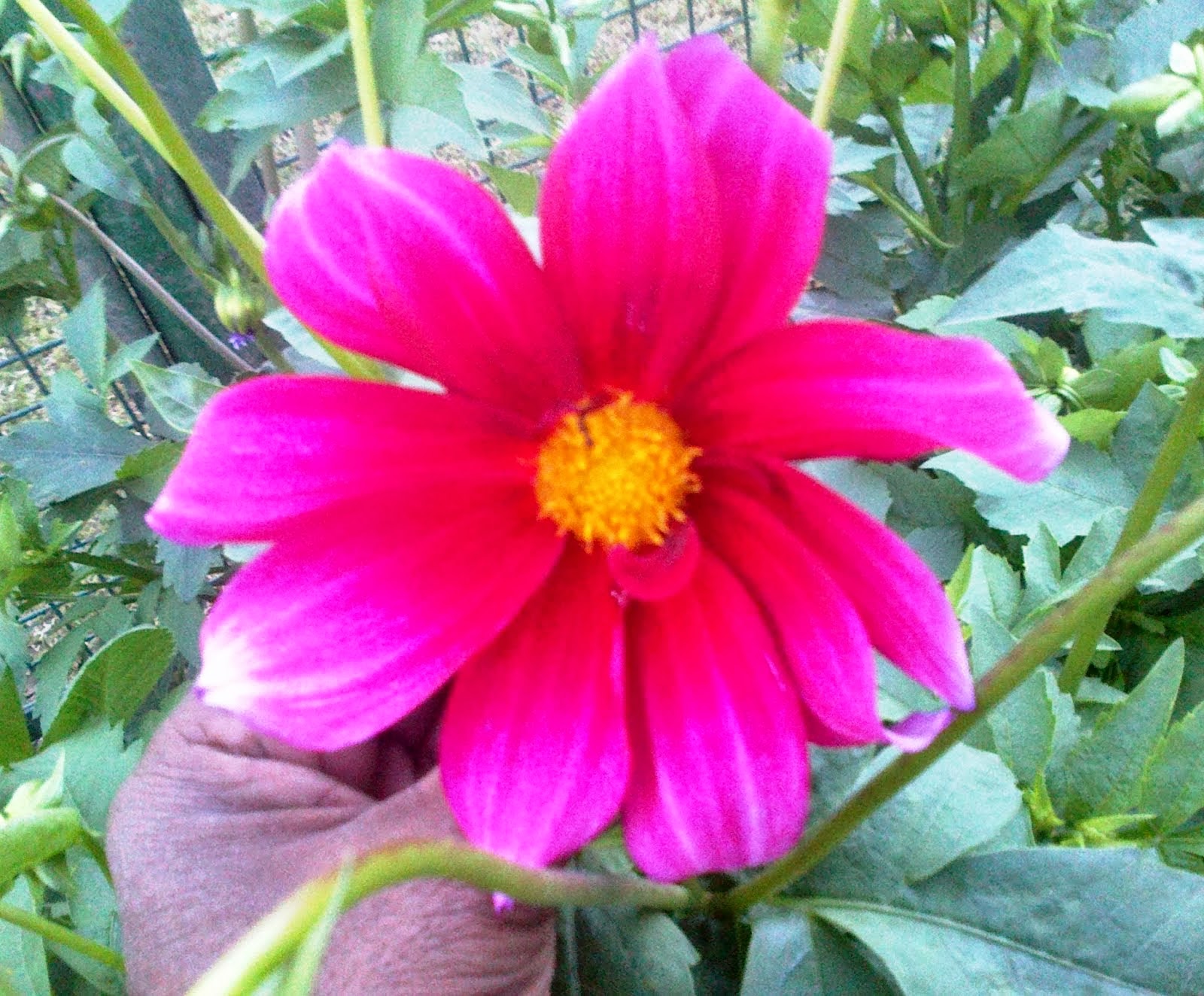


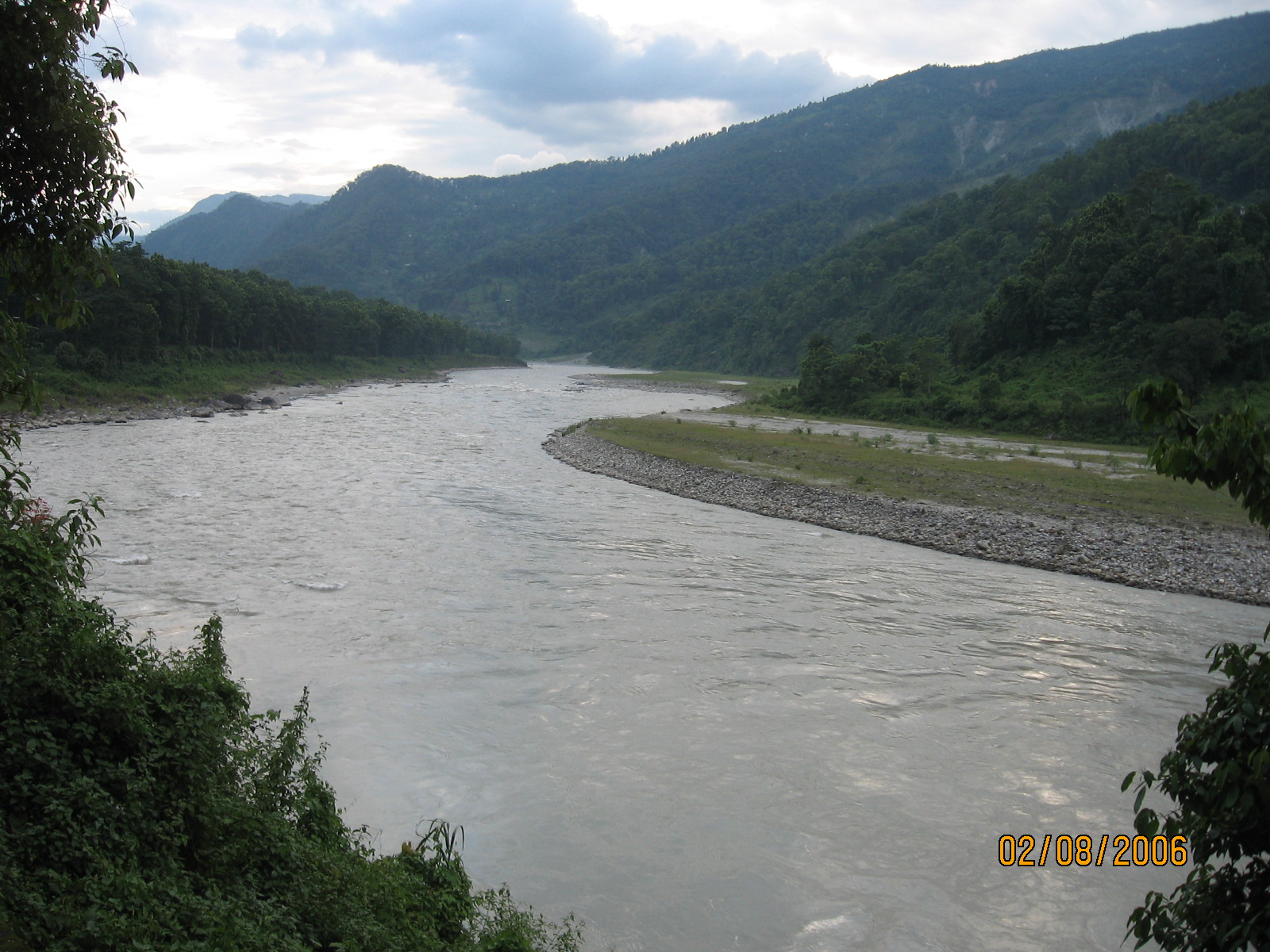

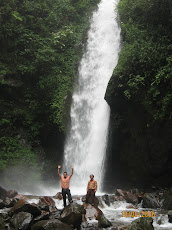
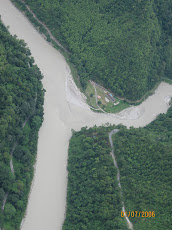
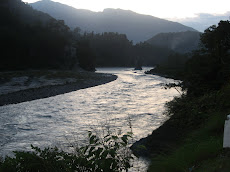
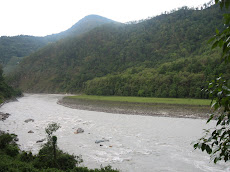
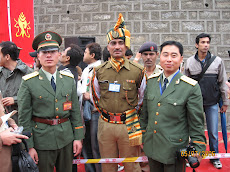
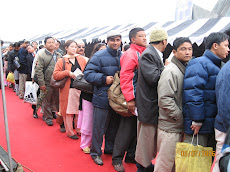
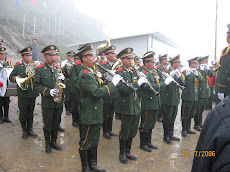

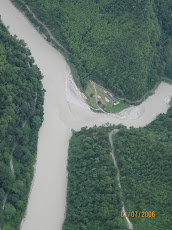
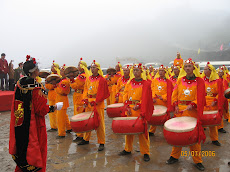
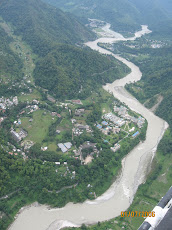

.JPG)


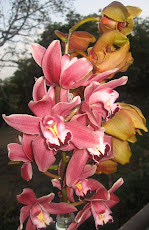


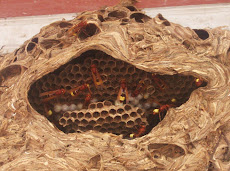


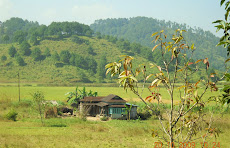
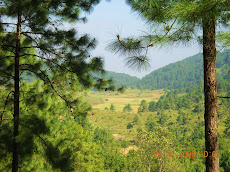


.jpg)


.JPG)
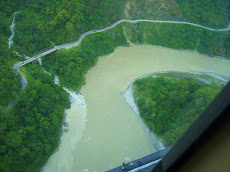








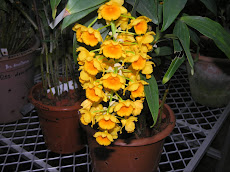
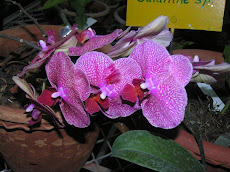


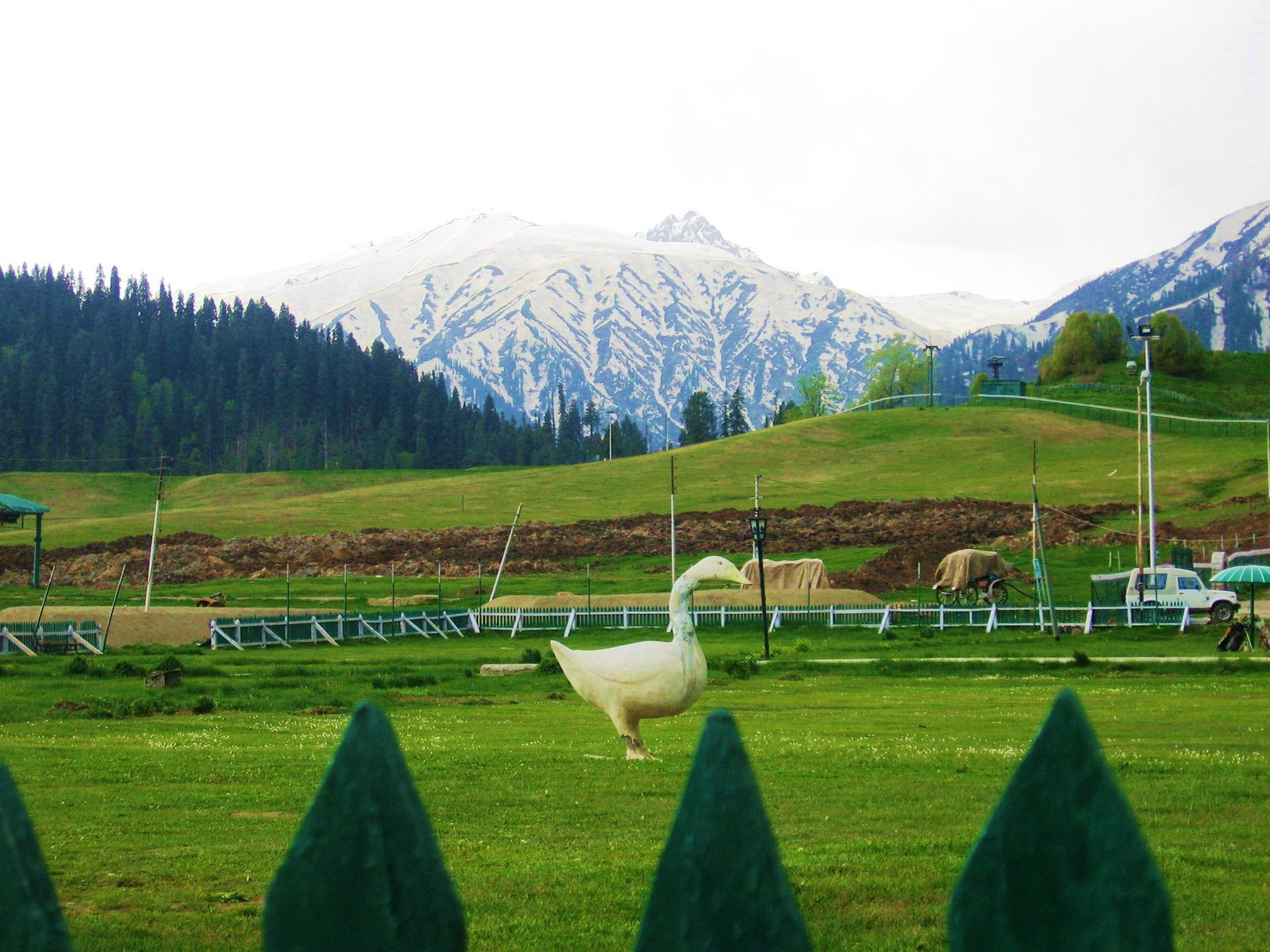
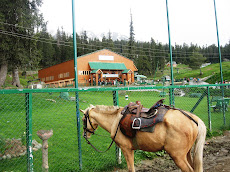
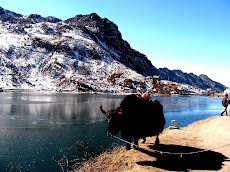



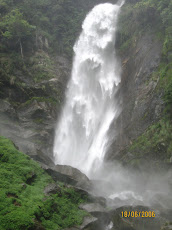
.JPG)


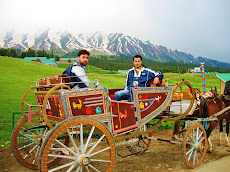


.JPG)