





The Oxford Dictionary describes a corrupt person as dishonest, especially, the one using bribery. It has been rightly considered an immoral activity.
(2) If we are to elaborate further, corruption to this author means deviation or distortion from an established, expected or a desirable path. Basically, he would like to sound normative while making an attempt to analyse an inseparable dragon of this sort. Meaning thereby, what ought to be, becomes infructuous vis-à-vis what it is. This is why it becomes a difficult, if not impossible proposition to detect and pinpoint such an unfair means.
(3) It is said that corruption has become a non-issue. A thinking on these lines perhaps does not mean that one is in favour of corruption. It also refers to a kind of, or apparent helplessness about this all pervading, monstrous and cancerous malaise.
(4) Corruption, per se, may not only refer to a practice of giving and accepting money for a normal, day to day work. It also has a dangerous combination of cash as well as kind. In addition, there may be, or there are individuals, who neither take cash nor allow any perceptible flow of goods into their household but they may resort to a corrupt means of invisible kind. Still there are people who are different from the lot described. Such persons, by their ‘honest’ looking deeds may guarantee inputs in cash or kind to others, thus ensuring for themselves, a position or a rank not normally possible to get through the fair means. Besides, they also succeed to build a good, enduring and usable image.
(5) Another group of individuals may not be habitually corrupt but they definitely fall in the category of occasionally corrupt. By these parameters, I suppose, it would perhaps be impossible to locate an extremely fair and honest person. While one is ready to express concern against such an unworthy practice, it would be safe to state that both in developing and developed economies, corruption exists in some form or the other and that it would be difficult, if not impossible to uproot such a perpetual malady. One can, however, always hope to minimise its impact.
(6) If one digs into our glorious history, Kautilya’s Saptanga theory or the theory of seven elements of state threw sufficient light on the conduct of the Amatyas (encompassing the Ministers and the Officials). They were required to be Dharmopashuddha (morally and ethically pure), Arthopashuddha (honest in financial matters) and Charitropashuddha (of good and pure character). Some other virtues, according to Kautilya, necessary for a person to serve as a state official were- free from all vices, a person of infallible memory, friendly nature, wisdom, patience and endurance.
(7) On the other hand, Ziauddin Barani, a notable historian and political thinker of the Tughluq dynasty opined that the Sultan (king) must rely on the learned, experienced and well-wishing Wazirs (Ministers) and Counsellors. He has prescribed 24 Nasihats (advices) for an ideal Sultan. One of the Nasihats as given in his scholarly work, Fatwa-i-Jahandari, pertains to appointing just, honest, truthful, reliable and intelligent officers. He was of the considered view that the king should appoint officers who do not accept bribes or presents or accede to recommendations and that the revenue collectors will always refrain from misappropriation of revenue.
(8) Generally it is observed that corrupt people are by and large competent and the mere fact that they outnumber the honest, they are not only in a position to survive but they also thrive beyond imagination. When we make a premise of this nature, we do not mean to say that the honest persons are incompetent. But it is also a fact that those having an unusual mix of integrity and competence, by and large, are troubled and harassed in the most inconceivable ways.
(9) Apart from the mental and semi-physical torture, these ‘marginals’ are, many a time, denied access to the normal facilities, which may appear privileges or perks in the eyes of the ‘mainliners’. This is why, it is often said, good is bad in government or public domain and that rating such as very good and outstanding are more often than not managed by unfair means.
(10) It may not be out of place to mention the timely observations of the Supreme Court in Dev Dutt vs. Union of India & Others (2008,AIR,2513). The apex court ruled that “………………………………………higher posts which are in a pyramidical structure, where often the principle of elimination is followed in selection for promotion, and even a single entry can destroy the career of an officer which has otherwise being outstanding throughout. This often results in grave injustice and heart-burning, and may shatter the morale of many good officers who are superseded due to this arbitrariness, while officers of inferior merit may be promoted”.
(11) In bureaucracy, one also comes across a situation, such as, ‘you show me the person, I will show you the rule.’ As a result, rules and regulations are twisted and partially amended or some times changed altogether to suit a vested interest. When these things do not appear helpful, one indulges into a corrupt means by following the ‘safe’ path of interpretation or drawing inference. Also, oft-repeated modus-operandi is to suggest ‘to read between the lines’. Generally, I help you, you help me, kind of ‘brotherly’ phenomenon comes in the way of delivery of fair and impartial stands, decisions and judgements. AND the actually honest, fair, quiet and non-assertive types continue to suffer at the hands of the self proclaimed honest and competent superiors.
(12) Corruption is found in some form or the other in every sphere, in every country and social system. In a developing economy, it takes a manifest shape or face, in the economies of polar opposite scenario, it may be more prevalent but perhaps with a latent face. While the former may see the use of unfair means at every step, in case of the latter, a certain degree of sophistication may act as a cover, though the stakes may be much higher, involving risks of the bigger magnitude.
(13) No wonder, a country like Bangladesh which is at the lowest rung of development, figures right on top when it comes to the menace of corruption. This is despite the stupendous success of the micro-credit phenomenon triggered and guided by the Nobel Laureate, Md. Yunus. India, does not lag behind, either. The Transparency International in its latest release has considered the world’s largest and the most vibrant democracy as the 83rd most corrupt country in the world. This is unfortunately in the backdrop of the unprecedented positive impact of the Right to Information Act and more vigilant consumerism.
(14) While the country has a sizeable chunk of black money and soaring Hawala transactions, $ 1.5 trillion worth of deposit (seven times the size of the union budget) has been reported to be in the safe custody of the banks of Switzerland and other countries since the year 1947. A disclosure to this effect was made by Professor R.Vaidyanathan of IIM, Banglore while delivering the Nani Palkhiwala Memorial Lecture on “Tax Heavens and the Illegal Wealth of India” at Chennai on 29/8/09 (The Hindu, New Delhi, dated 30th August, 2009). Further,our populous country has allegedly lost more than $ 20 billion every year in this way during 2002-06 alone.
(15) Apart from the money that living tax evaders may have kept therein, a large amount cannot be retrieved because those who managed to open such ‘safe’ accounts (presumably by taking undue advantage of our lax tax collection machinery) have died without informing their family or heirs of all relevant details. Needless to say, with the passage of time, the bank in question freezes or swallows such deposit. There is also an apprehension that these tax havens are used as a source of funding for the spying, terrorist, insurgency and other undesirable activities.
(16) The prevailing practice of subsidized food grains, seeds, fertilizers, kerosene oil and other essential items not reaching the intended beneficiaries also causes overwhelming concern, apart from adversely impacting economic growth and giving a set back to the efforts to build a just, fair and equitable society. Also the pitiable and rampant habit of late submission of the progress and utilization certificates, diversion of funds for non-targeted spheres, plea for revised estimates subsequent to time overrun etc go on to consume a large chunk of our scarce resources which can be better utilised in many other priority sectors.
(17) Enough institutional mechanism is available in the country to prevent and check corruption, right from the Vigilance Cells and Anti-Corruption Bureaux at the state level to the Chief Vigilance Officers and the CBI at the Central level. Unfortunately, not all of them perform their tasks as per mandate and not every one is reported above board. In order to plug the loop hole, the central government has recently decided to set up 71 CBI Courts. Expected to function as model courts, these are to hold day to day proceedings and avoid unnecessary adjournments.
(18) After so much of hue and cry, the institution of the Lokayukta has seen the light of the day only in a handful of states and not all of them are in a position to show their teeth. Either they are helpless, or rendered useless by non-cooperative attitude of the government of the day. The preliminary requirement of giving permission to prosecute a public servant takes months and years. The institution of the Lokpal, supposed to cover the PM also has not become a reality despite the frequent confabulations about it right from the date of lifting of the Emergency. In such a dismal scenario, the honest and dedicated officials toil and suffer while the corrupt and the inefficient continue to have a field day. Resultantly, the habit of corruption continues to pose a bigger threat to the country than external aggression or internal disturbance of the kind of the Left Wing Extremism.
(19) Corruption is something that captures the imagination of everyone but very little has been done to ‘catch the big fish’ in the opinion of our simple, learned and honest PM. Addressing the 17th Biennial Conference of the CBI, Anti-Corruption Bureaux and the Vigilance agencies recently, he called upon them to accord priority to the rapid, fair and accurate investigation of corruption in high places. They were expected to act firmly, swiftly and without fear or favour in view of the constitutional and legal protection available to them. He also called upon them to look at themselves critically and introspect deeply to fine tune the functioning of their organisations.
(20) The PM has also gone to the extent of admitting that the fear of harassment and damage to reputation makes the officials unduly timid and slow, thus rendering the whole government machinery ineffectual. Also expeditious conduct of trials was as important as was hastening the pace of the investigations. While on the one hand, one can see a glimmer of hope, on the other, clear sign of desperation is visible at a time when the Second Administrative Reforms Commission has submitted its wide ranging recommendations so that the poor are not disproportionately hurt because of corruption and carelessness.
(21) In addition, the Minister of State for Personnel, Administrative Reforms & PMO, while inaugurating a conference of secretaries of administrative reforms departments of states has also admitted that the Indian bureaucracy is inefficient and corrupt. He seems to have favoured a focused approach to implement the recommendations of the Second Administrative Reforms Commission within a realistic time frame and also an amendment in the RTI Act with a view to ensure more transparency in public administration. Is it not ironical that the same “inefficient and corrupt” lot is expected to examine the recommendations for improving the efficacy of the system, reduce corruption and ensure transparency?
(22) Similar conduct is expected from the judiciary, if we are to follow the candid and meaningful write up of Justice V.R. Krishna Iyer in the Hindu (Dt.31st Aug.2009) on the stalemate over the issue of declaration of assets. According to him, ‘The best judge has nothing to hide and everything to discover without fear or favour and do justice to everyone, be he high or humble, without affection or ill-will’. He goes on to add that the real cause of the pathological arrear syndrome is the absence of accountability and transparency and that creation of more courts would result into more arrears and more lazy judges. To him, ‘one capable judge with sound social philosophy is a better instrument of justice than a dozen mediocre, indolent ignoramuses who will merely add to the adipose of the system.’
(23) The mere fact that the reluctant judges at last gave in to the public pressure pertaining to declarations concerning disclosure of assets and the ruling of the Delhi High Court (The Hindustan Times, New Delhi dated 3rd September 2009) that the judicial power was accountable to the Constitution of India, proves the logic and necessity of transparency in public life. The judgment in question is unprecedented as this is the first time that a High Court has decided on a matter involving the Supreme Court Judges. Thus it has been maintained beyond doubt that the office of the Chief Justice of India did not fall outside the purview of the RTI Act.
(24) The enormous power available to the Judiciary, Revenue collectors, Police, Municipal bodies etc. has not succeeded in reducing the might of the lower level officials bent upon behaving like extortionists rather than protectors and the regulators. The people in general and the captains of the industry in particular too immensely contribute to the mess by showing their ever willingness to pay at every step, while resorting to short cuts and thus undermining the compliance of the rule of law.
(25) The Officers in general not only suck systematically and consistently the mammaries of our welfare state during their long and eventful service career, they also do not refrain from locating and finding a lucrative position in some commission or the ‘public service’ body, subsequent to their superannuation. In this way, the phenomena of dismal performance combined with non-accountability perpetuates at the cost of the paramount interest of the poor, ignorant and toiling masses.
(26) It goes without saying that barely five per cent bureaucrats are honest as on date and that together with another ten per cent of their corrupt, yet efficient brethren, they ensure functioning of the system. Is’nt the time ripe to downsize the bureaucracy and to recognise and motivate the non-descript looking honest, hard working and upright bureaucrats with a view to weed out corruption and complacency?.
(27) One cannot ensure purity in the doldrums of the public domain. But one can always make an attempt to reduce or to minimise the use of unfair means. Or shall we believe an experienced, qualified and non vocal urban housewife when she says ”Corruption will end only when the universe will come to an end. Only God is honest. Everyone else is corrupt”?.
Tuesday, September 8, 2009


Sunday, August 2, 2009
LIFE IN A SLOW MOTION
Many times down the history, it has been observed that taking a break or diverting from the main line proves productive. Even a thought along these lines has the propensity to provide necessary solace. With such a resolve, an attempt is being made to remember a recent anecdote concerning a popular means of transport that not only binds but also unites
I begin with the premise that too much of air travel followed by occasional journeys by fast moving trains in the artificial and air-conditioned settings had got into my nerves. An opportunity to avail of movement in a slow motion, therefore, turned out to be not only educative but it also had definite shades of a potential eye-opener. At the end of the day, one gained, recovered, felt satisfied as also rejuvenated.
When I got into the historic Darjeeling Mail in the evening of 7th July at the NJP station, the train was very much on time. Subsequently, it became ‘behind schedule’ by forty five minutes. One felt rather happy as the train was originally to reach my intended destination of Burdwan at the odd time of 4.00 hours. Rather isolated yet congenial atmosphere inside the A.C. compartment led to a deep slumber of roughly four and a half hours.
While I was in the process of attending a call of nature at the unearthly hour of 3.15, the silence of the fast moving train was suddenly broken by the desperate utterances of a middle aged Sardar Upjit Singh, who seemed to have over slept and missed, in the process, getting down at Malda between 2 to 2.30 hours. I could do nothing except to sympathise with him. Apparently, his business fatigue during the course of the previous day had taken its toll. He had, perhaps unknowingly begun cherishing life in a slow motion, some thing, I too had aspired for long.
We extend a helping hand to each other while getting down at Burdwan at dawn. My immediate hunch was to look for a connecting train for Dhanbad/Gomoh/Kodarma. Upjit’s immediate priority, however, was to move as fast as possible in the reverse direction. On getting the desired information I began pulling my bag towards the ticket counter on the rear side of the Platform no. 1. The ‘Maldavian’ Sardarji, however, appeared lost in the partial darkness of now crowded Platform No. 6, perhaps, not to surface again.
An irritating standing posture of twenty minutes in a que under somewhat unhygienic conditions, ensured me a ticket for Gomoh on payment of Rs. 28 only as compared to Rs. 400, I had paid for the preceding journey. Once again I dragged and lifted my bags to Platform No.3 and began my imminent wait in a slow and certain manner for the Shuttle scheduled to depart for Asansole at fifteen past five hours. In view of the fact that I had brushed my teeth inside the clean bathroom of Darjeeling Mail, I richly deserved a steaming hot Rs. 3 a cup of boiled C.T.C. tea. Some cookies packed generously by Dawney gave me the much needed company. I did doze off a couple of times while glancing through the morning Kolkata edition of the Times of India. I also learnt a bit about the glitterati of the ‘den’ of the Bhadra-Lok and the Babu Moshais.
Compared to the railway stations one had seen in the recent past, this one looked spic and span. The ramp connecting the platforms was a welcome development. It once again strengthened my resolve in the dictum “slow and steady wins the race”
Passengers in general showed exemplary behaviour when the daily Shuttle arrived at the scheduled time. Hardly any one ran helter skelter. Adequate time was available to refill drinking water bottles and procure pouches of Uncle Chipps, Kurkure or Lays to take care of the immediate needs of the tiny tots and the elderly alike. It was after a long gap that I was bestowed with an opportunity to avail of a short distance daily train having robust wooden seats. The non-A.C. compartment, in addition, had sufficient space on the racks above.
In no time, the train began moving. The view of green paddy fields having Palm, Mango and Pipal trees here and there, looked very soothing even to my sleepy eyes. My drowsy appearance received a lift on suddenly spotting the glory of the rising sun at the end of the horizon. It was akin to dark pink sight of the colour of a Flamingo which got transformed into a light pink, irresistible colour in a matter of seconds. The scenario was so pleasing that I desired to have a correct mix of the feeling it from within as also to capture the wonderful spectacle into my tiny Firang camera. A couple of memorable shots were possible primarily due to slow movement of train. I may confess honestly that I received unavoidable set back between the stations of Talit and Khana when the all pervading and unassailable monarch of the day (an ultimate source of all energies) played hide and seek in view of occasional emergence of the houses, trees and electric poles.
My photographic forays bore a distinct comparison with a similar encounter with the Sun God when I saw him emerging at Taki (North 24 Parganas) from the
I give myself a break to swallow a tablet and a capsule prescribed to regulate my ‘jumping’ heart and fluctuating B.P.. At Galsi Station (5.45 hours) an old couple make a quiet entry. Their innocent looks appeal to me. As a matter of courtesy I shift my bag so as to make them comfortable. My inquiry reveals that the old man by the name of Bamkin Chandra Chattopadhyay was to get down at Paraj Station (a 20 minute journey) while Konkana Sen Mukhopadyay, his decently dressed life partner was to continue upto Mankar. Latter was visiting her daughter who had recently become a proud mother of a chubby male child.
It further transpired that the public transport system in the area was available at cheaper rates but a journey by a train was considered more comfortable, relatively cheaper and was devoid of the Goondas and the Dadas who regularly throng the dirty and congested bus stands. Further, possibility of a theft and harassment was also less in the Shuttle, remarked a bubbly and youthful Aparna Sen before detraining in a 'filmy' style at Managarh.
On completion of an hour of a slow and congenial journey, the train touched the crowded platform of Rajbandh. A sizeable number of passengers pushed themselves into the compartment even though it was full to capacity by conventional standards. Nevertheless, the whole experience was becoming lively as I managed to pick up a tale or two concerning the establishment of Durgapur Steel Plant, located close by. Such ‘temples’ of modern and resurgent India set up in the Fifties of the Twentieth Century were the brainchild of a sanguine and dynamic Pandit Nehru.
A group of young and cheerful college students who supplement the account of
In the meanwhile, I divert my attention to catch a view of the moving train from outside when I notice a bend in the alignment. We are getting closer to Kali Pahari. I now notice that Sun has moved further up. It was no longer pink and soothing, rather it was hot and blazing. The gradual reduction in the number of passengers inside the bogie too gave an impression that our imminent destination of Asansole was to be reached in a matter of seconds. Sharp at 7.15 hours we manage to touch the Platform Number 3 of Asansole. Like at Burdwan, there was no hue and cry. Decent and polite behaviour on the part of poor looking passengers amply reflected the richness and magnanimity of their hearts. A few of them lend hand willingly when I attempt to lift my bags.
In retrospect, the whole journey was slow but rewarding. It refreshed and enriched as well. While carefully putting a piece of crisp Son Papdi into my hungry mouth, I begin preparing for the next part of journey by another slow motion, yet, lively Burdwan-Hatia Passenger. It is raining cats and dog when I make myself comfortable on an empty bench of the platform.Instead of exclaiming 'Oh it is raining!', I am prompted to utter- 'Aah, it is raining!'. This, perhaps, sums up my spirit.
Thursday, July 30, 2009
AN UNTITLED PIECE (19/9/09)
After almost two years, he gave a tinkle to share my moment of joy. Alas! I was away. On my return, I rang him up. Free and frank exchange of information followed. It was refreshing indeed to walk down the congenial memory lane. The time of 7 a.m., the following Sunday was agreed to for having a face to face intellectual intercourse.
2. Though I was up and kicking by 6.30 a.m., owing to overnight stay of a guest (leading to unbearable pressure and a rush at the only loo of the house), I could establish the first contact with the ever smiling and jovial Mipin, around twenty past seven. He appeared sleeping to glory and apparently showed a relaxed attitude when it came to punctuality on a ‘Mother’ of Holidays- Sunday. Ultimately, we met under a gigantic Melia Indica near a ‘Three in One’ religious ‘shop’ in a non-descript end of one and only Nehru Park. The revised time of 7.40 a.m. became ten to eight in the true tradition of the IST (Indian Stretchable Time!).
3. The almost six feet frame of Mipin, in a youthful attire, was visible from a distance. He had added, however, a pouch to his once impressive physique due to what he claimed ‘the side effects of some unconvincing medication’ prescribed by a ‘renowned’ physician. We smiled, shouted like kids and blamed each other for frittering away time. Soon it was mutually agreed to settle the scores by gentle shaking of hands and hugging (not of 377 kind).
4. The ritual of meeting had a solid kick start with a visit to the religious place in question. It was a ‘joint’ specialising more in bashing of women, opium consumption and its shameless facilitation by the vagabond, self proclaimed priests as opposed to the expected spiritual or pretended religious activity they are supposed to indulge in, in view of the publicised ‘Prachin’ (ancient) status of the temple.
5. As soon as we begin our foray into a bout of brisk walking, a large number of singles, pairs and non-pairs duly guided/ misguided by their impulses, begin passing by. Individuals of various sizes, colours and heights wearing shoes and sandals of a wide variety were thronging this centrally located park.
6. While two groups of teenagers were seen practicing, fine tuning and adding value to their Karate skills, a group of youth drawn from both the sexes was busy in testing its athletic skills in the acute, partially sunny and sultry conditions of July. Not to miss the fanfare, some senior citizens were seen relishing laughter therapy in their own, impressive ways.
7. A further walk of a kilometre gave us a rare opportunity to see an old couple picking up blackberries under a thick canopy. It reminded me of my own sweet and carefree childhood spent in the cosmopolitan, summer capital of erstwhile Bihar. A Firang middle aged plump woman in her figure hugging dress (revealing more than covering) was seen struggling with her lovely Apso puppies. The usual muddy water in the central pool was conspicuous by its absence. Barely, six to eight lotus buds and flowers were adding to the ‘beauty’ of the adjoining pool.
8. Mipin appeared enjoying every moment of the described activities in his unique, unusual style. His joy knew no bounds and he seemed to have entered the hallowed premises of the elusive seventh heaven when I remarked that he had not changed even a bit since the bygone MHA days. Rather, he was successful in adding to his inimitable sense of humour,
if his immediate, impromptu utterances and bits of ‘philosophies’ gave any hint.
9. Sri Hibber, the tall, fair, handsome and not to be missed, retired IG of CRPF was first one to be stopped and greeted by us. Prominently displaying his thick grey moustache, he appeared in true high spirits. Afterall, without looking ‘here and there’, he had completed three rounds of the park situated in the heart of a heartless Delhi.
10. Mipin, thereafter, almost bumped into a dusky, petite and charming Bong eve, who was enjoying her every bit of gentle cat walking while wearing a pair of electric blue hot pants and a sleeveless, semi-transparent polka -dot top. While taking adequate care of her cardio vascular requirements, she looked deeply engrossed in listening to the latest Pop music through an imported ear phone.
11. Within no time, we came across a group of tall hefty men led by the PS to one Minister. Same was followed closely by another combination ‘commanded’ in true military style by the PS to the ruling coalition Chairman. Their ‘regular’ work out had not led to reduction even of a kg of flesh from their bulging waistlines. Nevertheless, Mipin burst into laughter when informed of the presence of a large number of such regular jokers, pseudo walkers or even onlookers in this vast green lung of the city. ‘Appearances are deceptive’, he added, however, without fail.
12. The presence of a Lenin statue in absence of one of Nehru in the park spoke high of our ‘foreign commitments’ years after the disintegration of the USSR and months after loosening of the grip of so called Leftists over the Federal Government.
13. Mipin in the meanwhile, began giving some unsolicited advice in regard to regulating heart and mind. To him, life was to be led lightly without assuming any responsibility. He reiterated his grand plans of getting ‘cleaning’ of his heart done at least twice at official expense, prior to superannuation. He did add that an Apollo Doctor had misled him five years ago to undergo a conventional angiography. In view of his happy go lucky approach, a blockage to the extent of barely eight percent was shown.
14. He claimed to have run away from the hospital sooner than expected at the dead of the night and vowed not to re-enter such high voltage ‘by- pass factories’. I was not shocked to learn that upon being discharged, he drove his vehicle himself. Probably, his life partner is yet to become aware of this interesting and nocturnal medical encounter.
15. Before we close the chapter of heart, we occupy a bench, otherwise reserved for bold and smart pairs. I am advised to take Craetegus Tincture, a Homeopathic drop twice a day. A regular intake of this drop had kept him at a long distance from any Cardiologist during the last five years, he claimed once again in an authoritarian voice. I decided to give it a try to supplement my daily yoga and brisk walk sessions spanning to almost two hours.
16. Having completed the ‘heart to heart’ talk, I enquired about the welfare of his ailing 89 year old mother. He updated me in his true jovial manner. He was heaving a sigh of relief for a few days as his brother, for a change, had reluctantly assumed the onerous responsibility of looking after the octogenarian, yet robust parent.
17. The much awaited icing of the cake came in the form of sudden appearance of Mipin’s well dressed and attractive maid servant(M.S.) when I agreed to have some water and tea at his ‘palatial’ flat. Though his ‘Home Theatre’ failed to live up to expectations, his collection of
books and curio impressed me. When I finished gathering some information pertaining to the educational status of his off springs, the MS walked in gently. She smiled and showed polite manners. In a spur of moment, I uttered a few Nepali words. It hit her well. She responded positively. She was perplexed to hear flawless Nepali from a dark plainsman like me. She believed me when I informed her of my North-Eastern connections.
18. In no time she brought three glasses of plain water for me. A glass of cold water was handed over to Mipin, who appeared ignored, if not ignorant in presence of two Nepalis having the same wavelength. Though I hurriedly finished the hot cup of tea offered in a bourgeoisie cup without even looking at the M.S.(I swear), Mipin, true to his style, narrated my alleged weakness for the M.S. to my ‘strict’ prima donna, who by chance, had managed to catch me on Mipin’s latest mobile. Though, for a moment, my mobility and agility came to a sudden halt, I regained courage to convey to her that the concocted stories emanating from an old ‘mischievous’ friend had to be heard by one ear, to be dropped off instantly by another. She gave an impression as if she was convinced by my explanation.
19. At ten to ten, Mipin made no mistake in quickly seeing me off. While passing through the exit, he showed his two prized pitchers with a sense of pride. He added that these were refilled thrice a day to quench the thirst of his family members. I was amazed to take note of the mutual co-existence of the ultra-modern Home Theatre and the ancient pitcher.
20. While I begin scribbling these lines for posterity in a safe, airy corner of the park under the soothing shadow of a Ficus Infectoria, two crows approach a pool of clean water.Both have a piece of bread stuck to their beaks. Rather innocently, they soak the bread pieces into water and quickly gulp the same. Having done this, they fly to the near by bunch of trees.
21. When I almost make up my mind to depart, the crows make a comeback, this time with a bang. They wet themselves and begin taking bath to beat the temperature of 38 degree celcius. They appear innocent and stress-free while performing the cleaning ritual in the lap of nature unlike the hypocrite creatures that invariably avail of route number 11.I curse myself of having not carried my camera today. But such rare moments need to be felt and enjoyed also, rather than being ‘shot’. I suppose, I should end now. As such, I am surrounded by five to six pairs, ready to take a ‘plunge’ in this safe and lover-friendly zone of the park.
22. By the time, I finally leave, the foot suspension bridge and the mango grove at the another end give a quiet, desolate look. Except for the noise emanating from a miniature grass cutter, the area has the necessary cross ventilation to cool my rising ‘thinking’ temperature. The carefree pairs of yesterdays are not there anymore. Yet it is rejuvenating.
23. My further thought process comes to a distinct halt once being reminded of the scores of heating processes of Macroni & Pasta breakfast, my ‘furious’ prima Dona has been struggling with. While she aspired to serve a decent and changed menu for ‘breaking’ the fast on a
Sunday morning, I once again prove beyond doubt that I am, at times, incorrigible as far as punctuality was concerned. While she gave an impression of being misled for a moment by the innocuous designs of Mipin, she continues to express full confidence about my non-slippery approach when it comes to dealing with individuals from the fair sex.
24. Having thought so, I resume brisk-walking. Soon, I graduate to jogging. Going past the well laid out green trees of Amaltas, Dalbergia Sissod, Tecoma Argentina and Ficus Religiosa, one after another, I gather the requisite courage to face the inevitable, friendly and justified bitterness of my better-half. .
25. To sum up, I propose to pose a question- “Who is not scared of his wife?” An ‘experienced’ person showing a sign of disagreement is certainly lying. He is, perhaps not reflecting the reality in the manner Mipin seems to have mastered over the years, given any situation.
POSTSCRIPT-Readers having sufficient patience, tolerance and perseverance are free to choose any of the following suggested titles for this ‘honest’ piece of prose. If not, they are at a liberty to suggest new ones.
· Happy Go Lucky
· A Breath of Fresh Air
· Sunday, A Fun Day
· A Fantasy Called Mipin OR
· B.S.D.W.(Biwi Se Darne Wala)
May God Bless You
2. Though I was up and kicking by 6.30 a.m., owing to overnight stay of a guest (leading to unbearable pressure and a rush at the only loo of the house), I could establish the first contact with the ever smiling and jovial Mipin, around twenty past seven. He appeared sleeping to glory and apparently showed a relaxed attitude when it came to punctuality on a ‘Mother’ of Holidays- Sunday. Ultimately, we met under a gigantic Melia Indica near a ‘Three in One’ religious ‘shop’ in a non-descript end of one and only Nehru Park. The revised time of 7.40 a.m. became ten to eight in the true tradition of the IST (Indian Stretchable Time!).
3. The almost six feet frame of Mipin, in a youthful attire, was visible from a distance. He had added, however, a pouch to his once impressive physique due to what he claimed ‘the side effects of some unconvincing medication’ prescribed by a ‘renowned’ physician. We smiled, shouted like kids and blamed each other for frittering away time. Soon it was mutually agreed to settle the scores by gentle shaking of hands and hugging (not of 377 kind).
4. The ritual of meeting had a solid kick start with a visit to the religious place in question. It was a ‘joint’ specialising more in bashing of women, opium consumption and its shameless facilitation by the vagabond, self proclaimed priests as opposed to the expected spiritual or pretended religious activity they are supposed to indulge in, in view of the publicised ‘Prachin’ (ancient) status of the temple.
5. As soon as we begin our foray into a bout of brisk walking, a large number of singles, pairs and non-pairs duly guided/ misguided by their impulses, begin passing by. Individuals of various sizes, colours and heights wearing shoes and sandals of a wide variety were thronging this centrally located park.
6. While two groups of teenagers were seen practicing, fine tuning and adding value to their Karate skills, a group of youth drawn from both the sexes was busy in testing its athletic skills in the acute, partially sunny and sultry conditions of July. Not to miss the fanfare, some senior citizens were seen relishing laughter therapy in their own, impressive ways.
7. A further walk of a kilometre gave us a rare opportunity to see an old couple picking up blackberries under a thick canopy. It reminded me of my own sweet and carefree childhood spent in the cosmopolitan, summer capital of erstwhile Bihar. A Firang middle aged plump woman in her figure hugging dress (revealing more than covering) was seen struggling with her lovely Apso puppies. The usual muddy water in the central pool was conspicuous by its absence. Barely, six to eight lotus buds and flowers were adding to the ‘beauty’ of the adjoining pool.
8. Mipin appeared enjoying every moment of the described activities in his unique, unusual style. His joy knew no bounds and he seemed to have entered the hallowed premises of the elusive seventh heaven when I remarked that he had not changed even a bit since the bygone MHA days. Rather, he was successful in adding to his inimitable sense of humour,
if his immediate, impromptu utterances and bits of ‘philosophies’ gave any hint.
9. Sri Hibber, the tall, fair, handsome and not to be missed, retired IG of CRPF
 was first one to be stopped and greeted by us. Prominently displaying his thick grey moustache, he appeared in true high spirits. Afterall, without looking ‘here and there’, he had completed three rounds of the park situated in the heart of a heartless Delhi.
10. Mipin, thereafter, almost bumped into a dusky, petite and charming Bong eve, who was enjoying her every bit of gentle cat walking while wearing a pair of electric blue hot pants and a sleeveless, semi-transparent polka -dot top. While taking adequate care of her cardio vascular requirements, she looked deeply engrossed in listening to the latest Pop music through an imported ear phone.
11. Within no time, we came across a group of tall hefty men led by the PS to one Minister. Same was followed closely by another combination ‘commanded’ in true military style by the PS to the ruling coalition Chairman. Their ‘regular’ work out had not led to reduction even of a kg of flesh from their bulging waistlines. Nevertheless, Mipin burst into laughter when informed of the presence of a large number of such regular jokers, pseudo walkers or even onlookers in this vast green lung of the city. ‘Appearances are deceptive’, he added, however, without fail.
12. The presence of a Lenin statue in absence of one of Nehru in the park spoke high of our ‘foreign commitments’ years after the disintegration of the USSR and months after loosening of the grip of so called Leftists over the Federal Government.
13. Mipin in the meanwhile, began giving some unsolicited advice in regard to regulating heart and mind. To him, life was to be led lightly without assuming any responsibility. He reiterated his grand plans of getting ‘cleaning’ of his heart done at least twice at official expense, prior to superannuation. He did add that an Apollo Doctor had misled him five years ago to undergo a conventional angiography. In view of his happy go lucky approach, a blockage to the extent of barely eight percent was shown.
14. He claimed to have run away from the hospital sooner than expected at the dead of the night and vowed not to re-enter such high voltage ‘by- pass factories’. I was not shocked to learn that upon being discharged, he drove his vehicle himself. Probably, his life partner is yet to become aware of this interesting and nocturnal medical encounter.
15. Before we close the chapter of heart, we occupy a bench, otherwise reserved for bold and smart pairs. I am advised to take Craetegus Tincture, a Homeopathic drop twice a day. A regular intake of this drop had kept him at a long distance from any Cardiologist during the last five years, he claimed once again in an authoritarian voice. I decided to give it a try to supplement my daily yoga and brisk walk sessions spanning to almost two hours.
16. Having completed the ‘heart to heart’ talk, I enquired about the welfare of his ailing 89 year old mother. He updated me in his true jovial manner. He was heaving a sigh of relief for a few days as his brother, for a change, had reluctantly assumed the onerous responsibility of looking after the octogenarian, yet robust parent.
17. The much awaited icing of the cake came in the form of sudden appearance of Mipin’s well dressed and attractive maid servant(M.S.) when I agreed to have some water and tea at his ‘palatial’ flat. Though his ‘Home Theatre’ failed to live up to expectations, his collection of
books and curio impressed me. When I finished gathering some information pertaining to the educational status of his off springs, the MS walked in gently. She smiled and showed polite manners. In a spur of moment, I uttered a few Nepali words. It hit her well. She responded positively. She was perplexed to hear flawless Nepali from a dark plainsman like me. She believed me when I informed her of my North-Eastern connections.
18. In no time she brought three glasses of plain water for me. A glass of cold water was handed over to Mipin, who appeared ignored, if not ignorant in presence of two Nepalis having the same wavelength. Though I hurriedly finished the hot cup of tea offered in a bourgeoisie cup without even looking at the M.S.(I swear), Mipin, true to his style, narrated my alleged weakness for the M.S. to my ‘strict’ prima donna, who by chance, had managed to catch me on Mipin’s latest mobile. Though, for a moment, my mobility and agility came to a sudden halt, I regained courage to convey to her that the concocted stories emanating from an old ‘mischievous’ friend had to be heard by one ear, to be dropped off instantly by another. She gave an impression as if she was convinced by my explanation.
19. At ten to ten, Mipin made no mistake in quickly seeing me off. While passing through the exit, he showed his two prized pitchers with a sense of pride. He added that these were refilled thrice a day to quench the thirst of his family members. I was amazed to take note of the mutual co-existence of the ultra-modern Home Theatre and the ancient pitcher.
20. While I begin scribbling these lines for posterity in a safe, airy corner of the park under the soothing shadow of a Ficus Infectoria, two crows approach a pool of clean water.Both have a piece of bread stuck to their beaks. Rather innocently, they soak the bread pieces into water and quickly gulp the same. Having done this, they fly to the near by bunch of trees.
21. When I almost make up my mind to depart, the crows make a comeback, this time with a bang. They wet themselves and begin taking bath to beat the temperature of 38 degree celcius. They appear innocent and stress-free while performing the cleaning ritual in the lap of nature unlike the hypocrite creatures that invariably avail of route number 11.I curse myself of having not carried my camera today. But such rare moments need to be felt and enjoyed also, rather than being ‘shot’. I suppose, I should end now. As such, I am surrounded by five to six pairs, ready to take a ‘plunge’ in this safe and lover-friendly zone of the park.
22. By the time, I finally leave, the foot suspension bridge and the mango grove at the another end give a quiet, desolate look. Except for the noise emanating from a miniature grass cutter, the area has the necessary cross ventilation to cool my rising ‘thinking’ temperature. The carefree pairs of yesterdays are not there anymore. Yet it is rejuvenating.
23. My further thought process comes to a distinct halt once being reminded of the scores of heating processes of Macroni & Pasta breakfast, my ‘furious’ prima Dona has been struggling with. While she aspired to serve a decent and changed menu for ‘breaking’ the fast on a
Sunday morning, I once again prove beyond doubt that I am, at times, incorrigible as far as punctuality was concerned. While she gave an impression of being misled for a moment by the innocuous designs of Mipin, she continues to express full confidence about my non-slippery approach when it comes to dealing with individuals from the fair sex.
24. Having thought so, I resume brisk-walking. Soon, I graduate to jogging. Going past the well laid out green trees of Amaltas, Dalbergia Sissod, Tecoma Argentina and Ficus Religiosa, one after another, I gather the requisite courage to face the inevitable, friendly and justified bitterness of my better-half. .
25. To sum up, I propose to pose a question- “Who is not scared of his wife?” An ‘experienced’ person showing a sign of disagreement is certainly lying. He is, perhaps not reflecting the reality in the manner Mipin seems to have mastered over the years, given any situation.
POSTSCRIPT-Readers having sufficient patience, tolerance and perseverance are free to choose any of the following suggested titles for this ‘honest’ piece of prose. If not, they are at a liberty to suggest new ones.
· Happy Go Lucky
· A Breath of Fresh Air
· Sunday, A Fun Day
· A Fantasy Called Mipin OR
· B.S.D.W.(Biwi Se Darne Wala)
May God Bless You
Wednesday, July 22, 2009
Literally on Cloud Nine
The place is Departure Lounge of Jaipur Airport. Flight number CD 492 for Delhi scheduled to arrive at 21.40 hours is nowhere in sight. I am the first passenger to have been given security clearance. I came here out of my own choice, so that I could relax, ponder over the marvellous paintings and hoardings to interpret the essence of Rajasthan and that I could also scribble a few lines about the mesmerising charm of the Pink City and its erstwhile feudal surroundings.
Waiting here, I am reminded of a word of caution by a dear colleague that I should not be surprised if I land up spending rest of the night in the irresistible Rambagh Palace Hotel, owing to further delay of the hopping flght from Bombay.
Each visit to this enchanting and planned city compels me to think about our rich cultural heritage and the sincere efforts to preserve it in view of the onslaughts of the so-called modern civilisation. Ever since I came here first in 1984, rapid changes have been noticed. Yet, it remains as attractive to a person from the East or West, as it was, may be, fifty years ago.
The time now is 22.15 hours, yet, there is no sound of the flying machine touching the quiet and serene run way of the Pink City. The solitude of the departure lounge is suddenly broken by an announcement that the passengers travelling by CD 492 are requested to proceed for the security check up. I heave a sigh of relief. Upon a visit to the 'rest room', it is a pleasing sight to see a beautiful young foreigner with her chubby infant making a hurried entry. Further, the appearance of a naughty boy in the que enlivens the atmosphere. Slowly and gradually, other haggard passengers (majority of them half-asleep) also follow suit.
A deafening noise draws the attention of all. It is 22.45 hours. The plane appears to have finally landed from the Mayanagari. Not to play further with the sentiments and sensibilities of the passengers, their friends and associates, a loud announcement confirms it. We all pick up our belongings and proceed like nursery kids in a straight line towards the tarmac.
The whole air-strip is beautifully lit. Its beauty is enhanced by the gentle and cool breeze. Getting fresh air is more than a welcome and refreshing feeling these days. It helps in overcoming the chronic fatigue syndrome inherited during the day.
Once inside the flying machine, one comes across the cold, immune and official reception of the hefty and heavily made-up hostesses.
When light is dimmed, I attempt a nap but I fail. An effort to browse through a newspaper and a periodical also is an exercise in futility. The flight to Delhi is a relatively short affair of barely thirty minutes. A walk down the aisle is, therefore, completely ruled out.
My boredom gets over with the sight of sparkling and twinkling lights of the historic city of Delhi. The Qutub Minar, Red Fort, Humayun Tomb, India Gate, Lotus temple, all present a marvellous and breath-taking sight. One wishes that the aircraft should not land and that my visual romance with the monuments, structures and flora of Delhi continues. An announcement in English, followed by an atrocious anglicised version in Hindi, however, shatters my wishes.
Once on the ground, it is a long wait for the luggage. There after, I begin searching for the vehicle. I find it ultimately but as expected, the driver is traceless. Who knows, he may be immersed in playing cards or smoking like a chimney!
It is well past midnight when I reach home. The call-bell disturbs the slumber of my wife, who opens the door with the usual 'sound and fury', while my son is found sleeping to glory. The element of displeasure on the part of my life partner is a momentary affair. She loses no time in quickly grabbing the sparkling flight dinner packet, which I often ‘save’ for her.
While she is fully engrossed in getting the gastronomical delights, I jump onto bed, touch my son, feel his innocent face, his quiet breathing and hit the pillow.
The stirring sojourn with Jaipur is over. One is reminded of the ‘black’ Monday after a well spent, cheerful and meaningful Sunday. I close my eye-lids while thinking of the inevitable encounter with the files, letters, faxes, endless telephones, demanding bosses (pushing you often in caught-in-cross-fire kind of situations), over-expectant colleagues, irresponsible peons and last but not the least, the defiant struggle of we DONKEYS, ‘fond’ of working in company of monkeys (of North Block).
Saturday, July 18, 2009
FAIRYTALE SIKKIM
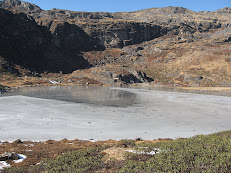
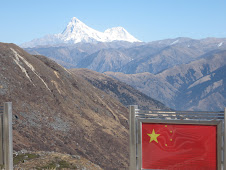
This tiny North-Eastern state, wedged in between Bhutan, Tibet and Nepal, is ensconced in the folds of the majestic Himalayan range. Its size (7096 square kms) belies its varied diversity, whether it is to do with its climate, its flora and fauna or its colourful mix of people. It is one of the three bio-diversity hotspots of the country and one of the twenty six such privileged spots in the world. It is also a veritable treasure house of some of the world’s most beautiful flowers, birds, mammals, streams, lakes, peaks and waterfalls.
Not surprisingly, therefore, Sikkim has been attracting the visitors and tourists from all over the world. Guru Padmasambhava, the erstwhile Prince and a Tantric scholar of the ancient and distinguished Nalanda University of Bihar, is reported to have visited this Shangrila in the 8th century. He meditated in four of Sikkim’s caves, each located in it’s four corners. Having accomplished that, he delivered his sermons at Tashiding, the holiest monastery of Sikkim,
Sikkim was first inhabited by the Lepchas of the Rong Migyit race. In the 15th Century they interacted with the Bhutia tribe of the Kham area of Tibet. After some deliberations between the Lepchas and the Bhutias, a Blood Brotherhood Treaty was signed at Kabi-Longchok in 1641 in North Sikkim. It paved the way for the establishment of the one and only Namgyal Dynasty of Sikkim by the Bhutias during the period1642 to 1975.
Much water has flown down the Teesta, Rangeet, Rathongchu and Ranikhola rivers since Sikkim joined the mainstream of India in May 1975. From less than 50,000 tourists in 1993-94, impressive figures of 3.60 lakh tourists were recorded by March 2007.
Keeping in view the immense potential and prospects for the tourism sector in Sikkim and realizing its growing contribution to the state economy, a Tourist Comment Book was introduced in early 2005. This is regularly filled-in by the tourists who pen positive comments on the performance of the Department and the stakeholders, thus giving useful feedback for fine tuning and improvement. In addition, the Secretary and senior officers have an interface with the tourists in the Information Centres, Wayside Amenities, tourist hubs and the head office from time to time, to get first-hand opinions and complaints, if any. The Secretary, also occasionally holds a tourist “darbar”, A feedback from is regularly circulated to tourists, explaining certain do’s and dont’s, as well as maintaining safe distance from certain strategic locations and respecting the ecological vulnerability of the state. An attempt has been made recently to record and document the impressions of a select group of tourists.
Pratim Chowdhury of Kolkata, who came to Sikkim with his better half and two off springs, has visited the State about thirty times and would like to come again. He organized a Motor Rally in 1994 from Kolkata to Gangtok, visited almost all places, including Tsomgo Lake, and thoroughly enjoyed the Yak ride. The Chowdhuries found Gangtok soothing and comfortable. However,in their opinion, the conversion of Siniolchu Lodge into a Circuit House should not have happened.
M K Banerjee, who made a trip to Sikkim with P K Chakravarti and his family from Pune via Kolkata, met this author en route. He received help in getting discounted accommodation and transport, both at Darjeeling and Gangtok. This was his maiden visit to Sikkim. He has travelled all over the world but found Sikkim ,extra special. Among the places visited, they enjoyed Tsomgo, Tashi View Point and Hanuman Tok.
Dr.M P Gandhi,Physician of Sikkim House, New Delhi, visited Sikkim recently for the first time. He loved Tashi View Point for its sunrise and Nathula for its snowfall. He also relished Sikkimese food and relished his visit to Pastanga Village in the East Sikkim. Dr.S N Pande, Coronary Yoga Expert, Ministry of Health(AYUSH), came to conduct a Yoga Camp.He received such an overwhelming response from the people, patients, public servants and the tourists that he has already planned another such camp, along with his family.
Mrs. Vanitha Reddy, wife of Sridhar Reddy from Tarnaka, Hyderabad, visited Sikkim between 17 to 21 April for the first time, along with her husband and daughter. They visited the Valley of Flowers at Yumthang,Tsomgo Sherathang. Nathula Harbhajan Mandir Circuit in East Sikkim and also did some sightseeing in and around Gangtok. She was overwhelmed by the snowfall, rugged mountains and the clean, unpolluted air.
Mrs. Indira Ramakrishna, wife of G Ramakrishna of Koppikar Road, Hubli, Karanataka, has also visited Sikkim for the first time. She believes in bonding with the people. Between Yumthang and Tsomgo- Nathula, she enjoyed Yumthang. She found all the places absolutely neat and clean. What amazed her the most was the sudden and rapid change of weather after every few kilometres. According to her, the roads were very good, all facilities, including medical, were available and the Army and drivers were very helpful. This was her first interview, and that too, conducted by the Commissioner, Tourism, she added with a glowing face.
C Rajeswari, wife of Pawan Kumar of Uttar Para, Kolkata, originally from Andhra, also a first timer, had heard of Sikkim from her husband’s colleagues. She especially liked the footpath with the sturdy railing in Gangtok, the well regulated traffic and the friendly and helpful people, including the staff of the hotel in the Development Area. She also liked the momos and thukpa. She, in addition, was amazed by the unusual and enchanting pine-covered mountains of the Yumthang Valley.
Sridhar Reddy, G Ramakrishna and Pawan Kumar too enjoyed Sikkim in their own way. Rohan Agarwal, aged thirteen, in the same way, comes to Sikkim every year during the Summer and thoroughly enjoys the cool and pleasant climate.
Dr.Manish Sharma, though a native of Kolkata, was bestowed with an opportunity to visit Sikkim for the first time along with Smita, his wife, and one-year old son Kusagra. Meeting them at Nathula, Tsomgo Lake and subsequently at some popular spots at Gangtok, provided me with a good deal of positive insight about the state. They seemed to have liked every day of their six day stay, more so, the hospitality they received at Hotel Mount Jopuno, Gangtok.
Saikat Kundu, Usha Rani Guleria, B B Upadhyaya and forty others of St John’s Ambulance of Silliguri and New Delhi visited various exotic places in East and West Sikkim, including Nathula and Tsomgo Lake. They appeared calm ,rejuvenated and relaxed when they were contacted during their Yak Ride and Lunch-break opposite Tsomgo Lake. They would like to repeat their unforgettable experience of this small, beautiful and charming state.
To sum up, in the words of Nikhil Suratwala of Jalgaon, (Maharashtra).“Sikkim was the best tourist destination for the honeymooners”. When he was expressing so, his petite and beautiful wife, Mamta, nodded with a big smile. Giving them company in the serene surroundings of the Alpine Cafetaria at Tsomgo Lake, were their relatives – Sanjay and Anju Vijay and Rajesh and Dhwani Mehta, along with their charming little children. It would be interesting to note that Sanjay and Rajesh had returned to Sikkim after many years, not only to celebrate their eighth marriage anniversary, (which they did photographically and romantically), but also to give ‘useful’ tips on marriage to their freshly married relatives – Nikhil and Mamta.
So the honeymooners and nature lovers alike, pack up your bags, book your tickets and simply rush to Sikkim, the Destination of the Millennium.
Not surprisingly, therefore, Sikkim has been attracting the visitors and tourists from all over the world. Guru Padmasambhava, the erstwhile Prince and a Tantric scholar of the ancient and distinguished Nalanda University of Bihar, is reported to have visited this Shangrila in the 8th century. He meditated in four of Sikkim’s caves, each located in it’s four corners. Having accomplished that, he delivered his sermons at Tashiding, the holiest monastery of Sikkim,
Sikkim was first inhabited by the Lepchas of the Rong Migyit race. In the 15th Century they interacted with the Bhutia tribe of the Kham area of Tibet. After some deliberations between the Lepchas and the Bhutias, a Blood Brotherhood Treaty was signed at Kabi-Longchok in 1641 in North Sikkim. It paved the way for the establishment of the one and only Namgyal Dynasty of Sikkim by the Bhutias during the period1642 to 1975.
Much water has flown down the Teesta, Rangeet, Rathongchu and Ranikhola rivers since Sikkim joined the mainstream of India in May 1975. From less than 50,000 tourists in 1993-94, impressive figures of 3.60 lakh tourists were recorded by March 2007.
Keeping in view the immense potential and prospects for the tourism sector in Sikkim and realizing its growing contribution to the state economy, a Tourist Comment Book was introduced in early 2005. This is regularly filled-in by the tourists who pen positive comments on the performance of the Department and the stakeholders, thus giving useful feedback for fine tuning and improvement. In addition, the Secretary and senior officers have an interface with the tourists in the Information Centres, Wayside Amenities, tourist hubs and the head office from time to time, to get first-hand opinions and complaints, if any. The Secretary, also occasionally holds a tourist “darbar”, A feedback from is regularly circulated to tourists, explaining certain do’s and dont’s, as well as maintaining safe distance from certain strategic locations and respecting the ecological vulnerability of the state. An attempt has been made recently to record and document the impressions of a select group of tourists.
Pratim Chowdhury of Kolkata, who came to Sikkim with his better half and two off springs, has visited the State about thirty times and would like to come again. He organized a Motor Rally in 1994 from Kolkata to Gangtok, visited almost all places, including Tsomgo Lake, and thoroughly enjoyed the Yak ride. The Chowdhuries found Gangtok soothing and comfortable. However,in their opinion, the conversion of Siniolchu Lodge into a Circuit House should not have happened.
M K Banerjee, who made a trip to Sikkim with P K Chakravarti and his family from Pune via Kolkata, met this author en route. He received help in getting discounted accommodation and transport, both at Darjeeling and Gangtok. This was his maiden visit to Sikkim. He has travelled all over the world but found Sikkim ,extra special. Among the places visited, they enjoyed Tsomgo, Tashi View Point and Hanuman Tok.
Dr.M P Gandhi,Physician of Sikkim House, New Delhi, visited Sikkim recently for the first time. He loved Tashi View Point for its sunrise and Nathula for its snowfall. He also relished Sikkimese food and relished his visit to Pastanga Village in the East Sikkim. Dr.S N Pande, Coronary Yoga Expert, Ministry of Health(AYUSH), came to conduct a Yoga Camp.He received such an overwhelming response from the people, patients, public servants and the tourists that he has already planned another such camp, along with his family.
Mrs. Vanitha Reddy, wife of Sridhar Reddy from Tarnaka, Hyderabad, visited Sikkim between 17 to 21 April for the first time, along with her husband and daughter. They visited the Valley of Flowers at Yumthang,Tsomgo Sherathang. Nathula Harbhajan Mandir Circuit in East Sikkim and also did some sightseeing in and around Gangtok. She was overwhelmed by the snowfall, rugged mountains and the clean, unpolluted air.
Mrs. Indira Ramakrishna, wife of G Ramakrishna of Koppikar Road, Hubli, Karanataka, has also visited Sikkim for the first time. She believes in bonding with the people. Between Yumthang and Tsomgo- Nathula, she enjoyed Yumthang. She found all the places absolutely neat and clean. What amazed her the most was the sudden and rapid change of weather after every few kilometres. According to her, the roads were very good, all facilities, including medical, were available and the Army and drivers were very helpful. This was her first interview, and that too, conducted by the Commissioner, Tourism, she added with a glowing face.
C Rajeswari, wife of Pawan Kumar of Uttar Para, Kolkata, originally from Andhra, also a first timer, had heard of Sikkim from her husband’s colleagues. She especially liked the footpath with the sturdy railing in Gangtok, the well regulated traffic and the friendly and helpful people, including the staff of the hotel in the Development Area. She also liked the momos and thukpa. She, in addition, was amazed by the unusual and enchanting pine-covered mountains of the Yumthang Valley.
Sridhar Reddy, G Ramakrishna and Pawan Kumar too enjoyed Sikkim in their own way. Rohan Agarwal, aged thirteen, in the same way, comes to Sikkim every year during the Summer and thoroughly enjoys the cool and pleasant climate.
Dr.Manish Sharma, though a native of Kolkata, was bestowed with an opportunity to visit Sikkim for the first time along with Smita, his wife, and one-year old son Kusagra. Meeting them at Nathula, Tsomgo Lake and subsequently at some popular spots at Gangtok, provided me with a good deal of positive insight about the state. They seemed to have liked every day of their six day stay, more so, the hospitality they received at Hotel Mount Jopuno, Gangtok.
Saikat Kundu, Usha Rani Guleria, B B Upadhyaya and forty others of St John’s Ambulance of Silliguri and New Delhi visited various exotic places in East and West Sikkim, including Nathula and Tsomgo Lake. They appeared calm ,rejuvenated and relaxed when they were contacted during their Yak Ride and Lunch-break opposite Tsomgo Lake. They would like to repeat their unforgettable experience of this small, beautiful and charming state.
To sum up, in the words of Nikhil Suratwala of Jalgaon, (Maharashtra).“Sikkim was the best tourist destination for the honeymooners”. When he was expressing so, his petite and beautiful wife, Mamta, nodded with a big smile. Giving them company in the serene surroundings of the Alpine Cafetaria at Tsomgo Lake, were their relatives – Sanjay and Anju Vijay and Rajesh and Dhwani Mehta, along with their charming little children. It would be interesting to note that Sanjay and Rajesh had returned to Sikkim after many years, not only to celebrate their eighth marriage anniversary, (which they did photographically and romantically), but also to give ‘useful’ tips on marriage to their freshly married relatives – Nikhil and Mamta.
So the honeymooners and nature lovers alike, pack up your bags, book your tickets and simply rush to Sikkim, the Destination of the Millennium.
ART & CRAFT OF INDIA
(Speech at a Painting Exhibition at N.Delhi on 14/6/09)
Visual art is a valuable expression of the creative faculty of mankind. It is integral to every civilization. If literature can be mirror of society, art and craft follows literature, rather closely. It can be more expressive than the former, sometimes.
A man or a woman, while drawing, painting or for that matter, photographing, thinks profusely. He or she has a keen, observant and decisive eye. Resultantly, expression is possible through the powerful medium of sketch, cartoon or painting.
Apart from highlighting the hidden mysteries and treasures of life, super human powers, events, individuals, places, etc, an object of art provides necessary solace to the artist when he or she desires to share the same.
Art has been an evolving and never stopping phenomenon. Just think of the value of objects of Indus Valley and Vedic Civilizations, cave paintings and sculptors of Ajanta and Ellora or the variety of folk arts of our country, such as, Kangra, Kishangarh, Kalamkari, Madhubani, Thanka, or the intricate and elaborate carvings and paintings in the palaces, temples, mosques, churches and the monasteries.
In our lovely and awesome country taking right pride in unity in diversity, each region has a distinct art form. But not everything gets known or publicized, forget about ensuring a minimum and reasonable price for the hard and time consuming labour of the artist. In good old days, we had the Emperors and Kings patronizing the artists. Soon the Government took over the responsibility, followed by the NGOs and the corporate houses. Now we also have individual admirers and buyers.
Keats said long back: “A thing of beauty is a joy forever.” How many of us realize it? Perhaps,very few.
Let us maintain this kind of healthy tradition. In addition to recognizing and encouraging the artists, let us ensure adequate price for their products. These paintings reflect our heritage and rich culture. We should preserve and promote them. While doing so, let us exercise due caution. Let us guard against the imitated and fake products. These have no place in a civilized society.
Thank You
Visual art is a valuable expression of the creative faculty of mankind. It is integral to every civilization. If literature can be mirror of society, art and craft follows literature, rather closely. It can be more expressive than the former, sometimes.
A man or a woman, while drawing, painting or for that matter, photographing, thinks profusely. He or she has a keen, observant and decisive eye. Resultantly, expression is possible through the powerful medium of sketch, cartoon or painting.
Apart from highlighting the hidden mysteries and treasures of life, super human powers, events, individuals, places, etc, an object of art provides necessary solace to the artist when he or she desires to share the same.
Art has been an evolving and never stopping phenomenon. Just think of the value of objects of Indus Valley and Vedic Civilizations, cave paintings and sculptors of Ajanta and Ellora or the variety of folk arts of our country, such as, Kangra, Kishangarh, Kalamkari, Madhubani, Thanka, or the intricate and elaborate carvings and paintings in the palaces, temples, mosques, churches and the monasteries.
In our lovely and awesome country taking right pride in unity in diversity, each region has a distinct art form. But not everything gets known or publicized, forget about ensuring a minimum and reasonable price for the hard and time consuming labour of the artist. In good old days, we had the Emperors and Kings patronizing the artists. Soon the Government took over the responsibility, followed by the NGOs and the corporate houses. Now we also have individual admirers and buyers.
Keats said long back: “A thing of beauty is a joy forever.” How many of us realize it? Perhaps,very few.
Let us maintain this kind of healthy tradition. In addition to recognizing and encouraging the artists, let us ensure adequate price for their products. These paintings reflect our heritage and rich culture. We should preserve and promote them. While doing so, let us exercise due caution. Let us guard against the imitated and fake products. These have no place in a civilized society.
Thank You
Saturday, June 27, 2009
ILLICIT PROLIFERATION OF SMALL ARMS
THE menace of terrorism which symbolises the use or threat of use of violence or an unusual strategy to achieve certain goals, has become a contagious world-wide problem. Though it is condemned by all the quarters and rejected as well, yet, it persists in a brutal and inhuman form. It is no longer an isolated event of socially delinquent elements but is ably aided and abetted by easy availability of small weapons, rendered ‘useless’ by conclusion of conflicts in Vietnam, Middle East, Afghanistan,Iraq etc. After proving their worth and lethal power in the guerrilla warfare in EI Salvador, Nicaragua, Lebanon, Ireland, Palestine, Afghanistan and Sri Lanka, small arms are being made easily and cheaply available in Singapore, Bangladesh and hundreds of shops located along the Pakistan-Afghanistan border, particularly in Swat Valley and Dara Adamkhel area near Peshawar. In addition to procuring small arms from such accessible locations, terrorists have been in a position to establish a strong communication link through the mobile and satellite phones, internet etc. These undoubtedly facilitate the process of forging links with the informers, the fellow-terrorists and criminal gangs active in other parts of the world.
Small and light weapons-guns, pistols, revolvers and shotguns, fired at short ranges, have been proliferating rapidly in an illicit fashion in the last fifty or sixty years. According to an estimate, about 750 million small weapons have become primary weapons for the criminals, guerrillas, terrorists, Left Wing Extremists as also the smugglers. New developments in science and technology and communication have led to up gradation of military and armament technology. The terrorists, because of their world-wide access and networking, coupled with plethora of funds emanating from drug-trafficking and money laundering, have been in a position to get hold of the latest weapons and technology.
Though small weapons are less destructive in comparison to the conventional ones, yet, they have proved effective and more lethal in perpetrating violence due to their light weight, portability, simplicity in use, low cost, and above all, increasing lethality. The technology of small arms has been improving day by day. Many of these weapons can be dismantled and reassembled even by the teenagers. No wonder, the wars sustained by the light weapons have taken a heavy toll of life, apart from causing grievous injuries to people and destruction of property worth millions of Dollars.
Over the years, India has remained a prime victim of Pak-sponsored small weapons trafficking. This phenomenon has been witnessed without any break in addition to the State-sponsored terrorism aided by them, first in Punjab and later in Jammu & Kashmir. Off and on, innumerable soft and vulnerable targets are hit either serially or simultaneously in the metropolitan centres. Although militancy in Punjab has been eliminated, the Pak ISI continues to provide sanctuary to the leftover Sikh militant leaders even outside Pakistan (Nepal and Bangladesh), with a view to revive and sustain militancy. At the same time, systematic training in the use of small arms and weapons on a massive scale to the misguided Kashmiri youth at the specially set-up training camps (more than 50 in number) has been a key feature of the support extended almost religiously by Pakistan. Mainly due to proliferation of small arms and ammunitions, in the State of Punjab alone, more than 12,000 innocent civilians and 1,700 security personnel were killed. Similarly, in Jammu & Kashmir, more than 8000 civilians and approximately 2,000 security personnel have lost their lives, as of now. In addition, a number of helpless civilians have been kidnapped, taken hostage and tortured. Latest naked manifestation of intimidation caused by the small arms was the hijacking of an Indian Airlines plane, which led to 155 passengers being held in captivity in most inhuman conditions for a week, apart from the cold-blooded murder of one of the innocent passengers.
A huge quantity of small arms and ammunition smuggled into the country from across the borders has been recovered by the security agencies. In the State of Jammu & Kashmir alone, more than 7,500 pistols and revolvers, about 2,500 pistol/revolver magazines and not less than 28,000 rounds of ammunition for such weapons have been seized during the last decade. This goes on to show the astonishing level of up gradation of weapons in the hands of militants. The militants hiding in the country, continue to upgrade their weapons with the passage of time with the connivance of and the assistance they receive from the smugglers and infiltrators operating along the Indo-Pak and Indo-Nepal borders.
There is an urgent need to work for checking the flow of small arms by resorting to bilateral as also multilateral efforts. An unilateral approach may perhaps prove meaningless and ineffective in checking a phenomenon which has increased drastically in scale and scope. This is a phenomenon which has nearly replaced the conventional warfare and is fast emerging as a means of surrogate warfare. At the regional level, a beginning has already been made in the form of adoption of a Convention by the Latin American countries and circulation of a draft Convention against illicit trafficking in small firearms by India at a SAARC Summit in September 1997. Further, debate on the draft Convention needs to be carried forward, keeping in view the spirit of SAARC Convention on Prevention and Suppression of Terrorism adopted in 1987. The South Asian nations must realise that the unhealthy growth of small arms is not only detrimental to India’s Security but it will hit all of them also, in the long run, thus leaving an adverse impact on the security scenario of the entire South Asian region. Strong and effective measures, therefore, need to be taken against the illegal possession and trafficking in small arms by the countries of the region by carrying out suitable amendments in the relevant legislations. Regular exchange of information pertaining to the smugglers indulging in small arms and drug trafficking, is also very much called for.
At the global level, India has played a leading role in evolving a consensus adopted by the Non-aligned nations against terrorism and small arms proliferation. The NAM Summit held at Durban had also reaffirmed that all the member-States have an obligation to refrain from organising and assisting or participating in terrorist acts in the territory of other States. India has also proposed a Comprehensive International Convention against Terrorism. The 53rd General Assembly Session of the UN has agreed that a negotiation on such a Convention should be taken up on a priority. In not too distant past, G-7 nations had also announced their priority to fight terrorism.
A number of bilateral agreements on the question of terrorism have been signed, many are under consideration and many may be in the offing. However, in order to combat seriously a global problem, an unanimous global strategy would be necessary. All the double standards have to go. There has to be a determined and popular awareness campaign against the terrorists, smugglers, arms traffickers and money launderers. Not only conventions need to be adopted but measures of their implementation have to be also effective. There has to be a quick enactment of the enabling legislations and a continuous cooperation among all the Governments with regard to sharing of experiences and intelligence in combating terrorism and trafficking in small arms, drugs, narcotics and psychotropic substances.
Small and light weapons-guns, pistols, revolvers and shotguns, fired at short ranges, have been proliferating rapidly in an illicit fashion in the last fifty or sixty years. According to an estimate, about 750 million small weapons have become primary weapons for the criminals, guerrillas, terrorists, Left Wing Extremists as also the smugglers. New developments in science and technology and communication have led to up gradation of military and armament technology. The terrorists, because of their world-wide access and networking, coupled with plethora of funds emanating from drug-trafficking and money laundering, have been in a position to get hold of the latest weapons and technology.
Though small weapons are less destructive in comparison to the conventional ones, yet, they have proved effective and more lethal in perpetrating violence due to their light weight, portability, simplicity in use, low cost, and above all, increasing lethality. The technology of small arms has been improving day by day. Many of these weapons can be dismantled and reassembled even by the teenagers. No wonder, the wars sustained by the light weapons have taken a heavy toll of life, apart from causing grievous injuries to people and destruction of property worth millions of Dollars.
Over the years, India has remained a prime victim of Pak-sponsored small weapons trafficking. This phenomenon has been witnessed without any break in addition to the State-sponsored terrorism aided by them, first in Punjab and later in Jammu & Kashmir. Off and on, innumerable soft and vulnerable targets are hit either serially or simultaneously in the metropolitan centres. Although militancy in Punjab has been eliminated, the Pak ISI continues to provide sanctuary to the leftover Sikh militant leaders even outside Pakistan (Nepal and Bangladesh), with a view to revive and sustain militancy. At the same time, systematic training in the use of small arms and weapons on a massive scale to the misguided Kashmiri youth at the specially set-up training camps (more than 50 in number) has been a key feature of the support extended almost religiously by Pakistan. Mainly due to proliferation of small arms and ammunitions, in the State of Punjab alone, more than 12,000 innocent civilians and 1,700 security personnel were killed. Similarly, in Jammu & Kashmir, more than 8000 civilians and approximately 2,000 security personnel have lost their lives, as of now. In addition, a number of helpless civilians have been kidnapped, taken hostage and tortured. Latest naked manifestation of intimidation caused by the small arms was the hijacking of an Indian Airlines plane, which led to 155 passengers being held in captivity in most inhuman conditions for a week, apart from the cold-blooded murder of one of the innocent passengers.
A huge quantity of small arms and ammunition smuggled into the country from across the borders has been recovered by the security agencies. In the State of Jammu & Kashmir alone, more than 7,500 pistols and revolvers, about 2,500 pistol/revolver magazines and not less than 28,000 rounds of ammunition for such weapons have been seized during the last decade. This goes on to show the astonishing level of up gradation of weapons in the hands of militants. The militants hiding in the country, continue to upgrade their weapons with the passage of time with the connivance of and the assistance they receive from the smugglers and infiltrators operating along the Indo-Pak and Indo-Nepal borders.
There is an urgent need to work for checking the flow of small arms by resorting to bilateral as also multilateral efforts. An unilateral approach may perhaps prove meaningless and ineffective in checking a phenomenon which has increased drastically in scale and scope. This is a phenomenon which has nearly replaced the conventional warfare and is fast emerging as a means of surrogate warfare. At the regional level, a beginning has already been made in the form of adoption of a Convention by the Latin American countries and circulation of a draft Convention against illicit trafficking in small firearms by India at a SAARC Summit in September 1997. Further, debate on the draft Convention needs to be carried forward, keeping in view the spirit of SAARC Convention on Prevention and Suppression of Terrorism adopted in 1987. The South Asian nations must realise that the unhealthy growth of small arms is not only detrimental to India’s Security but it will hit all of them also, in the long run, thus leaving an adverse impact on the security scenario of the entire South Asian region. Strong and effective measures, therefore, need to be taken against the illegal possession and trafficking in small arms by the countries of the region by carrying out suitable amendments in the relevant legislations. Regular exchange of information pertaining to the smugglers indulging in small arms and drug trafficking, is also very much called for.
At the global level, India has played a leading role in evolving a consensus adopted by the Non-aligned nations against terrorism and small arms proliferation. The NAM Summit held at Durban had also reaffirmed that all the member-States have an obligation to refrain from organising and assisting or participating in terrorist acts in the territory of other States. India has also proposed a Comprehensive International Convention against Terrorism. The 53rd General Assembly Session of the UN has agreed that a negotiation on such a Convention should be taken up on a priority. In not too distant past, G-7 nations had also announced their priority to fight terrorism.
A number of bilateral agreements on the question of terrorism have been signed, many are under consideration and many may be in the offing. However, in order to combat seriously a global problem, an unanimous global strategy would be necessary. All the double standards have to go. There has to be a determined and popular awareness campaign against the terrorists, smugglers, arms traffickers and money launderers. Not only conventions need to be adopted but measures of their implementation have to be also effective. There has to be a quick enactment of the enabling legislations and a continuous cooperation among all the Governments with regard to sharing of experiences and intelligence in combating terrorism and trafficking in small arms, drugs, narcotics and psychotropic substances.
Thursday, June 25, 2009
Myths and Realities of Tele-socialisation
Man’s desire at quicker connectivity with his fellow human beings is playing havoc with his sense of creativity. While connections have registered a remarkable and appreciable improvement, leading to increased pace of responses, man’s desire to write and challenge someone’s might has gone for a ’duck’, He has perhaps become berserk. He is in a way, clean-bowled by the technological discoveries, innovations and improvisations. His propensity to convey his feelings, wishes and aspirations by taking recourse to power of pen is undoubtedly being confined to pavilion. In addition to writing being a victim of the bouncers of improved and upgraded communication, man’s basic desire to react, interact and contribute has been relegated to the status of the 12th man.
Varying Social Systems
The googlies, swingers and Yorkers coming from the ‘silly point’ of the powerful instrument called telephone or more specifically mobile are having a decisive bearing on the interaction in physically proximate situations. Very soon, man will be in a position to see the fellow converser by means of a cursor from a distance of thousand miles but he cannot possibly feel, sense, shake and embrace. Emotional bonds may continue in the changed scenario but the medium will be different. The medium will be perhaps always in air without giving a feel of some one’s 'air’.
The warmth of hand-shake or for that matter the kiss, the cultural attributes of varying social systems for generations altogether will soon become subjects of tribute in the daily newspapers.
Back Gallery Seat
No one seems to be thinking. Effort is only on blinking and effortlessly surrendering to the stinking agents of materialism -flashy, transparent and short dresses, fast food and swanky cars, which at times leave a deep scar on your body as well as your mind. You are turned blind to the reality and inner-worldly asceticism. The desire to create, procreate and socialise tend to take a back gallery seat, while gaudy notions continue to thrive without much inhibitions. The change of this sort is bound to have severe impact on the coming generations. The gulf between the family of orientation and the family of procreation will slowly become wide and wide. The consanguinal relatives may stay but further additions to the family may not be possible on account of lesser number of affinal relatives willing to join a family of orientation. Both ethics and ethnicity will be the poor victims of the mad rush and a desire to crush will be all pervading.
Unrealistic life-styles
A desire to have more and more and to sincerely follow the unrealistic life-styles promoted by the idiot-box will one day lead to elimination of the ‘have-nots’. The struggle will no longer be between the rich and the poor in a relative sense, rather, a feeling or desire of reaching the unrealistic level of parity is bound to result into further disparity. Perhaps, only time will tell as to who will be the actual winner- the man or the instrument or for that matter, the machine.
Varying Social Systems
The googlies, swingers and Yorkers coming from the ‘silly point’ of the powerful instrument called telephone or more specifically mobile are having a decisive bearing on the interaction in physically proximate situations. Very soon, man will be in a position to see the fellow converser by means of a cursor from a distance of thousand miles but he cannot possibly feel, sense, shake and embrace. Emotional bonds may continue in the changed scenario but the medium will be different. The medium will be perhaps always in air without giving a feel of some one’s 'air’.
The warmth of hand-shake or for that matter the kiss, the cultural attributes of varying social systems for generations altogether will soon become subjects of tribute in the daily newspapers.
Back Gallery Seat
No one seems to be thinking. Effort is only on blinking and effortlessly surrendering to the stinking agents of materialism -flashy, transparent and short dresses, fast food and swanky cars, which at times leave a deep scar on your body as well as your mind. You are turned blind to the reality and inner-worldly asceticism. The desire to create, procreate and socialise tend to take a back gallery seat, while gaudy notions continue to thrive without much inhibitions. The change of this sort is bound to have severe impact on the coming generations. The gulf between the family of orientation and the family of procreation will slowly become wide and wide. The consanguinal relatives may stay but further additions to the family may not be possible on account of lesser number of affinal relatives willing to join a family of orientation. Both ethics and ethnicity will be the poor victims of the mad rush and a desire to crush will be all pervading.
Unrealistic life-styles
A desire to have more and more and to sincerely follow the unrealistic life-styles promoted by the idiot-box will one day lead to elimination of the ‘have-nots’. The struggle will no longer be between the rich and the poor in a relative sense, rather, a feeling or desire of reaching the unrealistic level of parity is bound to result into further disparity. Perhaps, only time will tell as to who will be the actual winner- the man or the instrument or for that matter, the machine.
The Genesis & Nemesis
Death is something, which is sure and certain. It is as natural a phenomenon as is life. Every one has to die one day. No one is immortal. One, however, can not know the exact time of death. It defies the element of any systematic or scientific prediction.
In our day to day life we tend to undertake plethora of functions. Some may be to our liking. Some may not be. Yet, we perform these tasks as per our individual, family and vocational obligations. Some bring us real pleasures of life, still others land us in a horn of dilemma or at times, in deep trouble.
It is only when near or dear ones suffer and depart that we understand the relevance and philosophy of the life cycle. This necessary evil invariably creates a vacuum which is difficult to fathom.
Demise of an individual brings us closer to the persona of the deceased, provided we are in a position to correctly assess or evaluate his or her strong points or weaknesses, whims and fancies, or taste and preferences. No one is perfect in this world. One should not aim at being perfect or devoid of worldly pains and privileges. Our urge and quantum of accomplishment should be in keeping with our inclination, attitude and ability.
Sooner we realize the imminence and inevitability of death, the better. Despite the fact that this natural phenomenon emanates grief, misfortune and discomfort, it is necessary for human wellbeing. As long as we live in a given setting, it is well and good. As and when the call comes from HIM, we have to leave. Rather, we are destined to leave. There can not possibly be an iota of resistance.
Everlasting happiness is a misnomer. All of us are born naked. We retreat in the same condition, wrapped in a loin cloth which is bereft of any pocket. Meaning thereby, our urge or expectation for material goods should be strictly in accordance to our need. Our greed should not have an upper hand. In the ultimate analysis, we will be judged according to the goodwill we earn or the good deeds we perform, not on the basis of our ability to flaunt, assemble or accomplish.
We should aim to gulp, whatever we can chew or swallow. Any diversion or digression is not only unhealthy but same also needs to be avoided. Limited desires and expectations enable us to have a propensity to lead to a smooth sailing in a situation of turbulence and catastrophe.
After attending a cremation or burial, we are religiously reminded not to inculcate ill feelings vis -a- vis our fellow beings AND not to forget either the Almighty or death. How many of us actually follow these or act according to these teachings, is anybody’s guess? This is how life goes on till the time we encounter another death or a dead-end. Can we attempt to be courteous and decent or even pretend to be infallible?
In our day to day life we tend to undertake plethora of functions. Some may be to our liking. Some may not be. Yet, we perform these tasks as per our individual, family and vocational obligations. Some bring us real pleasures of life, still others land us in a horn of dilemma or at times, in deep trouble.
It is only when near or dear ones suffer and depart that we understand the relevance and philosophy of the life cycle. This necessary evil invariably creates a vacuum which is difficult to fathom.
Demise of an individual brings us closer to the persona of the deceased, provided we are in a position to correctly assess or evaluate his or her strong points or weaknesses, whims and fancies, or taste and preferences. No one is perfect in this world. One should not aim at being perfect or devoid of worldly pains and privileges. Our urge and quantum of accomplishment should be in keeping with our inclination, attitude and ability.
Sooner we realize the imminence and inevitability of death, the better. Despite the fact that this natural phenomenon emanates grief, misfortune and discomfort, it is necessary for human wellbeing. As long as we live in a given setting, it is well and good. As and when the call comes from HIM, we have to leave. Rather, we are destined to leave. There can not possibly be an iota of resistance.
Everlasting happiness is a misnomer. All of us are born naked. We retreat in the same condition, wrapped in a loin cloth which is bereft of any pocket. Meaning thereby, our urge or expectation for material goods should be strictly in accordance to our need. Our greed should not have an upper hand. In the ultimate analysis, we will be judged according to the goodwill we earn or the good deeds we perform, not on the basis of our ability to flaunt, assemble or accomplish.
We should aim to gulp, whatever we can chew or swallow. Any diversion or digression is not only unhealthy but same also needs to be avoided. Limited desires and expectations enable us to have a propensity to lead to a smooth sailing in a situation of turbulence and catastrophe.
After attending a cremation or burial, we are religiously reminded not to inculcate ill feelings vis -a- vis our fellow beings AND not to forget either the Almighty or death. How many of us actually follow these or act according to these teachings, is anybody’s guess? This is how life goes on till the time we encounter another death or a dead-end. Can we attempt to be courteous and decent or even pretend to be infallible?
Tuesday, June 16, 2009
A TALE OF TWO CITIES
Makar Sankranti is a festival that is celebrated across the length and breadth of India with equal fervour, albeit in different styles and under different names. It is Makar Sankranti in Karnataka, Maharashtra, Bihar and Uttar Pradesh, while it is called Pongal in Tamil Nadu, Bihu in Assam and Lohri in Punjab, Haryana and Delhi. This popular social festival marks the transition of the Sun from Capricorn to Aquarius during the winter solstice in the Northern Hemisphere. The festival also symbolizes the beginning of warm weather and a decrease in biting cold conditions.
2. When I had the occasion to visit Banglore on the eve of the festival in 2007, I noticed that the whole cosmopolitan city was in a festive mood. The markets were full of seasonal flowers and items such as yellu-bella, sweet potato, ground nut, sweet-sour berry, sugarcane and sakkare achchu (sugar moulds) . But it was sugarcane stick that filled every commercial area. I learnt that the thin variety came from the nearby areas of Tamil Nadu, whereas the darker, thicker but juicy ones came from different parts of Karnataka.
3. It was an enjoyable and memorable experience to walk through the market place and interact with the people from different walks of life. Among the items present, yellu-bella- a mixture of sesame (til), dry coconut, groundnut and jaggery- fascinated me the most. The market place was also full of the usual mouth-watering delights, such as, holige, dosa, vada, payasam, chikki and nippatthu.
4. During the festival, the relatives, friends and well wishers visit each other to greet, exchange sweets and convey best wishes for peace and prosperity durimg the whole year. The houses are decked beautifully with garlands and exotic rangolis adorn the front side of homes.
5. Subsequent to experiencing the Sankranti of South India, I returned to the native Sikkim to look at the objects of beauty and utility in the Maghey Mela festivities at the planned township of Jorethang, a major business centre of South Sikkim. Such celebrations, usually confined to two or three days in the past, now stretch to four to six days in major townships located on the bank of gorgeous rivers.
6. Just as in South India, wherein people consume traditional sweets and worship the Sun God, in Sikkim too, the people in general take an early bath, preferably in river and share boiled sweet potato, bread of buckwheat, bread of dal and sweets made of sesame. Besides the sprawling mela complex of Jorethang, a large gathering in festive mood is also witnessed at places, such as, Saramsa, Singtam, Ranipool and Rimbi. The Maghey Mela is the largest and the most important festival of Sikkim as it showcases brilliantly the rich history and cultural heritage of the people of the serene Himalayan state.
7. All through the celebrations, a festive and joyous mood sweeps the whole state. People sing and partake in various activities all day long. The celebrations also provide the state government departments, a chance to exhibit their traditional and new products and get the much needed feedback from the local people, visitors and tourists. The NGOs, Self Help Groups and the talented artisans too get a chance to exhibit their cottage products and earn additional income during the period.
8. The Maghey Mela provides the right platform to display as well as sell items of food, craft, household tools and the utensils made by the various communities. But for such occasions, many traditional items of day to day use will be confined to the dustbins of history. During the festivities, more than ten to twelve communities of Sikkim, viz., Lepcha, Bhutia, Rai, Gurung, Limbu, Tamang, Bhujel, Mangar, Bahun, Chetri and Newar participate and showcase their culture and crafts. Not only such shows provide the visitors and the tourists with a good learning experience about the state’s history but they are also a great incentive for reviving the age old customs and traditions. The Mela, in addition, is the perfect place to relish and enjoy the ethnic delicacies and savouries.
9. Besides being exposed to the traditional and customary rituals of Sikkim, the people get a taste of adventure sports, such as, para gliding, rafting, trekking and hot air ballooning. Thus, new life and zest is added to the celebrations. The activities this time, also included football and volleyball matches, the half marathon and the immensely popular Miss Tendong competition.
10. The Maghey Mela has, indeed, metamorphosed from an ancient low profile ritual to a mega festival, effectively showcasing the life and times of the people of Sikkim. It is a burning example of preserving and sustaining the brilliant community efforts and spirits inculcated over the years.
2. When I had the occasion to visit Banglore on the eve of the festival in 2007, I noticed that the whole cosmopolitan city was in a festive mood. The markets were full of seasonal flowers and items such as yellu-bella, sweet potato, ground nut, sweet-sour berry, sugarcane and sakkare achchu (sugar moulds) . But it was sugarcane stick that filled every commercial area. I learnt that the thin variety came from the nearby areas of Tamil Nadu, whereas the darker, thicker but juicy ones came from different parts of Karnataka.
3. It was an enjoyable and memorable experience to walk through the market place and interact with the people from different walks of life. Among the items present, yellu-bella- a mixture of sesame (til), dry coconut, groundnut and jaggery- fascinated me the most. The market place was also full of the usual mouth-watering delights, such as, holige, dosa, vada, payasam, chikki and nippatthu.
4. During the festival, the relatives, friends and well wishers visit each other to greet, exchange sweets and convey best wishes for peace and prosperity durimg the whole year. The houses are decked beautifully with garlands and exotic rangolis adorn the front side of homes.
5. Subsequent to experiencing the Sankranti of South India, I returned to the native Sikkim to look at the objects of beauty and utility in the Maghey Mela festivities at the planned township of Jorethang, a major business centre of South Sikkim. Such celebrations, usually confined to two or three days in the past, now stretch to four to six days in major townships located on the bank of gorgeous rivers.
6. Just as in South India, wherein people consume traditional sweets and worship the Sun God, in Sikkim too, the people in general take an early bath, preferably in river and share boiled sweet potato, bread of buckwheat, bread of dal and sweets made of sesame. Besides the sprawling mela complex of Jorethang, a large gathering in festive mood is also witnessed at places, such as, Saramsa, Singtam, Ranipool and Rimbi. The Maghey Mela is the largest and the most important festival of Sikkim as it showcases brilliantly the rich history and cultural heritage of the people of the serene Himalayan state.
7. All through the celebrations, a festive and joyous mood sweeps the whole state. People sing and partake in various activities all day long. The celebrations also provide the state government departments, a chance to exhibit their traditional and new products and get the much needed feedback from the local people, visitors and tourists. The NGOs, Self Help Groups and the talented artisans too get a chance to exhibit their cottage products and earn additional income during the period.
8. The Maghey Mela provides the right platform to display as well as sell items of food, craft, household tools and the utensils made by the various communities. But for such occasions, many traditional items of day to day use will be confined to the dustbins of history. During the festivities, more than ten to twelve communities of Sikkim, viz., Lepcha, Bhutia, Rai, Gurung, Limbu, Tamang, Bhujel, Mangar, Bahun, Chetri and Newar participate and showcase their culture and crafts. Not only such shows provide the visitors and the tourists with a good learning experience about the state’s history but they are also a great incentive for reviving the age old customs and traditions. The Mela, in addition, is the perfect place to relish and enjoy the ethnic delicacies and savouries.
9. Besides being exposed to the traditional and customary rituals of Sikkim, the people get a taste of adventure sports, such as, para gliding, rafting, trekking and hot air ballooning. Thus, new life and zest is added to the celebrations. The activities this time, also included football and volleyball matches, the half marathon and the immensely popular Miss Tendong competition.
10. The Maghey Mela has, indeed, metamorphosed from an ancient low profile ritual to a mega festival, effectively showcasing the life and times of the people of Sikkim. It is a burning example of preserving and sustaining the brilliant community efforts and spirits inculcated over the years.
Friday, June 12, 2009
INDIA- A LAND OF MULTIPLE RELIGIONS

Religion represents a belief or a system of faith in the existence of Gods or Goddesses or a superhuman controlling power. It finds expression in the innumerable ways and types of worship patterns, human beings take recourse to in various social systems. It assists an individual in identifying himself with his group or association. It supports him in the phase of uncertainty, disappointment and distress. In the ultimate analysis, it acts to reinforce the unity and stability of the society.
Religion, as practiced in the present era, had its genesis in the beliefs in soul, natural phenomena such as sun, moon, wind, floods, thunder, earthquakes etc. as also the beliefs in totems. The belief in soul takes the form of spirit after death. The soul spirit, it is believed, can be present in plants and animals as well. The animism as a theory of religion, originated to satisfy man’s intellectual curiosity about death, dreams, illusions, hallucinations and visions. On the other hand, as per naturism, man could not explain or control the super natural powers. Therefore, he not only submitted and surrendered himself to those forces but also began worshiping them. Such an exercise gradually ensured a kind of emotional satisfaction and stability to the mankind.
According to another view point, religion in its elementary forms was concerned with beliefs and rituals of the sacred objects and events of the society. In the primitive societies, based on clans, a totem such as tree, animal or rock began to be worshiped. In due course of time, religion could take proper form and became instrumental in reinforcing and promoting social solidarity. According to still another school of thought, religion evolved due to anxiety and stress situations such as birth, marriage and death faced and experienced by the human beings from time to time.
India, right from the beginning has been a land of multiple faiths, persuasions, and sects. At present, there are six major religious categories : Hindus forming 82.64 percent of population, followed by Muslims (11.35%), Christians (2.43%), Sikhs (1.96%), Buddhists (0.71%) and Jains (0.48%). Apart from these, a small percentage still practice animism and naturism along with their new religions. Also there are some groups, such as, the Jews, Zoroastrians and Bahais who follow religions brought in by the migrant communities.
Hinduism is a pantheistic religion comprising of many sects, scriptures, worship patterns and deities. An average follower’s life is based on the idea of purity and pollution. It is governed by such notions as samsara (world), karma (deed), punya (right deed), papa (evil deed), dharma (prescribed course of conduct) and moksha (liberation of soul). Besides these thelogical notions, influence of Varna and Ashrama on the life of an individual Hindu cannot possibly be undermined.
The Varna hierarchy : Brahmins, Kshatriyas, Vaishyas and Shudras is explained in terms of the alleged deeds of a person in his previous life. A Hindu can hope for an upward mobility in the next birth provided he has performed with care, the duties attached to his Varna and observed a disciplined and austere life. The element of rigidity concerning Varna and Jatis resulting into social inequalities has been adequately highlighted in all great Hindu scriptures – the Vedas, the Upanishads and the Gita.
Over the years, nonetheless, several protest movements have taken place against Hinduism. The rise of Jainism and Buddhism in the sixth century B.C. as a reaction against the orthodox Brahamanism can be considered as the first major religious protest movement. The Jainism questioned and denied the authority of the Vedas and generated a certain revolt against the Vedic sacrifices. The Buddhism, while accepting the essential teachings of the Upanishads, supported Jainism in denouncing Vedic sacrifices and the Brahamanic supremacy. Both the religions, however, stood for the cause of common man, by asserting the common spiritual right of all men, acknowledging compassion and love for all living beings, preaching in the language of common people and above all, rejecting the authority of the arrogant and all pervading Brahmins.
The third religious group to emerge as a protest against the established religions is Sikhism. Unlike Jainism and Buddhism, it is a relatively young religion. Guru Nanak, their founder too reacted against the dominance of the Brahmin priests, their legalistic controls as also the Islamic orthodoxy. The notable Sikh sects to emerge over the years are: Udasis, Sahajdharis, Keshdharis, Nirankaris and Namdharis. The Udasis sect founded by Baba Sri Chand, elder son of Guru Nanak in the15 century, comprises of a group of asetic men who either do not wear clothes or wear yellow robes. The Sahajdharis or the slow adopters are shaven like Hindus. They do not subscribe to the militant teachings promoted by Guru Govind Singh. The Keshdharis (hair-wearers), the most popular face of Sikhism today include sub-sects, such as, the Amritdharis or Khalsas, the Nihangs, and the Nirmals.
The Nirankaris, founded by Baba Dayal Das in the middle of 19th century, follow an Upanishadic vision of the formless, eternal nature of God, popularized by Guru Nanak. But they accept an on going line of living Gurus. The Namdharis or the Kukas too evolved as a reform group in the 19th century. By following vegetarianism and sporting straight white turbans, they stand apart vis-à-vis other sects. They too have a living Guru, who is reported to have descended from the original Gurus. They espouse that Guru Govind Singh, the tenth and the last Guru of Sikhs did not die at Nanded. Rather, according to them, he went incognito to Amritsar and bestowed the Gurgaddi (leadership) on Guru Balak Singh.
Christianity and Islam in India are generally perceived to be products of conquest and colonization. However, it is fact that Christianity was preached in our liberal and tolerant country in the first century A D. In the same way, Islam was propagated by the Arab migrants in the Malabar region of South India from the 7th century onwards. The three southern states, Andhra Pradesh, Tamil Nadu and Kerala together account for more than 60 percent of the Christians in India. Nagaland, Meghalaya, Mizoram, Jharkhand, Goa and Daman & Diu too have a sizeable percentage of Christians. Thus Christians are dispersed in different regions and are ethnically divided. There are denominations such as Catholics, Protestants, Anglo-Indians, Tribal Christians, Neo-Christians, Syrian Christians etc., all speaking different languages and pursuing myriad styles of life.
Muslims are the largest minority community in India. Like Christians, they are both concentrated and dispersed. Islam as a faith too is sharply divided, both denominationally and ethnically. The division into Shias and Sunnis is universal. It, unfortunately, results into frequent clashes between the two not only in India but elsewhere too. It can be said that past political glory, substantial size, ability to adapt local mores, folkways and cultures and a commitment to propagate their religion, makes Indian Muslims a collectivity distinct vis- a- vis other religions.
The above attempted analysis goes on to prove that India has a positive Kaleidoscope of religions. There is more diversity of religions, sects and denominations in India than anywhere else in the world. Apart from having nearly all the world’s great religious collectivities represented here, India has been also the birthplace of three of the world’s greatest religions. The country, in addition, has the proud privilege to commemorate a few of the religion founder’s birthdays as the Gazetted Holidays,
Over the years it has been observed that various religions could exist and prosper in our multi-ethnic society in an atmosphere of tolerance, peace and harmony. The phenomenon of communalism involving Hindus and Muslims took birth only in the beginning of the 20th century. Same can be also considered a colonial legacy. The dedicated and devoted architects of the Indian Constitution, after having been convinced that communalism was in no way conducive to national integration provided the country a secular character. It has ensured a peaceful co-existence of all the religions without any State patronage. However, it is a matter of concern that some political configurations still voice their opinion in favour of a particular religion or faith, by duly taking adequate precaution to survive and sustain under the ambit of a secular setting.
It will be worthwhile to flag that the occasional communal tensions should not be taken as a threat to the process of secularization. Many studies have shown that the material interests rather than the religious considerations, on the one hand and personal interests and enmity rather than the group interests on the other, have been instrumental in sowing the seeds of hatred against each other. They also instigate and perpetuate the communal tensions. The firm faith in the dictum ‘Unity in Diversity’, prevalent in the mind of an average Indian has been always successful in crushing the evil designs of certain self proclaimed warriors of God, who, time and again, try to make a futile effort to prove that India’s Secular Democracy has a fragile face. Needless to say, such a faith has sustained us. It will continue to do so.
Religion, as practiced in the present era, had its genesis in the beliefs in soul, natural phenomena such as sun, moon, wind, floods, thunder, earthquakes etc. as also the beliefs in totems. The belief in soul takes the form of spirit after death. The soul spirit, it is believed, can be present in plants and animals as well. The animism as a theory of religion, originated to satisfy man’s intellectual curiosity about death, dreams, illusions, hallucinations and visions. On the other hand, as per naturism, man could not explain or control the super natural powers. Therefore, he not only submitted and surrendered himself to those forces but also began worshiping them. Such an exercise gradually ensured a kind of emotional satisfaction and stability to the mankind.
According to another view point, religion in its elementary forms was concerned with beliefs and rituals of the sacred objects and events of the society. In the primitive societies, based on clans, a totem such as tree, animal or rock began to be worshiped. In due course of time, religion could take proper form and became instrumental in reinforcing and promoting social solidarity. According to still another school of thought, religion evolved due to anxiety and stress situations such as birth, marriage and death faced and experienced by the human beings from time to time.
India, right from the beginning has been a land of multiple faiths, persuasions, and sects. At present, there are six major religious categories : Hindus forming 82.64 percent of population, followed by Muslims (11.35%), Christians (2.43%), Sikhs (1.96%), Buddhists (0.71%) and Jains (0.48%). Apart from these, a small percentage still practice animism and naturism along with their new religions. Also there are some groups, such as, the Jews, Zoroastrians and Bahais who follow religions brought in by the migrant communities.
Hinduism is a pantheistic religion comprising of many sects, scriptures, worship patterns and deities. An average follower’s life is based on the idea of purity and pollution. It is governed by such notions as samsara (world), karma (deed), punya (right deed), papa (evil deed), dharma (prescribed course of conduct) and moksha (liberation of soul). Besides these thelogical notions, influence of Varna and Ashrama on the life of an individual Hindu cannot possibly be undermined.
The Varna hierarchy : Brahmins, Kshatriyas, Vaishyas and Shudras is explained in terms of the alleged deeds of a person in his previous life. A Hindu can hope for an upward mobility in the next birth provided he has performed with care, the duties attached to his Varna and observed a disciplined and austere life. The element of rigidity concerning Varna and Jatis resulting into social inequalities has been adequately highlighted in all great Hindu scriptures – the Vedas, the Upanishads and the Gita.
Over the years, nonetheless, several protest movements have taken place against Hinduism. The rise of Jainism and Buddhism in the sixth century B.C. as a reaction against the orthodox Brahamanism can be considered as the first major religious protest movement. The Jainism questioned and denied the authority of the Vedas and generated a certain revolt against the Vedic sacrifices. The Buddhism, while accepting the essential teachings of the Upanishads, supported Jainism in denouncing Vedic sacrifices and the Brahamanic supremacy. Both the religions, however, stood for the cause of common man, by asserting the common spiritual right of all men, acknowledging compassion and love for all living beings, preaching in the language of common people and above all, rejecting the authority of the arrogant and all pervading Brahmins.
The third religious group to emerge as a protest against the established religions is Sikhism. Unlike Jainism and Buddhism, it is a relatively young religion. Guru Nanak, their founder too reacted against the dominance of the Brahmin priests, their legalistic controls as also the Islamic orthodoxy. The notable Sikh sects to emerge over the years are: Udasis, Sahajdharis, Keshdharis, Nirankaris and Namdharis. The Udasis sect founded by Baba Sri Chand, elder son of Guru Nanak in the15 century, comprises of a group of asetic men who either do not wear clothes or wear yellow robes. The Sahajdharis or the slow adopters are shaven like Hindus. They do not subscribe to the militant teachings promoted by Guru Govind Singh. The Keshdharis (hair-wearers), the most popular face of Sikhism today include sub-sects, such as, the Amritdharis or Khalsas, the Nihangs, and the Nirmals.
The Nirankaris, founded by Baba Dayal Das in the middle of 19th century, follow an Upanishadic vision of the formless, eternal nature of God, popularized by Guru Nanak. But they accept an on going line of living Gurus. The Namdharis or the Kukas too evolved as a reform group in the 19th century. By following vegetarianism and sporting straight white turbans, they stand apart vis-à-vis other sects. They too have a living Guru, who is reported to have descended from the original Gurus. They espouse that Guru Govind Singh, the tenth and the last Guru of Sikhs did not die at Nanded. Rather, according to them, he went incognito to Amritsar and bestowed the Gurgaddi (leadership) on Guru Balak Singh.
Christianity and Islam in India are generally perceived to be products of conquest and colonization. However, it is fact that Christianity was preached in our liberal and tolerant country in the first century A D. In the same way, Islam was propagated by the Arab migrants in the Malabar region of South India from the 7th century onwards. The three southern states, Andhra Pradesh, Tamil Nadu and Kerala together account for more than 60 percent of the Christians in India. Nagaland, Meghalaya, Mizoram, Jharkhand, Goa and Daman & Diu too have a sizeable percentage of Christians. Thus Christians are dispersed in different regions and are ethnically divided. There are denominations such as Catholics, Protestants, Anglo-Indians, Tribal Christians, Neo-Christians, Syrian Christians etc., all speaking different languages and pursuing myriad styles of life.
Muslims are the largest minority community in India. Like Christians, they are both concentrated and dispersed. Islam as a faith too is sharply divided, both denominationally and ethnically. The division into Shias and Sunnis is universal. It, unfortunately, results into frequent clashes between the two not only in India but elsewhere too. It can be said that past political glory, substantial size, ability to adapt local mores, folkways and cultures and a commitment to propagate their religion, makes Indian Muslims a collectivity distinct vis- a- vis other religions.
The above attempted analysis goes on to prove that India has a positive Kaleidoscope of religions. There is more diversity of religions, sects and denominations in India than anywhere else in the world. Apart from having nearly all the world’s great religious collectivities represented here, India has been also the birthplace of three of the world’s greatest religions. The country, in addition, has the proud privilege to commemorate a few of the religion founder’s birthdays as the Gazetted Holidays,
Over the years it has been observed that various religions could exist and prosper in our multi-ethnic society in an atmosphere of tolerance, peace and harmony. The phenomenon of communalism involving Hindus and Muslims took birth only in the beginning of the 20th century. Same can be also considered a colonial legacy. The dedicated and devoted architects of the Indian Constitution, after having been convinced that communalism was in no way conducive to national integration provided the country a secular character. It has ensured a peaceful co-existence of all the religions without any State patronage. However, it is a matter of concern that some political configurations still voice their opinion in favour of a particular religion or faith, by duly taking adequate precaution to survive and sustain under the ambit of a secular setting.
It will be worthwhile to flag that the occasional communal tensions should not be taken as a threat to the process of secularization. Many studies have shown that the material interests rather than the religious considerations, on the one hand and personal interests and enmity rather than the group interests on the other, have been instrumental in sowing the seeds of hatred against each other. They also instigate and perpetuate the communal tensions. The firm faith in the dictum ‘Unity in Diversity’, prevalent in the mind of an average Indian has been always successful in crushing the evil designs of certain self proclaimed warriors of God, who, time and again, try to make a futile effort to prove that India’s Secular Democracy has a fragile face. Needless to say, such a faith has sustained us. It will continue to do so.
Thursday, April 23, 2009
THE AMISH COMMUNITY
Following the time-tasted customs and traditions in an under developed or developing society is not something unusual or out of place. If a similar course is adopted in a highly developed and relatively fast setup, such as, U.S.A., it certainly brings in an element of surprise. Many social practices are based on religious beliefs. These not only touch day to day life but they also very much affect interaction with other groups. The practices, per se, may look unusual. However, same are justified generation after generation, by the community elders or opinion makers to maintain and sustain a certain and distinct  identity.
 identity.
 In this back drop, one would like to talk about the Amish community residing in a ‘closed group’ kind of set up in Maryland in USA. Located in the Lancaster County, in close proximity of highly developed regions of Baltimore and Philadelphia, the Amish people have been able to maintain and preserve a traditional if not obsolete way of life, untouched by the so called ‘worldly’ pleasures. Since they have a strong sense of separation from the outside world, their deviant elements are destined to be ‘banned.’
The first and the last exposure of this unique community one had in August 1995, when an old fashioned horse carriage was seen approaching a modern super market at Lancaster. A tall man wearing a traditional long dress, gum boot and a large hat parks his cart in one corner and begins unloading the farm products and craft items. He quickly takes them to a small store inside. Two female family members sporting equally distinct dresses and head gear are seen selling such products. Though they are partially educated, they are in a position to do business, more by the use of sign language. The craft items, though expensive, manage to give some hint about their life styles. I am tempted to make some exploration.
While sipping a cup of espresso coffee in the parking yard, I gather that the Amish are a Protestant group of Dutch origin, who are believed to have migrated from Europe in the 17th century in search of more religious freedom. They do not encourage imparting higher education to their children. Mostly they are sent to a neighbourhood school between the ages six and fourteen. Members of this ultra-ancient group reside in traditional houses having no electricity and telephone connection. No modern medicines are taken by them in the event of indisposition. Rather, naturopathy is resorted to. They do not marry out side the community
and often meet each other during the religious congregations in their own exclusive churches. Possessing several skills, they believe in following a slow, labour-intensive way of life style. They espouse and practice simplicity as opposed to a fast, materialistic life.
A drive of half an hour through an ordinary, bumpy road enables me to reach one of their closest hamlets. I draw pleasure in seeing their barefooted tiny tots indulge in a game of make shift football under the watchful eyes of some bearded village elders basking in sun. I also take note of the diligent farmers making use of horse drawn plows. As it is getting dark, I notice candles being lit close to the windows and smoke coming out of the chimneys of the dwelling units. Scores of men and women are seen riding back to village in their horse pulled carriages. While I have a desire to interact, they prefer smiling and waving. During my retreat to Delaware, I just cannot convince myself that such a social group can manage to live in an isolated ‘island’ surrounded by the ‘ocean’ of ultimate modernity and pragmatism, which USA represents or signifies.
While sipping a cup of espresso coffee in the parking yard, I gather that the Amish are a Protestant group of Dutch origin, who are believed to have migrated from Europe in the 17th century in search of more religious freedom. They do not encourage imparting higher education to their children. Mostly they are sent to a neighbourhood school between the ages six and fourteen. Members of this ultra-ancient group reside in traditional houses having no electricity and telephone connection. No modern medicines are taken by them in the event of indisposition. Rather, naturopathy is resorted to. They do not marry out side the community
and often meet each other during the religious congregations in their own exclusive churches. Possessing several skills, they believe in following a slow, labour-intensive way of life style. They espouse and practice simplicity as opposed to a fast, materialistic life.
A drive of half an hour through an ordinary, bumpy road enables me to reach one of their closest hamlets. I draw pleasure in seeing their barefooted tiny tots indulge in a game of make shift football under the watchful eyes of some bearded village elders basking in sun. I also take note of the diligent farmers making use of horse drawn plows. As it is getting dark, I notice candles being lit close to the windows and smoke coming out of the chimneys of the dwelling units. Scores of men and women are seen riding back to village in their horse pulled carriages. While I have a desire to interact, they prefer smiling and waving. During my retreat to Delaware, I just cannot convince myself that such a social group can manage to live in an isolated ‘island’ surrounded by the ‘ocean’ of ultimate modernity and pragmatism, which USA represents or signifies.
Monday, April 13, 2009
The Unforgettable Switzerland
 Switzerland or Helvetia is not only a paradise to look at but it is also one of the top-most tourist and business destinations. Practically everyone desires to visit this wonderland, at least once in a life time. I have been fortunate to have visited this breathtakingly beautiful country, four times. The last visit in March 2006 is going to be the most memorable one, not only in terms of coverage but also in content. It began with a tourist like visit to Geneva, to culminate with purely official business interaction at Zurich, the tiny country’s biggest and most populous city. However, the visits to Sion, Vissoie, Interlaken and Schilthorn were not only special from unspoilt beauty point of view but also the thrill of adventure, one was exposed to.
The enjoyable two hours drive from the capital city of Berne to the wine hub of Sion was worth taking note of. There were high and low mountains, lakes, rivulets, castles, beautiful cluster of traditional houses as also apple orchards. Our arrival at the attractive Hotel Pierre Christine,Sion at 15.06 hours gave us enough time to relax and explore. The heritage looking hotel itself had a lot to offer as regards rich traditions and charm of the country. The lounge and the sit out very close to the fire place were fine specimens of design. The staff was friendly and courteous. Gentle strolls in the vicinity in the evening, gave us a feel of the living pattern and business acumen of the people. One learnt that the best quality white and red wines were produced over here.
Subsequent to a very sound sleep in the modest setting of the hotel room, I was ready for the morning walk. Contrary to the apprehensions, weather was tolerable. An effort of fifteen minutes put me in the midst of a typical clean but quiet Swiss village. There were vineyards on the two sides. A small river emanating from the nearby high mountains provided the perfect backdrop. After picking up one or two ‘roots’, I began walking along the quiet river. While I was in the process of getting nearly mesmerized by the scenario, I had a sudden look at the watch. As the departure time was close by, I had no option but to jog back to the Hotel.
The time saved from skipping bath was utilized in having a hearty breakfast. Even though I had a desire to exchange pleasantries with the reception staff, I had to rush back to my room to get hold of the key. To our very pleasant surprise, upon handing over keys, each one of us was given a return gift of a bottle of complementary white wine. While thanking them, I bent down to pick up two woolen caps from my bag and gently put them over the heads of a boy & girl receptionist. They were elated. It got immediately noticed by the Manager. He lost no time in bringing six miniature wine glasses to reciprocate my otherwise routine tourism trade gesture. I could not say no. I was simply overwhelmed by their fine specimen of human-oriented professionalism. No where in world I had such an experience while checking out. Perhaps, I will never have.
The memorable and touching send off by the Sion hotel staff set the ball rolling smoothly for the day. From Sion to Vissoie it was a gentle and gradual climb. The patch of Alpine forest was thin. But snow was visible behind hard rock area. Many wine factories were seen in the valley. The villages located on the either side of the meandering road had attractive log houses. It appeared as if they were not used regularly. One could also notice the efforts made for containing landslides by the use of nets and bolts.
In a matter of two hours, we climbed sufficient height to reach Raiffeisen Dairy Plant at the snow covered village of Vissoie. Its setting as also that of the cheese plant was marvelous. During the power point presentation, we gathered that only thirteen milk producers were contributing to 3,50,000 litres of milk every year leaving aside the period of mid-June to October when healthy Jersey cows would be left for grazing up in the mountains. We were amazed on tasting the quality of cheese. The semi- literate supervisor informed that fifty litres of pure milk could produce five kilograms of cheese. While we thanked him profusely for sparing his valuable time, Franziska, our group coordinator presented him a packet of cake for the half an hour delay caused by us in arriving at the plant. It was the Swiss way of saying sorry.
The view outside offered an excellent photo opportunity. We also had a soothing walk in the quiet village having an imposing church, a school, a post office, and only one police man to cater to a population of 2200. Our group had a sumptuous lunch at a restaurant called Manor de la Poste. While eating, we did indulge in a sort of comparative analysis of the bounties of nature offered by Switzerland vis-à-vis Sikkim. A number of initiatives taken by this tourist friendly country were worth replicating. While departing, we appreciated the gesture of the woman owner in giving pens, clips and brochures to a few of us as souvenirs.
In the post-lunch period, we had a brain storming session with the President and members of the Municipality of Vissoie. It was educative to have a feel of their system of Governance at the grass root levels and the democratic financial autonomy enjoyed for looking after the essential services, enforcing building laws, maintenance of roads and ropeways, tourism, social welfare, civil defence, protection of environment etc. It was heartening to note that the surplus power generated by the Municipality was sold to some border areas of Italy. A proposal was already mooted to amalgamate the six separate municipalities of Ayer, Chandolin, Grimentz, St. Jean, St. Lue and Vissoie into one to take adequate care of the area population which swells from 2000 to 15000 during the peak tourist season of February.
Following this official business, it was time once again to enjoy the beauties of the nature. A somewhat steep climb of half an hour took us to the base of the Zinal Ropeway perched at an altitude of 1600 metres. The magic of fresh snow lifted our spirits. The system having two Gondolas of 40 capacity each, going upto the summit of 2000 metres, appeared professional and was put to good use by the tourists and the skiers alike. We were, however, unfortunate in not availing of the facility due to sudden illness of one of our elderly members. Upon taking a U-turn, we began driving on the lovely road leading to Interlaken. Though most of us were feeling sleepy, some of us did notice a tunnel, an arched ‘coronation’ bridge, a Bungee Jumping point, a satellite signal receiving centre and a hydel power station. Further, the beauty of Willow trees near a motel at Vellesia was worth taking note of.
We were really thrilled to know about our next exciting experience of going through the longest (24 kms) tunnel of Switzerland situated near the towns of Richberg and Lotschberg. To undergo the experience, we were not required to get down, rather, the vehicles were allowed to get over the huge railway wagons on payment of 20 Swiss Francs each. The ten to twelve minutes of this unusual train journey in complete darkness made us very cheerful. We were all praise for the Swiss technology which had accomplished this challenging task in the most inhospitable terrains.
Once free from the ‘lift’ offered by the mountain railway, we began driving down the beautiful countryside of the Berne Canton. A huge cluster of log houses at Kandersteg looked more than impressive. On the way we saw a man in ethnic dress walking up the Alps Mountains in the company of a beautiful dog. By the time we reached Speiz in another half an hour, we almost touched the flat surface. The shift from gentle slope to the drive along a river reduced the chill in the air. When the watch showed 17.45 hours, Carlos, our driver friend pointed his finger towards a gigantic lake. It was Brienz, a huge, neat and clean water body. We could not resist the temptation to feel its water and breathe in fresh air. Thus we prepared ourselves appropriately to relish the ravishing beauty of Interlaken, literally meaning ‘between the lakes’. Located in a valley between the lakes Brienz and Thun and touching the feet of three famous peaks, namely, Jungfrau (4158 metres), Monch (4099 meters) and Eiger (3970 metres), the town of Interlaken is one of the most popular tourist spots of Switzerland. Having excellent road and rail links, it is a sought after shooting destination for the Bollywood films.

While driving through the town, we looked at everything in a curious fashion. By 18.05 hours, we stopped in front of the brown coloured, impressive Gothic structure called Royal ST. George’s Hotel, our abode for the night. In view of the fact that check in process took longer, we got a chance to see a few lovely blow-ups of the area. Swiss Tourism looked far more modern and developed than their counterparts elsewhere. The overall look of the lounge, dining hall, the stair case and chandeliers could not be described in a few words. Soon after getting a room, I went off to sleep for an hour on the comfortable colonial looking bed.
When it was dinner time, I decided to have a solo experience in the now dazzling and completely flat Interlaken. First I walked up to the railway station having a beautiful shopping mall and an open relaxing area. The weather was very pleasant. While moving towards the west end, I could notice plenty of souvenir and garment shops, along with fair number of eating joints. After making a survey, I entered a small restaurant managed solely by a teenager. She was soft spoken, courteous and warm in manners. After ordering a local cuisine and soup for dinner, I utilized my time in saying hello to four “cowboy types” and in appreciating the ethnic tools and artifacts displayed on the walls. Going through an illustrated map of the locality also kept me busy. Waiting was worthwhile in the dimly-lit surroundings. Food was tasty and bereft of any chilly or spice. While clearing bills, I had a word of appreciation for the food and the over all setting. The young lady manager could not suppress her smile when I uttered a French equivalent of Thank You.
It was 22.30 hours and fairly cold when I managed to reenter the hotel. The sleepy looking Assistant Manager disclosed his Italian nationality on discovering that I belonged to the adopted land of Sonia Gandhi. He claimed to have once belonged to her ancestral place. I bid him good night after gathering additional inputs about Schilthorn, our next destination.
The next morning I had a good four Kms. walk up to the Lake Thun. I thoroughly enjoyed the pollution-free experience even when visibility was poor. One could see a few eating and boat hiring joints on the banks of the vast lake. An elderly man was deeply engaged in fishing. While returning I was so engrossed in admiring beauty of nature that I would have missed our group proceeding to Schilthorn but for the timely lift given by a generous factory worker. Though he could not understand my English, he could easily follow my sense of urgency. I thanked him from the core of my heart.
Sharp at 10.50 hours a small group of ours led by Karen Lauener of Swiss Inter-cooperation began our journey in a van for the famous ‘007’ peak of Schilthorn. A drive of half an hour provided us a privilege of witnessing a thick carpet of snow. We were informed that apart from gleaming whiteness of many peaks, we would be in a position to see scores of glaciers and waterfalls.
At 11:40 hours we reach Stechelberg at an altitude of 900 metres. Our joy knew no bounds when a bright orange coloured Gondola having a capacity of 100 persons descended at lower terminal building. An individual ride upto 2970 metre high Schilthorn was to cost 72 Swiss Franks. The four section cableway commissioned in four phases between 1962 and 1967, provides the tourists and the skiers a life time experience in just 34 minutes. In the process, it passes through the villages of Gimmelwald, Murren and Birg. Though a railway link became functional at Murren in 1891, same could not operate during the winter months of November to April due to heavy snow-fall in the vicinity. The prosperous milk producers of Murren had succeeded in setting up a modern hotel way back in 1857. But it was only in 1903 that one of the hotels decided to enable some aristocratic Britishers to indulge in winter sports activity for the first time. In addition to providing central heating, a Skating Rink was also built. Soon the guests arriving on horse backs could be encouraged to take up skiing on the lovely slopes.
As we negotiate the first section of the cable between Stechelberg and Gimmelwald, we see beautiful Fir trees all around. On gaining height, the towering mountains appear more stable as compared to the geologically young Himalayas. Within no time, we could realize that this cableway was a fine example of man’s physical strength, strong will power and fertile imagination. But for this device, one cannot perhaps have a feel of the glory of heights and surrounding open spaces.

As we go further up, the patches of forest and grass begin disappearing from view. It is a pleasant surprise to get a well deserved halt of five minutes at Gimmelwald village, situated at an altitude of 1377 metres. We utilize the time in taking photographs and interacting with a group of young skiers. Some of them have had skiing experience in India.
Soon we enter the second cable car and complete the journey to the historic village of Murren in exactly seven minutes. This stretch proved steeper than the first section. Scores of people were skiing down the steep slopes. Apart from preventive fence, one could notice separate Chairlifts for the use of skiers. The ride between Murren and Birg looked more challenging. There appeared a long gap between the tower near Murren and the one at Birg.
Of all the things, it was nice to see an Altimeter inside the cable car. First it showed 2200 metres, thereafter 2600 metres and finally when it stopped at 2700 metres, we had made it to Birg. Within a few minutes, we covered the last section and possibly the steepest one. At an altitude of 2970 metres, the summit of Schilthorn looked simply gorgeous. We shivered on learning that the temperature had plummeted down to minus ten degree centigrade. Our walk was slow and careful. We were amazed to see a wide open terrace, a revolving restaurant, a bustling tourist shop, close circuit T.V., telescopes and surveillance cameras at this height. A fluttering Swiss flag completed the picture.
Upon being fully satisfied with the breathtaking scenario, we enter the restaurant. It was baptized ‘Piz Gloria’ during the shooting of the super hit James Bond film “On Her Majesty’s Secret Service” (OHMSS) in the winter of 1968-69. Driven by a 1.5 horse power motor, the rotating eating & fun joint turns full circle in an hour. After ordering Vegetable soup, Poched Fillet of Salman with white wine sauce and butter rice, we resume admiring the awesome view of Jungfrau, the highest peak of Europe, and some other peaks by the names of Wetterhorn, Monch, Eiger, Blumlisalphorn and Breithorn. The delicious lunch is followed by telephone calls to Dawny and Amma.I was reminded of a similar telephonic conversation with both of them from Vyberg, the northern extreme point of Russia in the summer of 1996.
At the souvenir shop while I look for some literature concerning the longest aerial cableway, Karen narrates an interesting tale of Rajen Lama, an orphan of 12 years of Nepal, her foster son, who was never seen by her, yet she was meeting his annual expenses amounting to 700 Swiss Franks for the last seven years. Upon being exposed to such a strange relationship, we venture into “Touristorama”, to see a five minute version of OHMSS. The action packed crime thriller had superb acting by the then James Bond, his heroine and nine other beauties. The film, apart from giving immense worldwide publicity to the location, provided all the needed money to the builders of the cableway.
In the process of coming down (of course with a heavy heart), we had a short halt at Murren. Three village senior citizens wearing blue and black dresses were found playing long musical instruments in the courtyard of Hotel Alpenrub. We clapped in unison to appreciate their performance and rushed to the cable car. While descending further in the fast deteriorating weather, I had all the satisfaction and joy. On going through this exhilarating experience one did not mind having missed the ride at Zinal Ropeway.
Subscribe to:
Posts (Atom)





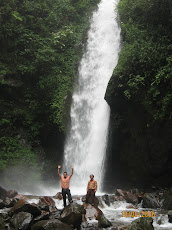
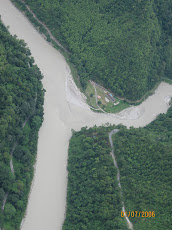
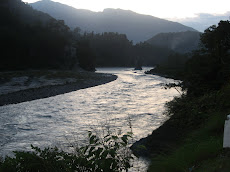
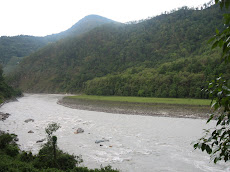
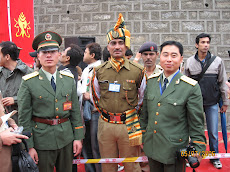
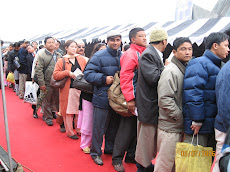
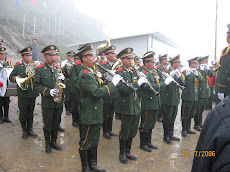

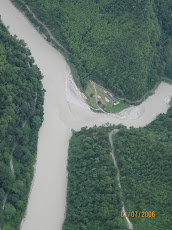
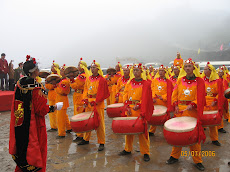
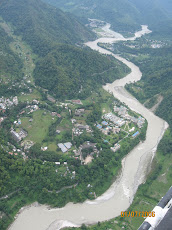

.JPG)






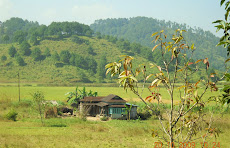
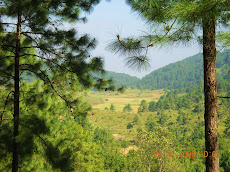


.jpg)


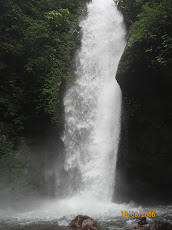
.JPG)
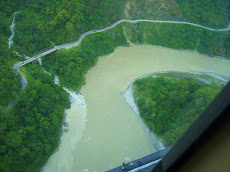


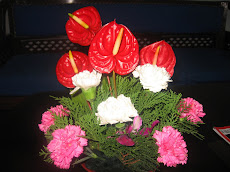









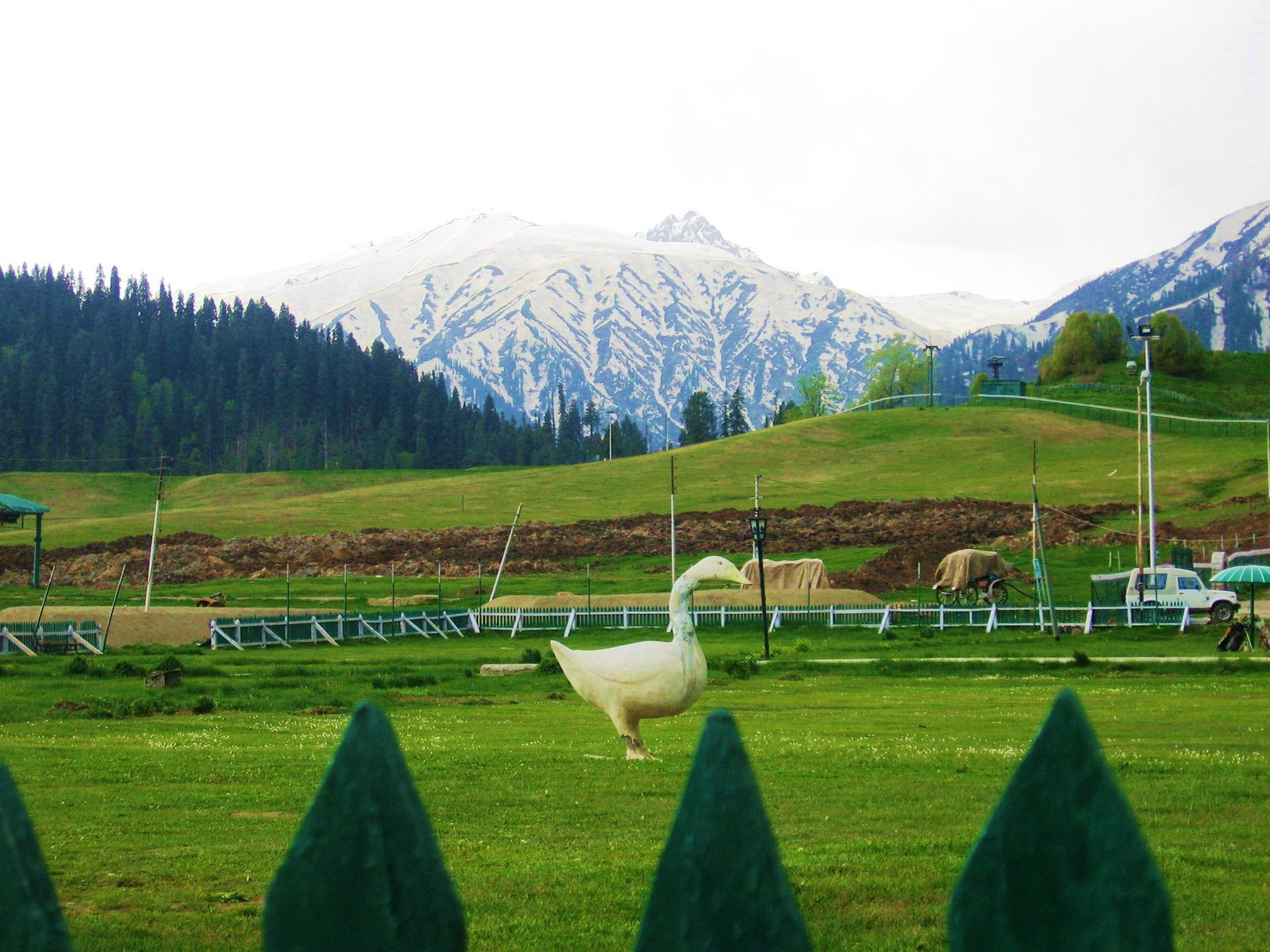
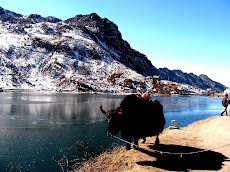



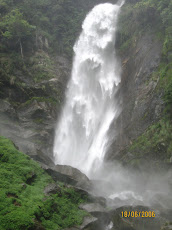
.JPG)


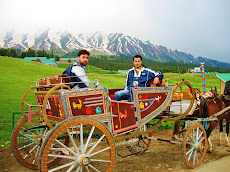


.JPG)