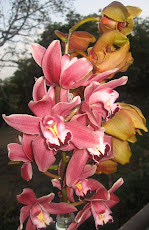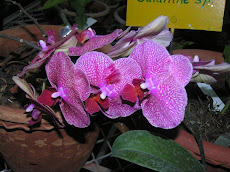
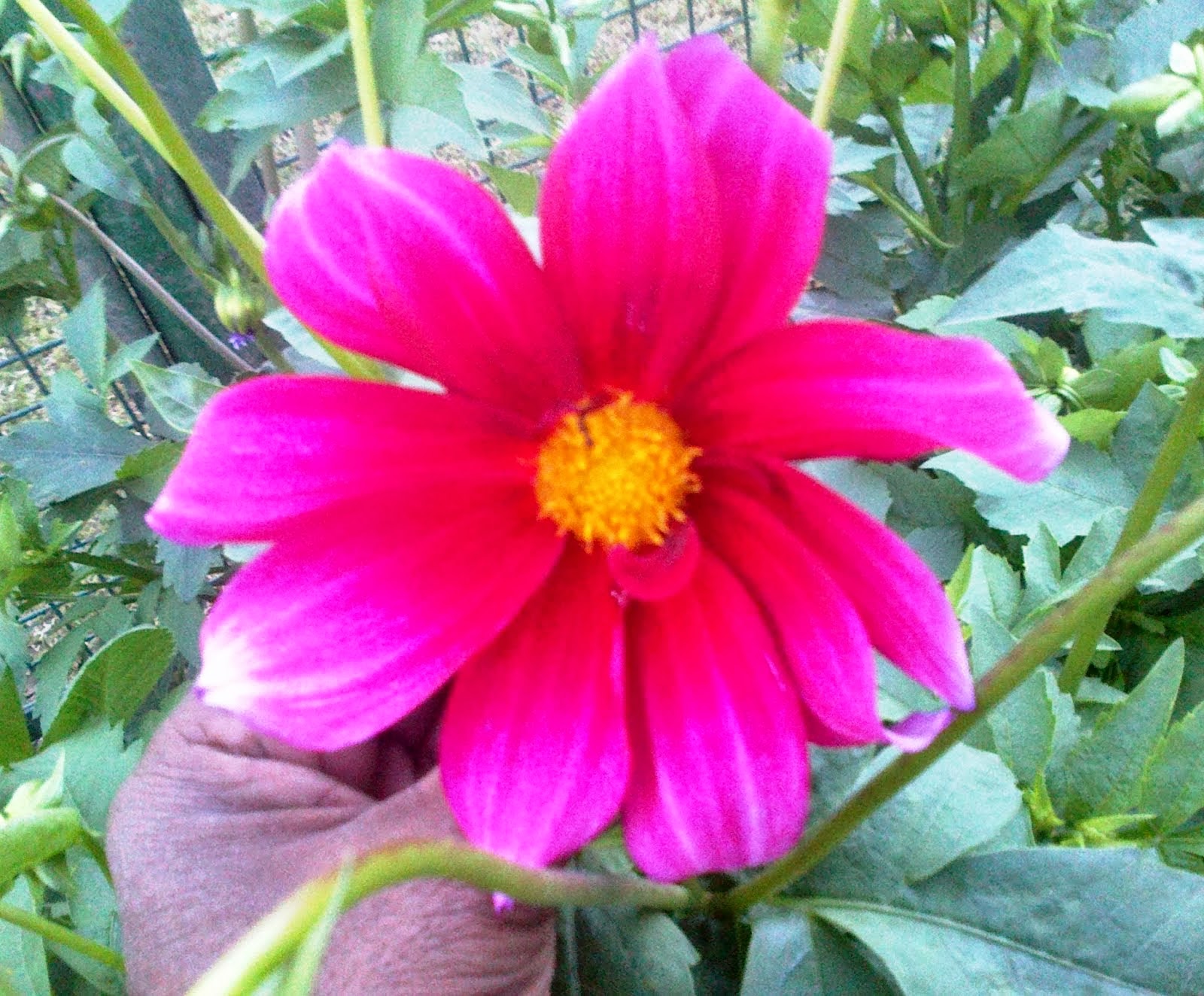
Pink Twins

Pink Twins
Gangtok

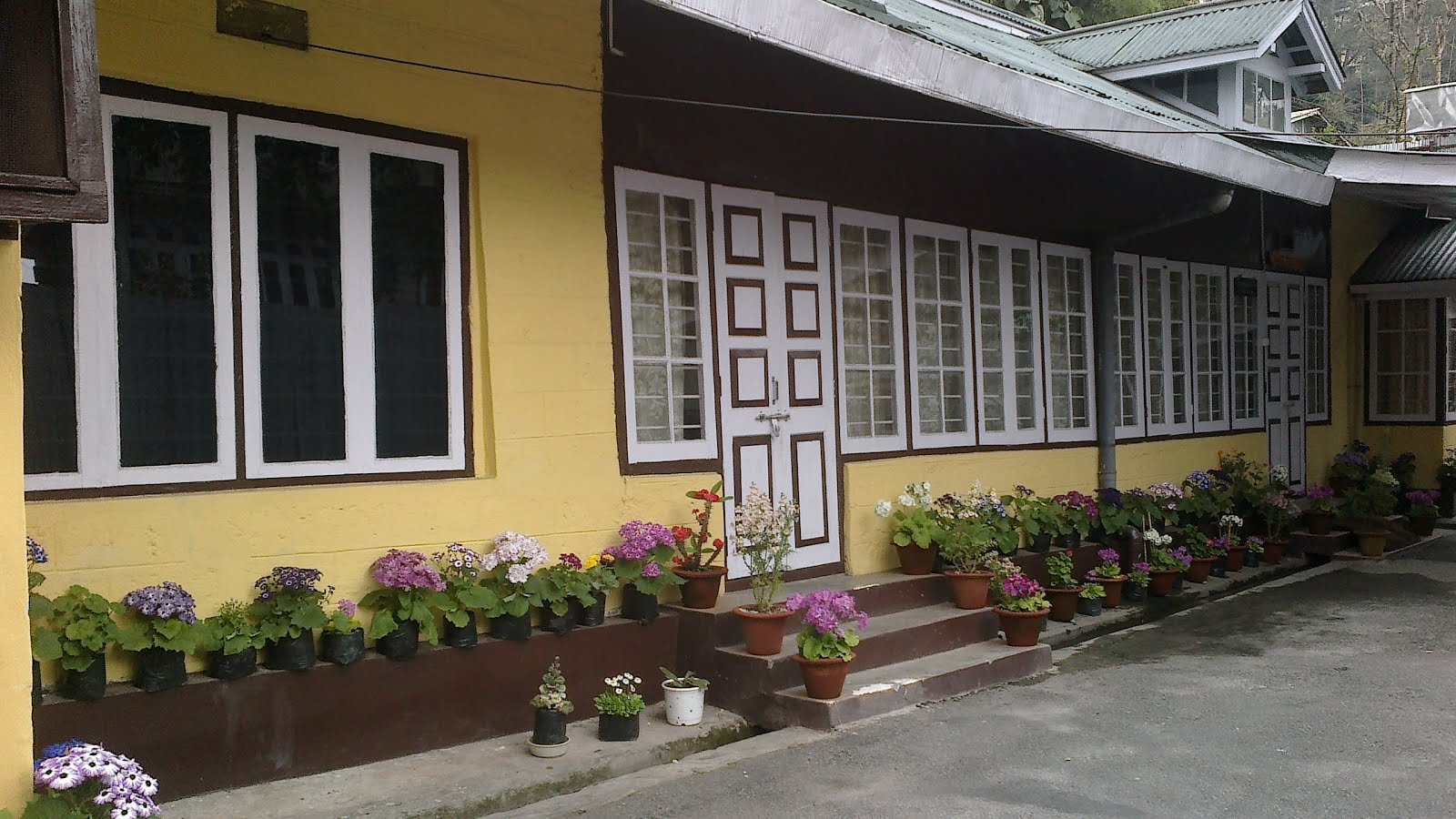
Yellow Villa

Yellow Villa
Gangtok

Sparkling Rai Saag

Sparkling Rai Saag
Gangtok

Lovely Poppy Flowers

Lovely Poppy Flowers
Gangtok

A Different type of Seasonal Flower

A Different type of Seasonal Flower
Gangtok

Blue Flavour

Blue Flavour
Gangtok

Pink & White Combination

Pink & White Combination

Dark Pink Flavour

Dark Pink Flavour
Gangtok 6th March 16

Purple Charm

Purple Charm
CS Quarter Gangtok

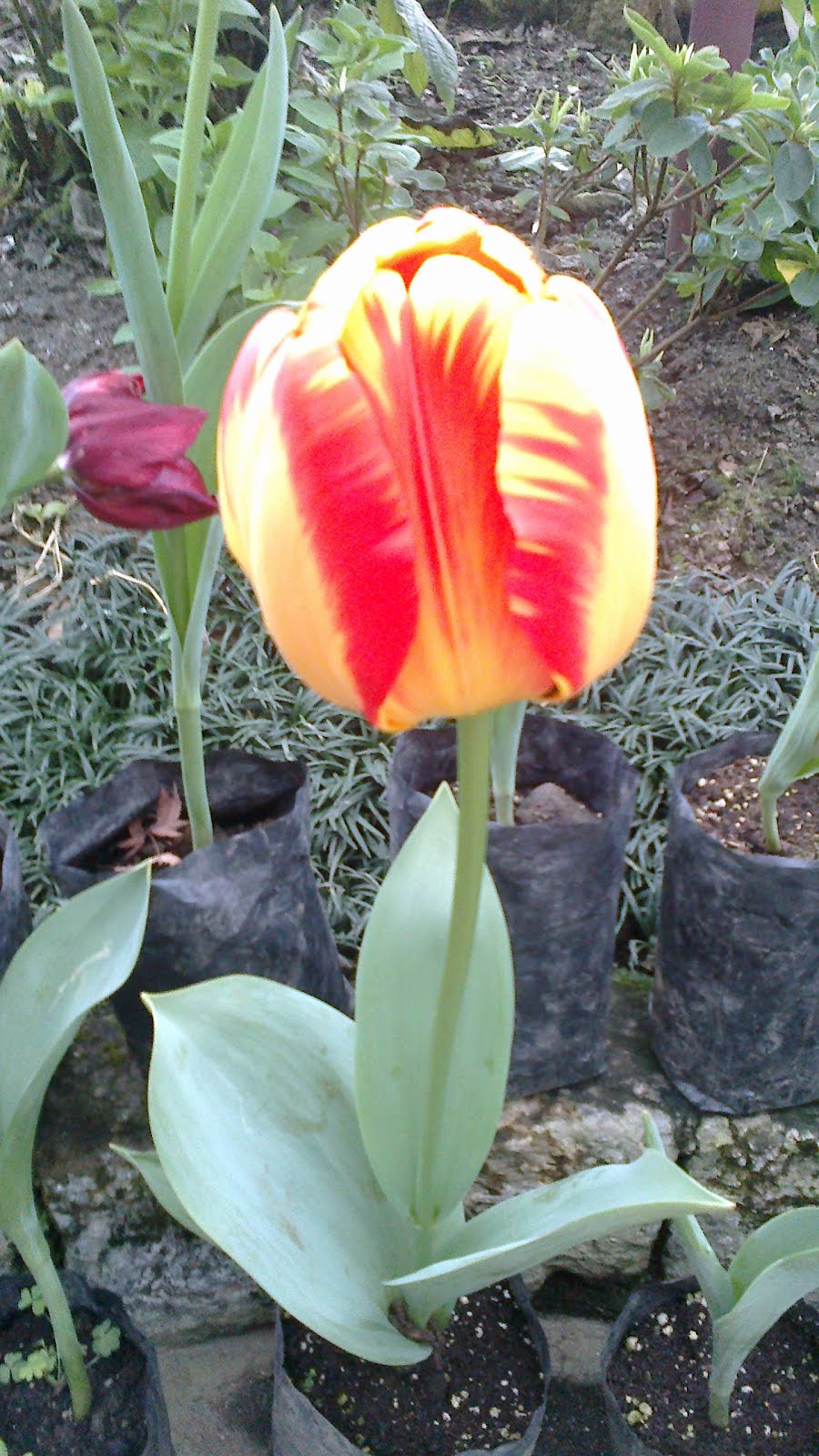
Magnificent Yellow and Red Tulip

Magnificent Yellow and Red Tulip
Conservatory Near Selep Tank

Charm of Red Tulips

Charm of Red Tulips
Conservatory near Selep Tank

Lord Buddha

Lord Buddha
1-D Terminal New Delhi

Attraction of Red Panda

Attraction of Red Panda
Saramsa Garden

Lord Ganesh made of oranges

Lord Ganesh made of oranges
Saramsa Garden

Charm of Seasonal Flower

Charm of Seasonal Flower
Gaurds Ground Gangtok

Unmatched beauty

Unmatched beauty
Sikkim Organic Festival

Green is always soothing

Green is always soothing
Sikkim Organic Festival 2016

Yellow Orchid

Yellow Orchid
Somewhere in Gangtok

White Orchid

White Orchid
Manan Kendra

Purple Orchid

Purple Orchid
Manan Kendra, 31-10-2015

Gift of Nature

Gift of Nature
Near Cherry Building

Majestic View of Sea

Majestic View of Sea
Marina, Chennai, 19-10-15

Typical Sikkim Pillar Carving and painting

Typical Sikkim Pillar Carving and painting
Hotel Nork Hill

Mirror Reflection, Changed Angle

Mirror Reflection, Changed Angle
Nork Hill, 24-11-2015

Mirror Trick

Mirror Trick
Hotel Nork Hill, Gtok, 24-11-2015

Yes we have the power

Yes we have the power
Qtr at Devt Area, 25-11-2015

Majestic View of K.jenga from SLA

Majestic View of K.jenga from SLA
Gangtok dt 20-11-2015

MIRROR IMAGE OR COMPUTER TRICK

MIRROR IMAGE OR COMPUTER TRICK
NEW DELHI 22-10-15

BRILLIANT KATHAK PERFORMANCE

BRILLIANT KATHAK PERFORMANCE
MRS MALI SMU 13-10-2015

SAROD RECITAL

SAROD RECITAL
SMU CONVOCATION 13-10-15

SHOWCASING SIKKIM CULTURE

SHOWCASING SIKKIM CULTURE
ITM GANGTOK 14-10-15

RED BEAUTY

RED BEAUTY
GANGTOK

ARCHITECTURAL MARVEL

ARCHITECTURAL MARVEL
MAYFAIR GANGTOK

OM NAMAH SHIVAY

OM NAMAH SHIVAY
MAYFAIR GANGTOK 02-11-15

Smile and Joy

Smile and Joy
24th September Delhi

Catelia Orchid

Catelia Orchid
Gangtok

Beautiful Chinaware Lampshed

Beautiful Chinaware Lampshed
Gangtok

Catelia Orchid

Catelia Orchid
Gangtok on 7-10-15

Morning Glow

Morning Glow
Denzong Regency- Gangtok on 7-10-15

Pink Orchid

Pink Orchid
Pakyong Area

Green Orchid

Green Orchid
Bojeytar Pakyong 26 Feb 15

Tabla or Log Piece

Tabla or Log Piece
HMI Darjeeling Nov 2014

Hand can do anything

Hand can do anything
Birla Science Museum Kolkata

Legacy and Heritage

Legacy and Heritage
Indian Museum Kolkata

Queen Nephretus of Egypt

Queen Nephretus of Egypt
India Museum Kolkata 4th Mar 15

A Buddhist Stone Art Piece

A Buddhist Stone Art Piece
Tashi Delek June 2014

Foot Print of Bason

Foot Print of Bason
Satpura Forest

Foot Print of Tiger

Foot Print of Tiger
Satpura Forest (MP) March 14

Unique Piece of Pine Wood

Unique Piece of Pine Wood

Lovely Twins

Lovely Twins

Pink,Pink,Pink

Pink,Pink,Pink
Orchid,not only Spl ,It lasts longer Also

Clean Water has a Different Impact

Clean Water has a Different Impact
Rangeet at Jorethang ,24-11-14

What a Ravishing Beauty ?

What a Ravishing Beauty ?
Teesta near Kalijhora, 19-12-14

Pre Dawn Captivating Beauty

Pre Dawn Captivating Beauty
K.JUNGA, 6:20 AM 18 -12-14

Another Dawn View -Different Angle

Another Dawn View -Different Angle
K.JUNGA, 18-12-14

View at Dawn in Biting Cold

View at Dawn in Biting Cold
K.JUNGA 18-12

Dawn Scene-2

Dawn Scene-2
V Awas 18 -12-14

Dawn Scenario

Dawn Scenario
K.JUNGA

Morning Means End of Night

Morning Means End of Night
K. JUNGA,

View at Dawn

View at Dawn
K.JUNGA 2 ,18-12-14

Early Morning Freshness

Early Morning Freshness
K.JUNGA, 18-12-14

What an eye opener early in the day?

What an eye opener early in the day?
View of 17-12-2014 from Terrace of V. Awas

Another view of full snow around Mt Kanchendzonga

Another view of full snow around  Mt Kanchendzonga
17-12-2014

Magnificent view after bone chilling night

Magnificent view after bone chilling night
17-12-2014

Beauty of Kachendzonga after a cold night

Beauty of Kachendzonga after a cold night
Vidhayak Awas Gangtok

Amazing charm of Green Orchid

Amazing charm of Green Orchid
HMI Darjeeling

Green Orchid

Green Orchid
HMI DARJEELING (13-11-14)

Bell Flower in full bloom

Bell Flower in full bloom

Yellow Orchid

Yellow Orchid
Dec 14 Circuit House

View of Kanchendzonga always inspires

View of Kanchendzonga always inspires
Vidhayak Aawas Gangtok

Cherry Blossom

Cherry Blossom
November 14 Ganesh Tok Gangtok

What a view after getting up ?

What a view after getting up ?
B-1 Vidhayak Aawas Gangtok

Chanda Mama looking at Kanchendzonga

Chanda Mama looking at Kanchendzonga
11-11-2014 VIP COLONY

Red Rose

Red Rose
Gangtok

Cranes having Gala Time

Cranes having Gala Time
Tigaon, Faridabad (2nd Oct 14)

Yes I am from Faridabad

Yes I am from Faridabad
Tiny, Beautiful Bird at NTPC, Ballabgarh (29.9.14)

Water Vital for Life

Water Vital for Life
Awesome view of Teesta near Kalijhora

Yes I had a Bath

Yes I had a Bath
Gladiola at 6200 ft.

Soothing Morning View

Soothing Morning View
Mt. Khangchendzonga from C.House (April, 14)

Natural Yellow Fascinates

Natural Yellow Fascinates
Gangtok (April, 2014)

Flowery Bell ?

Flowery Bell ?
Circuit House (May 14)

Riot of Colour in Monsoon

Riot of Colour in Monsoon
Circuit House, Gangtok(May 14)

Blushing orange

Blushing orange
Circuit House Gangtok (May 14)

Magnificent Taj

Magnificent Taj
Sept 2013

I can lift Taj Mahal

I can lift Taj Mahal
Taj Mahal,Sept end 2013

Natural fan to beat the heat

Natural fan to beat the heat
India Gate (24.08.14)

Engineering Marvel

Engineering Marvel
Coronation Bridge (22.08.2014)

Cascading water, soothing to eyes

Cascading water, soothing to eyes
Scene near Teesta Baazar (22.8.14)

Teesta attracts at every bend

Teesta attracts at every bend
16.7.2014

Monkey jump

Monkey jump
Teesta River, Birik(22.8.14)

Onset of Night

Onset of Night
Qutub,Sept.13

Qutub,Dusk Scene

Qutub,Dusk Scene
Sept.13

Together we take a Plunge

Together we take a Plunge
Clean Calicut Beach, Feb-2013

Setting Sun, always soothing

Setting Sun, always soothing
Dusk at a Gaya village(15.5.13)

Green Paradise in Concrete Jungle

Green Paradise in Concrete Jungle
Lake surrounding Purana Quila(20.10.13)

Saturday, March 2, 2013

THE DECCAN TALE


The historical city of Nagpur located in Satpuda mountainous region saw the birth of RSS in 1925. Presently, the hinterland of Nitin Gadkari, former BJP supremo, it is the winter capital of Maharashtra having the needed infrastructure, viz, CM residence, Assembly, Minister Cottages, High Court, RBI etc. It also houses National Fire Service College, a famous institution of the British Era.


 Talking of British, many buildings not only look colonial, they have been also kept in a commendable shape. Restriction on high rise culture, large lawns and backyards appear to be the redeeming features in this part of Deccan. The noticeable architectural masterpieces are: Assembly, GPO, Commissioner’s Office and Zila Parishad. An attempt has been made to give old, Gothic touch to the High Court building (too massive a structure to cater to 12 Judges) but something is amiss somewhere.


The Zero Point of India situated in the vicinity of Assembly has a non-descript pillar having four miniature horses in stone on the one side. An inscription shows that Hyderabad is 585 kms away. The semi circular green spot is hopelessly small for such an important landmark. One wishes, the State authorities will make it bigger by acquiring nearby private structures and subsequently highlight it in the tourist map. Close by is another important spot where 113 farmers agitating for ST status had died in a pandemonium in 1993.


The Deeksha Bhumi, where Dr. B.R. Ambedkar converted to Buddhism on 14/10/1956, has a replica of the Stupa and typical gates of Sanchi. Also having a Bodhi Peepal Tree, this structure is much bigger than the original. But one supposes, surroundings can be spruced up. A large round hall on the first floor was avoidable. Owing to it, the visitor is not in a position to have a full view of the round ceiling as in other monuments. It also prevents meditation. One should not defy the basics of architectural rationality. 


Coming to water bodies, appreciable steps seem to have been taken in cleaning and making a sort of joy cum picnic spot on the one side of vast Futala Talab. It may be giving breathing space to otherwise dense city. It was pleasing to see Swans and Ducks competing with boats full of youngsters and young couples. Bollywood music was all pervading.  


The city has wide, well maintained roads, divided by many squares, notable being, Ahinsa, Rajarani, AIR and GPO. Walkers, joggers, cyclists, all are seen in solos or pairs in the morning when the streets are being swept well. Who does not wish to lead a healthy and happy life? One does not see any road rage anywhere. Garbage management and social forestry seem to be the order of the day. The weather appears very pleasant between 7.30 to 9.30 am. after being slightly cold, previous night. It is nice to see some individuals practicing Pranayam in the busy areas. It is equally encouraging to watch young girls and women using scooties and four wheelers rather than depending on their men folk. Meeting Ashok Deshbhratar, an unassuming civil service aspirant and Dr.Anand (reportedly MA in 19 subjects),head of a coaching institute, were memorable pleasures.

Ravi Bhawan, the epicenter of our official activities is buzzing with activity from 7.30 am onwards. It is a huge area having 25 ministerial cottages, accommodations, committee rooms, dining halls etc. Regional history and culture depicted in Marathi along the corridor is a masterpiece. Late Pandit Ravi Shankar Shukla, the former CM of MP is reported to have owned this vast estate. His ancestral property is reportedly located close by. The new complex is rightly named after him.


Coming to the residents of Nagpur or for that matter, Vidarbha region, they are conspicuous by their Gandhi caps, nine yard Marathi Saris, umbrellas and high level of awareness. Fond of spicy and chilly dominating food, they look simple and well behaved compared to the Delhi-ites. Politicians and officers put together formed a bunch of criminals, candidly opined Dr.P G Dande.    

No description of Nagpur is complete without throwing light on its large sized and juicy oranges. Apart from standing apart, they are also available throughout the year. Another popular product is the Orange Burfi, made famous by Haldiram. When tasted, both reflect a certain class.


Carrying sweet memories of barely 24 hour sojourn at the Orange City, one lands late in the evening at the land of dreams. The Air India flight bereft of a dinner offering, is best forgotten. A relatively short journey became a bit long, for no rhyme or reason. After an interval of three and a half years, while the interiors of the airport look more spacious, the approach road outside still has to be widened and improved. Like in September 2009, one drives through a couple of flyovers and Worli Sea Link (6 km. plus long).It is a marvelous experience apart from enabling one to save valuable time.


The Palm Beach Road, a 13 km sea front sandwiched between mangroves and plush sky scrapers, on the other side, has now taken shape. It would prompt the people of the area not to throng Marine Drive for a view of exotic birds or relaxation. The road, cars and concrete towers, all dazzle. They look stunning. I am reminded of having availed of a few photographic opportunities with Ankoor in 2009. One wishes that equal degree of cooperation is extended for the up keep by the citizens and the authorities. The erstwhile anti-social elements active in the area will also have to be eliminated.

Munna, the cute, young driver proudly shows many sky scrappers, till recently deserted. He does not forget to mention the rent or the cost involved. One gathers that land is more costly than gold in this part of the country. Soon we see the highest (110 storied) building, under construction, from a distance. Reportedly, each flat therein was going to cost Rs. 30 crores. Ignoring the night crowd of the Chaupatty beach, I take a de-tour to pick up an essential medicine from a famous Mumbai Hospital at Chruchgate. By the time one checks into Hotel Marine Plaza at Marine Drive, it is well past 11.30 p.m. Delhi-ites might be snoring by now but for the Mumbaikars, night still looks starry in the land of stars. 


One admires the ravishing beauty of Queens Necklace from the large window, even if the sky looks blurred. The Arabian Sea is vast and infinite. One is once again reminded of my visit here with family almost at the same time in September 2009. Failure, rather reluctance to avail of a Victoria ride is still fresh.  The call or the awakening from the stomach, in the meanwhile has to be responded to with the leftover of the dinner packet affectionately given by Suresh Pendam, my ever smiling L.O. at Nagpur. I complete the formality, sitting in the adjacent small office room. The food/club sandwich promised by the hotel did not come till mid night. Good, that instead of calling reception, I surf various channels after a gap of two days. Sometimes, it is nice to be ‘away’ from the world.  

After somewhat disturbed sleep, day breaks for me at 6.30 a.m. I was expecting a bright clear day like in North India. But it eludes me for quite some time. I attempt a snap like last night but do not approve of it myself. In view of the fact that the day ahead was going to be hectic, I decide to relax for some more time on extra comfortable bed, even if sleep appears a distant possibility. Finally, I decide to face the semi dark, gloomy and foggy weather at 8.00 a.m. Inspiration comes from the hundreds of morning walkers and joggers. Ocean has not turned blue as yet. The transparent, hexagonal lift of the hotel looks very modern and attractive. Two yanky women are found sleeping to glory in the lounge. After saying good morning to a few friends and braving a bit of morning traffic, I see the following while doing brisk walk along the beach : 

-         Free hand exercises by men and women, young, old alike at the ‘Landsend’, while looking at Sun in a devout way. Enlightened and disciplined folk!
-         Large number of crows seated closely on the embankment. A sight to behold.
-         Plethora of pigeons and other white birds relishing the cool atmosphere of morning.
-         Chunk of people sitting in pairs and groups. Some serious, some whimsical.  Bambaiya style Hindi dominating.
-         Brisk and slow walkers, mostly in shorts, some talking passionately on cells.
-         NRIs strolling with their newborns in prams.
-      Surya Namashkar by ladies even while wearing inconvenient dresses. Some making an effort in Burqa.
-    Individuals in love, huddled together, unmindful and oblivious of passing onlookers. Perhaps determined to show charm and elegance.
-         Some amount of skin show is noticeable. May be, weather is like that. It is never too cold nor too hot. No staring or stalking, whatsoever. 
-         Impromptu rehearsals by budding cinema artists and stunt men.
-         Each was having his/her own agenda and pursuing the same in a manner in a much decent fashion than what one sees or experiences in North.
-         Sight of Orange colored fishing trawlers off and on, completes the vivid picture. 

Subsequent to the morning feel of the metropolis, I have a relaxing bath in the mini tub in the room. A hearty breakfast of predominantly south Indian items follows in the company of Rathod. When I get an inkling of possible delay, three of my colleagues enter the medium sized dining hall. Chaupatty beach is still brimming with activity when we hit the road. We reach our ‘business’ venue at Malabar Hill, ahead of time. It is both rewarding and upsetting, listening about and to the slum-dwellers. As expected, Medha Patkar, the stormy petrel, was spirited, convincing and commanding in highlighting education, health, nutrition and livelihood issues. One had heard that 65% of Mumbai lived in slums but one  was denied a close encounter of this kind. Compared to this face to face interaction, other two items slated for the day were without much meaning and impact. The silver lining of course was an opportunity to meet two of my batch mates and rubbing shoulders with top echelons of state bureaucracy.

The retreat from the city gave some moments of tension due to extremely dense traffic and warming weather. The last minute discovery of flight being international too required one to report ahead of schedule. Instead of getting an hour of relaxation, I was destined to be in vehicle all the time like an average Mumbaikar. To add insult to injury, the battery of my cell showed the signs of being low. Despite approach to international terminal being narrow, dirty and full of constructions, I manage to reach in time.

After check in, a long wait follows. The ‘domestic’ immigration counter looks as crowded and chaotic as of Delhi airport, a couple of years ago. Once you reach the lower hall after security check, it is a different world. Mostly red and orange colors dominate the backdrop of innumerable shops and eateries. Apart from consumer shops, spas and health clubs are also down the corridor, Thai and many other Asian female workers are seen attending to male customers rather openly. It is good to have such facilities keeping in view fatigue part. But they come with an exorbitant cost. Next to duty free shops, the Spice India restaurant steals the show while offering expensive meals (Rs. 299 for B.F. and Rs. 499 for Lunch/Dinner). Additionality of course is the display of all the spices used, presumably for the non-Indians. A ‘must see’ is an auto rickshaw placed in the corner.

Yet again, I find people of this city orderly and well behaved. Things look easy in Mumbai due to ‘Bindas’ nature of city-dwellers and perhaps their being tolerant and law abiding. After thirty minutes, monotony breaks when music blares from one corner. A group of young men and women cracking jokes rush to form a queue behind a bunch of designer Burqa-clad women. They do not forget to cover their T-Shirts/sleeve-less tops with woolens. Afterall, destination Delhi was going to be very cold. The boarding announcement of AI-310 ultimately proves to be the dividing line between the commercial capital and the political one. I am not to be left behind in the fading light of the day.

Friday, February 15, 2013

Confluence of Faith

A jumping Sadhu, another concentrating on Damru while doing Vrikshasana. Still another, ash-smeared, blowing a bugle. A fellow ‘brother’ relishing the smoke of chillum. A Sadhavi deep in meditation, post-dip. Sages throwing water from entangled long hairs, collective jump by the Naga Sadhus at Dawn, men and women offering prayers while standing in knee deep cold water AND the serene, inspiring aarati in the evenings. Where do we see all this? Obviously at Mahakumbh (MK) at Prayag or Allahabad. Though Nasik, Ujjain and Haridwar host Ardha or half Kumbh, every 6 years, yet, the Prayag one is adjudged a magnum opus.

2. The MK which began in early January will see the unbelievable conglomeration of millions. Virtually, a sea of humanity. Of all castes, creed, complexions and races. Millions come to take dips of faith on the eve of Spring. Rituals and superstitions are very much visible and they are there to stay. Solace in exchange of misery and depression is always welcome.

3. It is a great leveler. However important or high one may be, everyone is equal before the almighty. A walk of 3 to 4 kms, braving cold and dust is a must. Bath at Triveni Sangam is considered very auspicious according to the Skand Purana. Same is supposed to clean one’s body and cleanse one’s sins. That is the faith or belief held for millions of years. Flowing water takes away all the ill feelings, all the divisions, sub-divisions and fragmentations. Post-bath, therefore, one is supposed to be in a profound state of mind. One also gets a ‘darshan’ of most of the Gurus & Saints here rather than taking the trouble of visiting them in their Ashrams located in far off places. They come from length and breadth of the vast nation and get identified with their own Akharas, altogether thirteen of them. Riot of color at the confluence of faith is amazing. Pull of Sangam is perplexing.

4. The fair held in 6000 acres area, divided in 14 sectors for 55 days will see many royal dips. First two have been performed on Makar Sankranti (14th January) and Mauni Amavasya (10th February). Latter was to see bath by 3 crore devotees. While doing so, they were expected to observe silence. Such large gatherings are also expected on 15th February on the Basant Panchami Day (3rd and last royal bath), Magh Purnima (25th February) and finally on Shivratri (10th March).
5. The ash – smeared Naga Sadhus decisively dominate the scenario. Mostly they do not wear cloths and have to undergo stringent ‘Tapasya’ for years. For some of them, dip at Sangam is a maiden activity. Otherwise also the congregation cannot proceed further unless Naga Sadhus (most of them partially clad now a days) have jumped in water by creating a loud sound.

6. The Dandi Dhari Sadhus, followers of Adi Sankracharya are also present in large numbers. They wear normal Indian cloths of orange colour. Sporting a beard, they carry a stick (dandi), made compulsory by the Sankracharya. One also sees them inside a cover to be carried in the manner a batsman carries his bat.

7. Coming to the entry and movement style, one gets an impression as if a change is in offing .Most of the seers use tractors or mini trucks in a procession, accompanied by a band, akin to a marriage. Some sages are seen mounted on horse back, some ride a chariot kind of structure, while others are even driving to the confluence point in expensive automobiles, provided liberally by the devotees.

8. The whole activity or the event gets an aesthetic look with the large presence of white Siberian Cranes. Not only they get needed relief in terms of weather, they get the added attention. No wonder they mingle well. Another welcome wind of change is the awareness campaign and discussions by the seers, researchers, activists and film stars on the need to keep Ganga clean. Protection and preservation are very much called for in view of expected adverse impact of the massive bathing activity.

9. For almost two months, the place takes the shape of a city of tents. The tents of various types, including the deluxe heated ones allow the followers to combine their status with spirituality. Following a bath in cold and may be muddy water, bathrooms with modern amenities are made available. A few of them also offer massage therapy to get rid of aches and pains.

10. Management of this sea of humanity or what is considered largest religious fair in the world, is a Herculean task, involving about 15,000 security personnel who are in turn assisted by 30,000 volunteers. 4,000 buses and 260 trains are pressed into service. Apart from encouraging & facilitating elation, jubilation and feeling of salvation, the Mela administration is on its tenterhooks managing its lost and found booth. Despite best efforts, some elders as well as children go astray apart from the loss of valuables of many devotees.

11. The conduct and control mechanism of the fair 12 years ago had been not only widely acclaimed but same had received top most ratings by the specialized firms. It is therefore, shameful and unfortunate that 38 persons, including two at the Sangam area lost their lives in a sudden stampede on 10th February, 2013. The passengers jostling at the infamous platform number 6 inspired the artists to develop bonding to make sketches and paintings. When Kumbh has to be depicted in totality, pain and anguish should not be ignored.

12. While the Mela per se is seen on TV in 100 countries, devotees actually come from more than 40 countries. Watching on TV is interesting, with people shown going one way and reversing from a different way. One does not, however, get a close view or look of the Sangam/actual bathing area. The third of the rivers, the Saraswati, remains as mythical as ever. While the foreigner Sadhus are conspicuous by their presence, too many boats and dense movement over Pontoon bridges become stumbling blocks.

13. At personal level I have not been able to visit Prayag during the Kumbh. One has seen it from a long distance from trains several times. My first trip was in December 1978 as a failed SSB candidate while the second time was in summer of 2003 when we lost Vikrama Chachi at Allahabad. On both occasions one had a feel of fast moving water but for unexplained reasons, no bath could materialize. What I distinctly remember is that colour of two rivers is different. They do not appear to meet visually, rather they follow their own course. May be­­­­­­, actual mingling takes place later. Also the visit to a Lord Hanuman Temple on the beach is vivid in my memory. Never before one had seen the monkey God in a slanting posture.

14. After 12 years, that is in 2025 when the MK will again be held in Allahabad, I will be 66 years old. I would have completed 7 years of superannuation. One does not know whether one will be alive by that time. If alive, whether I would be in a position to see and witness this spectacle. Nothing can be predicted. To prevent and pre-empt anything, I, therefore, thought it proper to scribble these lines in the name of faith and devotion to God. Let us take a solemn pledge to protect Ganga Maiya.

Monday, January 28, 2013

Nainital : Interface With Nature


While braving present extreme winter of Delhi (two days being coldest in 40 years), memories of time spent in Nainital and Mukteshwar in September – end, 2011 prick my mind. There is nothing unusual in attending a training in diverse settings but a village attachment with same is like an icing on a cake. One such opportunity was availed of in Sunderkhal village of Dhari Block. It is 55kms. from Nainital on Bhatelia – Dhanachuli road.

Consciousness about ecology and environment in the village could be measured from the fact that out of 189 hectares, 113 hectares were placed under Van Panchayat and that majority of 1009 villagers were reported involved in community managed forest. The practice of Van Panchayat Samiti had begun way back in October 1932. Extraction of fuel and fodder was taking place as per established norms. Thus, valuable and important varieties of trees were getting conserved with a sustainable bent of mind. The JFM had also played its role in building the capacity of community members and bringing awareness about proper use of forest resources. Interaction with the villagers revealed that three years ago they had also setup a Surveillance Committee to check open defecation and other unhealthy sanitation practices. Inspiration and support came from the CLASS programme initiated by Uttrakhand Academy of Administration.

 As per Panchayat Members, the Committee was regularly testing the quality of water in the existing sources (we saw one or two) and was also keeping a close watch on overall sanitation standards. Open defecation attracted a fine from the Committee. As a result, almost all households had constructed pucca latrines. In addition, the Mahila Jagriti Sangh was maintaining its own truck for transportation of village products to the nearest market. Same was also utilized for carrying patients and accident victims, whenever a need arose. The whole thing reflected tone and tenor of a success story and good partnership between a scheme of the Government and the will and commitment at the cutting edge.

Subsequent to a quick bite and tea with the villagers, we were shown patches of beautiful Pine forest maintained and protected by the community. What a zeal and enthusiasm they displayed in this land of Chipko Movement! The setting was relatively flat with a narrow but unpolluted rivulet flowing in between. It provided a good photo opportunity specially for the couples on the wrong side of fifties. Knowing my skill and inclination, I too was roped in. At personal level, I ventured little bit into the deep forest having discovered some similarity with the road side meadows of Lachen and Yumthang Valleys.

Lush green forest always attracts, mesmerizes and relieves. What a rich growth of Oak, Pine, Deodar and Rhododendrons one saw over the last two days! Somewhere it was virgin and pristine, elsewhere traces of biotic interference were clearly visible. It was encouraging to see prevalence of thick, healthy forest. It is essential for human survival, more so, for those living along the hills. In sum and substance, the Uttarakhand hills appeared more stable and sturdy as compared to young geological formations of the Eastern Himalayas.

Once we hit the road, it was a pleasure to come across attractive hamlets at varying heights. Flowers would refreshen us every how and then. Water appeared scarce as compared to the East. May be, rate of urbanization was swift. Soon the quality of road deteriorates. There was an absence of parapets even at sharp bends. Hardly any sight of mile stones was possible. Low volume of traffic was the only plus point. After an hour and a half of slow and dull drive, we descend to a small township with captivating houses. Though its name is out of mind, simplicity of people and their way of life left an impression during our brief halt.

Following a drive of 5 kms, one touches Bhimtal, a mammoth water body, supposedly quieter and bigger than Naini Lake. One is reminded of a visit to this enchanting place in September – October 1996 in the lovely company of Late Ankoor, who was in 2nd class at that point of time. We had thoroughly enjoyed our halt and taken some memorable pictures, still kept in an album. The previous evening, we had Teej Puja at Nainital Club (now State Guest House), an occasion when D.T, on complete waterless fast, could not change her dress on account of extreme cold conditions.

Another drive of 6 kms and we are at Naugachia Tal, an extremely huge and picturesque water body, surrounded by serene forest. The first view itself, even in semi-fog conditions was awesome. Local officers convey that the lake derived its name from its nine corners. One was in a photographic spree at the drop of hat. Soon we enter the Lake resort building of Uttarakhand Tourism. Once belonging to the legendary G.B. Pant, it had 12 spacious rooms, a very eye catching reception, a dining room, beautiful verandahs and lawns on three sides, abounding in Arocaria plants. But what it lacks is a proper Drawing Room. One has to manage with the casual sitting arrangement in the verandah after negotiating a long que to the rest room (but natural, after a long drive). The flight of wooden stairs enable one to see more beautiful, well maintained and immaculately polished parts of the villa and view of the lake from two other directions. A couple of snaps taken from the rooms and hexagonal balcony on the first floor were going to be etched in memory. Halt of one and a half hours was rounded off beautifully by a sumptuous buffet lunch in the lawns.

By 17.00 hours, we were in our temporary abode at Nainital Academy. Hectic activity since dawn justified the rest followed by a sleep for almost two hours. The grand finale came in the form of a Cultural Extravaganza organized in the magnificent wooden paneled auditorium. A Woman Assistant Director, dressed all white with a printed Rajasthani Chunni, who anchored the show, did everything professionally. Song and Dance sequences, mostly from Uttarakhand, entertained and appealed to one and all. From the side of participants, Shri Jawahar from Tamil Nadu and Mrs. Devanikar from Maharashtra sang songs in their regional languages. More requests were set aside for want of time. Shri Kalita of Assam led everyone in dancing impromptu from audience. I too joined the spree with Kalita, rather reluctantly, after a long time. It was definitely for the first time since losing Ankoor, four months ago.

Dinner in cold conditions at nearby Heritage Hotel had also its own flavour of ‘warmth’, ethnicity and music. Another two hours passed by in taking snacks, food and not to be forgotten, a fresh bout of dancing and singing. Thanks to Kalita yet again, I attempted singing a duet, ably supported by a synthesizer and a light band. When we called it a day, Joshi was about to finish his intake of brown water. In his true inimitable style, he was seen ordering a late dinner to his room, far away from the madding crowd. The penultimate day at Nainital thus came to an end.     

Thursday, January 3, 2013

The Dame in Distress

Damini or Nirbhaya, a self made para-medico daughter of a Loader, who was commendably supporting her studies by doing tuitions, was tortured, dehumanized and ultimately consigned to flames very early on an extremely cold day. Visibility being low during this part of the year is not something unusual in Delhi. But the bone-chilling and freezing conditions on 29/12/12 made the matters worse.

No one got a hint about the exact touch down of the dead body from Singapore and its subsequent arrival at a non-descript location in Sector 19, Dwarka. Thus, 13 days of unimaginable trauma was over for a bubbly girl and the only hope of a struggling family who had just begun her foray in this mystical world. All her sympathizers and well-wishers at Vijay Chowk (12,000 on a day) India Gate & Jantar Mantar were left high and dry. While the largest impromptu public outrage in Delhi was punctured, the Administration had the last laugh.

Primarily, due to her extraordinary strength and determination, she could bear and tolerate assaults of extreme nature, which could easily be included in the category of horrendous crimes requiring exemplary punishment. Even in the I.C.U. she expressed a desire to change her clothes and comb her hair. It was a pity that recording of her statement by a woman SDM reflected an unfortunate bone of contention between the Magistracy and the Police. Alas, her God died young. Her fight and that of her friend and the remarkable resistance against the savage gang rape and aborted attempts to crush them under the bus will have a few parallels. What a grit and confidence they displayed against the brutal forces in the wee hours!

Reportedly, she was to get married within three months but no one had imagined that she will loose her valiant battles in two hospitals so soon despite the best medical treatment and attention. Decision to shift her abroad while she was still on ventilator, itself was not free from controversies.

Till last moment, her name remained undisclosed due to legal restrictions, yet she was fondly addressed and rightly revered. She went on to symbolize the pains and compulsions faced by the women, who, instead of getting protected and respected are silenced and vanquished almost everyday in the nooks and corners of the country. One knows only about a handful, courtesy media, civil society or a few crusaders, who take a vow to bring changes in the over all attitude of the society.

The case, per se, has brought enough shame for the country. At the same time, it exposed our hypocrisy. In the process, a large number of like minded and suffering individuals came together, got a voice and an occasion to unite. Her body is gone forever but her soul lives. Rather, it should live to provide support to the needy, to those who apprehend threats within the four walls as also outside, on a daily basis.
Very few episodes and incidents have united the country in the manner this particular one has, from students to housewives, tiny tots to senior citizens, media persons to writers & artists, politicians to film stars, all were on streets braving inclement weather but voicing concern unequivocally.

On the first day of yet another New Year don’t we, therefore, recite a prayer in her memory and attempt to discover Nirbhaya within ourselves? In sum and substance, she bravely lit a flame which needs to be protected and carried forward.

As a matter of relief if not as a remedy, the unprecedented sexual violence must come to an end and various measures suggested by a cross-section of people need to be considered: enhanced punishment, chemical castration, scaling down VIP security, fast track courts, daily hearing in rape cases, a dedicated helpline in important places, gender sensitivity training for police and Govt. servants, swift action on complaints against policemen, responsible reporting by the media and special session of Parliament. Also, the prevailing attitude towards women in general has to change. On the domestic front, preference on the part of a mother for a male child, has to be given up as quickly as possible.

Many known personalities of the country and abroad wrote and spoke about Damini’s sufferings as long as she was alive. Serious debate over dignity of women also triggered and touching obituaries were attempted after she breathed her last. Notable among them came from the President of India, Home Minister, Leader of Opposition in Lok Sabha, D.Raja, CPI Leader, Mary Kom, Javed Akhtar, Amitabh Bachchan etc.

Summing up with the statement of Ban-ki-Moon, Secretary General of UN, may be appropriate -“violence against women must never be accepted, never excused, never tolerated. Every girl and woman has the right to be respected, valued and protected”

Monday, December 24, 2012

SOCIOLOGY MATTERS


Neither I have the ability nor authority to write about CSSS, but a visit to the Centre on the occasion of 40 years of its ‘birth’ was truly an exercise in walking down the memory lane. Expected curiosity, camaraderie and bonhomie were all pervading. It was a pleasure to see the teachers, scholars, grand old teachers on the one hand and the contemporaries, competitors, seniors, young boys and girls, on the other.  A few of the employees were seen wearing the mantle of photographers, while most of the members of staff, library attendants & chowkidars of 80s were reported superannuated.

Although one did not get a chance to peep into the present brick structure of School of Social Sciences (SSS), its older and much more stable cousin had everything to offer when it came to the old world charm. Not so welcome change was the concrete work in once green courtyard. Flowers were conspicuous by their absence. Toilets for a change, were clean.  The walls, as usual, were full of large and imaginative posters showing the inkling of the students more in international affairs. The alumni hobnobbed in full swing in the corridors of this wing of SSS,prior to being exposed to the introspection of the era gone by. The books and literary works of Jawahar Book Depot of ‘Down Campus’ were not to be missed on such a memorable occasion.


While the adjoining reverse pyramid style building of School of Life Sciences, for a change wore a deserted look, the criss-cross walks all around were humming with activity. The trees, bushes and shrubs planted years ago had become matured. They were giving a green and dense look to the whole scenario. The 11 storied Central Library building over looked the scores of new School buildings like a presiding deity. It was supposed to do so keeping in view the attention it received and the utility it provided in the eighties and nineties. One presumes, it continues to be important for the present generation also rather than inculcating and facilitating Valentine intentions.


The Social Sciences Auditorium looked isolated to begin with. It soon got packed to capacity. In true JNU style, things were a bit casual and expected punctuality was amiss.  The programme began with an impressive welcome speech in flawless English by the youngest woman Faculty Member, followed by a very light and informal discourse by Prof. Soproy, VC, JNU, equally frank talk by Prof. Sudha Pai, Rector and not so impressive address by the Dean, Prof. M. Mukherjee. The gist and references made to a couple of old teachers of CSSS were on positive side. It could not be ascertained whether they were genuine or something was being said befitting the occasion. The person who actually left an impression was Prof. Moitrayee Chaudhury, Chairperson, who, I can proudly say, belonged to our tumultuous era (1978-84).


When the main discourse began, the first speaker, Prof. Yogendra Singh was reported to be away to his village and that he had desired to be excused. However, when he appeared through a video clip, he was as usual, very extempore, articulate and pleasing. The journey from Vigyan Bhawan Annexe to the ICWA  and thereafter to the N.A.A. campus (down campus) was very well narrated and the constrains of man power & resources and the challenges involved in designing the course structure were explained eloquently. Among the three Faculty members, only Prof. Oommen (other being Prof. C. Venugopal) the Emeritus Professor of the CSSS, was present in the hall to support, nod and applause. One also learnt that the relatively young discipline of Sociology made slow but certain stride with the addition of three more Faculty members in the year 1973. Further discourse of Prof. Singh tossed around his pioneering work on modernization of Indian tradition and the mix of theory and substance in the curriculum that was subsequently taught to the successive bunch of students.  Professor T.K. Oommen, famous for many of his path breaking works and his recent theorization of national movement, made his points very clear in his usual and candid articulation style. 


Felicitation of the Professors Y. Singh, Oommen, Nirmal Singh, R.K. Jain, K.L. Sharma, C. N. Venugopal and Panini was a touching moment. Most of them were present.  I not only had the privilege of being taught by them but was doubly fortunate to have a word with them. All except Prof. Nirmal Singh could recognize many of us. Prof. Anand Kumar, the towering student leader of the ‘ancient times’ showed true colours with a sense of reverence to all those who deserved.


 While the Cultural Evening on 20th December left much to be desired despite efforts of the youngsters, the Alumini Dinner provided immense opportunities for emotional connect and rediscovery.  Some friends and new faculty members who could not be contacted earlier were present in full smile and spirits.  Prior to the dinner, it was quite an experience to go through the green as well as upcoming concrete jungle in search of the elusive Faculty Lounge.  The food served in some what swanky room was very delicious but what was more important was being reminded of the old events and sharing of experiences of the present family & vocational responsibilities. From ‘mainliners to marginals’,‘ occupationals to professionals’, D.M.W.(Durkheim, Marx, Weber) to Talcott Parsons to R.K.Merton, Karl Polanyi to Margaret Mead, M.N.Srinivas to Dipankar Gupta, all figured between the bytes of roasted and fried items : Paneer & Chiken Tikka, Mushroom Pakoras, and Finger Chips. The tinned juices were clearly outclassed by the juicy stories and anectodes of the ‘Medieval Times’. 


Prof. Panini, George Mathew, Prof. Paul, Prof. Geeta, Prof. Moitrayee, Babu, Prof. Kiran Grewal, Savita Bhakhry, Maurya, P.K.Biswas, Bhaskar Khaund, S.K. Palit, R.K. Meher and many more dined together and rejoiced as if it was akin to having a grub during the special dinners in Kaveri, Godavari, Periyar or for that matter, Sutlej, Ganga, Jhelum or Brahamputra (Kashiram and Gopal Dhabas not to be forgotten). The predicament, perplexity and perseverance (PPP) on the part of D.T. could be, nevertheless, well understood in such ‘recall’ situations. These may have become monotonous for her after a while. But she has learnt to manage over the years.


All good things come to an end. This dinner was no exception. It got over at 9.30 P.M.  By this time, the campus dazzled like a necklace under the yellow sodium vapour lights (what a contrast from the old era!).The famous night life was gathering momentum. I came close to the main gate, expressing my eternal gratitude to the Centre and the then prevailing atmosphere for what I am today.

‘Sociology Matters’ could be an apt selling proposition for the Centre. It really mattered and still matters for me. It ensured my present bread and butter, apart from being a motivating, guiding and confidence boosting force. 

Thursday, December 6, 2012

Surya Namashkar at Mukteshwar


Following an enjoyable roller coaster late afternoon ride from Nainital, it was a welcome wind of change to come across isolated setting of Krishna Resort on the outskirts of the non-descript township of Mukteshwar. Very few families throng the dwelling units situated on either side of approach. Arrival at the beautifully designed porch overlooking a well kept garden is a soothing experience. Upon settling down, one is encouraged to shoot at setting sun in the back drop of fading snowline. A few attempts and one gives up, for quality is the casualty. Clouds too become stumbling blocks. Similar attempt by the youngest officer from Chhattisgarh too results into an exercise in futility. Nevertheless, idea was to maintain enthusiasm. A brisk walk around the complex is the next logical choice.


Interface with the staff over a cup of tasty tea reveals that we are in an extremely nice setting as far as witnessing an early morning glow was concerned. It was but natural that fellow participants indulge more in nature and adventure related issues rather than the scheduled official visits to two nearby villages: Sunkya and Sunderkhal.

Since scenario at dawn was to be observed, experienced and captured, one was up sooner than expected to come across dark night situation around 4.15 a.m. Hope, I was not sleepwalking. Even at this unearthly hour, the beauty of spacious rooms was irresistible. Despite sincere attempts, one could not catch up with sleep. Perhaps, old age had begun knocking.

Suddenly around 5.14 a.m., one hears a voice or two. One feels as if somebody is up and moving towards large terrace to get the first view. To confirm the same, I leave the princely bed at 5.18 a.m., to eventually find that no one except me is at the sprawling terrace. After a quick recee, Shetty is woken up in view of his request prior to dinner. Punetha almost refuses to be disturbed in spite of showing adequate interest on arrival. Deshmukhs and their Maharashtrian brethren sporting thermal ware, jackets and woolen skull caps, however, are ready to have a pleasant date with nature. Dr. Kanan despite his advancing age, too makes his presence felt with his ever smiling life partner.

Within a few moments, some more people join us, a few with spouses in tow, others, all alone. Most of them are armed with latest cameras, while a handful decide to shoot with cell phones. In sum and substance, all are interested, involved and eager. Before the actual ‘ball’ emerges over the horizon, we take shots of pinkish glow over sky, close to China border. The border is not visible as such but one believes so, based on inputs of Dinesh and Himanshu, active and friendly Faculty Members of Nainital Academy. While I concentrate on the point from which sun was to rise, Shetty meticulously captures a peak resembling a Shivling.

The wait finally gets over at 6.02 a.m. The all pervading and powerful, source of all energies, Sun decides to rise. Initially it is a small reddish ball, soon to transform into reddish orange colour. The tip of the ball becomes slightly bigger in no time and the simultaneous light over the four peaks- Trishul, Bandarpoonch, Nanda Devi, and Panchachuli is simply awe inspiring and mesmerizing. While one group captures sun rise in the front, other one concentrates on the range to our left. We are more than convinced about the nomenclature of the snow covered peaks based on reflection of sun at this time of morning. Each one was blessed on relishing a truly glorious and spectacular sight. Who will not flash a winning smile on seeing such colours of joy?

While the sun is rising and moving steadily, its sparkle and redness multiply. Being lost, no one takes attention of hot cups of teas faithfully brought by the bearers, even though one has to brave rather cold conditions at a height of 7,000 feet. I, nevertheless, do not forget to put an empty cup over a low pole and use the same as a shield or front to attempt an unusual shot. The momentary pleasure surely was going to have a good impact and make our day more fruitful and interesting, than expected. This is why, even when the whole complex is bathed in sun shine, some of us are still capturing the Sun God from behind the bushes and trees. A few also trek on the right side hill to get a different and more commanding view. Attractive flowers of various shades and sizes get relegated to the background owing to the photographic spree focused on sun.

While returning to room, one is rightly reminded of similar clear and remarkable sun rise witnessed in November, 1999 at Tiger Hill, close to Darjeeling in the green and more fragile Eastern Himalayas. Two are comparable to some extent only, as latter had a much wider reach and canvass, including rare views of Mt.Everest, Mt.Khangchendzonga and several snow capped peaks located above 22,000 feet.

Before performing the usual morning rituals prior to a village visit, I do not forget to relate one more memorable brush with the rising sun to DT and CB. One did not have the normal camera but I suppose the one in cell had captured the essence of candid photography. In addition, snaps taken from other cameras were also going to serve the desired purpose. Thus I console myself and get ready for the day upon feeling more energetic and relaxed.

Monday, November 26, 2012

BEE ONE, LUMSEY


It’s a relaxing September Sunday morning at AIS Colony, Lumsey, Tadong (5th Mile). There is a bit of chill accompanied by occasional drizzle. While I reluctantly agree to scribble the fantasies of my never say die hubby, old faithfuls Tommy & Baily and our friendly neighbor walk into the eco friendly and green sit out having two attractive yellow benches. Upon settling on a parapet, Tommy looks straight into the green valley downhill. RPG, on the contrary, is all set to flaunt his new haircut. What a pleasure it is to see a ‘young man’ of 65 years with semi jet black crowning glory. No doubt, it is not a match with the black colour of the office diary kept on the bench or for that matter, black Samsung held tightly by him or the black Bolero of one and only Y factor.
RPG, incidentally, on 9th of September, 2012 made up his mind to see the brighter side of life by resorting to have a close look at the fast flowing Rani Khola, almost at dusk. Accompanied by Als, two of them had a leisurely walk down the road under construction for 20 to 25 minutes. It was a welcome wind of change. Apart from exploring a new area, it also meant breaking the monotony. There was no question of any strain. Six or seven layers of road were taken care of without much difficulty. Once a green area, signs of rapid  denudation were visible all over.
Very close to the destination, they saw a rivulet, mistaken initially to be the main Rani Khola. However, the sight of a large flat field rightly occupied by the teen agers playing football, changed the whole perception. ‘Shoot at sight’ followed instantaneously. Within a few minutes, it was a soothing walk to the meandering river. It was a mesmerizing sight to behold in all the directions. A bamboo bridge, precariously hung in the middle of river, perhaps, was the only link between two hamlets located on the either side. A piece of tiny drift brick was dutifully collected from the ‘beach’ to be carried as a memento. Though it was getting dark, the spirit of adventure was nowhere to wane.
During the retreat, the teen aged footballers were missing from the scene. Villagers in the nearby huts had, in the meanwhile, begun hectic preparations for their dinner. Subsequent to a gradual climb of 800 feet, a bunch of footballers were spotted. True to their generation habits, a few were fiddling with cell phones, others were glued to listening to music while the remainder spoke about the anticipated anxiety on the part of their parents (supposedly connected to their return). In no time, taking recourse to a short cut, they vanished into darkness.
Though Als kept walking up without any break, he would ask RPG every now and then, if latter needed any rest. While former had trekked along this stretch several times in the past during morning hours, including one round, this very day, for latter, it was a maiden opportunity. Though he avoided any halt or break for first 20 minutes, by the time it was 6.15 pm, he felt exhausted. For a moment, while wiping sweat off his face, it appeared as if he would not be in a position to proceed further. There was, however, a lot of spirit left in him. Sitting close to a miniature waterfall, for a moment, a foolish thought came which prompted him to believe as if the world was going to end. However, he was determined not to exhibit an element of abject surrender before his 54 years old friend.
Patience and silence together with slow and gradual breathing came as a welcome wind of change. Though it grew darker than before, the stamina supposedly lost could be regained in about 8 to 10 minutes. The climb to next 500 feet to the Mechanical Garage was  a measured one. Since nothing was visible on the adjacent pitch road, old faithful and handy mobile came to rescue. Passing slowly by the side of a few dimly-lit huts and on encountering the errant dogs here and there, the duo slowly made it to their abode, located further up 500 feet.
Sipping leisurely his late evening peg, RPG was not in a gloomy mood, per se. He was, however, caught in a syndrome of decision/indecision. All the isolated evenings, often resulting into contemplation in isolation, were at the back of his mind. Looking at Joseph, his Man Friday (who had recently discovered his love for a chick apart from drinks), he decided to break the story of the evening, back home. All listened patiently but they also expressed concern. While everyone advised to exercise due precaution in the allegedly hostile hilly hinterland of Sikkim, no one, surprisingly boosted his morale.
With due credence to the relaxing talk and counseling on the part of Usha, Dudul and Dimpy (both share the same birthday), RPG, somehow, felt deep within his heart that his spirit of adventure in the evening may have sounded alarming to his near and dear ones, it, nonetheless, gave him the indomitable bout of courage and confidence. Such a state of mind will see him through during the weeks that follow. Perhaps the moral that emanates is - hard work, positivism and optimism have to be inculcated, shared and adored. Age should not and must not be a hindering factor.

Friday, November 23, 2012

JNU Beckons


Lot many unusual things happen at the drop of hat in our revered country. Some are not place specific. Can one imagine flights taking off fifteen to twenty minutes ahead of schedule? Yes, it happens at Aizawal, Agartala , Guwahati and now Bagdogra. In good old days, it used to be the domain of the private carriers so that they could outshine each other and log in more hours of experience to qualify swiftly for international circuits. Slowly and gradually, the national carrier is also catching up the trend.

Having been a beneficiary or victim or sufferer of one such development at Bagdogra, I landed up half an hour ahead of schedule at the swanky T-3 terminal at New Delhi. It had a cascading impact on my evening engagements - ‘late’ arrival of taxi, guided by otherwise reliable if not punctual Dips, delayed LcM and unwarranted recasting of meetings.

To partially take care of the last named activity, I land up, willingly in the familiar surroundings of JNU, its 24x7 crowded dhaba, being one of the prominent and star attractions. I have an inherent intention to refresh, if not to chill out. Passing below room no. 144, Sutlej Hostel, Jhelum lawns, Ganga Dhaba, Kamals, Periyar Hostel, Central School, and recently added Tapti Hostel, all are not only good experiences but these also enable one to cheerfully walk down the memory lane. I miss no time in consuming a large glass of Lassi (Rs. 12/-) in the august company of giggling Dips. We play a prank with CB and CM in telling the latter on cell that I was ‘missing’ from the arrival area of T-3. Moments of fun at the cost of tension on the other end follow.

Before we finish, a desperate call from DT comes. She desires to know our location and whether we had a meal. While our response is in affirmative, she is made to smile in exclamation when informed of 50% to less than that rates of ironing of cloths as also eatables and other essentials as compared to Gangtok.
 
Next, I try to locate an isolated place close to 24x7, wherein I had spotted a Nilgai, one summer evening in the company of now late Ankoor. He dominates my thoughts while we have a close look at the newly constructed Chandrabhaga and other attractive hostels.
 
Everywhere it is clean and green experience. The famous and enchanting birds of JNU appear every now and then, though they look subdued at this hour. A walk of half an hour entitles us to have a snack of Samosa, Idly and Barra at the Central Library canteen (next to a 12 storey edifice). When the owner shows some hesitation, disclosure of I belonging to 1978 batch of MA, Sociology in the Centre for the Study of Social Systems works. The old man is too eager to interact, oblige and help. We have another privilege of absolutely quiet setting on the Aravali rocks, surrounded by green, arid and thick vegetation. While sipping piping hot coffee, I notice that the Qutub Minar is no longer visible but peacocks and several other flying and walking birds, much more in number, makeup for the loss. They provide a bountiful experience by the dazzling sunset.

One had visited this marvelous eco-friendly place last in September, 2011 with CB in toe. True to his unique nature, he showed more interest in eating rather than seeing the catalogue having entry of my first M.Phil. Dissertation and two books of mine- Surajkund: The Sikkim Story and Sikkim: Small and Beautiful, donated to the JNU Library in 2002 and 2006 respectively. One does remember Ankoor vividly while getting into the main reading room (now centrally air-conditioned).

He came reluctantly with two of us in one warm evening of April 2011, took measured steps inside, had a look around to ultimately sit down to scribble a few lines in perfect English. Despite our persuasion he could not concentrate on any book or magazine. Later, however, he had a frank chat with a student of SSS, struggling as a non- permitted third partner in one of the beautiful brick hostels of the campus. I touch the table, remember and relive that very day.
 
Sitting in an isolated corner of the Research Scholar section, I attempt a piece on Meghalaya. As Dips was not very comfortable in this serious zone, he is advised to move to the Journal floor to flick through the magazines and newspapers. Prior to writing, bouts of discussion, more on global issues, clubbing of pairs, innovative and attractive posters featuring the Leftists of Latin America, our own Safdar Hashmi, a clarion call for joining a ‘national’ march by AISA on 9/8/12, etc. appear before my eyes.
 
Nothing has changed in the last three decades or so, except the size and pattern of cloths worn by the fair sex (shorter than before), majority having bikes or vehicles and almost all the boys and girls having better appearance (no guarantee for high intellectual faculties). While the greenery and the water table are on upswing, the unusual presence of a SIS security man in every nook and corner gives a different pointer. It is certainly not encouraging. The show has to go on. It must, in the changing circumstances but the basic focus of intellectual attainment by ensuring and sustaining character should not be lost.

Magic of Broadway


Theatre as compared to cinema is not very popular or sought after in India. Naturally, I was drawn to the world of listening to music and occasionally watching the same, more by accident than by design. Listening to songs or being part of any instrumental concert during the childhood was only possible during ‘off ‘ hours through the vintage Bush radio (an exceptionally polished wooden beauty) kept on the top self in our common bed room. We did not have the privilege of a record player or a tape recorder.

From class VIIth to B.A., mostly we would watch a semi-classical musical concert at Durga Puja “Pandals”. Afterall, Ranchi being influenced by rich and vibrant Bengali culture will have full four days of festivities, duly facilitated by traffic free roads.

In addition, once in a blue moon, one would witness a play in Hindi or English at St. Xaviers’ College, my alma mater. O yes, I did act in one satire during the annual Vishwakarma Puja celebrations. All said & done, it was either a play or a musical concert which mattered and both were seen once or twice a year. Mother of all the acts was, nonetheless, the ten day long religious concert of Ramlila, with its myriad, memorable and irresistible characters. Post-dinner, same was warm, fun-filled and delightful.

It was fairly long break from the Durga Puja and Ramlila days when in October, 2012, I was exposed to the amazing charm and glamour of Broadway at the Winter Garden theatre, one of the 30 theatres of New York, the financial and cultural capital of USA, that never sleeps.

Thanks to Vicky, my nephew, I managed to get the coveted paid entry ($76) into a packed Broadway show subsequent to an awfully expensive Indian meal. It was perhaps, a true grand finale to a five day tight official visit to the most populous and famous city of USA. One had heard a lot about it but had never availed of an opportunity. Most noteworthy were- light, sound, acting, setting, melodramatic effects or the speed and proficiency at which the artists would perform. Perform & leave an indelible impact. And ultimately bind & mesmerize the audience.
Inspired by the musical super hit ABBA of yesteryears, Mama Mia (Director, Phyllida Lloyd) is one of the longest running shows on the Broadway. Among the fifty odd dedicated and professional cast, it was pleasing to find Monica Kapoor, an Indian in the ensemble/understudy category even though it was not possible to notice her presence instantly.

My reading of the Playbill and interactions revealed that there were 22 musical numbers in the play. Some of the superhits included: Gimme! Gimme! Gimme!, Honey, Honey, I have a dream, Mama Mia, and Money, Money, Money. The play, per se, was divided into 3 parts: Prologue (3 months prior to wedding), Act one (the day before the wedding) and Act two (the day of the wedding).

It was all about a remote Greek Island, wherein a wedding is about to take place in the Sheridan family. The opening scene itself featuring the prospective bride and her two friends is not only superb in terms of song, dance and light effects, it leaves a positive impression in terms of make up, choice of colour and period costumes. The backdrop was simple, yet marvelous. The swiftness with which it was changed every now and then spoke volumes of the Director and his team.

Enthusiasm on the part of bride ( Christy Altomare) sets the ball rolling from the very first scene. Though her hero looked tall and handsome, she outclassed him both in singing and acting. Judy Mclane, who played the character of the mother rather brilliantly, had a clear and inimitable voice. Her singing and acting both were splendid.

Audience behaviour, if in terms of watching & listening was praise worthy, it was simply outstanding when it came to singing with the cast towards the end and ultimately giving them a standing ovation. In the dying or closing moments, at least three-four times it appeared as if the show was reaching its pinnacle. But pleasantly it swung back to emerge again.

Long live the show! Long live the actress who played the bride or the lady with a true golden, melodious and loud voice, who was compelled to become a bride. It was providence if not an act in the genre of predestination.

The Victorian style lavish hall, having close to 2000 seats was packed to capacity. Rather, one was feeling suffocated and claustrophobic initially. I was witnessing something in a theatre, sandwiched between women of all sizes, mostly obese after a long time.

May the magic of Broadway linger on to perpetuate and preserve the spirit of theatre. It was a truly once in a life time experience.

Postscript-once the show ends, exit doors are flung open on the side of 7th Avenue. Rickshaw pullers, all lined up with hand bells ringing evokes the sweet memories of a bygone era.

Sunday, November 11, 2012


Long Live London Olympics

“I haven’t   contributed anything. Credit goes to my Guru, Federation Officials and Chief Coach”. Thus spoke Super Sushil,  a simple and unassuming Haryanwi hailing from Najafgarh, Delhi upon winning a silver medal in 66 kg weight category of  men’s  freestyle wrestling.
He created history at 18.30 hrs (IST) on the last day of London Olympics by winning his second successive individual medal despite being a victim of unfortunate dehydration.
With his win, India wound up its campaign on a highly satisfying note. Rather, it was the best ever performance by an 81 member strong contingent. The tally of three medals (one silver & two bronze )at Beizing was convincingly  doubled to six (two silver & four bronze ).
It was a fitting and memorable tribute to emerging professionalism coupled with liberal and assured expenditure on training aids by a handful of public and private outfits.
It is time to assess, look back and introspect to move ahead with a positive bent of mind. Shall we begin with the biggest disappointment- below par performance by a much fancied Hockey team?  They lost six matches in a row without any worthwhile resistance. The characteristic   feature of the tale of sorrow was against Belgium, when no goal could be scored by a team whose predecessors had eight Olympic  Gold in their kitty starting from 1928 and ending with 1980 Moscow Olympics. In the process, the team had to be satisfied with 12th position as compared to 8th rank in the last World Cup Hockey at New Delhi in 2010.
The shooters too disappointed, in a way, the eager, expectant   and conscious   spectators  at home.  They didn’t fall exactly like pack of cards in the reverse rhythm of highly rated Tennis superstars. Many of them like Archers were right on top in some of the world events. One silver and one bronze by Vijay Kumar and Gagan Narang , however, keeps the hopes and expectations alive and kicking for posterity. It goes on to also prove that the fire ignited by the gold winning  superlative  performance of  Abhinav Bindra in 2008 Beizing Olympics hasn’t been extinguished.
Saina Nehwal played exceedingly well till she took part in her last bronze medal deciding match. Her Chinese opponent simply collapsed due to acute knee pain. Thus luck favoured decisively the little star from Hyderabad, improving her world ranking to four.
Only grit, sustained practice and stamina are not the deciding factors. You also improve your chances sometimes for a medal, owing to the kind of draw you face and widely believed luck factor. Perhaps due to this extra  force , Amit Kumar and Yogeshwar Dutt got rare chances to enter the repepage round.
 While the former wrestled valiantly to be defeated despite coming back in second round and  winning  the last round,  Dutt went on winning spree after crushing his opponents, one after another. In the words of Michael Fereira, the former World Billiards Champion, “Dutt having got a solid hold over his North Korean opponent twisted him like a Sphagetti”. No wonder, on being certain about his bronze medal, he gymnasted and somersaulted like a butterfly in true Mohammed Ali style. This was his third Olympics. He had to show his might and determination.
Mary Kom , five times world champion, despite winning bronze medal in a category she resisted to be promoted, was, however, devoid of luck, in a way. She reportedly could not give her best due to ‘period’ factor, which might have restricted her overall strength and confidence. Nonetheless, medal winning performance by two Indian women has not only bolstered further the prospects of other compatriots from the fair sex but the day is not far when they will simply outperform the men.
In retrospect, India has three more medals as compared to Beizing but does it go on to justify for a nation having many world champions or world level winners in several games or events at present? Don’t we need to further improve?
A “country” called Phelps [of USA] has won 22 medals individually so far in two Olympics as compared to same number  by a much bigger country called India that has also the same number of medals in its bag since 1900. Will it be comparable?
The public authority needs to check malpractices and spend more on motivation, training, tapping talents from states like Manipur, Jharkhand, Sikkim, Chhattisgarh etc, infrastructure within and fine tuning spotted talents outside the country.
The number of officials may also need drastic reduction apart from freeing sports associations from the clutches of public servants. In the ultimate analysis, the contestants will gain supreme confidence to face the large crowd and thereby register a medal ensuring win. For want of such an accelerated and augmented mental make- up, Karmakar  and Devendro missed bronze medals by a whisker and Punia and Gowda figured at top, registering 7th and 8th rank in their respective events.

There is, therefore, a bright hope for future. There should be no reason NOT to grab it.

Pleasure of rafting in Ganga (28/10/12)


Wednesday, July 25, 2012

Rajesh Khanna: End of an ERA

                                            ·     Marriages are made in heaven, but performed on Earth. Perhaps very few understand that and certainly the only superstar of Hindi films, Rajesh Khanna (RK) did not fall in this category. Failed marital bliss with an equally talented person soon gave birth to heavy alcoholism, ultimately leading to his nemesis at 13:40 hrs on 18thJuly 2012.

·     RK, also lovingly called Kaka was an Icon, a craze, an enigma and a phenomenon not only for a collectivity called fair sex (many of them would splatter wind screen of his swanky cars with lipsticks) but he was also a tremendous source of inspiration and style for the young men in the 70s and early 80s. Who can ignore or forget his unique hair style, distinct buttons, dog collars, large goggles and off course, the khadi kurta, which simply swept the nation?

·     The first and only superstar of Hindi Cinema had delivered 15 consecutive hits between1971 to 1980 as a solo hero, a record unbroken till date. Jatin Khanna, the adopted son of a big shot named Chunnilal Khanna, was famous for visiting studios in expensive cars in search of a role. Though he began his innings in 1966 from Aakhri Khat, directed by the talented Chetan Anand, followed by Raj, directed by GP Sippy, it was only through Khamosi (Director Ashit Sen), Safar and Anand (1969, Director, H. Mukherjee) that he was recognized and made an indelible mark.  He catapulated into instant stardom with Aradhana. A star was born, not to fade or set, it was to blink and blink for a long time. Once a clear winner out of 10,000 Filmfare contestants, he was determined to establish his credentials.

·     To my knowledge, Rup Tera Mastana and Ye Jo Mohabbat Hai were one of the most powerful and memorable picturisations ever. Neither the novice in RK nor immense experience and calmness in Sharmila Tagore uttered or did any ‘lip service’, they simply expressed and performed through their eyes. No ‘Munni Badnam Hui’, ‘Shiela ki Jawani’ or ‘Chikni Chameli’ type of formula was needed or called for.  There are many tales and sub-tales surrounding the life and times of RK, but in the fierce competitive world of celluloid when no new and fresh face was seen on the horizon, he saw and grabbed the opportunity. Soon he proved popular, flamboyant, charming and magical. A time came when he began out living the script and the prescribed frame.

·     Romance prospered always. It lingered on in this era when multi-starrers came knocking the doors, presumably taking a cue from a few Hollywood block- busters. Ultimately, it was anger and aggression that flourished starting with Namak Haram, Zanjeer, Deewar and Sholay. And the saga of love, hatred, melancholy, compassion, submission, annihilation and what not continues.

·     Apart from Sharmila Tagore, Asha Parekh, Mumtaz (exemplified excellent on screen chemistry) a few encouraging, experimenting and pulsating directors and script-writers, contribution of one and only Kishore Kumar cannot be undermined in the epic success story of Kaka. If Kaka was the body, Kishore Kumar was the soul, everyone would state.

·     He died rather, loved to die or made to die several times in films such as Anand, before he actually breathed his last at Ashirvad, now rechristened Dimple.

·     Not only he embodied the innocence and struggles of common man, he had tremendous ability to connect with the audience. Having figured in and behind haunting and melodious inimitable songs, at the end of the day, he was a lonely man. He gained in name and fame tremendously but was decisively vanquished on conjugal front. Like the highly pampered prince of Premnagar he would search for his Mehbooba, ostensibly with the help of ‘Lal Rang’, evening after evening. He would resort to contemplation in isolation, with no company from his erstwhile fans, foes or friends.

·     He had an unusual and powerful image. The unique movement of his right hand, twist of neck and gestures conveyed through eyes made him a legendary figure. Though he acted in over 150 films and was a big source for living for lakhs of people, he received only three Filmfare awards as best actor.

·     In 1992 he delved into the un-reliable and mysterious world of politics from New Delhi constituency with former or separated wife Dimple and two lovely daughters in toe. The ‘connection’ and ‘disconnection’ or purported romance with the teenage sensation of 1973 continued to be part of his multifarious or fractured personality till the time he actually called it a day. 
·     Like any ‘dying’ actor or an artist of bygone era, he was conferred with a life time achievement award in 2005 by none other than Amitabh Bachchan, his Babu Mosai or ‘foe’ of yesteryears. Despite his obsession for liquid, which he publicly pretended to detest, he made an unsuccessful comeback in a TV serial and a B grade film as also an unimpressive and non-descript advertisement for a ceiling fan.

·     It may be appropriate to sum up in the words of AB or Big B ‘Rajesh Khanna entered into the hearts and minds of every Indian’. But should we also quote Raj Kapoor ‘the show must go on, because it has to go on’?

·     An illustrious career has come to a standstill. With moist eyes, let us sing ‘ Zindagi Kaisi Hai Paheli, Kabhi to Hasaye, Kabhi to Rulaye’.