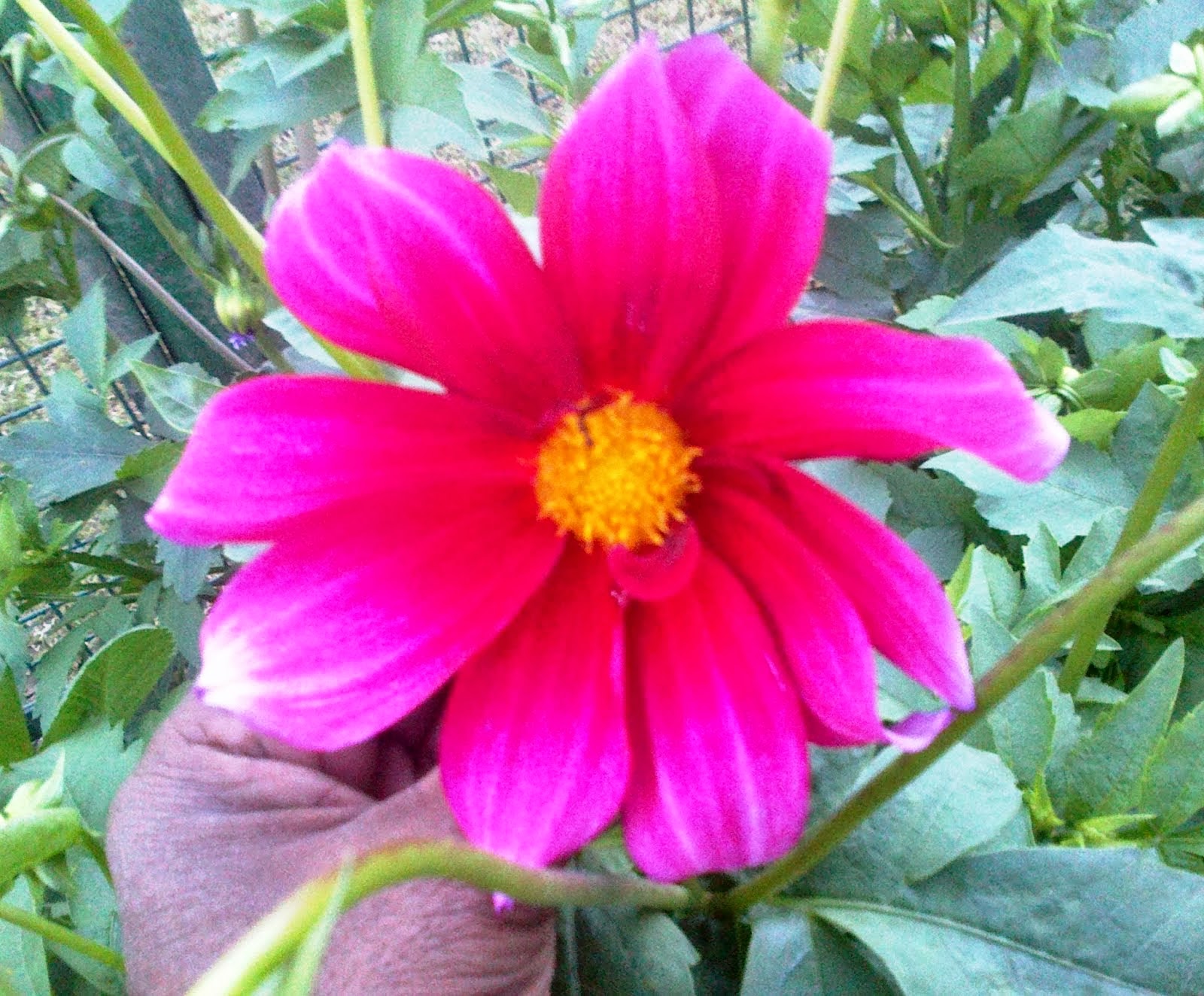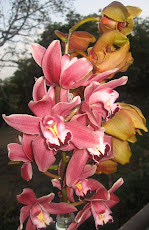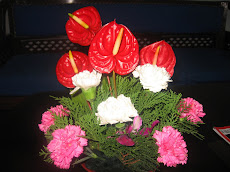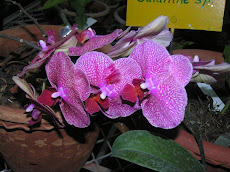
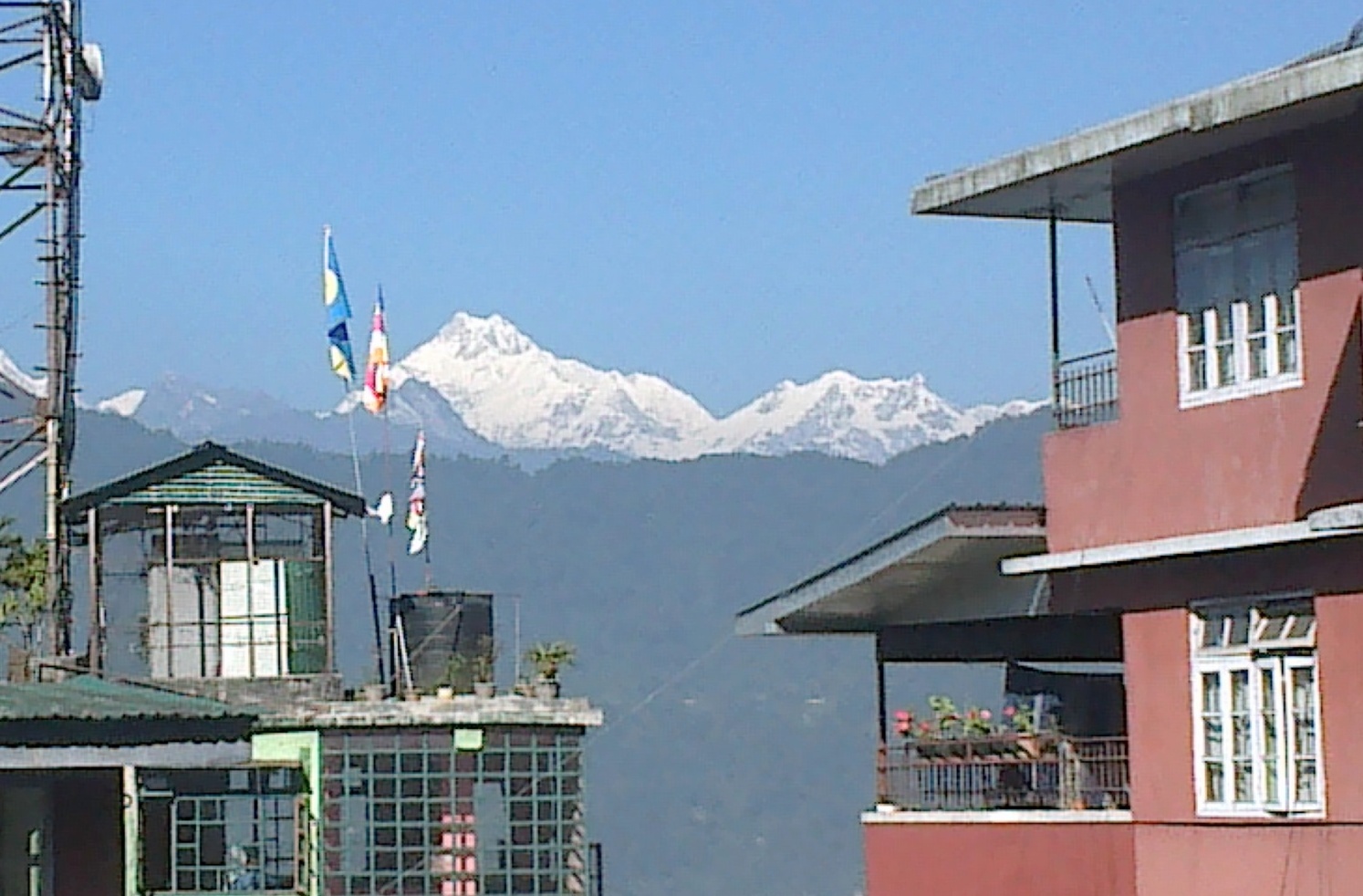
Pink Twins

Pink Twins
Gangtok

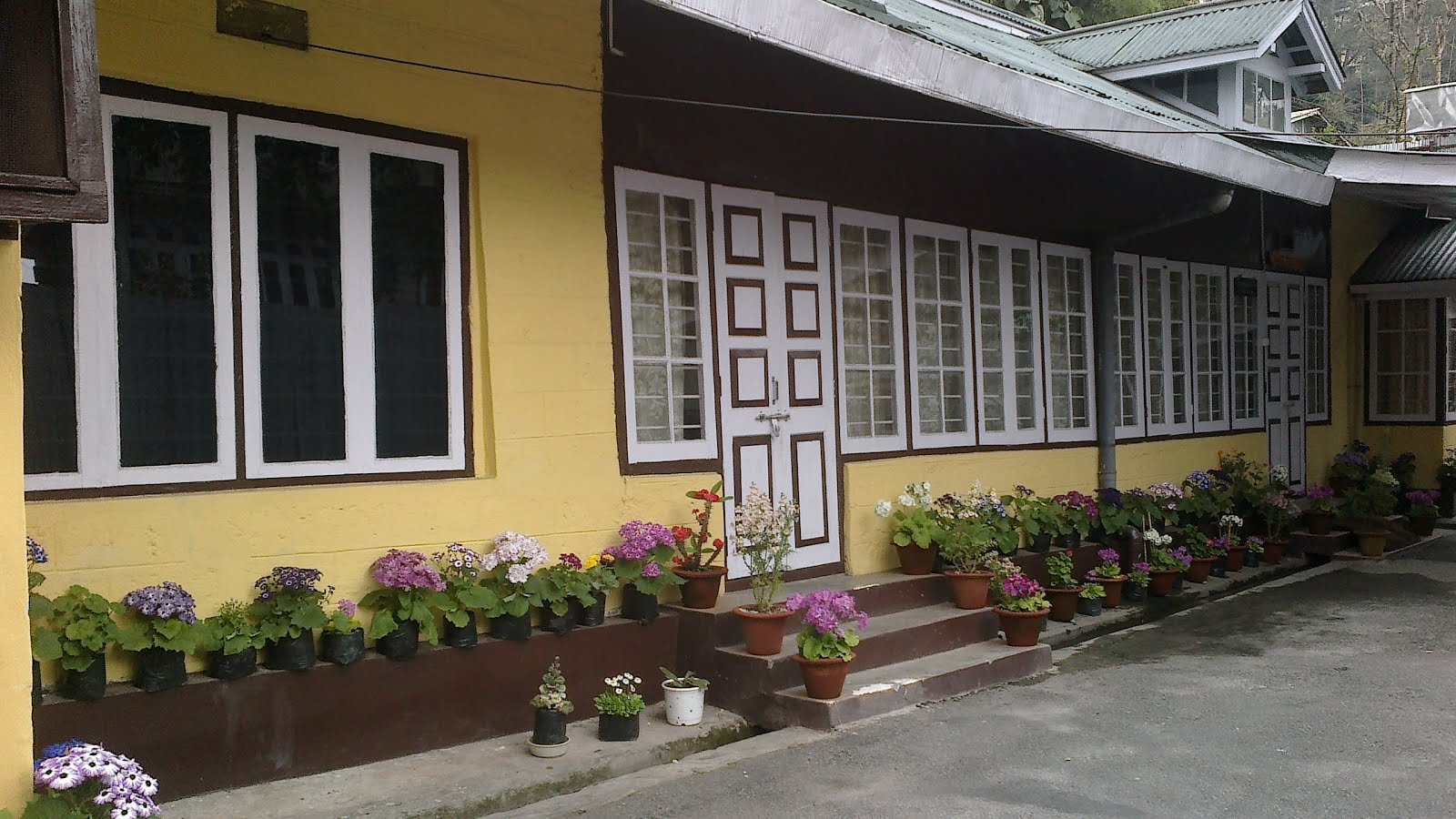
Yellow Villa

Yellow Villa
Gangtok

Sparkling Rai Saag

Sparkling Rai Saag
Gangtok

Lovely Poppy Flowers

Lovely Poppy Flowers
Gangtok

A Different type of Seasonal Flower

A Different type of Seasonal Flower
Gangtok

Blue Flavour

Blue Flavour
Gangtok

Pink & White Combination

Pink & White Combination

Dark Pink Flavour

Dark Pink Flavour
Gangtok 6th March 16

Purple Charm

Purple Charm
CS Quarter Gangtok

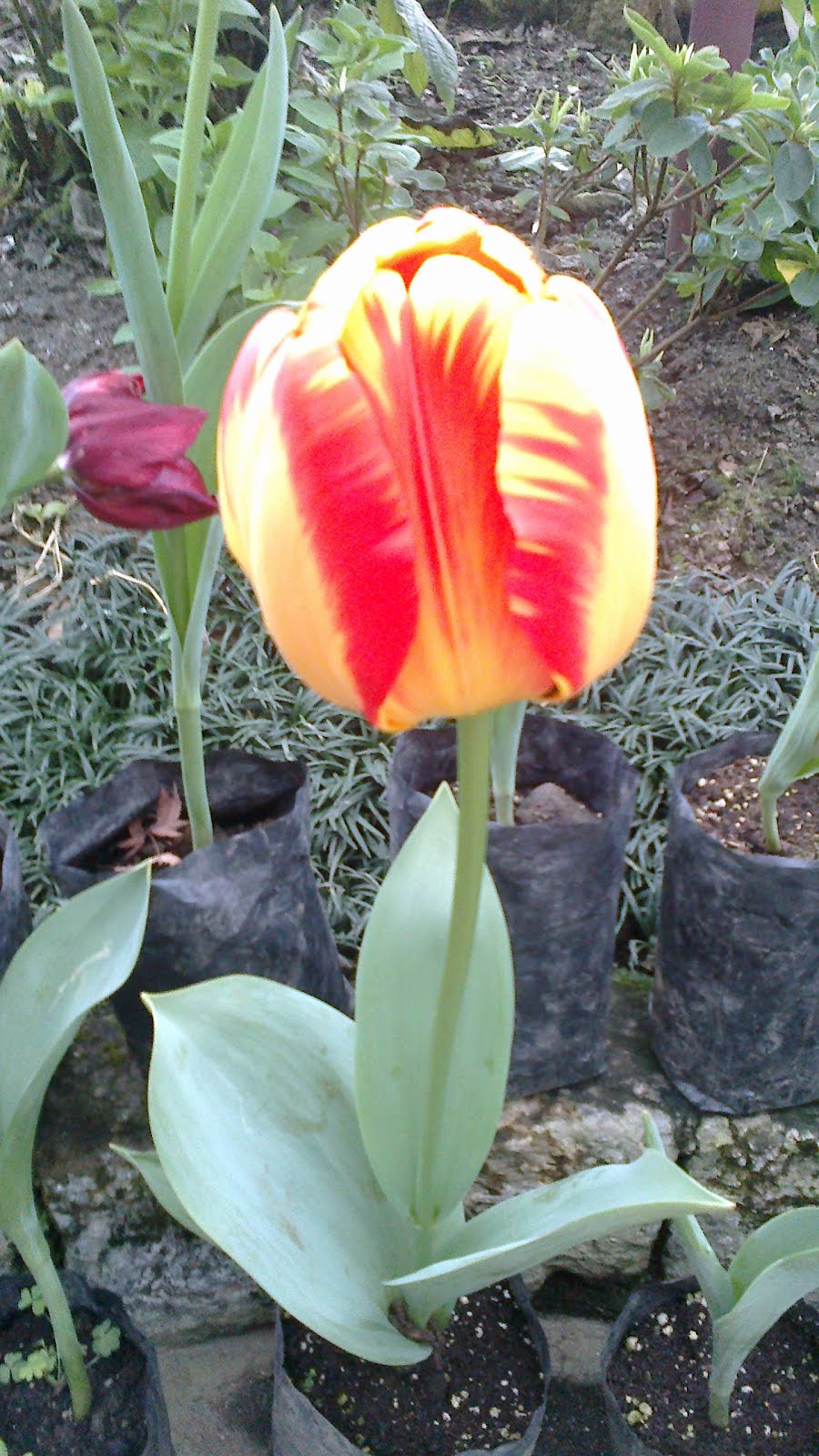
Magnificent Yellow and Red Tulip

Magnificent Yellow and Red Tulip
Conservatory Near Selep Tank

Charm of Red Tulips

Charm of Red Tulips
Conservatory near Selep Tank

Lord Buddha

Lord Buddha
1-D Terminal New Delhi

Attraction of Red Panda

Attraction of Red Panda
Saramsa Garden

Lord Ganesh made of oranges

Lord Ganesh made of oranges
Saramsa Garden

Charm of Seasonal Flower

Charm of Seasonal Flower
Gaurds Ground Gangtok

Unmatched beauty

Unmatched beauty
Sikkim Organic Festival

Green is always soothing

Green is always soothing
Sikkim Organic Festival 2016

Yellow Orchid

Yellow Orchid
Somewhere in Gangtok

White Orchid

White Orchid
Manan Kendra

Purple Orchid

Purple Orchid
Manan Kendra, 31-10-2015

Gift of Nature

Gift of Nature
Near Cherry Building

Majestic View of Sea

Majestic View of Sea
Marina, Chennai, 19-10-15

Typical Sikkim Pillar Carving and painting

Typical Sikkim Pillar Carving and painting
Hotel Nork Hill

Mirror Reflection, Changed Angle

Mirror Reflection, Changed Angle
Nork Hill, 24-11-2015

Mirror Trick

Mirror Trick
Hotel Nork Hill, Gtok, 24-11-2015

Yes we have the power

Yes we have the power
Qtr at Devt Area, 25-11-2015

Majestic View of K.jenga from SLA

Majestic View of K.jenga from SLA
Gangtok dt 20-11-2015

MIRROR IMAGE OR COMPUTER TRICK

MIRROR IMAGE OR COMPUTER TRICK
NEW DELHI 22-10-15

BRILLIANT KATHAK PERFORMANCE

BRILLIANT KATHAK PERFORMANCE
MRS MALI SMU 13-10-2015

SAROD RECITAL

SAROD RECITAL
SMU CONVOCATION 13-10-15

SHOWCASING SIKKIM CULTURE

SHOWCASING SIKKIM CULTURE
ITM GANGTOK 14-10-15

RED BEAUTY

RED BEAUTY
GANGTOK

ARCHITECTURAL MARVEL

ARCHITECTURAL MARVEL
MAYFAIR GANGTOK

OM NAMAH SHIVAY

OM NAMAH SHIVAY
MAYFAIR GANGTOK 02-11-15

Smile and Joy

Smile and Joy
24th September Delhi

Catelia Orchid

Catelia Orchid
Gangtok

Beautiful Chinaware Lampshed

Beautiful Chinaware Lampshed
Gangtok

Catelia Orchid

Catelia Orchid
Gangtok on 7-10-15

Morning Glow

Morning Glow
Denzong Regency- Gangtok on 7-10-15

Pink Orchid

Pink Orchid
Pakyong Area

Green Orchid

Green Orchid
Bojeytar Pakyong 26 Feb 15

Tabla or Log Piece

Tabla or Log Piece
HMI Darjeeling Nov 2014

Hand can do anything

Hand can do anything
Birla Science Museum Kolkata

Legacy and Heritage

Legacy and Heritage
Indian Museum Kolkata

Queen Nephretus of Egypt

Queen Nephretus of Egypt
India Museum Kolkata 4th Mar 15

A Buddhist Stone Art Piece

A Buddhist Stone Art Piece
Tashi Delek June 2014

Foot Print of Bason

Foot Print of Bason
Satpura Forest

Foot Print of Tiger

Foot Print of Tiger
Satpura Forest (MP) March 14

Unique Piece of Pine Wood

Unique Piece of Pine Wood

Lovely Twins

Lovely Twins

Pink,Pink,Pink

Pink,Pink,Pink
Orchid,not only Spl ,It lasts longer Also

Clean Water has a Different Impact

Clean Water has a Different Impact
Rangeet at Jorethang ,24-11-14

What a Ravishing Beauty ?

What a Ravishing Beauty ?
Teesta near Kalijhora, 19-12-14

Pre Dawn Captivating Beauty

Pre Dawn Captivating Beauty
K.JUNGA, 6:20 AM 18 -12-14

Another Dawn View -Different Angle

Another Dawn View -Different Angle
K.JUNGA, 18-12-14

View at Dawn in Biting Cold

View at Dawn in Biting Cold
K.JUNGA 18-12

Dawn Scene-2

Dawn Scene-2
V Awas 18 -12-14

Dawn Scenario

Dawn Scenario
K.JUNGA

Morning Means End of Night

Morning Means End of Night
K. JUNGA,

View at Dawn

View at Dawn
K.JUNGA 2 ,18-12-14

Early Morning Freshness

Early Morning Freshness
K.JUNGA, 18-12-14

What an eye opener early in the day?

What an eye opener early in the day?
View of 17-12-2014 from Terrace of V. Awas

Another view of full snow around Mt Kanchendzonga

Another view of full snow around  Mt Kanchendzonga
17-12-2014

Magnificent view after bone chilling night

Magnificent view after bone chilling night
17-12-2014

Beauty of Kachendzonga after a cold night

Beauty of Kachendzonga after a cold night
Vidhayak Awas Gangtok

Amazing charm of Green Orchid

Amazing charm of Green Orchid
HMI Darjeeling

Green Orchid

Green Orchid
HMI DARJEELING (13-11-14)

Bell Flower in full bloom

Bell Flower in full bloom

Yellow Orchid

Yellow Orchid
Dec 14 Circuit House

View of Kanchendzonga always inspires

View of Kanchendzonga always inspires
Vidhayak Aawas Gangtok

Cherry Blossom

Cherry Blossom
November 14 Ganesh Tok Gangtok

What a view after getting up ?

What a view after getting up ?
B-1 Vidhayak Aawas Gangtok

Chanda Mama looking at Kanchendzonga

Chanda Mama looking at Kanchendzonga
11-11-2014 VIP COLONY

Red Rose

Red Rose
Gangtok

Cranes having Gala Time

Cranes having Gala Time
Tigaon, Faridabad (2nd Oct 14)

Yes I am from Faridabad

Yes I am from Faridabad
Tiny, Beautiful Bird at NTPC, Ballabgarh (29.9.14)

Water Vital for Life

Water Vital for Life
Awesome view of Teesta near Kalijhora

Yes I had a Bath

Yes I had a Bath
Gladiola at 6200 ft.

Soothing Morning View

Soothing Morning View
Mt. Khangchendzonga from C.House (April, 14)

Natural Yellow Fascinates

Natural Yellow Fascinates
Gangtok (April, 2014)

Flowery Bell ?

Flowery Bell ?
Circuit House (May 14)

Riot of Colour in Monsoon

Riot of Colour in Monsoon
Circuit House, Gangtok(May 14)

Blushing orange

Blushing orange
Circuit House Gangtok (May 14)

Magnificent Taj

Magnificent Taj
Sept 2013

I can lift Taj Mahal

I can lift Taj Mahal
Taj Mahal,Sept end 2013

Natural fan to beat the heat

Natural fan to beat the heat
India Gate (24.08.14)

Engineering Marvel

Engineering Marvel
Coronation Bridge (22.08.2014)

Cascading water, soothing to eyes

Cascading water, soothing to eyes
Scene near Teesta Baazar (22.8.14)

Teesta attracts at every bend

Teesta attracts at every bend
16.7.2014

Monkey jump

Monkey jump
Teesta River, Birik(22.8.14)

Onset of Night

Onset of Night
Qutub,Sept.13

Qutub,Dusk Scene

Qutub,Dusk Scene
Sept.13

Together we take a Plunge

Together we take a Plunge
Clean Calicut Beach, Feb-2013

Setting Sun, always soothing

Setting Sun, always soothing
Dusk at a Gaya village(15.5.13)

Green Paradise in Concrete Jungle

Green Paradise in Concrete Jungle
Lake surrounding Purana Quila(20.10.13)

Tuesday, August 27, 2013

Lumsey to Thangu: Make An Unique Travel Statement

Lumsey to Thangu: Make An Unique Travel Statement                                 

One was longing to undertake a repeat visit to this beautiful high altitude vibrant Revenue Block. It is located in the lap of God-gifted North Sikkim. Idea was not only to sort out some nagging irritants linked to the site of the highest micro hydel project in the country (14,000 feet) but also to soak unhesitatingly in the unbelievable visual delight.
Jinxed Project
It was culled out from the files of S & T Dept. that the jinxed project was planned and initiated in 1998. Actual work is supposed to have begun in 2006. Rather ambitious for its times, it had its own share of challenges and problems. These were reported to have got complicated time and again due to the whims and fancies of the nominees, casual approach of the bureaucrats, permutations & combinations and all-pervading Pipon system, akin to the direct democracy pattern of the Greek city states. The scheme was slated to meet the bare minimum electricity requirements of the remote and sparsely populated village situated in the depleting tree cover zone, nearby hamlets, Gothalas as also the tough and sturdy Army units guarding the close by Indo-China border.
Characteristic feature of the area was an old Monastery having a commanding location. One can look for imprints of a bygone era in the rugged, vivid, yet attractive setting. Flavour of semi-pastoral period is also reflected faithfully. The highest transit camp no. 225 at 13,500 feet together with a field hospital blesses this tract of land with its usual facilities, frills and paraphernalia.
The Take Off
Since only one night halt was involved, we had to begin early from our beautiful, cosy and eco-friendly abode in Lumsey, the outskirts of Gangtok. Much against our wishes, quilt & blanket had to be thrown aside around 4.15 hours. Upon performing the essential and age old bathroom rituals, a cup of mixed tea (Gol dana & Temi) followed.
Side by side, munching of a few cookies, a prerequisite for gulping medicines had to be resorted to. Same was not even completed that Tommy and Bailey, members of our now depleted household began wagging their tails as a mark of faith and affection. In normal course, they would ‘knock’ at, between 6 to 6.30 am. We, however, were determined to look after them at this unearthly and dark hour, by opening ‘their’ tumbler, even though, having locked the kitchen, Jaya was not in a favourable mood to display even shreds of obligation in the semi-hostile chilly conditions of the day break. 
Sri D.G. Shrestha, the hard working and trust worthy Additional Director, arrived dot in time. His tour vehicle - a sturdy silver colored Bolero was supposed to be a symbol of reliability owing to its 4x4 wheels than our old but beautiful white Esteem Car (No. SK/02/077). Many fellow Gangtok-its were still in relaxed slumber in Lumsey, Ranka, 5th Mile Tadong, Dara Gaon, Convoy Ground, Amdo Golai etc.
Scene at Dawn
Around 5.30 am, we passed through Deorali, right below an area, once completely devastated by a massive land slide. Though it was settling gradually and was not even declared fit for construction, yet people in general were seen indulging in cut-throat competition with their counter parts elsewhere to construct high dwelling units. It was, to say the least, against all concerns for conservation of environment and bio-diversity. God bless them. I could not utter anything else.  
It is only when we entered the Indira Bye pass that we came across some discernible movements of men, vehicles and materials. Soon tiny tots began thronging the nearby footpaths and serpentine roads in their voyage to various places of learning. After all, free education policy of the State Govt., coupled with SSA was doing wonders on the  secondary socialization front. Side by side, ICDS, R.D.W’s, V.L.W’s and ASHA functionaries were also contributing their bits at the visible and crucial cutting edges. The ambitious institutions in the fringe areas and the grass roots were also taking the pressure off the parents of children of GREF and hydel companies.
Cattle, Goats, Poultry etc. began appearing along the road, time and again. Movement was slow due to bad condition of this part of the National Highway. Crores go down the drain in the name of maintenance and repair, year after year, yet, overall atmosphere looked congenial.
The Day Break
As we gained height, the snow peaks in the distinguished company of Mt. Khangchendzonga slowly appeared on the horizon. Clear blue sky in the morning glow formed a fantastic back drop. More beautiful and enchanting scenario was in store in another half an hour or so.  
Near Burtuk, exposure to lush green patch was soothing. Once a semi-forest area, this too was falling prey to the unsatiable concrete designs of a hogging creature called man. As a consequence, once charming, cascading and cute rivulets and waterfalls were becoming bounties of the past. It was unfortunate indeed from the perspective and angle of sustainable development and traditional livelihood patterns. When a former C.S. chose this location to settle down in early years of the new century, a few denizens of the capital city will not laugh at him but would not refrain from commenting either.
Tashi View Point
Once we gained further height and moved away from the city we were in for another marvelous visual delight. Though not in our original schedule, we were tempted to have a brief halt at the famous Tashi View Point (6100 Ft). The crystal clear view of Mt. Kanchenjunga and surrounding peaks was simply amazing and awesome. It defied all descriptions, something to be felt, experienced and cherished. Undoubtedly, it provided rare photographic opportunity of both types- static and moving. It was, nevertheless, distressing to note that a telescope and a mini restaurant inaugurated by the Chief Minister in 2006 were now rendered useless.
Pangthang
The slow passage through the Pangthang Sikkim Armed Police campus and the village proper enhanced further our levels of excitement and pleasure. A halt here or there, presumably for a cup of tea or for catching a different glimpse of the clearly visible snow peaks were no longer bothersome. When we will lose sight of snow peaks, the thick Pine and Rhododendron trees together with lovely cascading waterfalls and bewildering water bodies would enthrall us. However, we were telephonically reminded to move “fast-forward” to Thangu through a shorter route via Samdong & Dikchu.  
Entry into North Sikkim
A brief halt of 15 minutes for breakfast at the site of a small hydel power project being commissioned by NHPC in the outskirts of Dikchu in North Sikkim gave us a much needed break. The view of mammoth dam of Teesta Stage V project again of NHPC cannot simply be easily erased from one’s memory. More pleasure to eyes and mind followed when we hit the road  while proceeding towards Mangan through the new and short cut stretch built by GREF, little over a decade ago. The typical rain forest of Kerala kind was every where to see on both sides of Teesta river in the Dzongu region.
Magnificent Mangan
In order to catch up with time, it was decided to skip lunch at Mangan. A glass of water was gulped down. Taking stock of the rapid changes in this once sleepy town (population in 1986 was 723) was exhilarating. One also went smoothly down the memory lane, having begun one’s bureaucratic innings in this beautiful setting in the last week of August 1986. Visits to the confluence point of rivers, Kanaka and Teesta at Namprikdang still linger on.
No visit is complete and worthwhile unless one captures the unforgettable conical view of the guardian deity of Sikkim from Pakshep and Singhik. Needless to say, we did not want to be prominent exceptions. Jaya very nicely became my readily available unpaid for model. She was promised a grand treat in an up market eating joint in  down town Gangtok on return. Even she confessed to have rediscovered this unusual nature’s garden, say slightly after two decades.
Charming Chungthang
The drive between Mangan and Chungthang (30 kms.) exposed us to what would have been the horrendous experience of the earthquake that ravaged the area on 11/09/11. The devastations caused in Sakyong-Pentong, Tingvong, Passingdang, Lingdong, Singhik, Lanthe Khola, Naga, Namgor, Tong, Pegong, Chungthang and Bop were simply immeasurable. We stopped, therefore, at a make shift temple and a Chorten to pray for the departed 66 souls. This did not, however, include a large number of unregistered workmen missing from a crucial tunnel of the Teesta Stage III, an ambitious project being handled by an inexperienced Teesta Urja Limited.
With a gloomy mood, we entered the first floor modest flat of Sri Tega (the nominee’s son) in the heart of  Chungthang. The breakfast cum lunch served with usual Sikkimese warmth and hospitality by Tega’s mother and wife an hour before sunset proved to be a refreshing experience. A cup of Green Tea, thereafter was like icing on the cake.
 I did find out some time to take snaps of earthquake affected structures. The dwelling houses, schools, shops, hotels, animal sheds told their miseries yet again. It was very distressing to learn that even the SDM’s office was not spared, what to talk of the Veterinary complex and the hospital premises, wherein I was privileged to take lovely snaps during 1986-87 from a borrowed non-digital camera. Foundation stone for my sustaining interest in photography was laid in these settings. People of this tiny sub-divisional HQ were so simple and honest those days that the lens cover of an Yashika camera belonging to one and only Aroon was sent very faithfully by the slow moving SNT bus (average speed 15 Kms an hour) to my  Mangan  residence almost 48 hours after our departure.
Much of the ravishing scenario of the dense forest stretch between Chungthang and Lachen was missed due to partial to full darkness situation. The view of the innumerable waterfalls and the highest river bridge of the area very close to Chatten, however, was as usual very impressive. The panoramic Army helipad later dazzled like a jewel. A hot cup of Coffee with Pakoras, Jalebis and Cookies offered by Col. Niranjan at the Brigade HQ. gave a warm welcome to the attractive flat land situated at an altitude of 8,600 feet. A semblance of relief too was ensured for the ruffled feathers.
Lachen            
The hurricane stopover at Lachen ensured that we had the misfortune of missing its brilliant weaving, embroidery and wood carving traditions. Getting an exposure of the cloud burst point of 2006 which claimed 40 lives, the Dzumsa and the works undertaken by me in a record time while executing the UNDP sponsored Village Tourism Project (Lachen was adjudged the best) were also out of question.
The blanket of darkness soon enveloped the tiny valley. Early dinner laid around the fire place as per custom had its own fantasy and flavour. Bone chilling cold perpetrated countless visits to the loo, having sparkling Silver Fur interiors. I could succeed in politely turning down the offer of hard drinks. Jaya too was enticed without any success. In a MCP society like ours, how could spouse take hard drinks when the husband was a teetotaler? We posed to ourselves and had a hearty laugh.
The next morning one was up at 4.30 am. The disturbed sleep was possibly due to minus 4 degree celsius temperature. Both of us used two quilts in addition to famous ethnic blankets of Lachen in the modest room, purportedly being used as a Bed & Breakfast facility. Such a tourism oriented activity in this remote region would be an unheard of proposition, say a decade ago.
One had not shivered and struggled so much in this place while braving winter in the past or for that matter, when I had visited Vyberg or St. Petersburgh on Finland border of Russia (May 1995), London (Nov 2006) or Berlin (March 2006) when it was snowing all through in first and the third city. The traffic jam next morning was not irritating as in Delhi. Instead it was majestic due to sheer beauty and charm of snow and ice. Orderly conduct of the citizens even in inclement weather conditions was something to be learnt and admired.
First exposure to snow conditions
My first exposure to Lachen valley in November 1986 was unforgettable in the sense that despite being number 2 in the district, I could manage apology to an accommodation only after an hour of taking dinner. The then Governor, Sri T.V. Rajeshwar, father of present Foreign Secretary, Mrs. Sujatha Singh did not land by helicopter at  the nearest Army helipad due to what they proclaimed- ‘bad weather’.
It did snow a lot later in the evening and early morning. Had they tried, landing was possible prior to snow as I had trekked to the helipad to get satisfied. Idea was not to spend more than a day in tough snowy conditions as I was not properly dressed to withstand what I considered that time, inclement weather, albeit, in the lap of marvelous nature which had all the beauties -large, small and miniature.
Introspection  
Though I slept that time also in a RDD nominee’s wooden house, for barely 5-6 hours, same was more than sufficient as I was young, energetic and dashing, opposed perhaps to the present when I feel that I am a poor reflection of my former self.
Whatever it may be, presentation of self in everyday life upon proper or careful introspection had heralded, thanks to my two post graduate degrees in Sociology from JNU, the famous left (?) bastion. Side by side, the process of profound dialogue between me and myself at night after dinner in front of mirror in the dimly lit rooms had begun. It was sure to help and guide my destiny in the years to come. “Presentation of self in everyday life” was perhaps having its impact and bearing on my action patters, both latent and manifest, if I may use R.K. Merton’s phrases.
Following the resolve over dinner in front of fireplace in the memorable company of Sri S. Gyamtso, Sri Shrestha, Mrs Nima Choki, nurse in Lachen PHSC and Tom IV, the cute snow kitten, I dared to take bath in the biting & challenging cold conditions, after winning a bet with Jaya. This was, incidentally, her first night stay in winter at a height of 8,880 Ft.
Amazing early view
When Jaya was getting ready minus usual make up, I took some amazing shots of quietly flowing Lachen Chu & handful of snow peaks, sparkling right in front, on receiving early sun rays. They looked initially darkish pink and pink, soon to transform into bright pieces of gigantic Crescent oranges. It was a sight to watch, behold, capture, get mesmerized ……….. and what not. At dawn, as such, you are replete with energy and inspiration .Consequently, one famous English poet has uttered – A thing of beauty is joy forever.
Lama Ongden peak
When we finally came out at 5.45 am, prior to hitting the road what we saw in front was much more impressive – The Lama Ongden snow splattered peak (5868 meters) was in its crowning glory, looking much more beautiful than what we saw half an hour ago. We shot at it from different angles for the sake of future.
Some more such peaks could be sighted from Zemu Chu, the base camp of Kanchenjunga expedition. We also could capture the ravishing view of Lachen valley, slowly waking up to face the day. It was a perfect start to the great day ahead to the land of Thangu (13,500 ft.), Chopta (13,800 ft), Lunak La (15,000 feet), Zaru La (5100 meters), Gurudongmar Lake (17,800 feet) and Tsho-Lhamu, the origin of Teesta river at 18,500 feet.
Drive was slow, sturdy and lovely. No other vehicle was in sight. A waterfall on the left was presenting an attractive sight. We could see some Yaks and Mules here and there. It looked like a shot straight from a western movie. Only a cow boy was conspicuous by his absence.
Shivling Peak
Very soon we were fortunate to see a Yumthang type wide valley full of Rhododendrons on to our right. The Lachen Chu together with soothing high altitude vegetation was criss-crossing remarkably. One stopped by for a short photo session. While Sonam Gyamtso and Shreshtha obliged, Jaya preferred the warm interiors of Tata Safari/Bolero. Basking in glory like this also sometimes has its own merits.
By 7.00 am the awe inspiring ‘Shivling peak’, once shot meticulously by Sri Pramod, D.E., Tourism was seen on the right. It could stand out on its own  on the other side of the river. Though a major portion of terrain was devastated, the peak simply remained prominent. We had the privilege to show its picture in Sikkim Tourism calendar in 2005.
Between 7.30 and  7.38 am, the flat ‘table’ peak in front gave a mesmerizing look. We could not resist the temptation to take photos, knowing it fully well that one was getting further behind schedule. One took also photos of damage to the road by the  earthquake. The green patch of pristine Pine looked simply awesome. Soon one comes across a few Gothalas, though only a few individuals wearing long leather boots and Army Coat Parkas were seen here & there, looking after cows and Yaks.
Kalep and Gyathang
When the Cell watch shows 7.40, we reach Kalep, a beautiful valley on the left side. A ‘table’ mountain forms a magnificent backdrop. Another photo opportunity is not to be missed.
By 7.50 we reach Gyathang (10,000 ft). Abode of six Gods, a heart shaped island instantly attracts. The place, 16 Kms away from Lachen, to me also resembles Yumthang, situated on the other axis at an altitude of 12,000 feet.
Yakthang Village (12,500 ft)
At 8.00 am, what a sight we see next. An old affectionate woman in her 70’s milking a frail brown coloured cow from the wrong side. Her ethnic dress, colourful fur cap and fair skin impressed immensely. Though it was eye catching & interesting, I was aspiring to see a Yak being milked in this area. The shadows emerging under the clear and strong sun were utterly striking. They undoubtedly made a mark.
Another small round island in the middle of the river is seen on the left side. It satisfies our urge further. We do not forget to munch pop corn and boiled Maize together with lots of tea and hot water nicely kept in the large Chinese thermoses. It is repeated time and again. At the same time, we do bask in the glory of Sun for a while.
Now it is time for the snow to emerge beautifully on both sides of the river. Till 15-20 minutes back, only ice, that too, dirty ice was pleasing our senses.
21 Elite Unit
Sharp at 8.05 am we come across 21 Elite Unit of Army after 2 kms. of Kalep. Ankoor and Jaya had come upto this point in September 1991. Bauwa or Babu, as we will affectionately address him, was barely 2.5 years old. I vividly remember the instant transformation of his chubby cheeks into pinkish red colour due to effects of low oxygen supply. Inclement weather, thus had compelled their halt, while I being the D.C., North, had no option but to proceed ahead with my inspection of alleged Army encroachments along the road leading to Gegong (Kareng) plateau. One remembers fondly Late Sonam Lepcha, the ever jovial SDM, Chungthang at this juncture.
A bout of sunshine emerges. It is very refreshing & welcome. Another small village is seen. A wooden bridge over a Khola on the left side looks like a scene straight from a Hindi movie. I imagine that a hero & heroine may approach each other from either side, And a villain may emerge from nowhere to stake a claim over the damsel in romantic mood if not in distress. Whatever it may be, the effect of body chemistry is bound to be absolutely sizzling.
The bridge is also having a splattering of snow, which enhances the beauty of place further. An attempt is made again to capture the nuances. It is also the time for disappearance of the tree line. Road condition deteriorates. The valley is, however, flatter than before. One sees a board indicating the progress of Kalep – Giagong road (19.285 kms.) being constructed by the 86 Road Construction Company (RCC) of GREF.
First view of Thangu
When the watch strikes 8.15 am, one gets the unbelievable view of the flat village of Thangu from a distance of half a kilometer. Flat, tree less mountains are seen all over, prompting me to shoot with a rapid speed. I am tempted to get down to have a direct feel. It is a maddening experience, even if it is difficult to take long steps. Breathing all of a sudden gets affected. But the view of following does not affect the spirits: Snow Pigeons, light blue color of Lachen Chu, unusual shape of vegetation less mountains, cute dwelling units, sustainable  Army setup , fluttering prayer flags of five colors: blue, denoting ocean and sky, white symbolising peace, red ( ), green for earth,  and yellow (            ). Last, but not the least, the affectionate smile on the faces of Mrs. Rinzing Lhamu and her meek husband (Tega’s In-laws) has a spell binding effect. We take quick shots even at the risk of slipping on the hard ice on the road. Between 8.25 and 9.00 am we are treated to a very hearty breakfast in the house of Mrs Lhamu. All sorts of vegetarian and non-veg items are served with lots of care so early in the morning. Corn, Wai Wai, Soup, boiled vegetables, chicken, meat of local Sheep, all taste sumptuous. The famous Thangu potato and huge size of Shalgum are not to be missed in one corner
Challenge in Restroom
When I have to use toilet, there is no water in the bucket. Instead, it is all ice. Naturally, either I wait for it to melt or request Amla (Mrs.Lhamu) for a helping from kitchen. When Jaya also desires to visit the rest room after enjoying one of the most beautiful scenes of Lhasa Chu from the window, she does not wait for ice to melt. As she could not relish a joke, we have a big laugh at her cost. As a matter of decency, I don’t forget to tender an apology instantly.
The Inspection  
All said and done, we eat and drink to our satisfaction. Provide sufficient warmth to our body, prior to inspecting the site involving a careful and very slow (due to high altitude) trek along a PMGSY road going to Byamze village. Though, the velocity of the snow fed Lhasa Chu was difficult to be measured yet repeated assessments had confirmed that discharge per second even in lean season could sustain a micro hydel project. Looks wise also it was a world apart. The gushing rivulet was not only looking good, it was capable of sweeping away life and property in the event of flood owing to heavy down pour on the higher ridges. The cloud burst in Manali and Leh three years ago immediately remind us of the harmful aftermath of a powerful catastrophe.     
When we turn here & there for rest, it is a heavenly sight all over. Jaya opts for taking the vehicle up and has a feeling of great victory near the water collection tank (13, 900 feet). She looks very cheerful, still & calm in the company of bright and strong sunshine. Her eyes are rightly hidden by the newly bought dark glasses. She takes off her French Marooned coloured cap very often.Before we complete the next lap, we meet a few locals and labourers. Another photo opportunity is certainly not to be missed.  
Soon we complete the essential formality of inspecting the pipeline, dug-up ground, Pen stock etc. Water diversion point was simply looking out of world. Meditation, therefore, became a must in such a bewildering setting. Control over breathing learnt while doing Yoga comes as a blessing in disguise.
While retreating, we encounter numerous beautiful ice flaks, Rhododendron and endemic pine roots and drift wood. Some are picked up to be used as curio items. I carry a Dhuppi sapling together with its leaves to be burnt as Incense while performing Puja at home.
Thangu Monastery
As 74 year old re-incarnate Chewang Lama, a Tibetan was waiting for us in the old monastery of the village since breakfast time, we had to pay regards to him and the Guru Padamsambhava in the earthquake affected religious place. A Cosmopolitan Solar Energizer at this height makes us comfortable. One learnt that this century old monastery had 1,500 miniature clay images of the presiding deity, all made by the revered Lama between 1963 and 1990, subsequent to receiving divine sermons of His Holiness, the Dalai Lama. These were for general well being of the people. He had kept some aside for being given as presents to the distinguished visitors. I too was privileged to be a beneficiary.
Upon chanting of hymns and lighting of required butter lamps, as per tradition and out of profound respect, I offer some money to the deity and the Lama in the name of Ankoor, our dear departed. Jaya,for half an hour or so gets into a mood to meditate and contemplate. While we talk thereafter of organizing more relief for the earthquake affected monastery and the people in general, she is engrossed in her own world and perhaps, rightly so. Why shouldn’t she be? While I am busy officially and otherwise, she has to brave hard, long and arduous days all alone.
While descending, the view of Thangu village, serpentine footpaths and Army settlements is simply eye-catching. Something to be seen seriously, difficult to be described.                                                   
Chopta Valley
One can go on and on. We are yet to narrate the brush with the splendid Chopta valley. It may have been a lake in view of the present Geomorphogical conditions. Close by are the high altitude Yak farm, the ‘enigmatic’ Chumamu Khang (6,000 meters), the ‘chocolate’ peak for me all the while and the highest Tourism Guest House at 13,500 feet built under my close supervision in 2005. The eye-catching Igloo huts of 86 RCC, the far off Lunak La pass at a height of 5,120 meters on road to Mukuthang (30 kms.) and Zaru La at 5,100 meters are the other attractions which will have to be postponed for the next visit.
Before Jaya develops headache and fatigue for not being used to wearing caps, we indulge in photography session yet again to capture this unbelievably beautiful sunny & windy landscape. While turning back at 11.20 am, it is nice to wave at GREF personnel and their indomitable work force. Earth is full of sand and pink coloured stone chips. May be, this place was in the extreme end of the Tethys Sea once upon a time. I donot forget t, carry a piece of stone as a momento.
VIEW OF CHUMAMU KHANG
A tea break with Wai Wai opposite fire in a stout labourer’s hut in the company of a cute mountain dog follows. We are privileged to get another view of Chumamu Khang, in addition to the Golden Eagle, Snow Pigeon, Tibetan Mouse, Chinese jet black Crow and the Riband bird. The peak named, had unfortunately claimed the life of Sri Das, an IPS officer of Punjab Cadre and a former Director of SGMI, Gangtok in 2005-2006 when an audacious mountaineering expedition was being undertaken.
No energy is left now for an adventure to the Gurudongmar Lake. We therefore, pray to Guru Padmasambhava from here, having heard a great deal about his miracle over there while coming to Sikkim from Tibet, upon helping the people to get rid of devils and bad omen. According to a legend, due to digging of one corner of the lake by his stick, that particular portion does not freeze even in extreme winter conditions. Who says, therefore, religion is unscientific?
Time to Rethink & Retreat
More upward movement would have meant inviting further strain for the body which may have spoilt the good feeling of having enjoyed the nature in its extreme beauty on a clear sunny day. Though we had not acclimatized as per requirement, if not procedure, we managed to show and display our mettle rather well.
Before I conclude, I must share an experience of September 1991. I made it in similar fashion from Mangan to Tsho-Lhamu (186 kms one way and a movement from 4,000 feet to 18,500 feet) and back in the same day. However, I did conk off and vomit around 7 pm. It was right opposite Lachen Police Station. The faithful Govt. servants brought hot water and extended all help that was possible.
In view thereof, I suppose, the turnaround above Chopta valley at 12 noon on 20/11/2011 was very much justifiable. Later, a farewell cup of tea at the Transit Camp completed the journey nicely. We thanked Col. K.S. Mahar, the C.O. in absentia. Later he took the trouble of calling on me at Gangtok. While entering vehicles for our last lap, we could sense that air had become thin, while Sun was fairly strong and scorching in the zero hour. A sack of tasty Thangu potatoes purchased for Rs. 500/- and a cute and submissive Doggy kept in an open carton by Sonam Gyamtso were the deserving mementos placed on the rear side of the vehicle. A competition followed for taking a nap, turn by turn……     
Post script
With the passage of time, it will be and it is a cherished experience. The journey to this high altitude destination was not as easy as it may look in print. It entails sizeable patience, perseverance and hard work. Nevertheless, one felt happy and encouraged. In my service spanning almost thirty years I have been to many beautiful places all over the world. But I suppose, I was yet to rediscover a place like this.
I do not know whether we tasted a bit of success or had substantial accomplishment. Certainly, we were riding high on freshness, rejuvenation and creativity fronts, having thoroughly enjoyed what India Today Travel magazine declared in 2010, the best mountain drive in the country.   


Tuesday, July 2, 2013

ACHAMBHA BATHING POINT, GANGTOK


          It was a Sunday, a day to relax, to forget or postpone your worries, tensions and stress situations.  Previous evening was spent rather leisurely- an early closure of office, a slow walk on M.G. Marg, a quiet dinner and last but not the least, a late night movie on TV about oft-repeated topic of marital discord leading to separation and again ending at a reunion in true Indian style.  Sleeping late also means getting up late.  Nevertheless, I kept my appointment with Sharmaji to venture a walk upto the uppermost tier in the town despite my sprained ankle.  We did visit the Palace Gumpa to receive the blessings of Guru Padmasambava, followed by a gentle walk down to the Flower Show, the Ridge Garden and the upper terminal point of Gangtok Ropeway.  Having felt warm after forty minutes of walk, we did Pranayam in “a surrounding”, what Sharmaji often calls “is full of oxygen”.

            Later part of the first half was spent in relaxed bathing in sun, so much so that time passed by and I forgot the actual bath and puja.  Had a quiet meal with Hims, upon winding up our conversation about worldly affairs, unpredictable weather, responsibilities of parenthood, emerging political trends, state of economy, rising number of concrete houses & vehicles etc.

            Sharp at 1.45 PM, we began our drive in a maroon coloured Alto towards Tashi Viewpoint.  The town generally wore a deserted look.  Occasionally, a few tourists would be seen here or there.  It was a soothing, crystal clear and extremely attractive blue sky.  It was difficult to spot a patch of cloud.  By 2 PM, we reached the famous Tashi Viewpoint (6500 ft).  Mt. Kanchenjunga, the third highest peak of the world,  however, was not visible. 
         Despite clear sky, it was covered with thick layers of blue & black clouds.  The scenario in the foreground was nevertheless clear, so were a few snow clad peaks.  Our binocular brought us still closer to snow capped mountains.  A few tourists and lovers thronged the place.  It was nice to notice that the point was spotlessly clean.  We kept debating whether it was as a result of inculcation of good habits or reduction in tourist inflow at this time of the year.  While descending, Sharmaji expressed a desire to have a cup of tea but I persuaded him to resist his temptation as we had seen hardly anything to feel fatigued.

            The visit to next spot, a drive of barely a kilometer towards Ganesh Tok was quite an eye-opener.  We stopped by an unimpressive, yet beautiful (due to its setting) waterfall.  Began climbing rocks to our left.  Having climbed almost seventy feet or so, we discovered a small pool of clean water.  Since it was all quiet and sunny, I was desperate to take a nap.  Noting impelled the same more than playing of mouth organ, which I had begun learning lately.  While I was engrossed in it, Sharmaji took off his sweater and cap and began rolling up his jeans to feel quietly flowing clean water.  I too touched it a couple of times but found it too cold to bear.  In no time, I finished playing mouth organ and dozed off to sleep over the warm rocks.  After it was quite some time (at least 20 minutes or so), I realized that I was all alone facing the waterfall.  My friend had quietly disappeared to climb up to the upper main pool of water.  He called me once he was sure that I had got rid of my unavoidable slumber.  He advised me to continue relaxing, rather attempt another round of snoring, if needed, in such an idyllic setting.  In contrast, however, I felt embarrassed.

            The climb to the main pool was rather tedious, more so, due to my sprained ankle.  Nevertheless, it was enjoyable.  Just before we reached the summit, we had seen a few urchins, bathing and playing.  By the time we reached our destination, they had disappeared.  The sight of a natural pool of water of the size of 30x20 feet was very-very soothing.  I wish we had brought towels/shorts with us.  Another round of mouth organ was played.  I became a virtual Pied Piper for a six-year-old boy, named Rohit Subba, who came up with his moving wheel and a plastic ball.  He smiled and giggled.  After some hesitation, he desired to know if we wished to take bath.  We replied in negative.  Nevertheless, we persuaded him to do the act.   This he did, a couple of times before he finally decided to wear his birthday suit.  He sat and rose, stood and jumped but it was quite some time before he began swimming.  We soon discovered that he swam like a champion.  By the time he came out, he was shivering.  We gave him adequate moral courage and pat on his back.

            When we turned back, we realized that four more children, namely, Sanjay, Vinod, Karna Bahadur and “no name” had come up and were staring at us, rather curiously.  We exchanged greetings.  It was learnt that they were all students of local Burtuk School.  They were keen cricket beginners as well.  One of them was carrying a small bat. Like Rohit, after showing initial hesitation, they all took dip into the pool water, one by one. They thoroughly enjoyed themselves.  Once it was ensured that they were all dry, we began climbing down.  Over the highway, on the request of children, we played a short game of cricket for an hour with a makeshift ball.  The children were given a free ride after finishing the game.

            We soon realized that time was clicking and the sun had begun descending.  It was time for us to leave.  We stopped near a somewhat developed picnic point, having a bigger and wider waterfall than the previous one but the serene and quiet atmosphere were missing.  There were plenty of cars parked along the highway.  A group of people added colour and gaiety to the place by their impromptu drinking and dancing. A teenaged couple was lost in its own world in one remote corner. 

            A festive mood on a still lower scale was noticed at Ganesh Tok (6200 ft), wherein, ultimately, I acceded to the request of my friend for having a hot cup of Temi Tea.  A plate of tasty Potato Pakoras and Alu Chura came as a compliment from the group of dedicated poor women, who run the cafeteria.  We did gulp a dozen hot & enjoyable Momos & imagined the value addition in the scenario, if this place had a toy train on the lines of Shimla, Ooty or Darjeeling . While driving down, we saw the Sun setting behind Ranka Hills, next to the world famous Rumtek Monastery. A drizzle followed for a while.
            It was a very satisfying and memorable day.  It was a day, rather well spent. A day devoid of official and worldly worries & responsibilities.  We were ready to face a “black” Monday after a cheerful Sunday.

Monday, June 17, 2013

Rangilu Rajkot: Perceptional Experiences of Gandhiland

        Rajkot, located on the four lane splendid highway linking Dwarka and Junagarh with Ahmadabad was the capital of erstwhile Saurashtra State from April 1948 to its merger with Bombay in November 1956. With a population of 16 lakhs, it is the fourth largest city of Gujarat. Geographically, it falls in a very dry, semi-arid region. Summer starts as early as March. While this is scorching, winter is pleasant. Literacy wise, the average of 89% is better than national figures. Demographically, while the Hindus are in a majority, Sunni Muslims are found in large numbers. Presence of Sindhis, Marathis, Bengalese and Tamils. gives it a multicultural colour. It is also a harmonious and tolerant society as hardly any communal disturbance or tension (a blot on Ahmedabad or Baroda), has ever been reported.

        By and large, the society is vegetarian. As Rajkot formed part of Kathiyawad, people are also known as Kathiyawadis. By nature, they believe in enjoying themselves, freaking and eating out even late at night. They are found gossiping in parks or roadside even after normal dinner time. Women are fond of spicy food and loading themselves with interesting pieces and patterns of embroidery coupled with a variety of jewelry. Seeing street smart girls & women on swanky Scooties strengthens the resolve regarding women’s empowerment. Why should boys have all the fun? While it is a sign of upper mobility if not a reflection of forward looking approach, the shopkeepers invariably bring down their shutters between 1.30 to 4.30 p.m. to relish their sumptuous sweet & salty lunch, religiously followed by a nap. There is, thus, no end to personal pleasure even if it makes a hole in one’s pocket.

        No description of the place is complete without throwing light on Mahatma Gandhi. Being born in Porbunder on 2nd October 1869, he studied from 5th to 11th class at Alfred High School from 1880 to 1887. Consequent upon availing of the Grand Darshan of Lord Krishna at Dwarka, I had the privilege of visiting his ancestral house in September 2009 along with Jayshree and Ankoor. So to say, a permanent link with this ‘pilgrim centre’ was established by way of presentation of a copy of Mahatma’s auto-biography to us. We chose the Hindi version, as an English version already exists in what I call, an apology to a home library. The sound of the Bhajan- Raghupati Raghav Raja Ram, Pati Tapavan Sita Ram sung with melody and devotion by Jayshree on the spot was very timely and spontaneous. Same still reverberates, reminds and resonates. Also vivid are the memories of the candid interface with the unassuming sons and grandsons of neighbours and self proclaimed friends of the Mahatma, each coming out with his own version. Munching of local sweet and salty snacks and bhujia in the market, equally shared by humans & animals was refreshing, so much so that dinner comprising of different culinary flavours became a confirmed casualty.

        Turning back to the Rajkot bond of the Mahatma, during his schooling era, he had occupied a modest house built in 1880-81 in the busy main market area, now known as Kaba Gandhi No Delo in Gujarati. This is a typical Saurashtra style house with a central approach from an arched gateway. The house, now having glazed floors and optimum lighting has been kept spotlessly clean. Though, the photographs and documents have been displayed systematically, a brochure or a handout is very much needed for circulation to the visitors. Also both in Porbunder and Rajkot, the area around the heritage houses needs to be cleared up and spruced to leave a lasting impression on the tourists. In the modern world, after all, virtues and corner stones of simplicity have to be sold well to sustain interest in a man who went on to guide the destiny of nation. Attention of trusties and patrons on the spot was, therefore, drawn in this regard.

        According to the oral and written traditions, Gandhiji, son of a Diwan (Prime Minister) to the king of Rajkot had to shift to Ahmedabad for taking his matriculation examination as Rajkot was not a centre of Matric Board at that point of time. Being an ordinary student, he managed to secure barely 39.52% marks. A photo copy of his partly illegible marksheet displayed in a secluded and non-descript corner of the school bears testimony to it. Mrs. Gita Ben Ajmera, a very affectionate senior teacher incharge of the Gandhi Memorial Room of the school proudly takes you around the place and meticulously explains twenty paintings drawn by the artist Balwant Rai Joshi on the famous bhajan – Vaishnav Jan To Te Nere Kahiye written by Sri Narsingh Mehta. Gandhiji had a liking for it. Only a few personal belongings of Gandhiji are kept but not displayed properly. Very strangely, the school is waiting for some funds long promised by the D.C. Rajkot.

        The façade of the school building is very impressive. Its Gothic architecture has been maintained well. Started as a Rajkot English School in 1853, it became Rajkot High School in 1866, Kattywar High School in 1868 to be rechristened as Alfred High School in 1907. In 1971, as a mark of respect and association of Mahatma Gandhi with his alma mater, it was renamed as Mohan Das Karamchand Gandhi School.

        Drawing inspiration from the life and times of the Mahatma, an effort was made to cull out his considered views on humanity and environment. His views on significance of conservation of environment became the guiding and motivating force for a two day seminar on ‘Environment and Human Rights’ at Rajkot in association with the University of Saurastra. Prof. Padaliya, the V.C., though reluctant to begin with about the dates and not the idea, per se, moved positively forward and extended whole hearted support. His colleagues Prof. Dodiya and Prof. Ghosh spared no efforts for the success of the event. The discourses concentrated on………………………… Students, faculty and some social activists showed their disciplined involvement and concerted efforts. The climax in the form of typical Gujarati dances, viz, Garba, Dandia etc. and some north Indian dances left a lasting impression about the upbringing, socialization patterns and fast adoption of skills by the youngsters, especially those from the fair sex. Their childish charm, giggle, on stage chemistry and overall innocence takes you a different world. Their glamour quotient too was high, at the same time. Prof. Rathore, a senior citizen singer enthralled the audience by his memorable Md. Rafi numbers. Similar to her meticulous performance during the inaugural as an anchor, Prof. (Mrs.) Upadhaya simply impressed like a star V.J. Partly lit if not candle-lit dinner in the spacious lawn of the V.C. gave a good finishing touch. Varieties of Gujarati food were not only available but were served with grace, courtesy & dignity.

        In retrospect, even though we made a mark to remember and rekindle interest in Gandhi followed by creating some awareness on the need to conserve and protect environment from human angle, we failed in planting a few saplings due to a multitude of formalities if not idiosyncrasies connected with the VIP visits. As a consolation, the information came that plantation was not an easy proposition in this tough arid zone. For their survival and sustenance adequate water was needed, which itself is in short supply. While departing from the palatial Circuit House at the land of Mahatma, I had no option but to do a tentative compromise with the reality narrated to me.

        The delayed flight at the chaotic terminal building of Rajkot gave me more food for thought on the Mahatma and his actual relevance in modern and ‘liberalised’ India, a factor not well understood or comprehended but mentioned and repeated, time and again like a temple ritual. By the time the aircraft zooms off to dizzy heights, one thing became certain- the virtues of simplicity advocated by the Mahatma have been probably by passed, rightly or wrongly by the materialistic orientations of the people of his State. Selling Gandhism as a tourism product should not, however, be misconstrued, if we believe in the dictum- there is always a counterpoint.

        All said & done, it was an intense but liberating journey. Can we therefore think to discover Gandhi within ourselves? There is no need to plan a giant leap forward. Patience perseverance and tolerance (PPT) would do.

Tuesday, June 4, 2013

Wayanad, The Green Land Of Paddy And Much More


            Wayanad, situated not far off from the beautiful coast of Kozhikode is considered the biggest hill station of Kerala.  The name is reported to have been derived from the word ‘Vayalnadu’, meaning the land of paddy fields.  The present District, carved out from parts of Kozhikode and Kannaur, came into existence as 12th District of state in November, 1980.  Considered to be a ‘backward’ one according to the parameters of Planning Commission, it is surprisingly one of the biggest foreign exchange earners owing to its cash crops - pepper, small cardamom, coffee, tea and some spices. It has numerous native tribes, such as, Paniyas, Kurumas, Adiyars, Kurichiyars, Ooralis and Kattunaickens. The first of the lot is perpetually afflicted by the maladies of illiteracy, malnutrition, alcoholism and so on.  Adverse effects of Endosulfam pesticide and Sickle Cell disease add to the woes.


           Sultan Bathery, the place of our halt is a Taluk headquarter. Connected to the legend of Tipu Sultan and an ancient Jain temple, it is located at a distance of 30 kms. from Kalpetta, the District headquarter.  Talking of weather, though maximum and minimum temperatures are in the range of 32-24 degree Celsius, overall, it may be considered cool.  When night sets in, temperature plummets. And you look for a blanket. Sunrise at 6.35 a.m. could be called late.  By and large, morning sky is not clear.  On some days, it can be as misty and wet as in mountains.  Same may be attributable to the existence of maximum Reserve Forest area of the state falling over here. An elevation range of 700 to 2100 metres leads to absence of fans in many buildings.

           Tourism Department Guest House, the epi-centre of our activity, is located on a higher elevation, slightly away from the main town on the National Highway leading to Ootty (95 kms.). Though, there is enough space, accommodation needs care and maintenance.  Service is good, except taking note of change of linen and a few sundry items.  Usual official plea, one hears that situation may improve on completion of a new 20 room block within the campus.

           It is quite pleasing to see traditional as well as modern typical Kerala styled tiled houses in the vicinity.  One hears the sound of Azan everyday in the pollution free atmosphere.  The Christian religious institutions have a plethora of buildings dealing with various social acts- counseling centers, health, polytecniques etc. Majority of the buildings are two storied, though owners may be super rich. Eye-catching hoardings of car manufacturers boast-price begins at Rs. 25 lakhs! They tend to compete closely with the advertisements of Kerala Silk Saris. Atleast some symbol of tradition is withstanding the onslaught of modernity.

Morning Scenario

           It is interesting to see coffee plantation for the first time. Its white flowers attract.  Height of the plant is more than that of tea. Supposedly, Pythons throng the place.  One of the tea gardens is seen in a Clergy Home.  A taste of local dust tea and coffee is different and refreshing.   A silver lining or encouraging factor about women in the state is that apart from being highly literate, they are 1035 in number per 1000 males according to 2011 Census.  By and large, they cover their heads but are not confined to houses. Many of them wearing traditional attire turned out to be active teachers, government servants, social workers and Punchayat members.  Girl children are seen rushing to schools with their heads also covered.  Men are seen selling fish, eggs, bread, biscuits etc. on a Bike or a Moped.  In the nearby villages, people are slowly waking up. In view of prosperity emanating from hard work, small constructions are seen everywhere.  One does not see any “kutcha” structure, as such. Pleasant sound of a Cuckoo kind of bird is heard off and on.  The noise of passing vehicles increases as the sun rises further by 7.00 a.m. 

           Good pristine forest is seen on both sides of the highway. It has a hard rock base, thus less vulnerable to the ecological disasters. One gets a healthy and positive impression that every institution maintains a private forest. Overall, people look contended.  Very few boards are in English.  Almost everything is in Malayalam. Only exception is the office of SCERT. It is nice feeling to observe the beauty of endemic vegetation and flowers in front of some private dwellings.  No one wears a helmet even while driving a bike with a speed of 50-60 kms. Unfortunate similarity with the main stream in this regard is noticeable.  Pope Benedict alongwith the regional Head Priests figures prominently in many posters. Bus stops look modern and clean but buses do not stop as no one is found waiting.

           A good view of the plateau and a flat mountain with an unusual small round peak can be seen from St. Mary’s Hospital and School.  A couple of well built and painted houses also make a mark in the morning sunshine.

           One is greeted with a power cut for half an hour on return. Though load shedding officially takes place for half an hour each in the morning and evening, lights invariably go off during the day time.  Consequently, one is devoid of power for almost three hours.  Still on this count, situation is better in comparison to the states in the East and North.


Market View
           In the market, most of the shops are closed but traffic is mind-boggling keeping in view the size of the place. The cars, autos and buses compete closely with each other for the limited space. But there is no stress, no misbehavior, as seen elsewhere. A few fish and flower outlets are seen doing brisk business.  Fish sold is of different varieties, including dry fish.  In the flower stalls, Jasmine dominates.  At the eating joints, mostly men clad in half Dhoti (Mundu) are seen relishing Bara, Idli, Appam, and Coffee. Fruit shops, though closed, attract in the sense that majority of them have nets in the front to allow passage of air to ensure freshness of fruits. Lottery tickets seem popular, reflecting obvious monetary ambitions.  Women do not lag behind men in their brisk sale from dawn to dusk.

           One also notices a large number of gold shops. It may be possibly on account of unchecked and unregulated remittances from abroad.  A big chain, such as, Malabar Gold and Diamonds, reportedly has managed to open 82 outlets all over the world in barely 20 years. But all that glitters is not gold. For, the presence of Counselling and De-addiction centres causes concern.

           Eye catching water melons and green coconuts are being sold in one corner of the main market. On the other extreme, fresh fruits and vegetables draw attention. An impressive Church Tower has a commanding presence at the Town Square. (Mind it, it’s a Hindu dominated area).  Such structures with an image of Jesus Christ or Virgin Mary are now a days also seen in parts of Goa, Nagaland, Mizoram etc. Supposedly, they take a cue from Hinduism if not making an attempt to imitate.

Brush With Nature

           A drive on the well maintained highway leading to Mysore through a National sanctuary turns out to be a very refreshing experience apart from ensuring a breath of fresh air, post-dinner. One is in lap of nature, away, though temporarily from the confusing if not madding crowds.  Sight of eleven deers is possible in two spells and stories only of crossing of elephants is heard. Solitude at this altitude has to be felt, not to be described.  Conservation of wildlife and nature, no wonder, is so important.   A typical Kerala style widely publicized Ayurvedic massage at a remote tourist hut is a welcome wind of change.  One should say, experiencing is believing. A conversation with a few villagers, thereafter, throws light on changing livelihood patterns.


           Leaving behind the above memories and those pertaining to schools, hostels, ICDS centres, health centres, F.P. shops, police stations, jails, visits to villages, IAY and MNREGA sites, interface with Punchayats, NGO’s, officers etc., we drive back to Kozhikode through the green, undulating, hinter land.  Tea gardens, here and there, sparkle in the morning sunshine.  A halt or two for buying local honey proves unsuccessful.  Presence of spice, craft and Ayurvedic outlets on the way impresses. A few telephone calls from the friends and relatives entertains.  After a good two and a half hours, we are shown cashew plants and some unique features of rich regional bio-diversity.  Next to follow is a place having largest number of gold shops.  One does not think that all of them had adequate security even if they thrive in terms of business.

Retreat through Golden Sand
            Saving of nearly an hour enables us to take a detour through Calicut city.  On the way, one was exposed to more prosperity specially in the dense but green pockets.  The Calicut Medical College & hospital has a towering presence due to its vast campus. It caters to a large number of patients from India & abroad.  One learns that this is the biggest in the state.  Entry into the city brings back the memories of bygone colonial days.  Traffic is on the higher side, but by and large it looks orderly.  Even when the atmosphere warms up, the first view of golden beach is amazing and awesome.  The very touch of clean sea and sand has a positive impact.  Walking bare foot is a pleasure.  The beach of blue Arabian Sea appears fairly long but having few visitors.  It gives a chance to a pair of white cranes to vent their suppressed feelings.  They simply behave like us while confronting the soothing sea waves.  It is rightly said- birds of same feather flock together.  Once one is free from sea-gazing, the view of somewhat unusual sculptors, tourists kiosks and British era bungalows have a binding effect.  Photo opportunity thus provided, is not to be missed.


            Suddenly a look at the watch together with a ‘mobile reminder’ compels us back into the car.  We hit the road at a rather rapid pace by not giving even a scant attention to a ravishing river scenario akin to state’s famous back waters.  We reach the airport almost in time to be informed, rather to be pleasantly informed that the flights to Delhi were behind schedule by an hour or so.  This gives extended time and opportunity to think about and recapitulate what we had seen and experienced in the green paradise.  


Thursday, May 23, 2013

Ankoor, ahead of times but we lagged behind

Though we have learnt to live with the reality, however, harsh it may be, we do remember you very much and every day. In every nook and corner of Patna, Ranchi, Sikkim & Delhi you frequented, accompanied or shared moments with everyone. We make it a point not to miss A Block, Nivedita Kunj, the place of your painful departure between 4.30 to 5.00 pm on 22nd May, 2011. By this time, had you been alive, you would have seen 24th Spring of your life.

When we met a few Law Centre Interns in Nov. 2012 and very recently, amidst those bright and promising boys and girls, we saw you………for a moment and you disappeared. On some occasions you have figured in dreams. Last time was on 1st or 2nd May. As you knew, relationship of dream sequence both to animate and inanimate world cannot and should not be undermined. No wonder, Raj Kapur made it immortal and memorable.

On the personal front, you were quiet, helpful and non-demanding. You would strike a chord with anyone. Wherever you are, be happy, kind and considerate as you were. Perhaps this world was not meant for you or we could not make you comfortable. We could not look after you. In one of your poems, incidentally, you described this world as weird, dreadful and revengeful.

We had been to Ideal Nursery School, Mangan and Holy Cross, Gangtok where from you began and finished school education respectively. Saw also Sanskriti School where you spent four valuable years, including two interfaces with nature, so dear to you. Your actual first school- Rai School was also visited. None of us, however, could make it to S.B.S College or Venky, which fine-tuned your potentials and was pleased to give you the title of “Mr. Political Science”. Our sincere apologies. Nevertheless, we are in regular touch with Hemant, Raj & Priyanka, the Trio, who spared no efforts to trace you till the last moment. They give us regular company. Addy, the kinder-garden boy of yesteryears, dear Rashmi Mami’s loving kid, your cousin and childhood trusted friend has grown up to join one of the elite colleges of North Campus.

Though we have met Deb only twice, no success has been achieved in case of Net Ram. He was extra nice & caring when we made it to the Law Centre of D.U. last. Deb is engrossed in his absorbing job upon completing a journalism course. It would be impossible to forget 13th/14th May 2011 when being sick and depressed, you reluctantly had lunch with him, took rest in your bedroom together and cried vociferously when he decided to leave. We dropped him at a convenient point on an extremely hot day to enable him to reach his Dwarka home. You kept staring at him and shook hand only after being advised. Loving remembrances of not too distant past resurfaced, when your close college buddies came home a month ago.

Oh yes, with the help of Deepak Bhaiya once I was able to see several messages on Facebook for you and responded to some of them. This resulted into our meeting Mr. & Mrs. Ghosh, Debbrat’s parents. He was so pally, brilliant and affectionate. Some people still wish you a happy birthday through email. This includes Miss Sara Freder and Pandit Punarvasu, the noted astrological experts. I recall your late but avid interest in astrology. But for you, I would not have learnt computer or figured on the Net.

Weather wise, Delhi has faced one of the coldest winters in 44 years. 2nd January 2013 can not be forgotten for the misery it gave. In the same way, the summer which began late, is simply severe. Reference to weather reminds us of the inconvenience faced by you when we shifted from Gangtok in August 2007 and subsequently to two quarters within this vibrant, inspiring, yet heartless city. Going all the way in the blistering heat to your first college and being denied an opportunity to attend even one class a week, sometimes, was extremely painful and frustrating (Bus stop at UK High Commission on Shanti Path everyday takes one down the memory lane). We could read your face, yet were helpless. With your discipline, dedication and determination, you overcame most of the hurdles one by one, to slump again……………in May, 2011.

Perusal of your notes and books highlights your hard work, helpful attitude towards friends and being enticed by the dual charms of poetry and prose. Your sketches and paintings as a kid, how can one forget? Your ‘night scene’ got you a prize in Class II and your first and last glass painting also received an award in Sanskriti. We have cherished memories of your active participation in exhibitions, outdoor events, cultural programmes and top honours for excelling in Social Studies throughout School. An award photo with a former Cabinet Secretary we had to hide as per your wish. Raza Uncle and Ghosh Auntie were generous enough to get some of your stories and poems published.

A feature too was written on you when you had not even passed Class VIIIth. They wrote and we quote, “a self satisfied loner…….….he has boarded a train to the fascinating journey of creative writing”.Unquote. Soon after your untimely demise, Today’s Traveller and Indian Dominion have published your “Nature, the human” and “Violence, Tolerance & Innocence” poems respectively. They have not only published. They have honored us by putting you on the last page. Your following expressions at a tender age will always be relevant:

SECULARISM FELL PREY TO THE EVIL FORCES OF FANATICISM

LAND OF PEACE HAS BEEN BROKEN INTO PIECES

RIOTS WERE REGIONAL BUT THEIR EFFECT WAS NATIONAL

GOD IS ONE BUT PEOPLE LACK ONENESS

After Sachida Mama, Amma, Naren Mama, his daughter, Ballu Chacha, Rita Bua, Nani, one more person - Dhiraj Bhaiya too have left this materialistic world to join you in less than two years. Among my friends in this unfortunate league are Fr. Benny, Sahir and Paitandy. I learnt about Sahir Uncle”s pre-mature expiry on 30th December, 2012 from Masha, his little daughter. He was struggling with Dialysis for over three years. Like Jayanthi Auntie, Haider Uncle & Prof. Thakur, he would always encourage your writing, thoughts and communication skills.

One summer evening in 2006 when I was returning from Chopta Valley, North Sikkim, Sahir uncle had informed us that you had figured in the famous column of Khushwant Singh. When I spoke to him on reaching Gangtok, he could not pinpoint the exact week or month. I searched here, there and everywhere. Finally, managed to flick through Hindustan Times of four months in the house of Prof. V.P. Sharan at Ranchi but could not taste success. It will always remain a mystery now that both of you are residing in an alien world, much against your wishes. In the same way, your unfinished detective novel will continue to elude us.

Like Sahir uncle, Paitandy uncle too was fond of you and would admire you as a person and a budding writer. You were very much a part and parcel of the discussions, rather, discourses by him when he would visit us or vice-versa. I shared some of my thoughts, disagreements and late evening exchanges in North Block with his younger daughter and his wife when we offered our condolences to them in the evening of 2nd February.

Towards the end, a frank if not emotionally charged question- Is your world “beautiful, delightful and graceful” as you had imagined/thought it to be in one of your poems? Since it has a philosophical tinge, it should not hurt nor it may be necessary to answer. As per Hindu philosophy, you may have taken a re-birth and……………....

We do not know how to close, how to wind up, as we feel like writing something of substance, if not substantial on your second death anniversary. It is difficult to sign off. But the journey, here or there has to go on. Both, in times of joys and sorrows. Life has to flow and carry forward like a river. With this understanding, we withdraw and disconnect. As you watch us from the other world, please accept our homage and be pleased to bless all assembled here.
 
Affectionately yours,
Mummy & Papa

Tuesday, May 7, 2013

DRUG DEMAND REDUCTION STRATEGIES: NEED FOR A FRESH LOOK


Drug addiction is a grim psycho-social medical malaise. It has made life of millions miserable in all nooks and corners of the world. Having shown its evil tentacles in many states of the country, it has made its unfortunate mark in small and beautiful Sikkim.
If the scene at a private de-addiction centre in South Sikkim is any indication, affected and unfortunate women look dejected, quiet and submissive, while men appear healthy and active. While women pick up the bad habit from the peers in school and neighbourhood, men take to it in course of driving or being engaged in various facets of taxi business along the border towns. The menace is spreading fast owing to well co-ordinated trafficking network as also availability of easy money and loosening of parental control.  It is not only the habit, how strong is the rule of law, that also needs to be looked into and addressed.
INITIAL STUDIES
Essentially it is a reflection of deviant behavior of teenagers and youth. While Talcot Parsons, the American Sociologist spelt out conformity towards the peer group, antagonism towards elders and having unusual idols as characteristic features of American youth, R.K Merton has described functions, dys-functions and non-functions to explain the phenomena. The addicts, obviously fall in last two categories. Experience has shown that drug addiction, alcoholism, suicide, prostitution and similar deviant acts, are inter-related.
Global  Context
The Substance Abuse Programme began in USA in 1970. A war was declared on drugs due to prevailing circumstances. Sincere efforts of the then First Lady Nancy Reagan paid rich dividends. By 1982, ‘Say no to drugs’ slogan was coined.  In December 1987, the UN General Assembly decided to observe 26th June every year as International Day Against Drug Abuse and Illicit Trafficking.
What Ignited The Fire ?
If they could do it in USA or other parts of country, why not in the manageable state of Sikkim, this became the thinking and planning point. As a matter of fact, those addicted, caretakers, former addicts as also family members already sensitized will have to be educated and made more aware in better ways about the impending dangers than before. Also changes need to be carried out in existing practices and policies.

How the Habit develops ?    
Interactions have revealed that it is the urge to ‘taste’ which makes the beginning, followed by a desire to experience for pleasure. Thereafter, experiments follow with all kinds of stuff, smoking and injecting.  Having over dose of medicines and injections without any confirmed sickness and bereft of doctor’s prescription are also witnessed. Impacts of such a state are in form of- changing sleep pattern, absenteeism , unexplained need for money, mood swings, changing friends, borrowing from peers, inculcation of stealing habits, use of code words, mental disturbance, stealing of cash, cell phones, indulgence in petty crimes, suicide etc.
Prevalent unauthorized Drugs
An analysis of seizures has shown the usage of following  drugs:  Spasmo Proxyvon (SP),Nitrosun-10,Recodex, Phencydyle  and Corex .In addition, a number of other articles of daily use are also resorted to, to provide a ‘kick’. Needless to say, these find origins in West Bengal, neighboring states, Nepal etc.
Why Is It Happening ?
Reasons, perhaps could be: old joint family norms getting disintegrated ,reduction in parental love and care in the event of both  parents being employed, decline of age old, primordial, religious and moral values, demonstration effect and taking recourse to drugs to escape hard realities of life is considered EASY.  
Objective
To minimise the use of  drugs in Sikkim society, as having an objective to make it completely drug- free will be a misnomer and impractical. Constraints, however, could be on account of elopement beginning early, liberal society, hollow economy  having low saving instinct, non-prevalence of Dowry system  and Income Tax free regime .
Dismal Scenario Demands:
A comprehensive strategy involving specific programmes and steps to bring about an overall reduction in use of drugs to be evolved by the Government  in close cooperation  with the NGO’s, schools and Panchayats. Immediate initiatives will have to be supplemented by regular and traditional measures, such as, education, counseling, treatment and rehabilitation
Need for changes in practices and policy:
Changes, recommended are not easy, as people at large are used to a lax, lethargic & non-responsive system. AND that any kind of change that asks for extra and sincere work & possibly hit the vested interests monetarily, is bound to be resisted.
Immediate taking of following steps is not only feasible and desirable but also necessary:
  • sharing expertise, guidance & support of Government of India Ministries & Institutions,
  • sustained vigil at check- posts and within the Districts, reward for whistle blowers and timely arrest and fitting punishment to the street peddlers,
  • photography of offenders in “act”,
  • regular awareness programmes involving teenagers, drivers and govt. employees to focus on using positive energy for good things in life,
  • monthly ICDS meetings with mothers to include tips on harmful effects of drugs, values of moral education, Maya, Mamta & Sanskar (MMS),
  • maintenance of inventory of major, dormant & suspected drug traffickers in cooperation with West Bengal and Nepal Police,
  • orientation programmes in major schools and colleges on a quarterly basis,
  • speeding up the process of setting up State Forensic Science Laboratory,
  • build up a cadre of motivational counselors,
  • modern treatment facility  for drug users at Central Referral Hospital and District Hospitals,
  • development of Drug Abuse Monitoring System,
  • immediate adoption of harm reduction measures and
  • rehabilitation & social re-integration of recovered addicts with the help of NGO’s and  vibrant Panchayats.

Tuesday, April 30, 2013

IN THE NAME OF CIVIL SERVICES

        
      It is said, better late than never.  At a time when three wings of armed forces, couple of Central paramilitary forces and police were observing their “days”, followed by “nights”, the top most civil services were bereft of having such an opportunity to mingle if not to show off.  As late as April, 2006 it was decided to observe a Civil Services Day by way of a conglomeration of all the civil services, including All India Services.

      Though, it appears to have become a regular feature with the Prime Minister as the centre piece or the focal point, it also goes without saying that it is by and large, a low key affair.  Some of the civil servants posted in country’s capital or in far flung areas still are not aware of it. A few tend to skip it as well.

      Since the show has begun, it must go on, presumably, with additions, alterations and improvements.  One of the cardinal features is the award to deserving officers, other being display of books by the writer minded officers (in this age of net, least number can be expected to pen down their thoughts & experiences), apart from the usual ritual of going down the memory lane or surmising for future. After all, the three All India Services, supposedly have the onerous task of integrating the fast “differing” country in the age of successful coalitions, even when we take pride in unity in diversity.

      Recently(21st April), I had the privilege to attend it for the second time after a lapse of four years.  On the last occasion, not only one received an advance intimation but one was also in a position to display one of my books (a coffee table book).  On the contrary, for the last edition, one had to “manage” an invite from the typical secretariat-minded officials.

      Politicians who speak on such occasions, are not expected to speak out their heart about the intricacies of the so called steel frame, yet most of them are tolerable. The serving and the retired brethren, on the contrary, expect you to follow something or give some prescriptions which they may not have followed themselves in their “illustrious” days.  Most of such panelists are opportunists and in their hey days, despite displaying their vocal, writing and patience skills, they knew which side of the slice to butter.

      The same people speak of crisis of confidence, officers becoming prisoners of their own rules, need for hard thinking in addition to hard work, prevalence of mis-trust and credibility on the one hand and mis-trust and suspicion on the other, being fair and independent in taking decisions, accountability for performance, need for re-orienting oneself and what not.  It was interesting to know that in the changed system of ACR, 90% are rated as outstanding, thus defeating the very purpose, apart from posing fresh problems for the authorities.  It was also gratifying to hear some comments on the unfair system of empanelment and giving less than expected attention to going through one’s service records seriously.

      Officers of sufficient seniority in the audience (many were deprived of seats 15 minutes ahead of start) could understand if not comprehend fully but gulping down such thoughts and sermons on the part of hundred odd probationers of different civil services would be, perhaps, a hard proposition. 

      Hardly anybody threw light on rapid or unabated rise in corruption, need to control population or the justification to post senior officers in non-viable and newly carved out small states or for that matter, in remote and non-descript locations of bigger entities of a federation or the nation in making that India is.  Also, why a large number of us flock together to the national capital, did not invite anybody’s scant attention.

      One of the impressive speakers from the other side of the spectrum wants us to keep our dreams alive in view of our capabilities.  A counter question, based on present dismal if not pessimistic scenario could be-only salary and hardly any perks will not make a difference.  There has to be a proper and congenial atmosphere, where sincerity, honesty and hard work is respected if not always taken note of and the corrupt, inefficient and yes men are clearly identified, if not punished always.  

      There is a plethora of intelligent and capable officers, men of calibre, vision, knowledge and character but they are unable to make a dent more on account of lack of support from the colleagues rather than the political masters.  It leads to gloom and despair if not complete pessimism.  Inner strength and capacity for patient endurance of a few under the circumstances is commendable.  They carry on with the management of men, material and money. 

      The saga that emanated from the ICS days more than a century ago-  slow movement of files and minutes, goes on perpetually from one officer to another, department to department and from ministry to ministry.  After all, civil service was one of the invaluable gifts of the British rule according to Sri N.A. Palkhivala, the legal luminary. Others were unity and integrity of nation, English language, civil & criminal laws, administrative structure and apolitical armed forces.  How long one has to remember it or refer to it? 

        It is high time, we got rid of our whims and fancies and begin arresting the process of  degeneration of character and conscience OR shall we continue compromising with the dictum ‘show me the person, I will show you the rule’ ?