





After having a relaxed and hearty dinner in the musical setting of ‘Canacona’, I could not resist the temptation to take a gentle stroll in the gigantic lobby of the Grand Resort. By a sheer chance, I met Arif, Nusrat and Ghulam. While chitchatting, from nowhere, we were attracted towards a Golf cart parked in one corner of the portico. When casually requested, the hotel watchman, a tall, hefty but helpful Sardarji agreed to arrange a free ride for us. Seeing the dimly-lit vast compound of the Portuguese style hotel and its golf course turned out to be an interesting experience. Towards the end, we were dropped outside the main gate. A group of well dressed village young men wanted to speak to us. They followed us gently when we wished to have a cup of tea at the only Dhaba of the remote coastal village. The owner was polite but his time was up. He was in the process of closing the shop. In the meanwhile, the young men approached us again.
Interaction with them revealed that many of them owned taxis and motorcycles, available for hire at any time of the day. Either the visitor could drive them to a location of choice or else one of them would do the job. The system sounded pleasantly different from other tourist spots of the country. One could sense a degree of trust reposed in the tourists. A number of nearby tourist spots were spelt out in addition to the packages available for Aguada Fort, the beaches of Anjuna and Candolim, Old Goa, Panaji, Margaon and a glance at the newly introduced casinos. Upon listening to the whole commentary, we decided to contact Yash, one of the owners, the following day. But he succeeded, then and there in persuading us to visit the Palolem beach, located at a distance of barely five kms. He promptly agreed when I expressed a desire to pick up my mouthorgan.
What a refreshing drive he gave! The cool breeze from the Arabian sea provided us the relief from the fatigue of a packed training day. While ensuring a smooth drive, Yash also gave us vivid descriptions of the life under the Portuguese, transforming villages, unabated construction boom, communal harmony in Goa, system of hiring rooms and cottages and an Annaconda snake which lived about three kms away from our hotel. When I finished a tune on the mouthorgan, he was quick to add that the whole area looked quiet and isolated as the tourist season was still a fortnight away. According to him, the foreigners who visited this part were mostly bag packers or the budget tourists from England and Australia. They had no worry in life. Most of them happen to be scantily clad drug addicts.
Hearing these accounts we reached the small settlement of Palolem. It was already 10.pm but the shops were open if not doing brisk business. Without losing time we walked to the beach. It was heartening to see some do’s and don’ts made prominent on a board of the local Municipal body. Though it was dark, a few steps over the sand made us aware that it was a clean beach. A few more steps took us closer to the sea waves. The mere touch of sea water lifted our spirits. A few couples were already enjoying darkness. After taking a few snaps, including of a parked fishing boat, I persuaded Ghulam to have a brush with the solitude .We sat down on sand which was partly wet. Feeling the sound of the waves for about fifteen minutes turned out to be more pleasing experience. Later we resorted to star gazing. Soon Nusrat and Arif rejoined us. We began walking towards the restaurants located along the beach. As expected, a bunch of foreign tourists were seated in funny postures. Some appeared normal, some were half asleep, while a sizeable chunk was found waiting to dance to the tune of English and Goan disco numbers, two hours later. For strange reasons, all the discos of the area become actually functional from midnight.
A peep into the Draupadi Restaurant revealed that a variety of food was available-Goan,Tandoori,Chinese as also continental. The menu offered was affordable. Having witnessed the scenario there, we proceeded to the market.
While a garment seller was calculating his day’s earnings, a Dhaba owner was busy getting a sumptuous item prepared. It was educative to talk to a curio shopkeeper and later listen to his explanations pertaining to the gems and precious stones before three deeply involved middle aged tourists. But what actually stole the show was a serious game of Billiards played between the waiter of an eating joint and a foreigner, whose bulky companion, smoking like a chimney, would occasionally curse him for ignoring her.
Seeing all this, time frittered away. Though the prescribed time of two hours was about to expire, Yash was conspicuous by his absence. Ultimately, he was located at the main entrance to the Palolem Beach. Of all the things, he was seen relishing a fight involving a few stray dogs. While we reminded him of his assignment, we were, at the same time, rather impressed with the frantic efforts of a teenaged tourist in resolving the dispute between the dogs. Her partner, unmindful of the developments taking place, stuck to their hired scooter till she succeeded in restoring peace. By admiring her concern and animal handling skills and bidding her Goodnight, we began driving back to Canacona.
I was too drowsy to play the mouthorgan again. While we did experience the cool sea breeze even around midnight, Yash switched on the tape. What a treat we received! While attentively listening to the Ghazals of Ghulam Ali, we never knew that we had returned to the hotel and it was not the hefty Sardarji but a make shift thin watchman who was unprofessionally welcoming us back. Even though we had exceeded the time limit, Yash was polite enough in realising only Rs Two Hundred. His infectious smile and good nature, won our hearts. While walking down aesthetically lit corridors, we decided to avail of the services of Yash again to discover other enchanting spots of Goa.
Friday, November 21, 2008


Wednesday, November 5, 2008
Waiting For a Train
After six years I got an opportunity to visit Old Delhi Railway Station. As regards volume of traffic on its approach road, I suppose, there was no perceptible change, contrary to the claims made by the civic and the Railway authorities. The old fashioned animal pulled carts still compete for space with the jet age Toyota and Suzuki automobiles. In this portion of the country’s capital, jay walkers show no regard to the traffic lights. When one gets closer to the station, there is hardly any board welcoming the private or the Government owned vehicles. Most of the entry points are in reality No Entry points. Driving, therefore, becomes a challenging proposition in these situations. 
On gaining entry into the premises, a typical gothic style imposing structure welcomes you. The place is full of visible signs of renovation. Newly installed swanky flex and electronic boards give an indication of the state of preparedness for the 2010 Commonwealth Games. But what a mismatch they have with the upkeep of platforms! They are not only dirty and uneven; some of them have potholes as well.
The first and foremost information I sought, was the expected arrival time of 2817 Jharkhand Express,the train Amma had boarded for Delhi. A grave voice at the ‘Inquiry’ informed me that same was delayed further by more than an hour. It was nothing unusual. What actually shocked me instead was the flat refusal of the platform ticket. I presumed, the authorities were preempting inflow of unwanted visitors. When my turn came at the‘HELP’ counter, the reason given was the expected rush of people on the eve of the Chhath Pooja. I kept my fingers crossed, therefore, on learning about denial of platform ticket to a few persons. It was becoming irritating being in queue for nearly fifteen minutes. I along with a fellow ‘receiver’ could somehow convince the clerk that each one of us was genuinely intending to help our respective female relatives, who desperately looked forward to our assistance on account of age and safety considerations.
Having secured a platform ticket after some exercise, I was looking forward to a bout of relaxation. I would have preferred having a piping hot cup of tea. But as soon as I entered, I escaped being hit by a hand pulled cart carrying sealed parcel sacks, a scene one is familiar with since the childhood. I had not finished thanking my stars that I was disturbed by a group of middle aged men bent upon chasing a departing train. Though I was pushed aside by their rapid fire action, I watched the whole thing with a degree of amusement. Why can’t they be on time? Why can’t they have some consideration for the fellow passengers or those intending to play the role of ‘receivers’to perfection?, I asked my inner-self. While half of them could succeed in their efforts, a few hit others in the process. This included a petty hawker. He appeared to have lost eatables worth Rs. fifty. For a daily wage earner it meant a lot specially when he has to give commissions to gain entry into and sustain on a platform.
Upon being witness to what I have described, I managed to arrive on the platform number 10. A wait of fifteen minutes ensured a sort of seat for me. I prefer to call it a sort of seat as the person seating next to me was reluctant to remove his handbag on the false plea that another person was occupying it already. I pleaded, but he was not in a mood to budge. Later he realized that by not allowing me to sit properly, he was, perhaps not resorting to fair play.
A couple of trains arrived and left in the next half an hour. Each time a platform would be free, futile attempts by the sweepers would follow to clear the garbage on the tracks. Gradually, however, the stench emanating from there began becoming unbearable. It was, nevertheless, interesting to hear the casual and sometimes foolish queries of some passengers.
In order to get past the boredom ,I decided to take a stroll and thereafter establish a contact with Amma through a mobile number held by her immediate neighbor inside the compartment. The first attempt was futile. So I made a local call to pass on the news about delayed arrival of the train.
Soon the dull platform became alive with a minor scuffle between the telephone booth operator and a dirty urchin selling unlicensed, king sized saboodana papad. The former had taken away one piece apparently without even realizing a need to pay. Being hefty and in command of a better and bigger business outlet, I suppose he was in a position to dictate terms to the lesser mortals. The boy ultimately gave up after churning out choicest abuses. When it was all quiet, I wished to pay for the local call. Somehow the booth operator got an impression that I had made two calls but was willing to pay only for one. I did not surrender when he tried to charge me extra. Then he insisted on accepting only change. I was, on the contrary, possessive of same to make sundry payments outside the station. Seeing no other PCO,I had to relent. After all I was also anxious to speak to Amma in this hour of extended wait.
I could taste success in my second attempt. Not only I got a chance to hear her voice, but I was equally relieved to hear the reassuring voice of her caring ‘neighbor’.He appeared cool and unperturbed. Normally in good old days this sort of help would be forthcoming in the IInd Class Sleeper and most of the AC kind of passengers would not only act snobbish but they would be also aloof and insensitive to the fellow passengers. Maybe the magnanimous behavior in question was indicative of the enhanced purchasing power of the middle class or the said gentleman was actually nice, helpful and considerate.
When the electronic clock shows 15.55 hours, I decide to get up and look for the area wherein AI coach was expected. Finding no railway staff, the old trusted coolie comes to my rescue. All the half sleeping relatives of the passengers too come back to ‘life’. While waiting for the elusive train, a minor altercation is witnessed between a husband and his wife over something trivial. A truce is ensured in no time by timely intervention by some good soul. The catering stalls and the roving hawkers begin doing brisk business.
The scheduled time of 16.00 hours passes by but the train we were waiting for, is nowhere in sight. To add insult to our injuries, a train began departing from the adjacent platform number 8.Within a few minutes, however, a middle-aged Bengali gentleman, named Ritupurno Ghosh(RG) giving me company all along, shows a ray of hope. He notices an approaching engine. Everyone felt relieved. But our joy was short-lived. The engine in question was bringing in a local overcrowded rake. At this point of time, R.G. lost his patience. His scathing attack on the railways was not only genuine but justifiable. He was to collect a packet or two from his younger sister coming by 2817 and same was to be handed over to his elder brother departing by the Awadh Assam Express at 16:30 hours. While imagining his state of tension for a moment, I forgot my own.To console ourselves, we decided to sit down over a piece of huge railway parcel. A pouch of fruit juice gave us the needed relief.
Within a few minutes, God appeared kind to us. The time was 16:12 hours. The sought after announcement relating to arrival of 2817 was audible. We position ourselves appropriately. This time the engine and the accompanying coaches do not deceive us. Exactly at 16:18 hours, i.e. two hours and eighteen minutes behind schedule, the Jharkhand Express comes to a screeching halt. I have to run at least three hundred metres for locating A-1 coach. While doing so, I curse the Coolie in question for not guiding me properly. In the process,I lose touch with RG. Nevertheless, I pray to God for the success of his ambitious‘mission transfer’.
It takes me barely three minutes to locate Amma. She is beaming despite her extended journey. While coming out, she tries her best to overcome the pain emanating from her upper back. I lean forward to touch her feet. Seeing her after months amuses me. She reciprocates. As expected, behind her are Mr. and Mrs. Jayant Aggarwal of Ranchi, gently carrying her two bags. At the first glance,I perceive them to be very fine and benevolent. After Amma alights from the bogie with some difficulty, I take her to a vacant bench. While thanking Aggarwals profusely for their kind help extended throughout the journey, I ask if they need a lift to any point in the city. Apt comes the response that their brother,a resident of Gurgaon was already waiting outside the station. We lose no time in warmly shaking hands and conveying to each other the normal courtesy of being in touch in future.
While I begin walking towards the congested staircase leading to exit, I sincerely attempt to forget the sweet and sour experiences undergone at the Old Delhi Station for close to two hours. Focus of attention rightly begins shifting from the state of platform to more mundane things engaging my attention at home. This is how life goes on.

On gaining entry into the premises, a typical gothic style imposing structure welcomes you. The place is full of visible signs of renovation. Newly installed swanky flex and electronic boards give an indication of the state of preparedness for the 2010 Commonwealth Games. But what a mismatch they have with the upkeep of platforms! They are not only dirty and uneven; some of them have potholes as well.
The first and foremost information I sought, was the expected arrival time of 2817 Jharkhand Express,the train Amma had boarded for Delhi. A grave voice at the ‘Inquiry’ informed me that same was delayed further by more than an hour. It was nothing unusual. What actually shocked me instead was the flat refusal of the platform ticket. I presumed, the authorities were preempting inflow of unwanted visitors. When my turn came at the‘HELP’ counter, the reason given was the expected rush of people on the eve of the Chhath Pooja. I kept my fingers crossed, therefore, on learning about denial of platform ticket to a few persons. It was becoming irritating being in queue for nearly fifteen minutes. I along with a fellow ‘receiver’ could somehow convince the clerk that each one of us was genuinely intending to help our respective female relatives, who desperately looked forward to our assistance on account of age and safety considerations.
Having secured a platform ticket after some exercise, I was looking forward to a bout of relaxation. I would have preferred having a piping hot cup of tea. But as soon as I entered, I escaped being hit by a hand pulled cart carrying sealed parcel sacks, a scene one is familiar with since the childhood. I had not finished thanking my stars that I was disturbed by a group of middle aged men bent upon chasing a departing train. Though I was pushed aside by their rapid fire action, I watched the whole thing with a degree of amusement. Why can’t they be on time? Why can’t they have some consideration for the fellow passengers or those intending to play the role of ‘receivers’to perfection?, I asked my inner-self. While half of them could succeed in their efforts, a few hit others in the process. This included a petty hawker. He appeared to have lost eatables worth Rs. fifty. For a daily wage earner it meant a lot specially when he has to give commissions to gain entry into and sustain on a platform.
Upon being witness to what I have described, I managed to arrive on the platform number 10. A wait of fifteen minutes ensured a sort of seat for me. I prefer to call it a sort of seat as the person seating next to me was reluctant to remove his handbag on the false plea that another person was occupying it already. I pleaded, but he was not in a mood to budge. Later he realized that by not allowing me to sit properly, he was, perhaps not resorting to fair play.
A couple of trains arrived and left in the next half an hour. Each time a platform would be free, futile attempts by the sweepers would follow to clear the garbage on the tracks. Gradually, however, the stench emanating from there began becoming unbearable. It was, nevertheless, interesting to hear the casual and sometimes foolish queries of some passengers.
In order to get past the boredom ,I decided to take a stroll and thereafter establish a contact with Amma through a mobile number held by her immediate neighbor inside the compartment. The first attempt was futile. So I made a local call to pass on the news about delayed arrival of the train.
Soon the dull platform became alive with a minor scuffle between the telephone booth operator and a dirty urchin selling unlicensed, king sized saboodana papad. The former had taken away one piece apparently without even realizing a need to pay. Being hefty and in command of a better and bigger business outlet, I suppose he was in a position to dictate terms to the lesser mortals. The boy ultimately gave up after churning out choicest abuses. When it was all quiet, I wished to pay for the local call. Somehow the booth operator got an impression that I had made two calls but was willing to pay only for one. I did not surrender when he tried to charge me extra. Then he insisted on accepting only change. I was, on the contrary, possessive of same to make sundry payments outside the station. Seeing no other PCO,I had to relent. After all I was also anxious to speak to Amma in this hour of extended wait.
I could taste success in my second attempt. Not only I got a chance to hear her voice, but I was equally relieved to hear the reassuring voice of her caring ‘neighbor’.He appeared cool and unperturbed. Normally in good old days this sort of help would be forthcoming in the IInd Class Sleeper and most of the AC kind of passengers would not only act snobbish but they would be also aloof and insensitive to the fellow passengers. Maybe the magnanimous behavior in question was indicative of the enhanced purchasing power of the middle class or the said gentleman was actually nice, helpful and considerate.
When the electronic clock shows 15.55 hours, I decide to get up and look for the area wherein AI coach was expected. Finding no railway staff, the old trusted coolie comes to my rescue. All the half sleeping relatives of the passengers too come back to ‘life’. While waiting for the elusive train, a minor altercation is witnessed between a husband and his wife over something trivial. A truce is ensured in no time by timely intervention by some good soul. The catering stalls and the roving hawkers begin doing brisk business.
The scheduled time of 16.00 hours passes by but the train we were waiting for, is nowhere in sight. To add insult to our injuries, a train began departing from the adjacent platform number 8.Within a few minutes, however, a middle-aged Bengali gentleman, named Ritupurno Ghosh(RG) giving me company all along, shows a ray of hope. He notices an approaching engine. Everyone felt relieved. But our joy was short-lived. The engine in question was bringing in a local overcrowded rake. At this point of time, R.G. lost his patience. His scathing attack on the railways was not only genuine but justifiable. He was to collect a packet or two from his younger sister coming by 2817 and same was to be handed over to his elder brother departing by the Awadh Assam Express at 16:30 hours. While imagining his state of tension for a moment, I forgot my own.To console ourselves, we decided to sit down over a piece of huge railway parcel. A pouch of fruit juice gave us the needed relief.
Within a few minutes, God appeared kind to us. The time was 16:12 hours. The sought after announcement relating to arrival of 2817 was audible. We position ourselves appropriately. This time the engine and the accompanying coaches do not deceive us. Exactly at 16:18 hours, i.e. two hours and eighteen minutes behind schedule, the Jharkhand Express comes to a screeching halt. I have to run at least three hundred metres for locating A-1 coach. While doing so, I curse the Coolie in question for not guiding me properly. In the process,I lose touch with RG. Nevertheless, I pray to God for the success of his ambitious‘mission transfer’.
It takes me barely three minutes to locate Amma. She is beaming despite her extended journey. While coming out, she tries her best to overcome the pain emanating from her upper back. I lean forward to touch her feet. Seeing her after months amuses me. She reciprocates. As expected, behind her are Mr. and Mrs. Jayant Aggarwal of Ranchi, gently carrying her two bags. At the first glance,I perceive them to be very fine and benevolent. After Amma alights from the bogie with some difficulty, I take her to a vacant bench. While thanking Aggarwals profusely for their kind help extended throughout the journey, I ask if they need a lift to any point in the city. Apt comes the response that their brother,a resident of Gurgaon was already waiting outside the station. We lose no time in warmly shaking hands and conveying to each other the normal courtesy of being in touch in future.

While I begin walking towards the congested staircase leading to exit, I sincerely attempt to forget the sweet and sour experiences undergone at the Old Delhi Station for close to two hours. Focus of attention rightly begins shifting from the state of platform to more mundane things engaging my attention at home. This is how life goes on.
Sunday, October 26, 2008
SIkkim Expedition to Mount Everest

Named after the legendary mountaineer and the first Everester from Sikkim, the Sonam Gyatso Mountaineering Institute is located at Gangtok. From the modest beginning as an adventure club in 1961, it assumed the status of a full-fledged mountaineering institute in 1963. In view of the pristine beauty and location of many peaks above the height of twenty two thousand feet, namely, Mt. Khangchendzonga, Mt. Kabru, Mt. Talung, Mt. Siniolchu, Mt. Simvo, Mt. Pandim, Mt. Rathong, and Mt. Paunhari, Sikkim was considered the right choice for training and pursuing the sport of mountaineering and adventure activities. Much ahead of this significant step, HMI, Darjeeling had started giving training to the budding mountaineers by using Yuksom area of West Sikkim as its base.
Though worthy sons of the soil, namely, Sonam Gyatso, Phu Dorji and Nadey Sherpa had achieved the difficult and challenging feat of climbing the Mount Everest, a need was recently felt to form a fresh group comprising of mountaineers from Sikkim as also other states and undertake an expedition to the ‘Sagarmatha’.
As a result of sincere work, commitment and painstaking planning for several weeks, a twenty member team was finally selected under the leadership of G.T.Bhutia, the former Principal of the SGMI. Dr. D.S.Burfal, an experienced mountaineer was chosen as the Deputy Leader and the expedition doctor. Of the twenty members, two were women, who hailed from Sikkim. One of them, Phulmaya Tamang had figured in the HMI Expedition to the world’s highest peak in 2003 but was unlucky in not reaching the summit.
Upon fulfilling the basic requirements and completion of necessary formalities, the team members had to undergo various rigorous sessions to determine their grit, stamina and determination. The objective was to put a sizeable number of mountaineers on the top. The team finally left Gangtok for New Delhi on 16th of March,2008.After some briefings, interactions and sensitizations for nearly a fortnight the highly spirited members were in a position to land at Kathmandu.
Subsequent to arranging essential climbing and camping equipments, food items and medicines, the work relating to logistics was tied up with a reputed company of Kathmandu. It took them another six days before they reached Lukla. There was nothing to worry on account of weather. Days were cool and sunny, while the nights were not very chilly. The team members, in addition, were in good health and high spirits. Perhaps, only setback the team faced was near the Namche Bazar(altitude 11,000 feet) when Bishnu, one of the members suddenly became indisposed. When sincere efforts to cure him failed, he had to be evacuated to Kathmandu.
Following a trek of another ten days over forty odd kilometers and undergoing acclimatization sessions, the team finally succeeded in setting up its first Base Camp at an altitude of 17,500 feet on 15th of April. Many of the members had the rich exposure of earlier expeditions. It became a plus point and an encouraging factor. The location maps began to be read seriously and the tips of seniors soon became the guiding principles. This being the main climbing season, a lot of activities were being witnessed in the surrounding rugged terrain. The team members did not forget to take part in a comprehensive puja for their well being and for the overall success of the expedition.
Slowly the thought of the daunting task ahead began occupying the mindset of every climber. But no one looked worried after a detailed interaction session on probable climbing routes. The next destination for them was the Khumbu Glacier. The climb was steep and therefore tough. The steep and hard ice walls on the way actually tested the technical skills of the climbers. They had to negotiate an ice maze using ladders, fixed ropes and ice axes.
After two days of hard work in the beautiful surroundings, the team could arrange its First Acclimatization Camp. A few of the members, however,had to be examined by the Deputy Leader for testing their endurance skills. They had to retreat on health grounds. With the passage of two more days, the team was in a position to climb a height of 6000 metres followed by another climb of 400 metres in the next five days. Thus, two additional rounds of acclimatizations could be completed. The Camp II was pitched at an altitude of 6400 metres on 26th April. Fourteen out of the original twenty mountaineers managed to reach this point. Intensity of cold was on rise, accompanied by strong winds and avalanche. Adequate precaution, therefore, had to be taken starting from the afternoons. At the night, biting cold conditions would prevail.
By 30th of April, further upward movement took place. Ultimately, the Fourth Acclimatization Camp could be set up. Sign of fatigue, now could be seen over the faces of a few members. When further planning and steps were being discussed, a news was received that the Government of China had imposed restrictions on more treacherous Northern Ridge approach to the peak. This was to ensure unhindered movement of the Olympic Torch. The expedition members, therefore, were compelled to modify their approach route and suspend further activities. They were, thus confined to the Camp II till 10th of May without any notable activity. They, nevertheless, kept themselves in good humor and encouraged each other to the best of their ability. When the Olympic Torch rally finally got over, further movement began.
The Camp III of the expedition could be set up on 13th May with tremendous hard work by braving inclement weather at an altitude of 7200 metres. This also meant a kind of fresh acclimatization process for the diehard 13 members. Profound discussions thereafter, led to the planning for the final assault. Further meticulous climb over the next seven days took them closer to the Lhotse Face. The view of Mt. Nuptse (25,850 feet) while ascending, was awesome. A halt or two in these beautiful settings lifted the spirits of everyone.
On 21st May, the climb began rather early for the famous transit point- South Col (26,200 ft.). Late in the afternoon, the proposed site of Camp IV located at an altitude of 8,000 metres could be approached. The sight of MT.Lhotse (27,890 feet)from here was simply out of world. It was pristine. It was crystal clear. Since the weather was very congenial, it was decided to make an attempt on the Mount Everest the same evening.
Keeping in view the fitness and overall performance, the leader decided to send D.D. Bhutia of Kalimpong first.By being cheered and encouraged by everyone, he began his climb around 19:30 hours. Kunzang Gyatso Bhutia of Sikkim followed him closely. Subsequent to almost non-stop movement of about eight hours in the trying conditions,including a 'jam' at the famous Hillary Steps, D.D. Bhutia was lucky to reach the summit of the magnificent Mount Everest at 29,035 feet. He made it at 5:30 am on 22nd May. Even though he was tired, he was extremely elated and satisfied. For him, rightly, it was a dream which came true. It was enthralling and mesmerising on top of the world. Peaks in the neighbourhood were also visible clearly.
Before Kunzang Gyatso Bhutia, the next member could make it at 5:40 am, the famous mountaineer, Yappa Sherpa of Nepal reached the peak for a record eighteenth time. Thus, the diehard Sherpa was instrumental in breaking his own world record.
The well deserved success of K.G. Bhutia was immediately followed by Ram Singh of Jammu & Kashmir. He proudly displayed the Indian tri colour and the flag of J&K Police exactly at 5:40 am. The summit was full of colourful prayer flags and many other things left behind by other mountaineers.
The next turn was that of two women climbers from Sikkim - Phulmaya Tamang and Yangdi Sherpa. With their sincerity and determination, they set foot on the highest point of the world at 6:30 am. While doing so they became the first two women to accomplish the feat from anywhere in the North Eastern Region.
Phulmaya Tamang was lucky after a gap of five years, having failed at a substantial height as a member of HMI 2003 Expedition. Recounting their experience and feelings, later, they stated “It was unbelievable. We felt as if we were in the sky. Everything else was down below. We closed our eyes on reaching the top. We thanked God and offered prayers (Mt. Everest is considered Chomolongma or the Mother Goddess of the Earth by the Sherpas).Given a choice, we are ready to climb again.”
The next five members namely, Ashish K. Singh of Uttarakhand, Nima Wangchuk Sherpa of Sikkim, N. Suraj Singh of Manipur, Yaduram Sharma of Siliguri and Atul Karwal of Gujarat reached the top between 6:30 and 8.30 am. Relentless hard work and blessings of God enabled Karwal to become the first All India Services officer to achieve the distinction.Similarly, Nima Wangchuk at the age of fifty nine years and seven months became the oldest Indian ever to accomplish the feat. According to him, it was the greatest achievement of his life.He was working very hard for same for forty years.
It was a very busy and lucky day at the Mount Everest. Including ten victorious members of this expedition, altogether twenty seven mountaineers from different countries made it to the summit. Overall, it was a show of fantastic camrederie and performance by the Sikkim expedition .Putting ten climbers on top in one attempt without any accident or casualty was incredible indeed.
After spending half an hour and expressing pleasure and happiness over their remarkable achievements, all the climbers could return to Camp IV at South Col between 14:00 and 15.00 hours. They had to spend the night therein. This night however, was different. In view of their accomplishments, all could get sound sleep.
The next day, the team reached Camp II located at a height of 6,400 metres. Climbing down ,however ,was not easy. Same precautions or sometimes more had to be taken. By 24th May, the team could reach the base camp at 17,500 feet.
On 27th May ,all except three members, departed for Kathmandu. The three members, namely. Dr. D.S. Burfal, P.W. Sherpa and S. Pokhariyal stayed back at the Base Camp for the Everest Marathon organised by Bikrum Pandey, of the Himalayan Expedition Company,Kathmandu. Organised between the Everest Base Camp and Namche Bazar(42 kms),it is the highest marathon venue in the world.
With a sense of pride, the whole team returned to Kathmandu on 31st May. Half of the team departed for New Delhi. Those belonging to Sikkim and nearby states returned to a rousing welcome and reception by the Tourism Department at Rangpo on 5th of June. People from all walks of life in Sikkim appeared overjoyed. It was a resounding success after a gap of 43 years.(Late Sonam Gyatso had climbed the Mt. Everest in 1965).Sri Pawan Chamling, the Chief Minister of Sikkim expressing his extreme happiness, congratulated the expedition members.
The expedition, per se, had some more achievements to their credit apart from putting ten members on the top of the Mount Everest. These were;
-- Nepal Army was assisted in building a helipad at the Everest Base Camp for the emergency evacuations. Same was used a couple of times in their presence.
--In a rare humanitarian gesture, Ashish Singh gave his oxygen cylinder to a Vietnamese climber when the latter had exhausted his own. Thus a precious life was saved during the return journey between the summit and the Camp IV.
--The medical team of the expedition, in the same way, saved the life of Miss Kalpana Das, a single woman climber from Orissa .On 21st May, after scaling the peak she was reported to have developed severe dehydration and abdominal pain. She was kept on observation at the Base Camp for more than twenty eight hours and given all possible care. Ultimately, she recovered upon being evacuated by a helicopter to Kathmandu.
--Last but not the least, thirty nine expeditions from different parts of the world were also given free medical aid..
One hopes that more young men and women from the North-Eastern Region will be inspired by the achievements of the expedition. They may, perhaps be encouraged to take up mountaineering activity more seriously and diligently than before.
Though worthy sons of the soil, namely, Sonam Gyatso, Phu Dorji and Nadey Sherpa had achieved the difficult and challenging feat of climbing the Mount Everest, a need was recently felt to form a fresh group comprising of mountaineers from Sikkim as also other states and undertake an expedition to the ‘Sagarmatha’.
As a result of sincere work, commitment and painstaking planning for several weeks, a twenty member team was finally selected under the leadership of G.T.Bhutia, the former Principal of the SGMI. Dr. D.S.Burfal, an experienced mountaineer was chosen as the Deputy Leader and the expedition doctor. Of the twenty members, two were women, who hailed from Sikkim. One of them, Phulmaya Tamang had figured in the HMI Expedition to the world’s highest peak in 2003 but was unlucky in not reaching the summit.
Upon fulfilling the basic requirements and completion of necessary formalities, the team members had to undergo various rigorous sessions to determine their grit, stamina and determination. The objective was to put a sizeable number of mountaineers on the top. The team finally left Gangtok for New Delhi on 16th of March,2008.After some briefings, interactions and sensitizations for nearly a fortnight the highly spirited members were in a position to land at Kathmandu.
Subsequent to arranging essential climbing and camping equipments, food items and medicines, the work relating to logistics was tied up with a reputed company of Kathmandu. It took them another six days before they reached Lukla. There was nothing to worry on account of weather. Days were cool and sunny, while the nights were not very chilly. The team members, in addition, were in good health and high spirits. Perhaps, only setback the team faced was near the Namche Bazar(altitude 11,000 feet) when Bishnu, one of the members suddenly became indisposed. When sincere efforts to cure him failed, he had to be evacuated to Kathmandu.
Following a trek of another ten days over forty odd kilometers and undergoing acclimatization sessions, the team finally succeeded in setting up its first Base Camp at an altitude of 17,500 feet on 15th of April. Many of the members had the rich exposure of earlier expeditions. It became a plus point and an encouraging factor. The location maps began to be read seriously and the tips of seniors soon became the guiding principles. This being the main climbing season, a lot of activities were being witnessed in the surrounding rugged terrain. The team members did not forget to take part in a comprehensive puja for their well being and for the overall success of the expedition.
Slowly the thought of the daunting task ahead began occupying the mindset of every climber. But no one looked worried after a detailed interaction session on probable climbing routes. The next destination for them was the Khumbu Glacier. The climb was steep and therefore tough. The steep and hard ice walls on the way actually tested the technical skills of the climbers. They had to negotiate an ice maze using ladders, fixed ropes and ice axes.
After two days of hard work in the beautiful surroundings, the team could arrange its First Acclimatization Camp. A few of the members, however,had to be examined by the Deputy Leader for testing their endurance skills. They had to retreat on health grounds. With the passage of two more days, the team was in a position to climb a height of 6000 metres followed by another climb of 400 metres in the next five days. Thus, two additional rounds of acclimatizations could be completed. The Camp II was pitched at an altitude of 6400 metres on 26th April. Fourteen out of the original twenty mountaineers managed to reach this point. Intensity of cold was on rise, accompanied by strong winds and avalanche. Adequate precaution, therefore, had to be taken starting from the afternoons. At the night, biting cold conditions would prevail.
By 30th of April, further upward movement took place. Ultimately, the Fourth Acclimatization Camp could be set up. Sign of fatigue, now could be seen over the faces of a few members. When further planning and steps were being discussed, a news was received that the Government of China had imposed restrictions on more treacherous Northern Ridge approach to the peak. This was to ensure unhindered movement of the Olympic Torch. The expedition members, therefore, were compelled to modify their approach route and suspend further activities. They were, thus confined to the Camp II till 10th of May without any notable activity. They, nevertheless, kept themselves in good humor and encouraged each other to the best of their ability. When the Olympic Torch rally finally got over, further movement began.
The Camp III of the expedition could be set up on 13th May with tremendous hard work by braving inclement weather at an altitude of 7200 metres. This also meant a kind of fresh acclimatization process for the diehard 13 members. Profound discussions thereafter, led to the planning for the final assault. Further meticulous climb over the next seven days took them closer to the Lhotse Face. The view of Mt. Nuptse (25,850 feet) while ascending, was awesome. A halt or two in these beautiful settings lifted the spirits of everyone.
On 21st May, the climb began rather early for the famous transit point- South Col (26,200 ft.). Late in the afternoon, the proposed site of Camp IV located at an altitude of 8,000 metres could be approached. The sight of MT.Lhotse (27,890 feet)from here was simply out of world. It was pristine. It was crystal clear. Since the weather was very congenial, it was decided to make an attempt on the Mount Everest the same evening.
Keeping in view the fitness and overall performance, the leader decided to send D.D. Bhutia of Kalimpong first.By being cheered and encouraged by everyone, he began his climb around 19:30 hours. Kunzang Gyatso Bhutia of Sikkim followed him closely. Subsequent to almost non-stop movement of about eight hours in the trying conditions,including a 'jam' at the famous Hillary Steps, D.D. Bhutia was lucky to reach the summit of the magnificent Mount Everest at 29,035 feet. He made it at 5:30 am on 22nd May. Even though he was tired, he was extremely elated and satisfied. For him, rightly, it was a dream which came true. It was enthralling and mesmerising on top of the world. Peaks in the neighbourhood were also visible clearly.
Before Kunzang Gyatso Bhutia, the next member could make it at 5:40 am, the famous mountaineer, Yappa Sherpa of Nepal reached the peak for a record eighteenth time. Thus, the diehard Sherpa was instrumental in breaking his own world record.
The well deserved success of K.G. Bhutia was immediately followed by Ram Singh of Jammu & Kashmir. He proudly displayed the Indian tri colour and the flag of J&K Police exactly at 5:40 am. The summit was full of colourful prayer flags and many other things left behind by other mountaineers.
The next turn was that of two women climbers from Sikkim - Phulmaya Tamang and Yangdi Sherpa. With their sincerity and determination, they set foot on the highest point of the world at 6:30 am. While doing so they became the first two women to accomplish the feat from anywhere in the North Eastern Region.
Phulmaya Tamang was lucky after a gap of five years, having failed at a substantial height as a member of HMI 2003 Expedition. Recounting their experience and feelings, later, they stated “It was unbelievable. We felt as if we were in the sky. Everything else was down below. We closed our eyes on reaching the top. We thanked God and offered prayers (Mt. Everest is considered Chomolongma or the Mother Goddess of the Earth by the Sherpas).Given a choice, we are ready to climb again.”
The next five members namely, Ashish K. Singh of Uttarakhand, Nima Wangchuk Sherpa of Sikkim, N. Suraj Singh of Manipur, Yaduram Sharma of Siliguri and Atul Karwal of Gujarat reached the top between 6:30 and 8.30 am. Relentless hard work and blessings of God enabled Karwal to become the first All India Services officer to achieve the distinction.Similarly, Nima Wangchuk at the age of fifty nine years and seven months became the oldest Indian ever to accomplish the feat. According to him, it was the greatest achievement of his life.He was working very hard for same for forty years.
It was a very busy and lucky day at the Mount Everest. Including ten victorious members of this expedition, altogether twenty seven mountaineers from different countries made it to the summit. Overall, it was a show of fantastic camrederie and performance by the Sikkim expedition .Putting ten climbers on top in one attempt without any accident or casualty was incredible indeed.
After spending half an hour and expressing pleasure and happiness over their remarkable achievements, all the climbers could return to Camp IV at South Col between 14:00 and 15.00 hours. They had to spend the night therein. This night however, was different. In view of their accomplishments, all could get sound sleep.
The next day, the team reached Camp II located at a height of 6,400 metres. Climbing down ,however ,was not easy. Same precautions or sometimes more had to be taken. By 24th May, the team could reach the base camp at 17,500 feet.
On 27th May ,all except three members, departed for Kathmandu. The three members, namely. Dr. D.S. Burfal, P.W. Sherpa and S. Pokhariyal stayed back at the Base Camp for the Everest Marathon organised by Bikrum Pandey, of the Himalayan Expedition Company,Kathmandu. Organised between the Everest Base Camp and Namche Bazar(42 kms),it is the highest marathon venue in the world.
With a sense of pride, the whole team returned to Kathmandu on 31st May. Half of the team departed for New Delhi. Those belonging to Sikkim and nearby states returned to a rousing welcome and reception by the Tourism Department at Rangpo on 5th of June. People from all walks of life in Sikkim appeared overjoyed. It was a resounding success after a gap of 43 years.(Late Sonam Gyatso had climbed the Mt. Everest in 1965).Sri Pawan Chamling, the Chief Minister of Sikkim expressing his extreme happiness, congratulated the expedition members.
The expedition, per se, had some more achievements to their credit apart from putting ten members on the top of the Mount Everest. These were;
-- Nepal Army was assisted in building a helipad at the Everest Base Camp for the emergency evacuations. Same was used a couple of times in their presence.
--In a rare humanitarian gesture, Ashish Singh gave his oxygen cylinder to a Vietnamese climber when the latter had exhausted his own. Thus a precious life was saved during the return journey between the summit and the Camp IV.
--The medical team of the expedition, in the same way, saved the life of Miss Kalpana Das, a single woman climber from Orissa .On 21st May, after scaling the peak she was reported to have developed severe dehydration and abdominal pain. She was kept on observation at the Base Camp for more than twenty eight hours and given all possible care. Ultimately, she recovered upon being evacuated by a helicopter to Kathmandu.
--Last but not the least, thirty nine expeditions from different parts of the world were also given free medical aid..
One hopes that more young men and women from the North-Eastern Region will be inspired by the achievements of the expedition. They may, perhaps be encouraged to take up mountaineering activity more seriously and diligently than before.
Thursday, October 23, 2008
INDIA'S LUNAR MISSION

Twenty Second October 2008 will indeed be a historic and a remarkable day. At 6.22 am on this memorable day, the talented and dedicated Indian space scientists led by G.Madhavan Nair, Chairman ISRO and M.Annadurai, Project Director of the Moon Mission had every reason to feel elated and satisfied. At this auspicious time, Chandrayaan I, the indigenously fabricated spacecraft was successfully launched at Sriharikota from the 44 meter tall,316 tonne Polar Satellite Launch Vehicle.
Though it is devoid of an astronaut, it has enabled India to join the select group of six countries to attempt an orbiter mission to Moon. In doing so, India has reestablished its credentials as a scientific super power. One hopes and prays that our maiden mission to ‘Chandamama’ achieves its goals and is in a position to throw more light on the partially known physical aspects of the earth’s nearest neigbour in space, apart from exploring the possibility of finding water, a compound necessary to establish a permanent colony.
Afterall, it has eleven instruments or the payloads on board, including two from NASA, three from the European Space Agency and one from Bulgaria. In this way, the Indian Space Scientists have added a fresh sparkling feather to their distinguished cap worn on April 19,1975, when Aryabhatta, the country’s first satellite was launched from Balkanur in Kazakhstan.
A lot of water has flown down the rivers of the world ever since the Apollo IX spacecraft of the USA facilitated the first man Neil A. Armstrong to land on the surface of the Moon on July 19, 1969. Within a few minutes, he was joined by Michael Colins. Their fellow astronaut, Edward Eldrin had to be satisfied with remaining in control of the Mother ship. Though he could not set his foot on Moon, he may have been equally proud of his achievements.
As a ten year old boy in Ranchi, I followed the mystical developments relating to the Apollo IX rather closely. Thanks to Papa, valuable inputs made available through the AIR, BBC, London and the Indian Nation would be explained to me in full details. I would not forget to religiously narrate the same to my friends in the neighbour hood and classmates in the St.John’s School. On the D day, we were expectedly excited. Close to the midnight, all of us in the family were glued to our large Bush Radio, listening very carefully to each and every word uttered in the golden voice of Amin Sayani, the famous ‘Binaca’ broadcaster.
Apart from giving a flawless and lively commentary about the movements of the Apollo IX, Sayani managed to relay the recorded voice of Neil A. Armstrong. It was simply unbelievable to hear a voice so clearly from a distance of more than 3 lakh 86 thousand kilometers. We would watch Moon Uncle almost every night. But observing HIM that very night was something special. Very innocently if not foolishly, we gazed and gazed in the hope to see if any of the US astronauts would be visible through our naked eyes.
I was extremely delighted to hear the news that a postage stamp was being issued by the Union Government to commemorate the historic moment. Amma gave me the required Paise to buy the stamp from the GPO. Seeing my hero Armstrong in print was simply amazing. He was shown walking slowly carrying his Oxygen Cylinder and essential research apparatus on the back. Behind him the Mother Earth was visible in her pristine glory. It was a scene similar to the Moon as observed on a Full Moon day from the earth.
Soon I was bestowed with the opportunity to see a dedicated documentary film on the Apollo mission followed by a chance to have a close look at a moonstone brought by the historic mission. With a sense of pride, I would tell my relatives and known persons that from amongst all the schools of Ranchi only St.John’s was chosen for the rare display.
A couple of more missions to the Moon were undertaken by the USA, the USSR and some other countries. However, the urge to further explore the satellite began waning, presumably, due to lack of an atmosphere akin to the earth. Only time will tell whether the Indian Mission taken up at an estimated cost of $ 80 million will actually take off from where the American-European mission left behind in the mid 1990’s.
By the time the Chandryaan I moves closer to the Moon on November 8,2008,renewed interest is likely to be generated in researching several unknown facets of the Lunar surface. Such an initiative, so to say, is expected to be followed by the Chandrayaan II which is being designed to actually land on Moon. Simultaneously, Indian manned space missions have been proposed that will take an Indian ultimately to the Moon. That day is therefore not far when the Moon will become a transit station for undertaking voyages to the Mars and many other planets of the vast, yet, mystical Solar system.
Monday, October 6, 2008
A TALE OF FOUR PETS
Pets are domestic or tamed animals. They are kept for pleasure or for the sake of company. Whatever may be their size or breed, they evoke warm and nostalgic memories. They make us smile by bringing in joys. By their sheer nature, they work as stress busters. Unlike human beings, they are trust worthy and loyal. We give them little time, spend an insignificant portion of our income on them, yet, they are large hearted in giving returns.
Pets have been part and parcel of the human civilisation. They have been found working hand in hand with the mankind both in win and loss situtaions. Besides being inseparable members of many a household, their emotions, affection and sense of attachment is truly noticeable if one is away from them for long durations. Their sense of belonging can be felt and experienced only when we spend some quality time with them. Upon developing a particular rapport, they begin asserting and demanding. Sometimes they show the same tantrums as non vocal infants.
Subsequent to adjusting to a particular location or a family, it is hard for them to get used to an alien setting or a new group. In the event of any change, they express their anguish in no uncertain terms. At times, it is silent. They tend to give up food or continuously search for familiar surroundings or the old mates and masters.
The earliest memory of a pet I have, concerns a locality dog named Tipu Sultan. Since he was fed and looked after by more than one family, he could not be considered a pet in the usual sense of the term. I along with my siblings seemed to have developed a certain fondness for him. A black and white dog of medium built, Tipu would occasionally turn ferocious at fellow dogs, hens, cats, cows and buffaloes, who would dare to enter his territory. While protecting the people of the area he would, invariably resist the entry of strangers, more so, at night. His loyalty to the families of the area and affection shown to the tiny tots earned him goodwill.
He was entitled to the delicious meals during the festivals, marriages and birth anniversaries. Though he was fed all kind of food opposite various houses, he will be always be present at the entrance of our house early in the morning or when we would call it a day. During the course of the day, he will find out ample time for rest and relaxation.
Tipu had the unusual strength and determination to bear the summer heat, intermittent rainfall and biting cold conditions. As teenagers, we would often innocently wonder as to how he could manage to withstand the vagaries of nature without wearing clothes. Tipu was very fond of running behind the speeding vehicles, more so, during the Durga Puja holidays when as a result of diversion of route of some town buses, peace and tranquillity of our locality would get disturbed. One by one, Tipu’s legs would get hurt during the chase and run. Despite our wish, nobody would take him to a Vet. By grace of God he would get cured in the natural way in no time. When he would limp, all of us would feel profusely for him.
A time came when Tipu became rather old to carry forward his antics. While chasing a heavily loaded truck on a misty winter evening, he received irreparable injuries. Two of his legs were fractured. It made him immobile for weeks. Even in this condition, he will refuse to vacate a portion of the road. A time came when he began declining food. His pots would be full of milk and wastefood but he stopped even looking at the eatables. Early in the morning of a Sunday prior to the Holi festival, Tipu was found dead. From some elders, we ascertained his age. He lived an active life of twelve years. Very few persons gathered when we arranged his burial in the adjacent jail field.
With the passage of time, Tipu was replaced by a light brown coloured dog named Tiger. In his infancy, he was a cute Puppy. By nature, he was shy but performance wise, he fell short of our expectations. He could not fit into the shoes of Tipu. In order to hone up his skills, Dabloo would take him for jogging every now and then. But Tiger was unresponsive. As a result, the unwanted animals and ruffians began having gala time. His fervent desire to have food without doing anything in return gave him a parasite kind of reputation. No one, therefore, took note of or expressed grief when he was crushed one day by a high speed bus.
Lucy, in contrast to Tipu or Tiger belonged to a superior pedigree. She became our exclusive pet by design. She was born to an Alsatian father and an Indian mother. A lot of care was taken in bringing her up. Thanks to our profound affection and fondness, she became a roly poly. As her performance was getting affected, we were, advised to give her a balanced diet according to a fixed time schedule. To begin with, she would survive on chapati and milk. It was gradually supplemented by pieces of mutton two to three times a week.
Each time we would enter the compound, Lucy would bark. In no time, upon knowing our identity, she would jump in absolute jubilation. Very often, she would leap forward right upto the chest level. It was always a pleasure to throw rubber balls at her and wait for her prompt reaction. At the end of such performances, she would be entitled to tasty sweet biscuits.
Outside animals and unfamiliar human beings would figure in her ‘negative list’. On more than one occasion, theft and house breaking were prevented due to her robust and alert nature. Her strong olfactory sense always worked to our advantage. Though she would not venture to harm anybody, once’ identification parade’ was complete, it was always considered desirable to put her on leash during a pooja or social event at home.
Once she fell sick. She gradually lost her appetite and resultantly, her stamina and charm. Each one of us got disturbed. We tried our level best to go to the root of her problem. At last on the advice of a family friend, we lifted her on a scooter and consulted a Veterinary Doctor. After a thorough check up, he found something wrong in her stomach. She was prescribed liquid medicines and restricted diet. Though she began responding to the treatment, administering her medicines was a herculean task. As a result of our prayers and care, she recovered within ten days or so.
In the meanwhile, in order to stand respectfully on my own feet, I had to migrate to New Delhi. With my shifting, contact with Lucy became a six monthly affair. But I won’t forget to ask her welfare through the weekly letters addressed to Amma. During the peak summer of 1989,when I visited home, no one greeted me at the gate. The familiar jump of Lucy was missing. Something was amiss. Within no time, on my insistence, the sad news of Lucy’s demise two days ahead of my arrival was broken to me. I was deeply upset. Without having water or tea ,I went straight to Lucy’s den. There was a pin drop silence. Closing my eyes, I prayed for the well being of her soul with a heavy heart. Late in the evening, I ate something not because I had to, but because I had to overcome the fatigue of the long train journey.
It is after a lapse of almost 19 years since the demise of Lucy that Tom the cat entered our life. She is incidentally the first pet of my family of procreation. Late in the evening of 30th July 08, she was sighted wandering aimlessly in the green belt behind the Kaveri hostel of J.N.U.I fell for her at the first sight. She showed no signs of resistance when I began touching her. I was therefore encouraged to lift her in my lap. Thereafter, in the good company of Thaks, we began a gentle stroll towards the Administrative Block. The first ten minutes, she maintained silence. When she got an inkling of friendly captivity, she began making little bit of noise. Her sharp nails became active in my chest region. Somehow, I retreated and could succeed in convincing D.T. and Ankoor to adopt the cute, quiet cat. Though they nodded, it was not going to be acceptance from within. Thaks also opined that my act would separate her from her mother and that she may miss her familiar surroundings.
I ultimately managed to bring her home. Although she gave tough time to Ankoor on the way, it was he, who named her Tom on being reminded of the famous cartoon serial ‘Tom and Jerry’. Like any other living creature, she took time to adjust. After turning down the offer of a bowl of milk, she spent her first night in the reasonable comfort of our Drawing Room. Next morning, we found her up and roaming fairly early. We were more than satisfied on noticing the empty milk bowl. We were encouraged to offer her more of eatables. At the earliest opportunity, Ankoor initiated a kind of search on the Internet for food habits, likes and dislikes of the cats etc.. We supplemented it by interacting with the people familiar with the cats.
Each passing day became interesting and full of activity. Gradually, our spacious balcony became her happy hunting ground. Herein, she would get ample scope to see all the developments in the neighbourhood and occasionally may have a friendly interface with the newborns of the Pigeon family. On the 10th day, an excellent photo opportunity was provided by her. We clicked and clicked. Later, some of her snaps were sent to relatives and friends all over the world through the Internet. Her bemusing acts, day after day prompted us to buy a Handycam.
The first day when she had to be left alone in the house, we were not only concerned, we were tense as well. Now we frequently go out by leaving Tom only in the company of milk and curd or whatever she relishes. But each day we venture to go out, one can read the feeling of loneliness in her. There is, no way out, however. All attempts to expose her to outside world have failed. She hates noise and heavy traffic. Despite my sincere attempts, I have not been able to create even one interaction session between her and the elderly cats of our premises. Hope she has a rethinking in her own interest.
 TOM is predominantly white with large patches of black. Having a black coloured tail, white whiskers, round black eyes, alert and sharp ears, she gives a friendly appearance. She is fond of nibbling things and chewing her favourite tail when she is in a good mood. She uses her long nails to perfection for climbing up the curtains of the house. She maintains balance and weight of her body equally on her four limbs. Apart from liking milk. curd, cheese cubes, ice-cream, pasta, egg, and the Maggie noodles, she expresses her non-vegetarian intentions amply clear, when flies, pigeons and cockroaches are sighted.
D.T. sums up the behaviour pattern and the overall persona of Tom in the following words -“Tom is cute, beautiful, sweet and loving. She is not rude. She is a kind being. We miss her when she is away. She is obedient. Though she sleeps late, she gets up early. She has a good soul. She is the only being in the world who loves me. She eats, whatever is given to her. She is not fussy. She has the pristine touch of heaven. She is pious. She is like a saint. May God give her a happy and long life”
Pets have been part and parcel of the human civilisation. They have been found working hand in hand with the mankind both in win and loss situtaions. Besides being inseparable members of many a household, their emotions, affection and sense of attachment is truly noticeable if one is away from them for long durations. Their sense of belonging can be felt and experienced only when we spend some quality time with them. Upon developing a particular rapport, they begin asserting and demanding. Sometimes they show the same tantrums as non vocal infants.
Subsequent to adjusting to a particular location or a family, it is hard for them to get used to an alien setting or a new group. In the event of any change, they express their anguish in no uncertain terms. At times, it is silent. They tend to give up food or continuously search for familiar surroundings or the old mates and masters.
The earliest memory of a pet I have, concerns a locality dog named Tipu Sultan. Since he was fed and looked after by more than one family, he could not be considered a pet in the usual sense of the term. I along with my siblings seemed to have developed a certain fondness for him. A black and white dog of medium built, Tipu would occasionally turn ferocious at fellow dogs, hens, cats, cows and buffaloes, who would dare to enter his territory. While protecting the people of the area he would, invariably resist the entry of strangers, more so, at night. His loyalty to the families of the area and affection shown to the tiny tots earned him goodwill.
He was entitled to the delicious meals during the festivals, marriages and birth anniversaries. Though he was fed all kind of food opposite various houses, he will be always be present at the entrance of our house early in the morning or when we would call it a day. During the course of the day, he will find out ample time for rest and relaxation.
Tipu had the unusual strength and determination to bear the summer heat, intermittent rainfall and biting cold conditions. As teenagers, we would often innocently wonder as to how he could manage to withstand the vagaries of nature without wearing clothes. Tipu was very fond of running behind the speeding vehicles, more so, during the Durga Puja holidays when as a result of diversion of route of some town buses, peace and tranquillity of our locality would get disturbed. One by one, Tipu’s legs would get hurt during the chase and run. Despite our wish, nobody would take him to a Vet. By grace of God he would get cured in the natural way in no time. When he would limp, all of us would feel profusely for him.
A time came when Tipu became rather old to carry forward his antics. While chasing a heavily loaded truck on a misty winter evening, he received irreparable injuries. Two of his legs were fractured. It made him immobile for weeks. Even in this condition, he will refuse to vacate a portion of the road. A time came when he began declining food. His pots would be full of milk and wastefood but he stopped even looking at the eatables. Early in the morning of a Sunday prior to the Holi festival, Tipu was found dead. From some elders, we ascertained his age. He lived an active life of twelve years. Very few persons gathered when we arranged his burial in the adjacent jail field.
With the passage of time, Tipu was replaced by a light brown coloured dog named Tiger. In his infancy, he was a cute Puppy. By nature, he was shy but performance wise, he fell short of our expectations. He could not fit into the shoes of Tipu. In order to hone up his skills, Dabloo would take him for jogging every now and then. But Tiger was unresponsive. As a result, the unwanted animals and ruffians began having gala time. His fervent desire to have food without doing anything in return gave him a parasite kind of reputation. No one, therefore, took note of or expressed grief when he was crushed one day by a high speed bus.
Lucy, in contrast to Tipu or Tiger belonged to a superior pedigree. She became our exclusive pet by design. She was born to an Alsatian father and an Indian mother. A lot of care was taken in bringing her up. Thanks to our profound affection and fondness, she became a roly poly. As her performance was getting affected, we were, advised to give her a balanced diet according to a fixed time schedule. To begin with, she would survive on chapati and milk. It was gradually supplemented by pieces of mutton two to three times a week.
Each time we would enter the compound, Lucy would bark. In no time, upon knowing our identity, she would jump in absolute jubilation. Very often, she would leap forward right upto the chest level. It was always a pleasure to throw rubber balls at her and wait for her prompt reaction. At the end of such performances, she would be entitled to tasty sweet biscuits.
Outside animals and unfamiliar human beings would figure in her ‘negative list’. On more than one occasion, theft and house breaking were prevented due to her robust and alert nature. Her strong olfactory sense always worked to our advantage. Though she would not venture to harm anybody, once’ identification parade’ was complete, it was always considered desirable to put her on leash during a pooja or social event at home.
Once she fell sick. She gradually lost her appetite and resultantly, her stamina and charm. Each one of us got disturbed. We tried our level best to go to the root of her problem. At last on the advice of a family friend, we lifted her on a scooter and consulted a Veterinary Doctor. After a thorough check up, he found something wrong in her stomach. She was prescribed liquid medicines and restricted diet. Though she began responding to the treatment, administering her medicines was a herculean task. As a result of our prayers and care, she recovered within ten days or so.
In the meanwhile, in order to stand respectfully on my own feet, I had to migrate to New Delhi. With my shifting, contact with Lucy became a six monthly affair. But I won’t forget to ask her welfare through the weekly letters addressed to Amma. During the peak summer of 1989,when I visited home, no one greeted me at the gate. The familiar jump of Lucy was missing. Something was amiss. Within no time, on my insistence, the sad news of Lucy’s demise two days ahead of my arrival was broken to me. I was deeply upset. Without having water or tea ,I went straight to Lucy’s den. There was a pin drop silence. Closing my eyes, I prayed for the well being of her soul with a heavy heart. Late in the evening, I ate something not because I had to, but because I had to overcome the fatigue of the long train journey.
It is after a lapse of almost 19 years since the demise of Lucy that Tom the cat entered our life. She is incidentally the first pet of my family of procreation. Late in the evening of 30th July 08, she was sighted wandering aimlessly in the green belt behind the Kaveri hostel of J.N.U.I fell for her at the first sight. She showed no signs of resistance when I began touching her. I was therefore encouraged to lift her in my lap. Thereafter, in the good company of Thaks, we began a gentle stroll towards the Administrative Block. The first ten minutes, she maintained silence. When she got an inkling of friendly captivity, she began making little bit of noise. Her sharp nails became active in my chest region. Somehow, I retreated and could succeed in convincing D.T. and Ankoor to adopt the cute, quiet cat. Though they nodded, it was not going to be acceptance from within. Thaks also opined that my act would separate her from her mother and that she may miss her familiar surroundings.
I ultimately managed to bring her home. Although she gave tough time to Ankoor on the way, it was he, who named her Tom on being reminded of the famous cartoon serial ‘Tom and Jerry’. Like any other living creature, she took time to adjust. After turning down the offer of a bowl of milk, she spent her first night in the reasonable comfort of our Drawing Room. Next morning, we found her up and roaming fairly early. We were more than satisfied on noticing the empty milk bowl. We were encouraged to offer her more of eatables. At the earliest opportunity, Ankoor initiated a kind of search on the Internet for food habits, likes and dislikes of the cats etc.. We supplemented it by interacting with the people familiar with the cats.
Each passing day became interesting and full of activity. Gradually, our spacious balcony became her happy hunting ground. Herein, she would get ample scope to see all the developments in the neighbourhood and occasionally may have a friendly interface with the newborns of the Pigeon family. On the 10th day, an excellent photo opportunity was provided by her. We clicked and clicked. Later, some of her snaps were sent to relatives and friends all over the world through the Internet. Her bemusing acts, day after day prompted us to buy a Handycam.
The first day when she had to be left alone in the house, we were not only concerned, we were tense as well. Now we frequently go out by leaving Tom only in the company of milk and curd or whatever she relishes. But each day we venture to go out, one can read the feeling of loneliness in her. There is, no way out, however. All attempts to expose her to outside world have failed. She hates noise and heavy traffic. Despite my sincere attempts, I have not been able to create even one interaction session between her and the elderly cats of our premises. Hope she has a rethinking in her own interest.
 TOM is predominantly white with large patches of black. Having a black coloured tail, white whiskers, round black eyes, alert and sharp ears, she gives a friendly appearance. She is fond of nibbling things and chewing her favourite tail when she is in a good mood. She uses her long nails to perfection for climbing up the curtains of the house. She maintains balance and weight of her body equally on her four limbs. Apart from liking milk. curd, cheese cubes, ice-cream, pasta, egg, and the Maggie noodles, she expresses her non-vegetarian intentions amply clear, when flies, pigeons and cockroaches are sighted.
D.T. sums up the behaviour pattern and the overall persona of Tom in the following words -“Tom is cute, beautiful, sweet and loving. She is not rude. She is a kind being. We miss her when she is away. She is obedient. Though she sleeps late, she gets up early. She has a good soul. She is the only being in the world who loves me. She eats, whatever is given to her. She is not fussy. She has the pristine touch of heaven. She is pious. She is like a saint. May God give her a happy and long life”
Thursday, October 2, 2008
A RUSSIAN EVENING
Projection of rich and vibrant Russian culture in the Indian situation and the vice versa, is not something new. In view of the mutual respect and admiration for the deep and fascinating cultural ethos of one another, a “Festival of India” pageant was organised in Moscow in the Seventies.
With a view to continue the friendly tradition, the year 2008 is being observed as the ”Year of Russia in India”. Close on the heels of the breathtaking Russian Musical Circus at the Sirifort on 25th September, the “Russkaya Fe’eria, a grand show of Russian folk and modern dances was staged on the 1st October 2008.It was meticulously organised by the Russian Centre of Science & Culture in association with the Mamontov Centre of Moscow.
The curtain raiser was an impressive group dance. Comely fairy look-alikes performing on the pencil heel sandals were a treat to watch. The items presented over the next forty five minutes ranged from the traditional Ballet to the faint touch of the modern disco.
The dances were not only choreographed brilliantly, the artists possessing supple figures managed also to give their best in their attractive costumes and sparkling headgears. The dancers looked awesome in all the appearances, be it a doll or the Charlie Chaplin look, a queen’s poise or the Tango or the Sambha type dance. The change of dresses and accessories was at an electrifying speed. This resulted into a no gap kind of situation between the two performances.
The last group item, dominated by the song-‘Liz Gama, Liz Gama, Liz Gama’ arguably stood out vis-à-vis the rest. A group of five girls also stole the show in the stunning combination of golden hats, tops and flowing coats. These were adequately supplemented by the black slacks and sticks of same colour. Their sense of timing and overall coordination was praiseworthy.
What was prominent, was the grace and the decency at which the artists would strike a statue like pose at the conclusion of an item. Thus, they would, invariably succeed in effectively conveying the sum and substance of every performance.
The discotheque kind of number presented by two girls flaunting white and black figure hugging and revealing dresses respectively, did not perhaps fit well in this cultural show. It looked a bit awkward.
The participation of only two male dancers left much to be desired. Though they were of equal calibre, age difference between them and their female counterparts was apparent and obvious. Inclusion of a few more males could have acted as an icing to the cake. In the same way, change of light to enhance the overall effect of the performances needs consideration.
The costume design, the colour combination, apt choice of jewellery, expressive eyes as a result of professional make up, rhythmic body movements and the flawless rapport among the dancers spoke of their high standards. The capsule of thirteen items presented in forty five minutes could have been staggered, however, to elicit still better applause and ‘Bravo’s’. Neither there was a time constraint, nor was there any visible sign of discomfort amidst the captive audience.
On the whole, it was an excellent and soothing evening treat. Though I regret very much my failure to capture the performances into my camera or the handy cam, the grace, humility and the professional stage manners of the artists will be deep in my memory. Who knows, many from the audience may be tempted to undertake a trip to Russia in 2009 when the ‘Year of India in Russia’ is due to be observed as a natural corollary?
Tuesday, September 30, 2008
ABHINAV BINDRA’S GOLDEN MOMENT (11-8-08)
Subsequent to a pleasing round of Yoga and brisk walk, I was all set to proceed to the AIIMS for my quarterly heart check-up. When I was about to finish my restricted fat and oil-free breakfast, I decided to check the latest Beijing Olympics development from the DD Sports. In the process of sipping rather lukewarm milk tea, I faintly hear the word India. Attentively, I move closer to the TV and make an effort to confirm. I could’ nt. Ankoor too, was not very sure. While I gulp down my throat rest of the milk, it became apparent that one of the Indians was in the reckoning and that too seriously.
Soon it turned out to be the final of the 10 Metre Air Rifle contest for the men. Vaguely again I managed to hear the name Bindra. But thanks to the slip shod telecast, his image or live shot would not be shown. Within a spur of moment, all three of us not only became curious but began showing a certain degree of anxiety, if not concern. Each time we tried to locate our Bindra, he would not be visible. Whichever Chinese or western shooter would be shown, he would not be shown hitting the target. Merely their side poses would be focused. Off and on, the points tally would emerge, nonetheless.
At last, we could clearly see the name of Abhinav Bindra, the world champion, on top of the scoreboard. Having seen that and thus optimally stabilized my B.P. and possibly the pulse rate, the voice of the commentator conveyed what millions of Indians were desperately waiting to hear for a long time. Not only Abhinav Bindra was shown on top, but he was pitched ahead of Zhu Qinan, another World Champion from China and the gold medalist at 2004 Athens Olympics. Trailing behind at the third spot was, Henri Hekkinen of Finland. Naturally, we were glued to the TV set more than before. Notable Indians among the spectators and Gaby Buehlmann the Swiss personal coach of Abhinav, could not suppress their deserving sense of excitement. Every now and then they would get up and continue shaking their bodies in adoration. Gaby lost no time in hugging her special prodigy.
The final moment of well fought for glory came sharp at 10.00 hrs. It was Bindra, Bindra, Bindra. He was adjudged the WINNER. He had clinched at last. Thus he became the first ever Indian to win an individual gold medal in the Olympics. So far, India had won the gold medal eight times, but they were all in the group event of the Men’s Hockey. For a moment, therefore, I closed my eyes. And jumped off in excitement. Not only I remembered the Almighty at, I should say, this historical moment but also did not forget to thank Him profusely from the core of my heart. Our joy knew no bounds while shaking hands and hugging each other warmly. It was momentous. It was unforgettable. It was definitely emotional.
Then followed the usual boring, drab and uninspiring commentary on the DD Sports. At last, Abhinav Bindra, the beaming yet cool and composed young man appeared prominently on the small screen. For a moment, it became a golden screen for all of us. To our utter disgust, they kept showing the second place Chinese and the third place Finnish. Naturally, no patriotic Indian will relish it, leave aside taking it lightly. Situation became rather bad when the telecast of some other event began all of a sudden. But same was rightly interrupted by the announcement of the Medal distribution ceremony of the 10 Metre Rifle Final for men. The shortest of the three, Abhinav, without divulging his sense of joy, obviously occupied the centre stage. What a proud moment for India it was! India appeared truly Incredible and unstoppable at this point of time.
The dignitary from the Netherlands tipped to be the chief guest showed the charm and grace befitting the occasion. She looked at the winners, who nodded politely in turn. I was dying to hear the National Anthem for the first time in 28 years from an Olympic podium. I appealed to D.T. and Ankoor to observe silence. Each time it is played, my respect and admiration for Mother India is enhanced. In no time, we were fortunate to witness the medal ceremony. First, it was the Finnish. He gladly and sportingly accepted the bronze. Thereafter, it was the Chinese. He looked rather dejected while taking the silver medal. Exactly at 10.20 hrs, came the golden moment for India.
When the Dutch lady picked up the sling having the gold medal, our hearts seemed to have stopped for a moment. It was unbelievable, but true. She made no mistake in putting the sling into the deserving neck of Abhinav. Latter took it with a sense of humility and grace. While keeping his nerve, he decided to smile at last. With his smile, the whole of India smiled, cheered and yes, shouted in jubilation. It was the fitting time to clap vehemently and perhaps jump as well.
I went a step further to capture this memorable golden moment into my camera. By the time I succeeded in taking two shots, my battery deceived. But with the ferocious speed of an Olympian, I managed to change the cell. I was on the job again with, so to say, an electrifying speed. When the scene changed over the TV, I rang up friends, relatives and well wishers to share our joy. Having finished with that, I religiously transferred the coveted four shots into the Laptop for the posterity. As per age old ethos, DT and Ankoor were given Rs.101/ each in this moment of unprecedented glory. They accepted with the comment that the most defining moment in India’s Olympic history called for a much better treat. I promised that with a glowing face and determined spirit.
While the well deserved victory of Abhinav Bindra stopped the heartbeat of the nation, it was time for me to remind myself about my impending heart check-up. Even though it was delayed by an hour or so, it was worth it. Afterall, an Indian does not win an Olympic gold medal everyday, I told myself while turning on the ignition of the vehicle.
Soon it turned out to be the final of the 10 Metre Air Rifle contest for the men. Vaguely again I managed to hear the name Bindra. But thanks to the slip shod telecast, his image or live shot would not be shown. Within a spur of moment, all three of us not only became curious but began showing a certain degree of anxiety, if not concern. Each time we tried to locate our Bindra, he would not be visible. Whichever Chinese or western shooter would be shown, he would not be shown hitting the target. Merely their side poses would be focused. Off and on, the points tally would emerge, nonetheless.
At last, we could clearly see the name of Abhinav Bindra, the world champion, on top of the scoreboard. Having seen that and thus optimally stabilized my B.P. and possibly the pulse rate, the voice of the commentator conveyed what millions of Indians were desperately waiting to hear for a long time. Not only Abhinav Bindra was shown on top, but he was pitched ahead of Zhu Qinan, another World Champion from China and the gold medalist at 2004 Athens Olympics. Trailing behind at the third spot was, Henri Hekkinen of Finland. Naturally, we were glued to the TV set more than before. Notable Indians among the spectators and Gaby Buehlmann the Swiss personal coach of Abhinav, could not suppress their deserving sense of excitement. Every now and then they would get up and continue shaking their bodies in adoration. Gaby lost no time in hugging her special prodigy.
The final moment of well fought for glory came sharp at 10.00 hrs. It was Bindra, Bindra, Bindra. He was adjudged the WINNER. He had clinched at last. Thus he became the first ever Indian to win an individual gold medal in the Olympics. So far, India had won the gold medal eight times, but they were all in the group event of the Men’s Hockey. For a moment, therefore, I closed my eyes. And jumped off in excitement. Not only I remembered the Almighty at, I should say, this historical moment but also did not forget to thank Him profusely from the core of my heart. Our joy knew no bounds while shaking hands and hugging each other warmly. It was momentous. It was unforgettable. It was definitely emotional.
Then followed the usual boring, drab and uninspiring commentary on the DD Sports. At last, Abhinav Bindra, the beaming yet cool and composed young man appeared prominently on the small screen. For a moment, it became a golden screen for all of us. To our utter disgust, they kept showing the second place Chinese and the third place Finnish. Naturally, no patriotic Indian will relish it, leave aside taking it lightly. Situation became rather bad when the telecast of some other event began all of a sudden. But same was rightly interrupted by the announcement of the Medal distribution ceremony of the 10 Metre Rifle Final for men. The shortest of the three, Abhinav, without divulging his sense of joy, obviously occupied the centre stage. What a proud moment for India it was! India appeared truly Incredible and unstoppable at this point of time.
The dignitary from the Netherlands tipped to be the chief guest showed the charm and grace befitting the occasion. She looked at the winners, who nodded politely in turn. I was dying to hear the National Anthem for the first time in 28 years from an Olympic podium. I appealed to D.T. and Ankoor to observe silence. Each time it is played, my respect and admiration for Mother India is enhanced. In no time, we were fortunate to witness the medal ceremony. First, it was the Finnish. He gladly and sportingly accepted the bronze. Thereafter, it was the Chinese. He looked rather dejected while taking the silver medal. Exactly at 10.20 hrs, came the golden moment for India.
When the Dutch lady picked up the sling having the gold medal, our hearts seemed to have stopped for a moment. It was unbelievable, but true. She made no mistake in putting the sling into the deserving neck of Abhinav. Latter took it with a sense of humility and grace. While keeping his nerve, he decided to smile at last. With his smile, the whole of India smiled, cheered and yes, shouted in jubilation. It was the fitting time to clap vehemently and perhaps jump as well.
I went a step further to capture this memorable golden moment into my camera. By the time I succeeded in taking two shots, my battery deceived. But with the ferocious speed of an Olympian, I managed to change the cell. I was on the job again with, so to say, an electrifying speed. When the scene changed over the TV, I rang up friends, relatives and well wishers to share our joy. Having finished with that, I religiously transferred the coveted four shots into the Laptop for the posterity. As per age old ethos, DT and Ankoor were given Rs.101/ each in this moment of unprecedented glory. They accepted with the comment that the most defining moment in India’s Olympic history called for a much better treat. I promised that with a glowing face and determined spirit.
While the well deserved victory of Abhinav Bindra stopped the heartbeat of the nation, it was time for me to remind myself about my impending heart check-up. Even though it was delayed by an hour or so, it was worth it. Afterall, an Indian does not win an Olympic gold medal everyday, I told myself while turning on the ignition of the vehicle.
Monday, September 29, 2008
LATA, THE LIVING LEGEND
(28-9-08)
Music heals. It relaxes and refreshes. It triggers memories of the bygone era. When mood swings to music, we tend to relive a setting, a situation, we were in, years ago.In view of the intrinsic bond between music and emotion we feel elevated or associate ourselves with a happening. Sometimes the line between the two becomes so thin that we are impelled to believe that a particular song or its lines were exclusively written for an incident we once confronted or came across.
If literature is considered the mirror of society, songs sung through the medium of music depict or amplify a custom or tradition or for that matter, an institution or sacrament in a way, easy to remember .A song that leads one person to smile can make another one cry.
All said and done, some songs are for ever. They may thrill or may haunt but they do enable us to walk down memory lane. One is reminded of his infancy, joys and sorrows, unforgettable incidents, a lost relative or friend or the carefree actions of the teen age.
When some positive thoughts concerning song and music came to my mind on a relaxed Sunday morning, I was tempted to postpone the daily exercise. I settled instead, for receiving the musical delight through the ‘idiot box’ .To my surprise, the cable line was temporarily disconnected. The penultimate sentence of the DD News, however, brought me closer to what I had aspired for. I learnt that today was the 79th Birth Anniversary of Lata Mangeshkar, the evergreen melody queen of India.
Soon followed the rare opportunity to watch a specially compiled episode of ‘Rangoli ’on the living legend. The programme commenced with the vivid descriptions of the struggle Lata had to go through at the young age of twelve years when her musician father departed for his heavenly abode. Gradually, not only she tasted success but she was also in a position to support the singing careers of her three younger sisters. While Asha closely followed Lata and became more versatile and likeable, Usha’s overall career graph could not be considered remarkable. Meena, the youngest of the lot, is hardly known.
Like her physical features. the voice of Lata was initially considered thin and uninspiring. Her surprise choice as a playback singer in the movie ( ) nonetheless, turned the tide. Through her simplicity and unassuming nature, she made her presence felt on the horizon of an otherwise nascent Hindi film industry. Music began her way of life. She was determined to play a long innings. Often minor controversies would erupt. But Lata was, perhaps, unaffected, undeterred. Many of the screen sirens, she sang for, may have retired or expired. But the force and commitment of Lata goes on unabated. It remains incomparable. Her singing has the power to take the listeners to a different world.
In addition to highlighting the varied human emotions forcefully from time to time ,she has occasionally rendered her singing talents at the time of war and natural calamities The songs sung by her in the old classics ,such as, Barsat, Madhumati, Aawara, and Mughal-e-Azam, to name a few, and the ‘medieval’ films, namely, Kati Patang, Aandhi and Razia Sultan not only speak of her multi-faceted talent but they have become good reminders of history as also our rapidly transforming social and political norms.
Keeping in view the sheer number of songs sung by her in different languages and her apt depiction of the human feelings and social change through them, it would be difficult to pinpoint a heroine or a music director who has not been associated with this singing sensation at some time or the other. In Lata, the spinster, we have a living example of a disciplined, cultured, sincere and dedicated human being.
She not only inspires or motivates, she personifies simplicity. She guides and encourages the budding singers with equal ease. No wonder, when she appears on the dias and bows before the audience prior to and after every song, she correctly reminds us of our fast diminishing age old ethos. Thus, her fan following simply goes on multiplying. Shall we say, she sets the examples for others to follow?. May the almighty, therefore, give her more strength, courage and perseverance to enthrall the audiences all over the world for many years to come.
Music heals. It relaxes and refreshes. It triggers memories of the bygone era. When mood swings to music, we tend to relive a setting, a situation, we were in, years ago.In view of the intrinsic bond between music and emotion we feel elevated or associate ourselves with a happening. Sometimes the line between the two becomes so thin that we are impelled to believe that a particular song or its lines were exclusively written for an incident we once confronted or came across.
If literature is considered the mirror of society, songs sung through the medium of music depict or amplify a custom or tradition or for that matter, an institution or sacrament in a way, easy to remember .A song that leads one person to smile can make another one cry.
All said and done, some songs are for ever. They may thrill or may haunt but they do enable us to walk down memory lane. One is reminded of his infancy, joys and sorrows, unforgettable incidents, a lost relative or friend or the carefree actions of the teen age.
When some positive thoughts concerning song and music came to my mind on a relaxed Sunday morning, I was tempted to postpone the daily exercise. I settled instead, for receiving the musical delight through the ‘idiot box’ .To my surprise, the cable line was temporarily disconnected. The penultimate sentence of the DD News, however, brought me closer to what I had aspired for. I learnt that today was the 79th Birth Anniversary of Lata Mangeshkar, the evergreen melody queen of India.
Soon followed the rare opportunity to watch a specially compiled episode of ‘Rangoli ’on the living legend. The programme commenced with the vivid descriptions of the struggle Lata had to go through at the young age of twelve years when her musician father departed for his heavenly abode. Gradually, not only she tasted success but she was also in a position to support the singing careers of her three younger sisters. While Asha closely followed Lata and became more versatile and likeable, Usha’s overall career graph could not be considered remarkable. Meena, the youngest of the lot, is hardly known.
Like her physical features. the voice of Lata was initially considered thin and uninspiring. Her surprise choice as a playback singer in the movie ( ) nonetheless, turned the tide. Through her simplicity and unassuming nature, she made her presence felt on the horizon of an otherwise nascent Hindi film industry. Music began her way of life. She was determined to play a long innings. Often minor controversies would erupt. But Lata was, perhaps, unaffected, undeterred. Many of the screen sirens, she sang for, may have retired or expired. But the force and commitment of Lata goes on unabated. It remains incomparable. Her singing has the power to take the listeners to a different world.
In addition to highlighting the varied human emotions forcefully from time to time ,she has occasionally rendered her singing talents at the time of war and natural calamities The songs sung by her in the old classics ,such as, Barsat, Madhumati, Aawara, and Mughal-e-Azam, to name a few, and the ‘medieval’ films, namely, Kati Patang, Aandhi and Razia Sultan not only speak of her multi-faceted talent but they have become good reminders of history as also our rapidly transforming social and political norms.
Keeping in view the sheer number of songs sung by her in different languages and her apt depiction of the human feelings and social change through them, it would be difficult to pinpoint a heroine or a music director who has not been associated with this singing sensation at some time or the other. In Lata, the spinster, we have a living example of a disciplined, cultured, sincere and dedicated human being.
She not only inspires or motivates, she personifies simplicity. She guides and encourages the budding singers with equal ease. No wonder, when she appears on the dias and bows before the audience prior to and after every song, she correctly reminds us of our fast diminishing age old ethos. Thus, her fan following simply goes on multiplying. Shall we say, she sets the examples for others to follow?. May the almighty, therefore, give her more strength, courage and perseverance to enthrall the audiences all over the world for many years to come.
Tuesday, September 9, 2008
DEMISE OF A PROMISING TEENAGER (March 04)
At the break of dawn I was up. I was up but not immediately inclined to leave the cosy comforts of bed. Afterall, the night before was exceedingly cold. Since the bedroom windows of the State Guest House were facing East, the entire room was flooded with the free gift of sunshine. I got over my inertia upon looking at the timepiece. The tour of two Districts had to begin at 6.00am and it was already forty past five. Swift action followed. Even the daily bath and pooja had to be cut short. Breakfast had to be packed rather than taken. It was too early for performing the ritual.
2. We hit the road ten minutes behind the schedule. Outside it was foggy. Visibility was a problem but my expert driver could manage reasonably well to drive swiftly on the meandering road going down to Ranipul. While passing through the 6th Mile, one could presume that Jayshree Didi was struggling to wakeup Jeejaji for the morning walk. K C Daju ,on the other hand, was not only up but was deeply engrossed in looking after his marvelous collection of orchids.
3. Today being a holiday, majority of the populace of Gangtok was in deep slumber We could notice some traces of previous night drizzle. Opening the window screens enabled the cold piercing wind inside. For a moment, it was refreshing. Later, to keep myself in tandem with the outside atmosphere, I kept lifting the glass up and down a couple of times.
4. From Ranipul to Singtam, the Ranikhola , to our left ,gave us the much needed company in this quiet hour. Its water was light green but the overall flow was clean. Patches of forest on both the sides of the highway were not dense. They had the necessary relaxing effect,nevertheless. While sighting of traditional huts would be soothing ,appearance of unaesthetic concrete structures at quick intervals will propel me to think about the imminent ecological catastrophe ahead.
5. Though we had begun slightly late, we managed to reach Singtam ahead of time. A steaming hot cup of milkless Temi tea at Food Godown provided the required refreshment. Munching of a few Crackjack and Goodday biscuits too had the desired effect. One had to resist the temptation to have more of these as proper breakfast was arranged at Namthang, a distance of 33 kms.
6. The dependable Esteem car picked up momentum in a matter of seconds. As soon as we left Singtam, the mighty Teesta river began following us from the right side. Though the volume of water was low, its currents were horrifying, to say the least. What a contrast it was with the Rani Khola! While the scenario ahead looked more attractive, the road also became somewhat straight and wide. A fast drive of about nine kms upto the Mamring bridge was extremely thrilling if not exhilarating.At the sleepy village of Mamring , we were very close to the Teesta, so much so ,that I decided to feel its icy cold ajure water and followed up the same by taking a few rare snaps.
7. The Journey resumed soon. Now it was going to be an uphill drive both through the devastated and green well preserved patches. The vehicle will slow down occasionally whenever a slide or sinking area or for that matter, a causeway will appear. Not only many parts of the East and South Sikkim were visible, but the famous town of Kalimpong could fortunately be seen ,though from a distance,as we gradually proceeded to Namthang.
8. The simple yet appetizing breakfast,forty minutes later in the satisfying setting of a traditional Nepali house was something, one was longing for. Bright sun greeted us when we were in a mood to stretch our tired muscles. The drive further was enjoyable. We could see less of human beings but more of nature. View from some of the turns and bends was simply exotic. One came across cute and handsome tiny tots as also naughty small animals every now and then. Sight of waterfalls and streams was missing ,somehow.
9.Subsequent to a drive of little less than half an hour, the first view of Namchi, the HQ of South Dist. was possible. Apart from the rapidly developing town, the sparkling statue of Guru Padmasambhava, atop Samdruptse was very much noticeable. A small hamlet situated about 80 degree below a poorly maintained Viewpoint completed the picture. I could not prevent myself from taking more rapid fire snaps.
10. Very soon I was in the premises of the Namchi Food Godown. It appeared in better shape than what I had seen at Singtam. Though it did not have any space constraints, record maintenance left much to be desired. Without spending any further time we drove comfortably down to Jorethang(18 kms). Thereafter, began the steep climb to Soreng. The drive through steep dense forest of Zoom lifted our spirits. One could comfortably have a bird’s eye view of Jorethang and quietly flowing Rangeet river. A few nondescript hamlets in the vicinity of Darjeeling were also visible. In view of the fact that the total drive thus far was to the extent of about 130 kilometres and that we had to go down and then climb up at least three four times, signs of fatigue became apparent. After a relaxed lunch cum dinner, therefore, we decided to halt. For want of advance booking, no government accommodation could be accessed. Nonetheless, it became a blessing in disguise.
11. The arrangement made for the night stay at a small hamlet in the outskirts of Soreng was going to be a memorable piece of experience. One felt as if one was back to school days spent in the modest settings of small towns. The element of warmth, courtesy and care was prominent in the overall behaviour of our hosts. In addition to nicely prepared ethnic food, the looks of pets was something which needs to be flagged. There were dogs, cats, goat kids, pigs as also a talkative parrot.
12.The next day was not very bright .The feel of better and fresh air as compared to Gangtok was definitely soothing. Naturally, therefore, I was tempted to undertake a brisk walk in the congenial and pollution-free rural settings. Everyone appeared up and kicking by the time it was quarter past seven.
13.The journey towards Sombaria began around 9:00 am after we had helped ourselves with a hearty breakfast. All along, plenty of constructions were afoot. These concerned, mainly the footpaths, roads, bridges, culverts and a few community oriented facilities. Most of these were to disturb the ecological balance sooner or later. After going through many of these biotically interfered areas, we did get a chance to see gushing streams, thick canopy of forests and terraced fields growing wheat and seasonal vegetables. We also passed through some of the beautiful bailey and suspension bridges. More photo opportunities,therefore, came by .
14.Having seen a few minor waterfalls close to the road as also deep into the cliffs, I was astonished to hear the sound of a huge waterfall. I could not believe myself when a mighty fall very close to Geetang village was sighted, very much on the road. We had plenty of time to go up the stairs and onto the arched bridge in order to admire the breathtaking beauty of the roaring waterfall. A halt of half an hour amidst its pleasing surroundings, perhaps helped in laying the foundation for a meaningful day ahead.
15. Within twenty minutes or so we reached the quiet village of Sombaria. The building housing the Food Godown, though newly constructed, was under occupied. The round and inspection took about an hour. I was surprised soon to note the absence of some of the key employees. It transpired that the Godown’s watchman had lost one of his teenaged daughters, the previous evening.
16. Upon reaching the balcony of the office I could see a cluster of traditional houses down below. One among them belonged to Karma Thinley Lepcha, the watchman. A descent of about two hundred feet through the dilapidated village footpath led us to the house. A simple wooden structure having a place for firewood and domesticated animals at its basement, was buzzing with activity. Though a shocking tragedy had happened in a matter of a few hours, there were no visible or felt signs of same. Some of the visitors definitely wore gloomy faces. As per local tradition, however, they would not refuse tea, Channg or even beer, something I politely declined in deference to the custom we followed on such sad occasions.
17. With the passage of about ten minutes I was introduced to Karma. Unfortunately, he hardly showed any sign of grief. Rather, he appeared drunk. Having given my heartfelt condolences, I decided to speak to his two surviving daughters and three sons. I also got a chance to converse with his two wives, called Jethi and Kanchi in the local parlance. I was informed that two days ahead of her premature demise, Nim Doma, a bright and promising class X student of Govt. Secondary School, Sombaria had developed light fever upon returning from school. She refused regular meal, milk or fruit. The examination by the Nurse-in-Charge of the Govt. PHSC was of no help. Some of the friends and relatives, therefore, managed to pool in some money to reserve a jeep so that she could be quickly taken to a relatively bigger PHC at Soreng. A qualified doctor was very much there. He looked at her in a routine manner. Instead of giving her the desired attention, he lost no time in referring her to the Dist. Hospital, Namchi. In the meanwhile, Nim Doma is reported to have developed more complications. Though the facility at Namchi was better and responses were somewhat quicker, perhaps a lot of valuable time was already lost. Subsequent to a long struggle throughout the night, the helpless girl breathed her last. A bright, smart and loveable being ,thus left this amazing world, much sooner than expected.
18. I was simply stunned. I was left with no expression. Bouts of silence engulfed the room. Very soon I was taken to a corner room to get the first and the last glimpse of the dead teenager. I gathered enough courage to perform the ritual of offering Khada over her body and left behind whatever money I had at this juncture. When I looked at her fair face, it was still attractive and glowing. Her eyes were closed for ever but her face probably gave faint hints about what she was aspiring to be even in absence of any worthwhile encouragement or support from her uncaring but poor father.
19. Back to the living room, I tried to mingle with the villagers. Though this was not the time to talk official, a few of them did recognize me and addressed me as their unassuming D.D.O of late eighties. Within no time, a few energetic young men managed to put the dead Nim Doma into a large tea carton in a sitting posture. With the chanting of Slokas by a group of handsome Lamas, the box was sealed forever. Before it was taken out for the last journey, all the offered Khadas were placed over it .I folded my hands, bowed and bid Nim Doma bye from a very heavy heart.
20. Slowly walking upto the Food Godown ,I felt as if I had developed a very strange rapport with the departed young soul. I won’t speak a word while we began an otherwise fascinating drive down to Daramdin, the rich and highly fertile and possibly the only ‘rice bowl’ of Sikkim. Going through the middle of this breathtaking flat region, I was fondly reminded of the memorable lunch taken in July 1988 in the office of Verghese, the then area JE of RDD. My life partner had just joined me then. In view of what I had seen and experienced, I could not gather courage to look for the lunch venue of yesteryears.
21. Leaving behind the memories of the immediate and distant past, turning towards the historic Limboo village of Tharpu, my attention was drawn to a patch of smoke coming from the top of Sombaria. Perhaps the smoke emanated from the funeral pyre of late Nim Doma. A bubbling
and vibrant life was on the verge of getting reduced to ashes, I thought so, without confirming the origin of the prominent smoke. Once again I felt perturbed. Though I had begun my journey from Gangtok on a happy note, I was retreating with the feelings that brought me much closer to the realities of the mystical life cycle. Life has to go on. It must go on. Tragedies come and go but the scar left by some of them, perhaps, cannot be erased from our psyche.
2. We hit the road ten minutes behind the schedule. Outside it was foggy. Visibility was a problem but my expert driver could manage reasonably well to drive swiftly on the meandering road going down to Ranipul. While passing through the 6th Mile, one could presume that Jayshree Didi was struggling to wakeup Jeejaji for the morning walk. K C Daju ,on the other hand, was not only up but was deeply engrossed in looking after his marvelous collection of orchids.
3. Today being a holiday, majority of the populace of Gangtok was in deep slumber We could notice some traces of previous night drizzle. Opening the window screens enabled the cold piercing wind inside. For a moment, it was refreshing. Later, to keep myself in tandem with the outside atmosphere, I kept lifting the glass up and down a couple of times.
4. From Ranipul to Singtam, the Ranikhola , to our left ,gave us the much needed company in this quiet hour. Its water was light green but the overall flow was clean. Patches of forest on both the sides of the highway were not dense. They had the necessary relaxing effect,nevertheless. While sighting of traditional huts would be soothing ,appearance of unaesthetic concrete structures at quick intervals will propel me to think about the imminent ecological catastrophe ahead.
5. Though we had begun slightly late, we managed to reach Singtam ahead of time. A steaming hot cup of milkless Temi tea at Food Godown provided the required refreshment. Munching of a few Crackjack and Goodday biscuits too had the desired effect. One had to resist the temptation to have more of these as proper breakfast was arranged at Namthang, a distance of 33 kms.
6. The dependable Esteem car picked up momentum in a matter of seconds. As soon as we left Singtam, the mighty Teesta river began following us from the right side. Though the volume of water was low, its currents were horrifying, to say the least. What a contrast it was with the Rani Khola! While the scenario ahead looked more attractive, the road also became somewhat straight and wide. A fast drive of about nine kms upto the Mamring bridge was extremely thrilling if not exhilarating.At the sleepy village of Mamring , we were very close to the Teesta, so much so ,that I decided to feel its icy cold ajure water and followed up the same by taking a few rare snaps.
7. The Journey resumed soon. Now it was going to be an uphill drive both through the devastated and green well preserved patches. The vehicle will slow down occasionally whenever a slide or sinking area or for that matter, a causeway will appear. Not only many parts of the East and South Sikkim were visible, but the famous town of Kalimpong could fortunately be seen ,though from a distance,as we gradually proceeded to Namthang.
8. The simple yet appetizing breakfast,forty minutes later in the satisfying setting of a traditional Nepali house was something, one was longing for. Bright sun greeted us when we were in a mood to stretch our tired muscles. The drive further was enjoyable. We could see less of human beings but more of nature. View from some of the turns and bends was simply exotic. One came across cute and handsome tiny tots as also naughty small animals every now and then. Sight of waterfalls and streams was missing ,somehow.
9.Subsequent to a drive of little less than half an hour, the first view of Namchi, the HQ of South Dist. was possible. Apart from the rapidly developing town, the sparkling statue of Guru Padmasambhava, atop Samdruptse was very much noticeable. A small hamlet situated about 80 degree below a poorly maintained Viewpoint completed the picture. I could not prevent myself from taking more rapid fire snaps.
10. Very soon I was in the premises of the Namchi Food Godown. It appeared in better shape than what I had seen at Singtam. Though it did not have any space constraints, record maintenance left much to be desired. Without spending any further time we drove comfortably down to Jorethang(18 kms). Thereafter, began the steep climb to Soreng. The drive through steep dense forest of Zoom lifted our spirits. One could comfortably have a bird’s eye view of Jorethang and quietly flowing Rangeet river. A few nondescript hamlets in the vicinity of Darjeeling were also visible. In view of the fact that the total drive thus far was to the extent of about 130 kilometres and that we had to go down and then climb up at least three four times, signs of fatigue became apparent. After a relaxed lunch cum dinner, therefore, we decided to halt. For want of advance booking, no government accommodation could be accessed. Nonetheless, it became a blessing in disguise.
11. The arrangement made for the night stay at a small hamlet in the outskirts of Soreng was going to be a memorable piece of experience. One felt as if one was back to school days spent in the modest settings of small towns. The element of warmth, courtesy and care was prominent in the overall behaviour of our hosts. In addition to nicely prepared ethnic food, the looks of pets was something which needs to be flagged. There were dogs, cats, goat kids, pigs as also a talkative parrot.
12.The next day was not very bright .The feel of better and fresh air as compared to Gangtok was definitely soothing. Naturally, therefore, I was tempted to undertake a brisk walk in the congenial and pollution-free rural settings. Everyone appeared up and kicking by the time it was quarter past seven.
13.The journey towards Sombaria began around 9:00 am after we had helped ourselves with a hearty breakfast. All along, plenty of constructions were afoot. These concerned, mainly the footpaths, roads, bridges, culverts and a few community oriented facilities. Most of these were to disturb the ecological balance sooner or later. After going through many of these biotically interfered areas, we did get a chance to see gushing streams, thick canopy of forests and terraced fields growing wheat and seasonal vegetables. We also passed through some of the beautiful bailey and suspension bridges. More photo opportunities,therefore, came by .
14.Having seen a few minor waterfalls close to the road as also deep into the cliffs, I was astonished to hear the sound of a huge waterfall. I could not believe myself when a mighty fall very close to Geetang village was sighted, very much on the road. We had plenty of time to go up the stairs and onto the arched bridge in order to admire the breathtaking beauty of the roaring waterfall. A halt of half an hour amidst its pleasing surroundings, perhaps helped in laying the foundation for a meaningful day ahead.
15. Within twenty minutes or so we reached the quiet village of Sombaria. The building housing the Food Godown, though newly constructed, was under occupied. The round and inspection took about an hour. I was surprised soon to note the absence of some of the key employees. It transpired that the Godown’s watchman had lost one of his teenaged daughters, the previous evening.
16. Upon reaching the balcony of the office I could see a cluster of traditional houses down below. One among them belonged to Karma Thinley Lepcha, the watchman. A descent of about two hundred feet through the dilapidated village footpath led us to the house. A simple wooden structure having a place for firewood and domesticated animals at its basement, was buzzing with activity. Though a shocking tragedy had happened in a matter of a few hours, there were no visible or felt signs of same. Some of the visitors definitely wore gloomy faces. As per local tradition, however, they would not refuse tea, Channg or even beer, something I politely declined in deference to the custom we followed on such sad occasions.
17. With the passage of about ten minutes I was introduced to Karma. Unfortunately, he hardly showed any sign of grief. Rather, he appeared drunk. Having given my heartfelt condolences, I decided to speak to his two surviving daughters and three sons. I also got a chance to converse with his two wives, called Jethi and Kanchi in the local parlance. I was informed that two days ahead of her premature demise, Nim Doma, a bright and promising class X student of Govt. Secondary School, Sombaria had developed light fever upon returning from school. She refused regular meal, milk or fruit. The examination by the Nurse-in-Charge of the Govt. PHSC was of no help. Some of the friends and relatives, therefore, managed to pool in some money to reserve a jeep so that she could be quickly taken to a relatively bigger PHC at Soreng. A qualified doctor was very much there. He looked at her in a routine manner. Instead of giving her the desired attention, he lost no time in referring her to the Dist. Hospital, Namchi. In the meanwhile, Nim Doma is reported to have developed more complications. Though the facility at Namchi was better and responses were somewhat quicker, perhaps a lot of valuable time was already lost. Subsequent to a long struggle throughout the night, the helpless girl breathed her last. A bright, smart and loveable being ,thus left this amazing world, much sooner than expected.
18. I was simply stunned. I was left with no expression. Bouts of silence engulfed the room. Very soon I was taken to a corner room to get the first and the last glimpse of the dead teenager. I gathered enough courage to perform the ritual of offering Khada over her body and left behind whatever money I had at this juncture. When I looked at her fair face, it was still attractive and glowing. Her eyes were closed for ever but her face probably gave faint hints about what she was aspiring to be even in absence of any worthwhile encouragement or support from her uncaring but poor father.
19. Back to the living room, I tried to mingle with the villagers. Though this was not the time to talk official, a few of them did recognize me and addressed me as their unassuming D.D.O of late eighties. Within no time, a few energetic young men managed to put the dead Nim Doma into a large tea carton in a sitting posture. With the chanting of Slokas by a group of handsome Lamas, the box was sealed forever. Before it was taken out for the last journey, all the offered Khadas were placed over it .I folded my hands, bowed and bid Nim Doma bye from a very heavy heart.
20. Slowly walking upto the Food Godown ,I felt as if I had developed a very strange rapport with the departed young soul. I won’t speak a word while we began an otherwise fascinating drive down to Daramdin, the rich and highly fertile and possibly the only ‘rice bowl’ of Sikkim. Going through the middle of this breathtaking flat region, I was fondly reminded of the memorable lunch taken in July 1988 in the office of Verghese, the then area JE of RDD. My life partner had just joined me then. In view of what I had seen and experienced, I could not gather courage to look for the lunch venue of yesteryears.
21. Leaving behind the memories of the immediate and distant past, turning towards the historic Limboo village of Tharpu, my attention was drawn to a patch of smoke coming from the top of Sombaria. Perhaps the smoke emanated from the funeral pyre of late Nim Doma. A bubbling
and vibrant life was on the verge of getting reduced to ashes, I thought so, without confirming the origin of the prominent smoke. Once again I felt perturbed. Though I had begun my journey from Gangtok on a happy note, I was retreating with the feelings that brought me much closer to the realities of the mystical life cycle. Life has to go on. It must go on. Tragedies come and go but the scar left by some of them, perhaps, cannot be erased from our psyche.
Sunday, September 7, 2008
SRIVARI KALYANAM
On a full Moon winter evening, I had the pleasure and privilege to witness ‘Srivari Kalyanam’ or the divine wedding of the Lord Venkateswara and his consorts. The rare ceremony was organized with adequate care and devotion by the Tirumala Tirupati Devasthanam (TTD) at Sri Venkateswara College, New Delhi. I cursed myself for arriving slightly late. When I entered the neat and clean premises, I could see a riot of white and orange colours. The gathering appeared disciplined, focused and orderly. Thousands of devotees were already seated on the chairs and carpets. There were men, women , children from the diverse age groups, waiting anxiously to have a ‘darshan’ of the Lord Venkateswara , brought specially all the way from Tirupati by the dedicated and well qualified priests.
2. The huge stage in the centre of the sprawling ground was looking gorgeous with layers of marigold flowers, attractive muslin designs and elaborate lighting arrangements. A huge eye-catching curtain was hung in the middle, so as to ensure privacy to the Lord and his consorts prior to the ceremony. For the convenience of the devotees, sound boxes and hundis were placed at important locations. Soon after announcements were made for bringing a semblance of order, the whole atmosphere began to be blessed with singing of soothing bhajans by two remarkably talented Telugu women, dressed immaculately in bright Kanjeevarams. They were superbly supported by simply dressed men playing well decorated South Indian musical instruments. Their flawless rendition not only touched our hearts but provided necessary solace as well. They had a truly golden, melodious and convincing voice. The volunteers sporting bright orange coloured scarves and the tall security guards were quick, firm, yet ,courteous. The flow of people at all the enclosures including the ‘advance Prasad’ and literature distribution counters, was well regulated.
3. As it may happen anywhere, several of the devotees turned out to be mere onlookers. Relentless efforts of some of them to get closer to the deity were politely prevented by the vigilant volunteers. Cash donation of a few enthusiastic young women was also timely declined. They were promptly guided to put the same into a near by Hundi. Use of mobile phones off and on, was irritating, nevertheless. Noise generated by the cries of tiny tots had to be ignored, if not to be tolerated .Afterall, they were offshoots of the same prominent Hindu samaskara of marriage, which was going to be the central theme of the ceremony.
4. Sharp at 18.15 hours, lights were switched on. Instant applause followed from the captive audience. The programme of bhajans immediately made the way for dedicated chanting of ‘Govinda…Govinda…. Govinda’. The main ceremony began with offering of Sankalp by the Joint Executive Officer of the TTD. He was seen leading a galaxy of VIPs with their spouses in toe, all distinctly seated on a high pedestal to the left of the dais. It was followed by the Havan ceremony. While the high priests initiated the rituals with a noticeable command over the chanting of the slokas, their simultaneous translation into English enabled many of us to get a feel of the essence of the ceremony.
5. When the curtains were finally drawn open, everyone stood up in reverence to catch a glimpse of the almighty. One by one , different ceremonies, such as, Bhaktsankalpam, offering of saris to the Goddesses Bhudevi and Sridevi, recitation of the lines of the ancestors of the Lord and the Goddesses and finally, bestowing of the sacred cloth to the deities took place with care and precision. Towards the end, when the Chief Priest came to the forefront of the dais, the devotees bowed and acknowledged. When the Mahasankalpam was being performed at 19.06 hours, the Lord Moon rose majestically from the West direction. Cool breeze followed suit. What a memorable sight it was! Under full glow of moonlit night, Kanyadaan ceremony was performed with purity and sincerity. It was an unforgettable climax. Alas! On account of a prior mundane commitment, I could not possibly wait till the distribution of Prasad and refreshment. I had to be contented with the Maha Laddoo, I had managed to buy, ahead of the ceremony.
6. The wedding celestial of the Lord Venkateswara and His consorts blessed everyone present. Truly it was an unique opportunity on a Poornima day. It enabled the devotees to take part in the solemn ritual without any distinction of caste, creed or the region. The whole experience was not only satisfying. It was thrilling and mesmerising as well. It was expected to ensure a certain degree of mental peace, prosperity and happiness, apart from re-building self-confidence.
7. In addition to the soaring standards displayed by the priests and the organizers alike, the overall discipline and decorum was something to be learnt and cherished. Their credentials could not possibly be doubted. Will this divine wedding bring in better sense, trust, mutual affection and regard to the numerous couples , who thronged the place? Will they share and care with renewed vigour by duly maintaining the sanctity of the age old institution of marriage? I asked myself these routine yet pertinent questions while retreating in a measured way towards my obscure dwelling unit.
8. Before calling it a day, I felt an unusual calm. I was devoid of any stress. I suppose, I was satisfied. It was a question of faith. It may not, therefore, call for any plausible explanation.
2. The huge stage in the centre of the sprawling ground was looking gorgeous with layers of marigold flowers, attractive muslin designs and elaborate lighting arrangements. A huge eye-catching curtain was hung in the middle, so as to ensure privacy to the Lord and his consorts prior to the ceremony. For the convenience of the devotees, sound boxes and hundis were placed at important locations. Soon after announcements were made for bringing a semblance of order, the whole atmosphere began to be blessed with singing of soothing bhajans by two remarkably talented Telugu women, dressed immaculately in bright Kanjeevarams. They were superbly supported by simply dressed men playing well decorated South Indian musical instruments. Their flawless rendition not only touched our hearts but provided necessary solace as well. They had a truly golden, melodious and convincing voice. The volunteers sporting bright orange coloured scarves and the tall security guards were quick, firm, yet ,courteous. The flow of people at all the enclosures including the ‘advance Prasad’ and literature distribution counters, was well regulated.
3. As it may happen anywhere, several of the devotees turned out to be mere onlookers. Relentless efforts of some of them to get closer to the deity were politely prevented by the vigilant volunteers. Cash donation of a few enthusiastic young women was also timely declined. They were promptly guided to put the same into a near by Hundi. Use of mobile phones off and on, was irritating, nevertheless. Noise generated by the cries of tiny tots had to be ignored, if not to be tolerated .Afterall, they were offshoots of the same prominent Hindu samaskara of marriage, which was going to be the central theme of the ceremony.
4. Sharp at 18.15 hours, lights were switched on. Instant applause followed from the captive audience. The programme of bhajans immediately made the way for dedicated chanting of ‘Govinda…Govinda…. Govinda’. The main ceremony began with offering of Sankalp by the Joint Executive Officer of the TTD. He was seen leading a galaxy of VIPs with their spouses in toe, all distinctly seated on a high pedestal to the left of the dais. It was followed by the Havan ceremony. While the high priests initiated the rituals with a noticeable command over the chanting of the slokas, their simultaneous translation into English enabled many of us to get a feel of the essence of the ceremony.
5. When the curtains were finally drawn open, everyone stood up in reverence to catch a glimpse of the almighty. One by one , different ceremonies, such as, Bhaktsankalpam, offering of saris to the Goddesses Bhudevi and Sridevi, recitation of the lines of the ancestors of the Lord and the Goddesses and finally, bestowing of the sacred cloth to the deities took place with care and precision. Towards the end, when the Chief Priest came to the forefront of the dais, the devotees bowed and acknowledged. When the Mahasankalpam was being performed at 19.06 hours, the Lord Moon rose majestically from the West direction. Cool breeze followed suit. What a memorable sight it was! Under full glow of moonlit night, Kanyadaan ceremony was performed with purity and sincerity. It was an unforgettable climax. Alas! On account of a prior mundane commitment, I could not possibly wait till the distribution of Prasad and refreshment. I had to be contented with the Maha Laddoo, I had managed to buy, ahead of the ceremony.
6. The wedding celestial of the Lord Venkateswara and His consorts blessed everyone present. Truly it was an unique opportunity on a Poornima day. It enabled the devotees to take part in the solemn ritual without any distinction of caste, creed or the region. The whole experience was not only satisfying. It was thrilling and mesmerising as well. It was expected to ensure a certain degree of mental peace, prosperity and happiness, apart from re-building self-confidence.
7. In addition to the soaring standards displayed by the priests and the organizers alike, the overall discipline and decorum was something to be learnt and cherished. Their credentials could not possibly be doubted. Will this divine wedding bring in better sense, trust, mutual affection and regard to the numerous couples , who thronged the place? Will they share and care with renewed vigour by duly maintaining the sanctity of the age old institution of marriage? I asked myself these routine yet pertinent questions while retreating in a measured way towards my obscure dwelling unit.
8. Before calling it a day, I felt an unusual calm. I was devoid of any stress. I suppose, I was satisfied. It was a question of faith. It may not, therefore, call for any plausible explanation.
Saturday, September 6, 2008
LOK-TARANG, THE HEART BEAT OF INDIA
It was one of the coldest evenings of Delhi. The minimum temperature had plummeted to 3 deg. C. The cold wind was not in a mood to abate. Since there was no prior occupation, one was exploring the possibility of a “warm up” session. Suddenly, the telephone rang. An invitation from Bhags, to witness Lok-Tarang, the National Folk Dance Festival, followed. Braving the inclement weather, I reached Pragati Maidan, the venue. As the first woman President was the Chief Guest, there was usual paraphernalia and security drill. Fortunately, the open air theatre was covered. The sets beautifully designed by the painstaking efforts of Anoop Suri showed a monastery, a gopuram, village huts and post-harvest heaps of hay. In the beginning, the audience was maintaining pin drop silence in deference to the dignity of the VIP. However, some “breach” was noticed when the arrival time got postponed. After 25 minutes, she made a quiet entry. Usual lighting of lamp (altogether 7 to denote 7 Zonal Cultural Centres) followed by beating of Nagara by the President, marked the commencement of the ceremony. The process which began with Pong Cholam dance of Manipur continued to keep the audience in rapt attention for more than an hour.
The intricate rhythms played on long but sleek drums with corresponding body movements and footwork, is typical of the North East. Performed during Holi, Pong Cholam is a part of Sankirtan tradition of Manipur. Their brief but effective performance was followed by Mungyanta harvest dance of Nagaland. Though very colourful with elaborate movements of hand and foot, the dance could not leave much impact. What they could not, was achieved by the Flower dance presented by the artists from Nubra Valley of Laddakh and Solakia dancers from Mizoram. The colorful attire and soothing sound of drum shehnai, gongs and cymbals were simply mesmerising. The Kud dance of Jammu & Kashmir and Panthi dance of Chattisgarh, however, left much to be desired. The accompanying musicians playing narsingha, talli, dhauns, mridang and cymbals came to their rescue.
What restored the attention and concentration of the onlookers, were Gotipua dance of Orissa and Ghasiyari dance of Uttarakhand. Not only the movements were precise and systematic but the images of Radha and Krishna were displayed by quick acrobatic yogic postures, adequately backed by musical support of pakhawaj, mini cymbals, violin and flute, a key instrument of the aboriginals. The Mayur dance, associated with gaiety and greenery during the Monsoon in Uttar Pradesh, Gidda, a dance performed by women at weddings and child-birth in Punjab and Dhollu Kunitha dance performed with acrobatic displays by the shepherd community of Karnataka were usual colourful affairs with good momentum, gusto and appreciable coordination.
The dances which turned the tide towards a smooth and extremely memorable climax, were Lavani, an integral part of the Tamasha folk theatre of Maharashtra, Kummi Kolattam, a charming and artistic harvest dance of Tamilnadu and the colourful Yakshgan of Karnataka. The Ghode-Modeni dance depicting exploits of Gaon warriors with attractive dresses and effigies of horses did leave an impact though the invitees were expecting usual folk music & dance of Goa, akin to the western cultural extravaganza.
Once again the focus shifted to the east with the appearance of Rangoli Bihu dancers of Asom and moved on to highlight the fascinating and reverberating dance performances of Kalbelia women of Rajasthan and Siddhi Dhamal men performers of Gujarat. In between came the most memorable Chhau, the vigourous dance drama of Purulia in West Bengal. Wearing colourful masks & elaborate headgears, the dancers depicted scenes from the Ramayana and Mahabharata with immense concentration supported by rhythmic drum beatings and playing of shehnai. The eight dancers posing as Godess Durga, her accompanying Gods and Goddesses and not to be missed, Mahishasur, in the concluding sequence, left an indelible mark on the audience. Elaborate clapping together with cheers in unison and foot tapping was something to be seen, not to be described.
Similar responses also witnessed at the conclusion of the semi-African Siddhi Dhamal dance, not only lifted our spirits but also helped in regaining concentration and confidence. The whole experience took us to the new heights of elation. The ultimate opportunity of getting exposed to the indomitable spirit of our cultural heritage came in the form of the Anhan Naad, a symphony of musical instruments of all the 22 dance groups, brilliantly choreographed by Taneraj Singh Sodha. This musical ensemble truly provided the grand finale to the embodiments of various dance and drama forms, meticulously preserved down the ages. The onlookers were rightly reminded of such a remarkable essence of our UNITY IN DIVERSITY. No wonder, I was tempted to share with my better half “the festival has grown in leaps & bounds. It is being presented more professionally than what I saw last in 2002”. After the function, it was a pleasure and privilege to have a close up with the performers and see their renewed energy and enthusiasm while they stood for group photographs. The event not only reduced the chill of the air outside but gave adequate inspiration to pursue things with a positive bent of mind.
The intricate rhythms played on long but sleek drums with corresponding body movements and footwork, is typical of the North East. Performed during Holi, Pong Cholam is a part of Sankirtan tradition of Manipur. Their brief but effective performance was followed by Mungyanta harvest dance of Nagaland. Though very colourful with elaborate movements of hand and foot, the dance could not leave much impact. What they could not, was achieved by the Flower dance presented by the artists from Nubra Valley of Laddakh and Solakia dancers from Mizoram. The colorful attire and soothing sound of drum shehnai, gongs and cymbals were simply mesmerising. The Kud dance of Jammu & Kashmir and Panthi dance of Chattisgarh, however, left much to be desired. The accompanying musicians playing narsingha, talli, dhauns, mridang and cymbals came to their rescue.
What restored the attention and concentration of the onlookers, were Gotipua dance of Orissa and Ghasiyari dance of Uttarakhand. Not only the movements were precise and systematic but the images of Radha and Krishna were displayed by quick acrobatic yogic postures, adequately backed by musical support of pakhawaj, mini cymbals, violin and flute, a key instrument of the aboriginals. The Mayur dance, associated with gaiety and greenery during the Monsoon in Uttar Pradesh, Gidda, a dance performed by women at weddings and child-birth in Punjab and Dhollu Kunitha dance performed with acrobatic displays by the shepherd community of Karnataka were usual colourful affairs with good momentum, gusto and appreciable coordination.
The dances which turned the tide towards a smooth and extremely memorable climax, were Lavani, an integral part of the Tamasha folk theatre of Maharashtra, Kummi Kolattam, a charming and artistic harvest dance of Tamilnadu and the colourful Yakshgan of Karnataka. The Ghode-Modeni dance depicting exploits of Gaon warriors with attractive dresses and effigies of horses did leave an impact though the invitees were expecting usual folk music & dance of Goa, akin to the western cultural extravaganza.
Once again the focus shifted to the east with the appearance of Rangoli Bihu dancers of Asom and moved on to highlight the fascinating and reverberating dance performances of Kalbelia women of Rajasthan and Siddhi Dhamal men performers of Gujarat. In between came the most memorable Chhau, the vigourous dance drama of Purulia in West Bengal. Wearing colourful masks & elaborate headgears, the dancers depicted scenes from the Ramayana and Mahabharata with immense concentration supported by rhythmic drum beatings and playing of shehnai. The eight dancers posing as Godess Durga, her accompanying Gods and Goddesses and not to be missed, Mahishasur, in the concluding sequence, left an indelible mark on the audience. Elaborate clapping together with cheers in unison and foot tapping was something to be seen, not to be described.
Similar responses also witnessed at the conclusion of the semi-African Siddhi Dhamal dance, not only lifted our spirits but also helped in regaining concentration and confidence. The whole experience took us to the new heights of elation. The ultimate opportunity of getting exposed to the indomitable spirit of our cultural heritage came in the form of the Anhan Naad, a symphony of musical instruments of all the 22 dance groups, brilliantly choreographed by Taneraj Singh Sodha. This musical ensemble truly provided the grand finale to the embodiments of various dance and drama forms, meticulously preserved down the ages. The onlookers were rightly reminded of such a remarkable essence of our UNITY IN DIVERSITY. No wonder, I was tempted to share with my better half “the festival has grown in leaps & bounds. It is being presented more professionally than what I saw last in 2002”. After the function, it was a pleasure and privilege to have a close up with the performers and see their renewed energy and enthusiasm while they stood for group photographs. The event not only reduced the chill of the air outside but gave adequate inspiration to pursue things with a positive bent of mind.
THE PHENOMENA OF REDISCOVERY
It is always a very soothing and relieving feeling to have a break from your adopted place and undergo somewhat thrilling experience on return when one has to start many things afresh. The process of shift and resettlement no doubt throws many challenges. If one gains, there are bouts of losses as well. Upon treading both challenging and easy paths, a variety of relearning opportunities are thrown at, which impels us to follow the path of rediscovery. Prior to rediscovering others it may perhaps be appropriate to look into your own self, identify the strong and weak points and chalkout a careful strategy to take renewed initiatives. While doing so, may be, one has to de-link from one or two individuals and re-link with others. While former may appear easy, latter may not be a bed of roses. What matters, however, is to adopt a never say die attitude.
Any theory is proved futile unless it is put to practice and ultimately its efficacy is tested. A text is rendered useless if there is no context. In the same way, a statement of facts or do’s and don’ts need illustration, if not substantiation. This writer while undergoing an experience akin to one dovetailed above, was very well exposed to the pleasure of phenomena of rediscovery, very recently. A thought to look for a person after a gap of almost five years was coming to mind but somehow digressions were having an upper hand, even when a sort of prioritization was resorted to. Since a few were relocated and contacted, there was a strong element of possibility in this case as well.
The efficacy of a positive mind in a situation of odds and impediments did make a mark one day. In view of an uncertain scenario, the correct course of action appeared to be trying a call. Soon it transpired that it was not as easy as one had thought it to be. There could be many persons by the same name. Trying a few common friends or going through old diaries could have been other options. In the ultimate analysis a visit to his work place would have certainly helped.
Once a process of determination was established, way for exercising one of the options appeared imminent. One fine morning, however, from no where I bumped into an old, dirty and ‘dilapidated’ pocket telephone diary while clearing up a heap of papers upon consistent directions of my life partner. Before finding out the alphabetical order, browsing through opening pages seemed more fruitful. To my utter delight, I came across an initial of mine with date and year. Perhaps, I was approaching the target. Frantic turning of pages led me to a point of success. Alas it was not so. Logical course of action, therefore, was to reverse the name and to restart. I did find a telephone number but digit wise that was incomplete. The momentary sense of achievement disappeared in no time. But I was not to give up so easily. To my relief, I found an aesteric (*) mark over the same number which led to discovery of another number. This time the digits were in order but there was initially no response followed by the message “this telephone number does not exist”. A fresh attempt greeted me with the message “please check the number you have dialed”. Still further effort said “this telephone number has been temporarily disconnected”.
The last hope came in the form of 197, the universal telephone inquiry. Upon a wait of full five minutes, a number was disclosed only after I introduced and reintroduced myself without leaving even an iota of doubt. The number obtained turned out to be false. Hesitatingly, therefore, I redialed 197. I was ready to face the same person in the event of a sudden change of her mood. But to my utter relief, it was someone else. The numbers procured in this attempt brought me closer to the target. The first number was lifted but got disconnected in no time. Natural corollary was to dial the second one. Even though it was a PABX, a male voice gave somewhat optimistic signals. In no time, however, he disclosed that it was lunch time, so dialing in post lunch session may be advisable. Before he was to disconnect, a God sent opportunity came in the form of a colleague of my target, who happened to pass through the reception. Another number was divulged. The lady by the name of Prakriti appeared to have some acquaintance with the person I was looking for but to my misfortune she did not have his telephone number, as more than a year ago, he had decided to gain a decisive degree of reputation by following the course of deputation. I was left with no option but to reconnect one and only 197.
I was ready to face any consequence in my third attempt. Prior to dialing, I felt a strong urge to pray. My prayer worked as I was reminded of the earlier designation and the workplace of the person concerned. Again I was advised to follow the PABX path. The operator, however, knew the person I was looking for. She appeared to have made contact but by the time she connected me, once again I tasted defeat as the person concerned had just left for availing much ‘sought after and sacrosanct’ lunch hour.
I decided to do some breathing exercises followed by moments of silence. When God fails, meditation takes over, I thought so. Perhaps, I was not wrong. I dialed, therefore, the last number with a resolve not to try again if I was going to be vanquished. To my great sense of relief and satisfaction, I achieved my goal but did not divulge my identity so easily. Afterall, I wanted him to get a taste of what I had gone thr3ough the whole of the first half. The clues given were hitting well, yet my identity was not going to be established so easily. In view of the fact that his lunch hour was hijacked by the ‘preachings’ of his boss, the pet animal of Lord Ganesha had begun creating a ‘scene’ in his abdominal region. But naturally, withdrawal symptoms were to follow.
When I got an inkling of same, I came out with a somewhat close locational clue pertaining to my last place of posting. I did not forget to pad up the same by inquiring about some of his close relatives and friends. His patience and perseverance duly supported by the sharpness of intellect came to his rescue and my name was at last correctly taken. A burst of laughter replaced a typical bureaucratic smile. It no doubt distracted the attention of my colleagues, yet I was highly contended to rediscover a ‘lost’ friend of yesteryears. When the clock rang five p.m., my logical way was towards my friend’s office, rather than proceeding on the off beaten track leading to my dwelling place. I was determined to relive the memories of the past.
AN AFTERNOON WITH KHUSWANT SINGH
It was a somewhat pleasant and relaxed day in November 2001. I had the mandate if not the instruction to seek the concerted views of some eminent people from various walks of life on two unprecedented documents brought out with care, caution and hope by my State Government. The idea was to learn from wide experience of such people and to take fruitful and sustainable initiatives for further improvement. The task in question enabled me to meet some distinguished citizens. One of them, Khushwant Singh, I can not easily and possibly forget. Each time I read about him or for that matter, get a chance to read his latest works, I am privileged to be reminded of my close ‘encounter’ with him.
It is a known fact that this magnificent genious does not hang a name plate over his main door, rather one historical and legendary board welcomes the visitors in the following way : “Please don’t ring the bell unless you are expected”. I ventured into his habitat, obviously upon getting an appointment. I was under the wrong impression that one of his personal staff would lift the telephone number 24620159. I proved incorrect when after repeated yet patient attempts, I tasted success. A grave, blunt voice greeted me. It was the celebrated, prolific and the controversial man himself. I was measured in my words while conversing. My more than adequate explanation convinced him. Thereafter, I was granted one of the rare opportunities of my life to meet a reputed intellectual, who was my consistent and favorite idol since the college days.
True to what I had heard and anticipated, despite all the wealth, Khushwant Singh appeared very simple, down to earth and straight forward. His drawing room, undoubtedly reflected his stature and personality. Ahead of taking a seat, I was rather distressed to see an ailing but beautiful old lady, attended to by two domestic helps. I gathered later that it was his life partner who had virtually become a vegetable due to some incurable disease. I was immediately reminded of what Khushwant had written about her in his controversial, informative but widely read autobiography “the day she departs I will stop writing”. The celebrated old man, however, has refrained from fulfilling his resolve. After her death, he has churned out more than four books. This speaks volumes about his depth, aptitude and a remarkable urge to share his feelings, emotions and wisdom as long as he can.
The moment I explained the purpose of the meeting, he retorted “Be reasonable, how can I go through these voluminous documents at this ripe ole age of 86? Nevertheless, do convey my thank to your CM for remembering me”. When he asked for my name, I disclosed. His immediate reaction was, “So you are a Kayashtha. We have a Kayashtha Damad, married to my grand daughter”. Before I could venture to introduce my small and beautiful State, he recalled fondly his only visit to the then Himalayan Kingdom in May 1975 prior to its joining the main stream of the Nation. He was very nostalgic about Mrs. Dorjee, wife of late Kazi Lendup Dorji, the first CM of Sikkim. It transpired that this famous historical lady belonging to Belgium was a school teacher in Delhi and that she had successfully taught one or two foreign languages to his kith and kin.
He remembered the narrow, serpentine but clean roads leading to Gangtok, the Ridge Park adjacent to the Royal Palace, simple people, bright flowers, exotic handicrafts and a very very soothing view of the Mount Khanchendzonga. He did recall his interaction with Palden Thondup Namgyal, the XIIth and the last Chogyal. Subsequent to patient hearing of his anecdotes ably supported by his elephantine memory, I ventured down the memory lane and was aptly reminded of the brilliant cover story penned by him as the editor of now defunct, The Illustrated Weekly of India in June 1975. I did recall my mother showing me the copy in question in November 1984 when I was allotted the cadre of Sikkim. Needless to say, it turned out to be my first introduction to the State, wherein I was to spend my lifetime. Hats-off to my mother, the issue of the ‘Weekly’ was preserved neatly in her tin cash box, presented to her by my late father in the early sixties.
Contrary to initial impressions, the element of hesitation gradually paved the way for a very enlightening face-to-face communication. The World famous Sardarji sporting a casual and unimpressive ‘Patka’, no wonder heads a flourishing writing ‘industry’ with a wide readership in not less than seventeen languages. Though only half of his works are considered scholarly, he evokes indelible mark on the mindset of the readers by what he calls – ‘provoking, amusing and informing’.
His insistence on punctuality prevented me from getting more insight into the mysteries of his writing world. After half an hour or so, it was the time to leave the famous address of Delhi- 49 E, Sujan Singh Park. Even though my hunger to acquire more knowledge from my idol could not be fully satiated, I was victorious in ways, more than one. I said goodbye to him by gently folding my hands. He did not show any change in his posture but his eyes and facial expression conveyed what I had aspired for. While getting into my car, I remembered his famous words uttered at the time of launch of one of his numerous books: “even if I write trash, not only I get published but I also get undue publicity”. His another famous statement speaks high of his candid and fearless mind: “no power on earth can ever invent a condom aimed to impede the flow of my pen”.
It is a known fact that this magnificent genious does not hang a name plate over his main door, rather one historical and legendary board welcomes the visitors in the following way : “Please don’t ring the bell unless you are expected”. I ventured into his habitat, obviously upon getting an appointment. I was under the wrong impression that one of his personal staff would lift the telephone number 24620159. I proved incorrect when after repeated yet patient attempts, I tasted success. A grave, blunt voice greeted me. It was the celebrated, prolific and the controversial man himself. I was measured in my words while conversing. My more than adequate explanation convinced him. Thereafter, I was granted one of the rare opportunities of my life to meet a reputed intellectual, who was my consistent and favorite idol since the college days.
True to what I had heard and anticipated, despite all the wealth, Khushwant Singh appeared very simple, down to earth and straight forward. His drawing room, undoubtedly reflected his stature and personality. Ahead of taking a seat, I was rather distressed to see an ailing but beautiful old lady, attended to by two domestic helps. I gathered later that it was his life partner who had virtually become a vegetable due to some incurable disease. I was immediately reminded of what Khushwant had written about her in his controversial, informative but widely read autobiography “the day she departs I will stop writing”. The celebrated old man, however, has refrained from fulfilling his resolve. After her death, he has churned out more than four books. This speaks volumes about his depth, aptitude and a remarkable urge to share his feelings, emotions and wisdom as long as he can.
The moment I explained the purpose of the meeting, he retorted “Be reasonable, how can I go through these voluminous documents at this ripe ole age of 86? Nevertheless, do convey my thank to your CM for remembering me”. When he asked for my name, I disclosed. His immediate reaction was, “So you are a Kayashtha. We have a Kayashtha Damad, married to my grand daughter”. Before I could venture to introduce my small and beautiful State, he recalled fondly his only visit to the then Himalayan Kingdom in May 1975 prior to its joining the main stream of the Nation. He was very nostalgic about Mrs. Dorjee, wife of late Kazi Lendup Dorji, the first CM of Sikkim. It transpired that this famous historical lady belonging to Belgium was a school teacher in Delhi and that she had successfully taught one or two foreign languages to his kith and kin.
He remembered the narrow, serpentine but clean roads leading to Gangtok, the Ridge Park adjacent to the Royal Palace, simple people, bright flowers, exotic handicrafts and a very very soothing view of the Mount Khanchendzonga. He did recall his interaction with Palden Thondup Namgyal, the XIIth and the last Chogyal. Subsequent to patient hearing of his anecdotes ably supported by his elephantine memory, I ventured down the memory lane and was aptly reminded of the brilliant cover story penned by him as the editor of now defunct, The Illustrated Weekly of India in June 1975. I did recall my mother showing me the copy in question in November 1984 when I was allotted the cadre of Sikkim. Needless to say, it turned out to be my first introduction to the State, wherein I was to spend my lifetime. Hats-off to my mother, the issue of the ‘Weekly’ was preserved neatly in her tin cash box, presented to her by my late father in the early sixties.
Contrary to initial impressions, the element of hesitation gradually paved the way for a very enlightening face-to-face communication. The World famous Sardarji sporting a casual and unimpressive ‘Patka’, no wonder heads a flourishing writing ‘industry’ with a wide readership in not less than seventeen languages. Though only half of his works are considered scholarly, he evokes indelible mark on the mindset of the readers by what he calls – ‘provoking, amusing and informing’.
His insistence on punctuality prevented me from getting more insight into the mysteries of his writing world. After half an hour or so, it was the time to leave the famous address of Delhi- 49 E, Sujan Singh Park. Even though my hunger to acquire more knowledge from my idol could not be fully satiated, I was victorious in ways, more than one. I said goodbye to him by gently folding my hands. He did not show any change in his posture but his eyes and facial expression conveyed what I had aspired for. While getting into my car, I remembered his famous words uttered at the time of launch of one of his numerous books: “even if I write trash, not only I get published but I also get undue publicity”. His another famous statement speaks high of his candid and fearless mind: “no power on earth can ever invent a condom aimed to impede the flow of my pen”.
HEAVEN ON EARTH- SAGA OF SHIKARAS AND HOUSEBOATS OF KASHMIR

Justifiably it is called the land of exotic scenic beauty. It is also acclaimed as the paradise on earth and a nature lover’s wonderland. Srinagar, the capital of Jammu and Kashmir located in a beautiful valley at an altitude of 1730 metres has everything to offer to a serious visitor or a casual and carefree tourist around its serene, breathtaking, lively, and mesmeric Dal Lake. Innumerable exquisitely decorated Shikaras, sometimes having outlandish names can be seen floating all over. On the other hand, the legendary houseboats parked in rows on the banks in a group and at key locations, not only are unique to the place but they do make a definite statement by creating a colourful panorama. They attract visitors from all over the world even if situation in the valley may not be congenial. Their mere sight while taking a leisurely stroll on the famous Boulevard from the Nehru Park corner to the sprawling Centaur Hotel lifts one’s spirits. It also provides much sought after succour to the tired minds and ruffled feathers.
2. Let us explore this marvellous stress buster. According to a rough estimate, there are more than thirteen hundred houseboats in Srinagar, of which eight hundred alone brighten up the scenario of the Dal Lake by becoming its coveted crowning glory. The rest five hundred are on the Nagin Lake and the Jhelum River, flowing in the exalted company of pine, deodar, chinar, willow and poplar trees.
3. It’s a completely different and unique world once you venture to step into a houseboat. These are mostly accessed by the Shikaras. While approaching them, the day to day life of an average Kashmiri can be noticed if one also looks at the Shikaras selling pleasing and colourful flowers, kesar, green vegetables, fruits, handicraft items, and imitation jewellery. Of all the things the Shikaras having floating studios steal the show. The poses suggested remind vividly of Shammi Kapoor and Sharmila Tagore of Kashmir Ki Kali fame. Occasionally, fishing freaks, moody hookawalas and the gorgeous housewives try their hands at the shikaras in the somewhat congested ‘colony’ of the houseboats.
4. Apart from making available comfortable accommodation at a relatively competitive price and luring the nature lovers, these ‘parked floaters’ house grocery shops, handicraft stores, cloth shops, studios, beauty parlours etc. While passing through one ‘water driveway’ having a sizeable number of houseboats, one gets an impression as if the typical romantic scenario of Venice has been straightway ’transplanted’ into this part of the world. While one desires to spend more time in a slow motion shikara, appropriately named, Harmony, Washu Sheikh, the boatman does reflect his commercial intentions and other mundane priorities. Consequently, a sort of disconnect situation is narrowly avoided.
5. While ultimately getting closer to a house ‘over’ a boat,one is greeted with a typical Kashmiri smile of the owner or caretaker. Its attractive signboard and distinct balcony stand out in the middle of a huge water body. Washu Sheikh,informs that the average width of a houseboat is 18 feet while its length will vary from 100 to 120 feet. Height of the ceiling is barely seven feet. It takes years to make, develop, beautify and ‘launch’ this special ‘craft’ for commercial proposition. None of the owners, however, divulge the exact time taken in construction. The improvements, additions, alterations and not to be forgotten, change of curtains and upholstery are taken for granted features.
6. Those managing the boats appear encouraged with the rapid inflow of the tourists, more so, the tourists actually spending a night or two. The occupancy rate directly depends upon the prevailing security scenario. Renovations are consistent and continuous processes reflecting a definite influence of the interaction patterns with the tourists. The names, such as, Manhattan, owned by the tall and handsome, Gulam Qadir Karnai and New Manila managed by shy but shrewd Bashir were reportedly inspired by the enthusiastic tourists from the USA and Philippines respectively. More often than not, names of famous places are considered for adoption simply because they are in news or the owner or his friends hear spicy tales about those places through the medium of newspapers, T.V. or the feature films.
7. While the houseboats are well protected vis a vis the vagaries of nature, most of them don’t have a provision for a terrace, a facility which could possibly augment their overall grandeur. The unfortunate and sickening flow of the used water and night soil into the already shrinking lake, apart from increasing the level of water pollution, is very much capable to cause insurmountable environmental hazards. A weed removal scheme under execution for many years in addition to the early morning manual clearance by the petty boatmen is hardly bearing the expected fruits. Nonetheless, it is heartening to take note of the voluntary efforts of a few former foreign tourists. 8. 8. As we slowly climb up the narrow wooden ladder by leaving aside the memories of a gentle shikara ride, unique and intricate carving over the deodar wood in the balcony greets us to this historic watery abode. The owner is conspicuous by his presence. After mincing selected words of pleasantry in a few Indian and European languages, he displays his infectious smile and hospitable attitude. The balcony has a sufficient space for standing to inhale fresh air or to admire the breathtaking scenario of the Char Chinar, Shalimar Bagh, Nishat Bagh Cheshma Shahi and Siraj Bagh, the Tulip garden situated on the slopes of Zabarwan Mountains. The sofa sets and the benches made of walnut wood, needless to say, add to the charm of the balcony. One can distinctly notice the designs and patterns depicting the endemic birds and animals, bunches of cherry, apple, peach, pears, pansies, daisies and the Chinar leaves.
9. Adjacent to the balcony, there is a large drawing cum dining room having beautiful pieces of Walnut furniture, sleek racks, attractive cupboards having ethnic cutlery and chinaware and the curtains highlighting local designs and embroidery skills. These are, no doubt, eye catching experiences. Inside another houseboat, one could come across extremely attractive Crewal embroidery over the bed covers, sofa upholstery and the curtains. One is also pleasantly surprised to see a couple of books in one corner. Mudasir, the owner, who has studied only upto 8th standard, gets obviously embarrassed when praised about the sheer range and subjects of his collection. He loses no time in explaining that the books have neither been purchased by him nor is he in a position to read them. Rather, these have been left behind by some magnanimous foreign tourists and domestic visitors.
10. A round of the carpeted corridor, bed room and its ‘master’ counterpart turns out also to be an enriching experience. While the double bed has comfortable mattresses, clean bed sheets and cute pillow covers, the attached bath has running hot and cold water. The tiled walls, latest shower, good looking washbasin and an apology to a bathtub are not to be missed. While taking note of these items, one stresses an ample scope to improve the design of the window as also upgrade the thickness and the quality of the curtains.
11. Subsequent to a satisfying round of the whole complex, sipping of clear and green Kahwa, with crisp Hide and Seek biscuits turns out to be an unforgettable experience, especially on noticing a sizable dip in the evening temperature. As Washu Sheikh sends a polite reminder to hurry up, the journey to the ‘kingdom’ of the houseboats is certain to end. Upon offering a reasonable bakshish to Ahmed Khan, the caretaker, one is reluctant to say a fond goodbye. The bond of temporary camaraderie comes to a sweet end with the utterance of Shukriya and Shabba Khair
12.Back to the congested banks of the Dal Lake, it’s the life as usual at the onset of dusk. I do not forget to purchase a graceful Kashmiri coat and one or two pieces of Paper Machie items to add to my collection. While the fun loving tourists struggle in the sudden drizzle to win over the clever vendors and autowalas, one distinctly hears the soothing sound of the Ajaan emanating from the holy and historic shrine of the Hazratbal. The sound of evening Aarti of the Shankaracharya temple is also audible, almost simultaneously.
13. Securing entry into an unknown but clean hotel at the down town Lal Chowk, one does not refrain from expressing sympathies for the toiling Shikara and houseboat men. Aren’t they ignored and often left rudderless due to immune attitude of those responsible for obstructing as also maintaing public order? I ask myself while switching off the lights and pretending to hit the pillow.
2. Let us explore this marvellous stress buster. According to a rough estimate, there are more than thirteen hundred houseboats in Srinagar, of which eight hundred alone brighten up the scenario of the Dal Lake by becoming its coveted crowning glory. The rest five hundred are on the Nagin Lake and the Jhelum River, flowing in the exalted company of pine, deodar, chinar, willow and poplar trees.
3. It’s a completely different and unique world once you venture to step into a houseboat. These are mostly accessed by the Shikaras. While approaching them, the day to day life of an average Kashmiri can be noticed if one also looks at the Shikaras selling pleasing and colourful flowers, kesar, green vegetables, fruits, handicraft items, and imitation jewellery. Of all the things the Shikaras having floating studios steal the show. The poses suggested remind vividly of Shammi Kapoor and Sharmila Tagore of Kashmir Ki Kali fame. Occasionally, fishing freaks, moody hookawalas and the gorgeous housewives try their hands at the shikaras in the somewhat congested ‘colony’ of the houseboats.
4. Apart from making available comfortable accommodation at a relatively competitive price and luring the nature lovers, these ‘parked floaters’ house grocery shops, handicraft stores, cloth shops, studios, beauty parlours etc. While passing through one ‘water driveway’ having a sizeable number of houseboats, one gets an impression as if the typical romantic scenario of Venice has been straightway ’transplanted’ into this part of the world. While one desires to spend more time in a slow motion shikara, appropriately named, Harmony, Washu Sheikh, the boatman does reflect his commercial intentions and other mundane priorities. Consequently, a sort of disconnect situation is narrowly avoided.
5. While ultimately getting closer to a house ‘over’ a boat,one is greeted with a typical Kashmiri smile of the owner or caretaker. Its attractive signboard and distinct balcony stand out in the middle of a huge water body. Washu Sheikh,informs that the average width of a houseboat is 18 feet while its length will vary from 100 to 120 feet. Height of the ceiling is barely seven feet. It takes years to make, develop, beautify and ‘launch’ this special ‘craft’ for commercial proposition. None of the owners, however, divulge the exact time taken in construction. The improvements, additions, alterations and not to be forgotten, change of curtains and upholstery are taken for granted features.
6. Those managing the boats appear encouraged with the rapid inflow of the tourists, more so, the tourists actually spending a night or two. The occupancy rate directly depends upon the prevailing security scenario. Renovations are consistent and continuous processes reflecting a definite influence of the interaction patterns with the tourists. The names, such as, Manhattan, owned by the tall and handsome, Gulam Qadir Karnai and New Manila managed by shy but shrewd Bashir were reportedly inspired by the enthusiastic tourists from the USA and Philippines respectively. More often than not, names of famous places are considered for adoption simply because they are in news or the owner or his friends hear spicy tales about those places through the medium of newspapers, T.V. or the feature films.
7. While the houseboats are well protected vis a vis the vagaries of nature, most of them don’t have a provision for a terrace, a facility which could possibly augment their overall grandeur. The unfortunate and sickening flow of the used water and night soil into the already shrinking lake, apart from increasing the level of water pollution, is very much capable to cause insurmountable environmental hazards. A weed removal scheme under execution for many years in addition to the early morning manual clearance by the petty boatmen is hardly bearing the expected fruits. Nonetheless, it is heartening to take note of the voluntary efforts of a few former foreign tourists. 8. 8. As we slowly climb up the narrow wooden ladder by leaving aside the memories of a gentle shikara ride, unique and intricate carving over the deodar wood in the balcony greets us to this historic watery abode. The owner is conspicuous by his presence. After mincing selected words of pleasantry in a few Indian and European languages, he displays his infectious smile and hospitable attitude. The balcony has a sufficient space for standing to inhale fresh air or to admire the breathtaking scenario of the Char Chinar, Shalimar Bagh, Nishat Bagh Cheshma Shahi and Siraj Bagh, the Tulip garden situated on the slopes of Zabarwan Mountains. The sofa sets and the benches made of walnut wood, needless to say, add to the charm of the balcony. One can distinctly notice the designs and patterns depicting the endemic birds and animals, bunches of cherry, apple, peach, pears, pansies, daisies and the Chinar leaves.
9. Adjacent to the balcony, there is a large drawing cum dining room having beautiful pieces of Walnut furniture, sleek racks, attractive cupboards having ethnic cutlery and chinaware and the curtains highlighting local designs and embroidery skills. These are, no doubt, eye catching experiences. Inside another houseboat, one could come across extremely attractive Crewal embroidery over the bed covers, sofa upholstery and the curtains. One is also pleasantly surprised to see a couple of books in one corner. Mudasir, the owner, who has studied only upto 8th standard, gets obviously embarrassed when praised about the sheer range and subjects of his collection. He loses no time in explaining that the books have neither been purchased by him nor is he in a position to read them. Rather, these have been left behind by some magnanimous foreign tourists and domestic visitors.
10. A round of the carpeted corridor, bed room and its ‘master’ counterpart turns out also to be an enriching experience. While the double bed has comfortable mattresses, clean bed sheets and cute pillow covers, the attached bath has running hot and cold water. The tiled walls, latest shower, good looking washbasin and an apology to a bathtub are not to be missed. While taking note of these items, one stresses an ample scope to improve the design of the window as also upgrade the thickness and the quality of the curtains.
11. Subsequent to a satisfying round of the whole complex, sipping of clear and green Kahwa, with crisp Hide and Seek biscuits turns out to be an unforgettable experience, especially on noticing a sizable dip in the evening temperature. As Washu Sheikh sends a polite reminder to hurry up, the journey to the ‘kingdom’ of the houseboats is certain to end. Upon offering a reasonable bakshish to Ahmed Khan, the caretaker, one is reluctant to say a fond goodbye. The bond of temporary camaraderie comes to a sweet end with the utterance of Shukriya and Shabba Khair
12.Back to the congested banks of the Dal Lake, it’s the life as usual at the onset of dusk. I do not forget to purchase a graceful Kashmiri coat and one or two pieces of Paper Machie items to add to my collection. While the fun loving tourists struggle in the sudden drizzle to win over the clever vendors and autowalas, one distinctly hears the soothing sound of the Ajaan emanating from the holy and historic shrine of the Hazratbal. The sound of evening Aarti of the Shankaracharya temple is also audible, almost simultaneously.
13. Securing entry into an unknown but clean hotel at the down town Lal Chowk, one does not refrain from expressing sympathies for the toiling Shikara and houseboat men. Aren’t they ignored and often left rudderless due to immune attitude of those responsible for obstructing as also maintaing public order? I ask myself while switching off the lights and pretending to hit the pillow.
Subscribe to:
Posts (Atom)





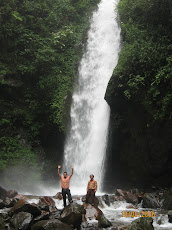
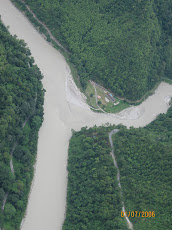
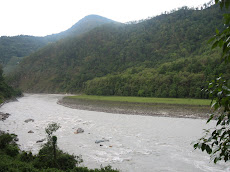
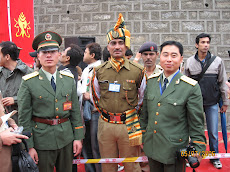
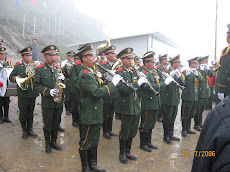

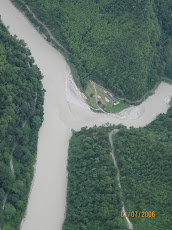
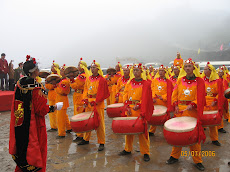
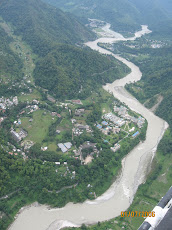

.JPG)







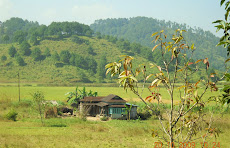


.jpg)


.JPG)





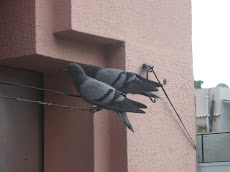









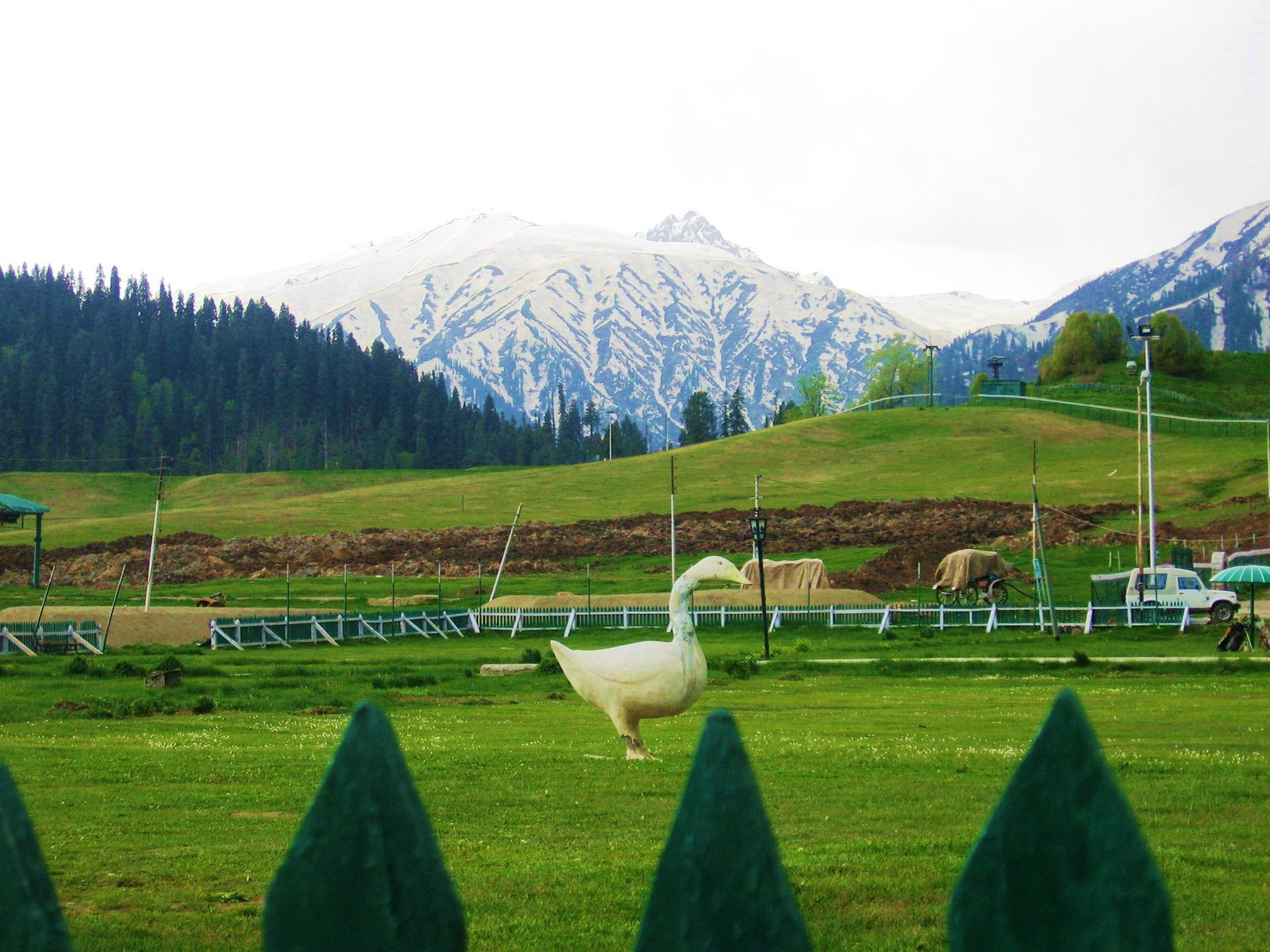
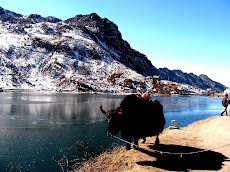



.JPG)


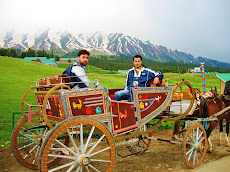


.JPG)