






Rongali Bihu marks the beginning of Assamese New Year. It is a festival of joy, coinciding with similar celebrations in West Bengal, Punjab, Manipur, Orissa, Kerala, Tamil Nadu etc. During the festival, everyone is in a jovial mood, singing and dancing with peer group or family. Mostly people throng their native places, leaving the cities deserted. It is the right moment to catch up with joint family and re strengthen the age-old bond. R.B. is the most popular and important among three Bihus celebrated. Other two being Bhogali Bihu (during Makar Sankranti) and Kongali Bihu (immediately after Diwali).
First day, known as Goru Bihu happens to be the last day of the previous year. On this day, cows are washed and worshipped. The second day, known as Manuh (human) Bihu, falls on the first day of the New Year.
Suddenly the whole environment changes together with the change in weather. Dresses of ‘other’ cultures give way to ethnic, yet expensive attire, both for women and men. People in general are so meticulously dressed that they give an impression as if marriages are taking place every day at the drop of hat.
Having made up my mind to enjoy the festivities from a close angle, I venture into the compound of Ganesh Mandir Community Centre at Khanapara. 11 pm was purposely chosen to get best out of it. As the arena was jam packed, settling down process took almost six hundred seconds. The first offering came in the form of a group song sung beautifully by a dozen little girls, wearing shocking yellow saris with tomato red borders. All of them were seated in a line. For a moment, it was silence in an otherwise noisy setting. They took time but could sing with confidence and poise for full 15 minutes. And, enthralled one and all. It set the ball rolling. Festive fervour was evident all over.
Next followed a dancing and singing troupe of young boys wearing cotton dhotis and muga silk kurtas. They were holding on to their Dhuls, flute, Gaganas, Toka, Pepas etc. In the close vicinity were pretty teenaged girls in heavy ethnic muga silk saris with long sleeve red blouses to give a contrasting effect. Their hair was neatly tied in a khupa. In such dance forms, the boys or men take the lead with hard beating of Dhuls and dancing in a circle. They set the stage literally on ‘fire’, for girls to take over, with their enigmatic smile, attractive facial expressions, graceful steps and ultimate circular movements. The dance comes to an end with vociferous beating of Dhuls and blowing of Pepas. A few selected girls twist and bend close to Pepa and strike a pose to reach the climax. Since the competitive spirit is all pervasive, they are often subjected to a variety of questions by the judges.
Upon conclusion of dance number, it was the time for vocal chord. One expected the usual stuff telecast on T.V. For a change, it was the turn of Goalpara folk songs. An eight member group led by a middle aged tall lady, wearing a chocolate coloured ethnic sari, duly supported by accompanying artists on Ghila, flute, Dhul, three Dotoras (Guitar kind of instruments) and a Sarangi simply mesmerized the audience for next hour. I could not follow the wordings of any of the seven songs but was more than convinced that she was singing straight from heart and that months or years of rehearsal were behind her deep voice. It had originality. It reflected a vibrant culture. She depicted a loud voice, while singing in a ‘Pancham Swar’. The number- Santa Re………….., probably is going to stir my imagination for a long time. A short, unassuming male companion was equally good, whenever he got a chance to sing a duet or indulge decisively into a chorus. The last song was a duet remarkably padded up with a slow, yet graceful dance movements by a dozen toddlers. They performed with care and confidence. They did not belie our expectations. But it was the ‘chocolate’ lady, who rightly occupied the centre stage.
All good things come to an end. This musical evening, being no exception. Two hours of uninterrupted entertainment gave me the needed healing and refreshment at a time when ‘Mission’ fever was at its peak. It may take some time before I lose the effect of the singer from Goalpara. She was too good to be forgotten instantly.
After soaking adequately in the festive spirit, I offer an ice-cream at the dead of the night to Jagannath, my faithful companion. He is half asleep. I return to the so-called modern world along the VIP Road. Over speeding mobikes and automobiles moving in wrong direction, semi-dark avenues, bumpy footpaths, homeless sleeping on pavements and dogs barking in the solitude of the night greet us. But I suppose, my haggard batteries are recharged to face a ‘Mission’ which will only mean business and no fun or frolic.
Sunday, April 24, 2011


Reviving Happy Moments of 1983
1983 was the year when India won the World Cricket Cup for the first time. 1983 was also the year that became a turning point of my career. I heard, did not ‘see’ the final match between West Indies and India over radio in the rented accommodation of C.B. at Patna. I happened to be there to take a competitive examination. Not everyone would be glued to radio those days even if India was on the verge of becoming a World Champion. Justifiably, C.B. preferred to attend office on this momentous day. It was hearing and believing. And only a few could afford a TV set.
With this backdrop, I would confess that I have vivid memories of brilliant team work of Mohinder Amarnath, Kapil Dev, Madan Lal, Srikant , Sandhu, Sandeep Patil, Kirti Azad and not to be forgotten, Sunil Gavaskar. Sunny, despite his overall command over game, could not come out with flying colours either in semi-final or final, both low scoring events unlike the stupendous scoring pattern at present. It was Amarnath, who managed to get Man of the Match award with his remarkable all round abilities both in semi-final and final. Thus, a low profile Indian outfit without having a player of the stature of Sachin Tendulkar had not only arrived on the scene but was going to have a decisive say in the years to come.
Scenario was different on 2ndApril 2011 when the coin itself had to be tossed twice, presumably to give a momentary setback to India, tipped as one of the hot favourites. Life came to a standstill at Guwahati at 14.30 hours. There were no radios, however. Part silence was attributed to Bandh call given by ULFA. It was the tenth World Cup final and only the third time when a ‘chasing’ team was expected to register a win. Sentiments and emotions were not only charged. They ran high. Occasional applause was accompanied by beating of drums. Crackers too were being kept ready for the ultimate moment. Telephonic contact confirmed that C.B., who had ignored the importance of 1983 final, had bunked off his office to witness Dhoni’s men in action.
As the time passed by, performances proved simply awesome from both the sides. After initial hiccup, India swung back, slowly and gradually, primarily due to patience and perseverance displayed by Gambhir and Dhoni. The defining moment came at 2300 hrs when Dhoni hit a six to wind up the game in style. It was a stunning finish by the Captain, ensuring a glorious win. Consistent play resulted into fabulous performance. After the narrow miss in the final of 2003 and nightmare of 2007, India came back systematically, grabbing the Cup for the second time in a resounding manner. While Dhoni was adjudged Man of the Match, Yuvraj Singh, having scored 362 runs and taken 15 wickets was rightly declared Man of the Tournament. Both Tendulkar and Zaheer excelled with bat and ball respectively to come close to top their tables.
History was made at Wankhede Stadium. For the first time, a host country won the cup. It was also for the first time that a team chased a high score of 275 with success. India too became only the third country after West Indies and Australia to win the coveted cup more than once.
It was the celebration time for young and old alike. Expression of joy and bonhomie witnessed within the stadium got multiplied along the main throughfares not only within the country but the Indians all over the world were seen in buoyant mood defying the darkness of night. Rather, the TV channels kept the interest alive throughout the night. Tumultuous expressions of neibours of Dhoni, Kohli’s brother, Sehwag’s tiny tot and instant Bhangra act of Harbhajan’s mother were understandable. The cream of celebration, however, was expressed through the elated mood of Gambhir’s grandmother, who was up and kicking even after midnight.
1983 and 2011 are two different eras, according to K.Srikant, a member of 1983 team and current Chairman of selectors. When Cricket has become so dominating and penetrating, it may perhaps be appropriate or sensible to draw a line of comparison with what was in store in the early eighties.
The concept of one day game itself was introduced with a degree of caution. For, the ‘gentlemen’ would not prefer a ‘hurried’ affair. In the old era, it was radio that provided the ball to ball commentary. Ears, and not the eyes had to be alert. Colour TV was yet to make an impact, having been introduced in the country as late as November 1982 with the hosting of ASIAD. Rapid commercialization, which became a foregone conclusion, was yet to begin. There would be no painting of flags on faces or parts of body, leave aside Poonam Pandays, who declared in 2011 to bare all if India was to win. This unusual legacy of South America invariably connected to Soccer was still a far cry.
There would be no ‘yagna’ or mass worship sessions to clinch the cup. Pomp and show was on a low scale. There would be less hype and euphoria and no hysteria guided by naked materialistic considerations. Thunderous applause would be seen but no scantly clad cheer girls or bohemian drummers would appear to entertain the spectators. Tickets were difficult to get even in good old days and may be, black marketing was also resorted to. But these won’t be sold at an unbelievable price of Rs. 35,000 as at Mohali or Rs. 1.5 lakhs at Mumbai. The difference rightly highlights the level of investment both in Cricket and emotions. The Presidents and Prime Ministers would hardly sit in stands to watch a high profile match in the past. Their involvement was confined to sending routine congratulatory messages through their Secretaries.
In the bygone era, cricketers would occasionally get film roles. On the contrary, now, they sell premium fashion products and earn more than the film stars in endorsements. No wonder, emotional attachment with the game is sometimes replaced by emotional fatigue. Coming to degree of response, mainly the youth would go to airport and follow the winners in procession. Nowadays, you have almost whole night of celebrations cutting across all age groups and barriers. In the changed situation the tri-colour flutters around the world in one go. Shall we believe that thanks to the craze for Cricket we are inching towards building a national character?
All said and done, be it 1983 or 2011, one had to lose. And, it was Sri Lanka, despite their better track record in World Cup. In the words of Imran Khan, if India had the advantage of playing at home, it had to also cope up with tremendous pressure. Well done India. Keep up the spirit. Don’t be carried away by the tempting bonanzas. Play the game in the spirit of game. You win or lose for the nation, not for yourself.
With this backdrop, I would confess that I have vivid memories of brilliant team work of Mohinder Amarnath, Kapil Dev, Madan Lal, Srikant , Sandhu, Sandeep Patil, Kirti Azad and not to be forgotten, Sunil Gavaskar. Sunny, despite his overall command over game, could not come out with flying colours either in semi-final or final, both low scoring events unlike the stupendous scoring pattern at present. It was Amarnath, who managed to get Man of the Match award with his remarkable all round abilities both in semi-final and final. Thus, a low profile Indian outfit without having a player of the stature of Sachin Tendulkar had not only arrived on the scene but was going to have a decisive say in the years to come.
Scenario was different on 2ndApril 2011 when the coin itself had to be tossed twice, presumably to give a momentary setback to India, tipped as one of the hot favourites. Life came to a standstill at Guwahati at 14.30 hours. There were no radios, however. Part silence was attributed to Bandh call given by ULFA. It was the tenth World Cup final and only the third time when a ‘chasing’ team was expected to register a win. Sentiments and emotions were not only charged. They ran high. Occasional applause was accompanied by beating of drums. Crackers too were being kept ready for the ultimate moment. Telephonic contact confirmed that C.B., who had ignored the importance of 1983 final, had bunked off his office to witness Dhoni’s men in action.
As the time passed by, performances proved simply awesome from both the sides. After initial hiccup, India swung back, slowly and gradually, primarily due to patience and perseverance displayed by Gambhir and Dhoni. The defining moment came at 2300 hrs when Dhoni hit a six to wind up the game in style. It was a stunning finish by the Captain, ensuring a glorious win. Consistent play resulted into fabulous performance. After the narrow miss in the final of 2003 and nightmare of 2007, India came back systematically, grabbing the Cup for the second time in a resounding manner. While Dhoni was adjudged Man of the Match, Yuvraj Singh, having scored 362 runs and taken 15 wickets was rightly declared Man of the Tournament. Both Tendulkar and Zaheer excelled with bat and ball respectively to come close to top their tables.
History was made at Wankhede Stadium. For the first time, a host country won the cup. It was also for the first time that a team chased a high score of 275 with success. India too became only the third country after West Indies and Australia to win the coveted cup more than once.
It was the celebration time for young and old alike. Expression of joy and bonhomie witnessed within the stadium got multiplied along the main throughfares not only within the country but the Indians all over the world were seen in buoyant mood defying the darkness of night. Rather, the TV channels kept the interest alive throughout the night. Tumultuous expressions of neibours of Dhoni, Kohli’s brother, Sehwag’s tiny tot and instant Bhangra act of Harbhajan’s mother were understandable. The cream of celebration, however, was expressed through the elated mood of Gambhir’s grandmother, who was up and kicking even after midnight.
1983 and 2011 are two different eras, according to K.Srikant, a member of 1983 team and current Chairman of selectors. When Cricket has become so dominating and penetrating, it may perhaps be appropriate or sensible to draw a line of comparison with what was in store in the early eighties.
The concept of one day game itself was introduced with a degree of caution. For, the ‘gentlemen’ would not prefer a ‘hurried’ affair. In the old era, it was radio that provided the ball to ball commentary. Ears, and not the eyes had to be alert. Colour TV was yet to make an impact, having been introduced in the country as late as November 1982 with the hosting of ASIAD. Rapid commercialization, which became a foregone conclusion, was yet to begin. There would be no painting of flags on faces or parts of body, leave aside Poonam Pandays, who declared in 2011 to bare all if India was to win. This unusual legacy of South America invariably connected to Soccer was still a far cry.
There would be no ‘yagna’ or mass worship sessions to clinch the cup. Pomp and show was on a low scale. There would be less hype and euphoria and no hysteria guided by naked materialistic considerations. Thunderous applause would be seen but no scantly clad cheer girls or bohemian drummers would appear to entertain the spectators. Tickets were difficult to get even in good old days and may be, black marketing was also resorted to. But these won’t be sold at an unbelievable price of Rs. 35,000 as at Mohali or Rs. 1.5 lakhs at Mumbai. The difference rightly highlights the level of investment both in Cricket and emotions. The Presidents and Prime Ministers would hardly sit in stands to watch a high profile match in the past. Their involvement was confined to sending routine congratulatory messages through their Secretaries.
In the bygone era, cricketers would occasionally get film roles. On the contrary, now, they sell premium fashion products and earn more than the film stars in endorsements. No wonder, emotional attachment with the game is sometimes replaced by emotional fatigue. Coming to degree of response, mainly the youth would go to airport and follow the winners in procession. Nowadays, you have almost whole night of celebrations cutting across all age groups and barriers. In the changed situation the tri-colour flutters around the world in one go. Shall we believe that thanks to the craze for Cricket we are inching towards building a national character?
All said and done, be it 1983 or 2011, one had to lose. And, it was Sri Lanka, despite their better track record in World Cup. In the words of Imran Khan, if India had the advantage of playing at home, it had to also cope up with tremendous pressure. Well done India. Keep up the spirit. Don’t be carried away by the tempting bonanzas. Play the game in the spirit of game. You win or lose for the nation, not for yourself.
Bird Watching
The phenomenon of season is one of the marvellous, enchanting and incredible free gifts of nature. In a normal parlance, one comes across three seasons. A deeper analysis will reveal six. Summer comes as a welcome relief to the pangs of severe winter. Reverse is also true. In between occurs the rainy season which not only balances but also cleans, refreshes and provides necessary succour. Like human beings, the animals and birds like and dislike, hate and relish, detest and enjoy a season or the other. Very few of us during our lifetime, however, take note of or are sensitive to the causes, needs, wishes and aspirations of a wonder called fauna.
Growing realization in this area will be beneficial both to the world and life, that is mild as also wild. Shall we give, therefore, some thought to an activity or a process of development that is sustainable?
To get rid of vagaries of nature, a good deal of inventions and discoveries have gradually become handy for the human beings. One can escape, therefore, the wrath of extreme nature by pressing a tiny and simple button. Why only human beings who can afford? Some of the privileged pets too lead a comfortable and sometimes, luxurious lives. Both in the West and East.
Right from beginning, shooting temperatures and dipping mercuries have propelled movement of thousands of birds from a place of extreme weather to the relatively milder pastures. They quickly learn from each other the habit of locating and then flocking around a water body thousands of miles away. Coming from a far away place, such as, Siberia, China and Afghanistan, these birds of paradise travel in a systematic way for several weeks. Popular destinations are- Bharatpur in Rajasthan, Sukhna in Chandigarh, Bhadkal Lake in Haryana, Mandwi river bank in Goa, Lake in the vicinity of Agartala and several other known and non-descript water bodies across the length and breadth of the country. Their migration period generally is noticed to be from early November to the middle of March.
While doing so, not only they experience much needed relief from the harsh and cold conditions of their habitat, they also feel at home in the company of local birds. It is a pleasure to see them grow and blossom in a new setting. Like any other 'guest,' they possess a sensitive nature. They, do not, however, have a desire to be pampered.
Bird watching during a particular time of the day is an amazingly peaceful and quiet feeling. It elevates mood. It teaches unity and understanding. Chirping of birds resonates. It has tremendous tourism potential apart from ensuring a deep healing touch. It can help in understanding and appreciating nature better. If you soak yourself in its mesmerizing beauty, it can leave a long lasting impact. It can, at the same time, free us from several misconceived notions. It has the capacity and the strength to enable us to move away from the element of artificiality.
For a change, let us attempt to peep into their innocent world whenever and wherever we get a chance. Rather, a bit of our quality time deserves to be devoted to them. They truly live and will facilitate our living. It can be a great learning experience, for, it can teach us the art of caring and sharing.
Shall we, therefore, strengthen our resolve in the dictum- unlike human beings, the birds and animals only give, do not take?
Growing realization in this area will be beneficial both to the world and life, that is mild as also wild. Shall we give, therefore, some thought to an activity or a process of development that is sustainable?
To get rid of vagaries of nature, a good deal of inventions and discoveries have gradually become handy for the human beings. One can escape, therefore, the wrath of extreme nature by pressing a tiny and simple button. Why only human beings who can afford? Some of the privileged pets too lead a comfortable and sometimes, luxurious lives. Both in the West and East.
Right from beginning, shooting temperatures and dipping mercuries have propelled movement of thousands of birds from a place of extreme weather to the relatively milder pastures. They quickly learn from each other the habit of locating and then flocking around a water body thousands of miles away. Coming from a far away place, such as, Siberia, China and Afghanistan, these birds of paradise travel in a systematic way for several weeks. Popular destinations are- Bharatpur in Rajasthan, Sukhna in Chandigarh, Bhadkal Lake in Haryana, Mandwi river bank in Goa, Lake in the vicinity of Agartala and several other known and non-descript water bodies across the length and breadth of the country. Their migration period generally is noticed to be from early November to the middle of March.
While doing so, not only they experience much needed relief from the harsh and cold conditions of their habitat, they also feel at home in the company of local birds. It is a pleasure to see them grow and blossom in a new setting. Like any other 'guest,' they possess a sensitive nature. They, do not, however, have a desire to be pampered.
Bird watching during a particular time of the day is an amazingly peaceful and quiet feeling. It elevates mood. It teaches unity and understanding. Chirping of birds resonates. It has tremendous tourism potential apart from ensuring a deep healing touch. It can help in understanding and appreciating nature better. If you soak yourself in its mesmerizing beauty, it can leave a long lasting impact. It can, at the same time, free us from several misconceived notions. It has the capacity and the strength to enable us to move away from the element of artificiality.
For a change, let us attempt to peep into their innocent world whenever and wherever we get a chance. Rather, a bit of our quality time deserves to be devoted to them. They truly live and will facilitate our living. It can be a great learning experience, for, it can teach us the art of caring and sharing.
Shall we, therefore, strengthen our resolve in the dictum- unlike human beings, the birds and animals only give, do not take?
Sunday, November 21, 2010
Tuesday Thoughts
Thoughts of 16 November 2010
I am Ankoor. I love myself and my parents. I am over obsessed with studies and feel that some conference is going on in my head. Sometimes I get an impression that a super power tries to control our mind through a satellite. As such, lakhs of emails are intercepted during the course of a day. OCD maybe is the name of my problem. But I am not sure.I have faith in God and myself. One day I may get cured. This faith is atoot (unbreakable).
I am feeling relieved after a good night’s sleep. Sleep had eluded me for a few days and for a week before the D.P. Though I am losing interest in studies, I have faith that I shall overcome some day. I have to keep trying. Someone has said- Failures are stepping stone to success.
One of my loves is typing on the computer. I was attracted to it instantly in Class-1 just like fish takes to water. It has made our lives easier. Internet is also a nice time pass, apart from being a wealth of information. While in school, I would search on net for any topic or theme that was given by the teacher to write on or to make an assignment. I would download photos and sketches also to make my home task attractive. But gradually one has realized that too much reliance on computer or net is bad. It may kill original thoughts. It also enables one to take a short cut.
Earlier I had this enjoyable experience of watching videos on You Tube. Now I guess it would not be great to watch videos on you tube. My age is 21 and a half. I have stopped talking to many friends. GOD knows why?
Law is a heavy subject for me as of now. I must fight with the thoughts that I have in my mind. God make me brave. I have sudden mood swings. Reverse counting and straight forward counting is what one doctor told me would cure me. I am experiencing the problem of short term memory. I also have difficulty in remembering places and having overall concentration. I see GODs in elders. My parents always tell me that I will get cured, get a good and reasonable job.
THUMBS UP TASTE THE THUNDER. HAVE IMMENSE FEELING OF MYTHOLOGY INSIDE ME.REGULAR WALKS AND YOGA WOULD HELP.
I am Ankoor. I love myself and my parents. I am over obsessed with studies and feel that some conference is going on in my head. Sometimes I get an impression that a super power tries to control our mind through a satellite. As such, lakhs of emails are intercepted during the course of a day. OCD maybe is the name of my problem. But I am not sure.I have faith in God and myself. One day I may get cured. This faith is atoot (unbreakable).
I am feeling relieved after a good night’s sleep. Sleep had eluded me for a few days and for a week before the D.P. Though I am losing interest in studies, I have faith that I shall overcome some day. I have to keep trying. Someone has said- Failures are stepping stone to success.
One of my loves is typing on the computer. I was attracted to it instantly in Class-1 just like fish takes to water. It has made our lives easier. Internet is also a nice time pass, apart from being a wealth of information. While in school, I would search on net for any topic or theme that was given by the teacher to write on or to make an assignment. I would download photos and sketches also to make my home task attractive. But gradually one has realized that too much reliance on computer or net is bad. It may kill original thoughts. It also enables one to take a short cut.
Earlier I had this enjoyable experience of watching videos on You Tube. Now I guess it would not be great to watch videos on you tube. My age is 21 and a half. I have stopped talking to many friends. GOD knows why?
Law is a heavy subject for me as of now. I must fight with the thoughts that I have in my mind. God make me brave. I have sudden mood swings. Reverse counting and straight forward counting is what one doctor told me would cure me. I am experiencing the problem of short term memory. I also have difficulty in remembering places and having overall concentration. I see GODs in elders. My parents always tell me that I will get cured, get a good and reasonable job.
THUMBS UP TASTE THE THUNDER. HAVE IMMENSE FEELING OF MYTHOLOGY INSIDE ME.REGULAR WALKS AND YOGA WOULD HELP.
Sunday, November 14, 2010
AN EVENING AT MACHAN
Evening means different things to different people.Some enjoy the solitude, some prefer a brisk walk, still others spend it in the company of near and dear ones. Atmosphere, aura, ambience-these make difference to a dull,drab and sultry place.Boredom is conquered.Even non-appetising meals become sumptuous, delicious, easy to remember. The decoration, frills and a particular way of presentation attract and delight. These help in relaxing, conversing,refreshing and healing. One tends to chill out without a hard drink AND post meal, sink into a bed of mink. Have a sweet dream and what not...........?
An October evening spent at Machan on the top floor of Dona Plaza,Guwahati will be memorable in ways, more than one. They were on time and absolutely prim and proper. While he impressed with his height, purse, physique and overall sense of humour, she sizzled and giggled to a temporary glory. Her curvaceous figure made prominent by a tight red and white dress earned her gazers if not fans during the semi-dark evening. Poses for photo session with a natural smile and grace against the background of animals, antique pieces and look-alikes of natural jungle were extempore and amazing. Same was noticed not once. But several times.......,before the soup, afterwards, before the '7Up' and in course of 'gup-shup'.
The topics and themes were so tantalizing that hunger or lust for food was almost set aside till a gentle reminder came from well dressed waiters and a haggard banquet manager. While waiting for compliance of order, it was observed that a 50 plus crowd was immersed deeply in the semi-dark, light musical backdrop. Like any other place, tiny tots in sufficient numbers were jumping all over. They would occasionally show their tantrums. While their parents relished their own talks and whispers, the kids appeared flavergasted at the sight of electric powered squirrel, birds, python,monkey and elephant.
Lighting was perfect, so were the cutlery and upholstery. Arrangement of chairs and tables was upto mark but food left much to be desired. It was in random but stylish order. There was nothing special about the typical delicasies, the management had promised to serve...........compared to the exorbitant prices shown in block capital letters in a menu card, weighing at least 20 grams.
When the crowd began thinning close to mid-night, we religiously rearrange chairs and tables to facilitate privacy, better relaxation and another bout of fruitful photo session. Soon the incredible view became a setting or nursery for instant creativity. While focusing, adjusting and clicking, we were not paranoid as such, but the very idea of creating something with a fair dose of joy had simply struck in our heads. We were speechless and spell bound with every shot. Two and a half hours spent drinking, sipping, eating and photographing is going to be deep in our thoughts. Afterall, the clock too had come to a stand still.
Towards the end, like a shrewd businessman, the manager promised to improve and add-on till we make another appearance. He displayed an infectious smile while offering us some appetiser. We did not fail in capturing him and his faithful waiters on camera. The grand finale turned out to be a memorable shot of an African tribesman.
Overall it was cozy, not noisy. It was fun and frolic. Not fantasy. In a world, full of ecstasy. The 'couple' added to the charm of the evening by their unusual appearance, conduct, manners and presence of mind.
Walking carefully down the stairs from the fifth floor, I whisper-"Good luck Machan. May you celebrate your second birthday soon. AND I take a plunge together with footfalls of compatriots of the 'couple' from Delhi.
An October evening spent at Machan on the top floor of Dona Plaza,Guwahati will be memorable in ways, more than one. They were on time and absolutely prim and proper. While he impressed with his height, purse, physique and overall sense of humour, she sizzled and giggled to a temporary glory. Her curvaceous figure made prominent by a tight red and white dress earned her gazers if not fans during the semi-dark evening. Poses for photo session with a natural smile and grace against the background of animals, antique pieces and look-alikes of natural jungle were extempore and amazing. Same was noticed not once. But several times.......,before the soup, afterwards, before the '7Up' and in course of 'gup-shup'.
The topics and themes were so tantalizing that hunger or lust for food was almost set aside till a gentle reminder came from well dressed waiters and a haggard banquet manager. While waiting for compliance of order, it was observed that a 50 plus crowd was immersed deeply in the semi-dark, light musical backdrop. Like any other place, tiny tots in sufficient numbers were jumping all over. They would occasionally show their tantrums. While their parents relished their own talks and whispers, the kids appeared flavergasted at the sight of electric powered squirrel, birds, python,monkey and elephant.
Lighting was perfect, so were the cutlery and upholstery. Arrangement of chairs and tables was upto mark but food left much to be desired. It was in random but stylish order. There was nothing special about the typical delicasies, the management had promised to serve...........compared to the exorbitant prices shown in block capital letters in a menu card, weighing at least 20 grams.
When the crowd began thinning close to mid-night, we religiously rearrange chairs and tables to facilitate privacy, better relaxation and another bout of fruitful photo session. Soon the incredible view became a setting or nursery for instant creativity. While focusing, adjusting and clicking, we were not paranoid as such, but the very idea of creating something with a fair dose of joy had simply struck in our heads. We were speechless and spell bound with every shot. Two and a half hours spent drinking, sipping, eating and photographing is going to be deep in our thoughts. Afterall, the clock too had come to a stand still.
Towards the end, like a shrewd businessman, the manager promised to improve and add-on till we make another appearance. He displayed an infectious smile while offering us some appetiser. We did not fail in capturing him and his faithful waiters on camera. The grand finale turned out to be a memorable shot of an African tribesman.
Overall it was cozy, not noisy. It was fun and frolic. Not fantasy. In a world, full of ecstasy. The 'couple' added to the charm of the evening by their unusual appearance, conduct, manners and presence of mind.
Walking carefully down the stairs from the fifth floor, I whisper-"Good luck Machan. May you celebrate your second birthday soon. AND I take a plunge together with footfalls of compatriots of the 'couple' from Delhi.
Sunday's Sentiments
Today is Sunday, the Children's Day. Yesterday it rained beautifully. For more than an hour. Day temperature came down by a few degrees. All of us liked. As reported on TV and morning newspapers, even the 'exalted' children- Rahul and Priyanka got wet. They seemed to have enjoyed every bit of the experience.
Rain is always a refreshing feeling. Nevertheless, too much of anything is not only bad, it may be also counter-productive. Did not we see it on the eve of CWG?
While going to Law Centre-1 in the afternoon, I felt the chill. Mummy made no mistake in pulling out an attractive pullover. Initially I thought, on a cool day (not a cold day), I was going to be an odd man out. But, I discovered soon to my pleasant surprise that I was a part and parcel of the bubbling mainstream.
Even though, no classes were held on a a casual day, such as, Saturday, the whole experience was exhilerating. Not only I did some 'Om Chanting', I tried also speaking to birds of the green campus. For the sake of friends, I got a glimpse of some from a distance. Of all the places, they got a refuse in our dirty toilet. However, the sight of ever helpful and reliable Netram made me happy.
Having waited for 1 hour and 30 minutes for the class, it was really nice to meet him. We exchanged useful notes about our first semester examination starting on First December 2010. Time was really short. And I was badly prepared. Therefore, on his advice and Mummy's instructions, I purchased a 'Duky' (D.U.Key), for the Criminal Law paper for Rs.75/-. My feeble bargaining skills ensured me a measurly 'saving' of only Rs. 5/-.
A vegetable pattie and a cup of tea with Netram during the dusk at SPIC-MCKEY became enjoyable. So was the Rick ride for 20 bucks.
When I felt the hustle & bustle and heat of the evening at VV Metro Station, I uttered the following while entering the swanky coach:
"Rain rain, come again
I may be in bus, or train
OR flying over a hilly terrain
I need healing and liberation
From the bouts of...........
Agony, stress and pain. "
AM I NOT ALIVE AND KICKING ?
Today is Sunday, the Children's Day. Yesterday it rained beautifully. For more than an hour. Day temperature came down by a few degrees. All of us liked. As reported on TV and morning newspapers, even the 'exalted' children- Rahul and Priyanka got wet. They seemed to have enjoyed every bit of the experience.
Rain is always a refreshing feeling. Nevertheless, too much of anything is not only bad, it may be also counter-productive. Did not we see it on the eve of CWG?
While going to Law Centre-1 in the afternoon, I felt the chill. Mummy made no mistake in pulling out an attractive pullover. Initially I thought, on a cool day (not a cold day), I was going to be an odd man out. But, I discovered soon to my pleasant surprise that I was a part and parcel of the bubbling mainstream.
Even though, no classes were held on a a casual day, such as, Saturday, the whole experience was exhilerating. Not only I did some 'Om Chanting', I tried also speaking to birds of the green campus. For the sake of friends, I got a glimpse of some from a distance. Of all the places, they got a refuse in our dirty toilet. However, the sight of ever helpful and reliable Netram made me happy.
Having waited for 1 hour and 30 minutes for the class, it was really nice to meet him. We exchanged useful notes about our first semester examination starting on First December 2010. Time was really short. And I was badly prepared. Therefore, on his advice and Mummy's instructions, I purchased a 'Duky' (D.U.Key), for the Criminal Law paper for Rs.75/-. My feeble bargaining skills ensured me a measurly 'saving' of only Rs. 5/-.
A vegetable pattie and a cup of tea with Netram during the dusk at SPIC-MCKEY became enjoyable. So was the Rick ride for 20 bucks.
When I felt the hustle & bustle and heat of the evening at VV Metro Station, I uttered the following while entering the swanky coach:
"Rain rain, come again
I may be in bus, or train
OR flying over a hilly terrain
I need healing and liberation
From the bouts of...........
Agony, stress and pain. "
AM I NOT ALIVE AND KICKING ?
Tuesday, August 10, 2010
Over the Red River & the Blue hills
It is an early morning scene in the outskirts of growing city of Guwahati. I am rushing to catch IC-7751 flight to Dimapur and Imphal. Low volume of traffic on the way ensures early arrival at the airport. Tempted, I try my hand at the wheels in the North East for the first time. A lady staffer of Indian Airlines is walking very fast to report for duty. She gets a healthy competition from a male colleague. In view of the fact that there is no other flight, I presume that I am not late. At the entry point, one is subjected to checking of identity twice. It is irritating but can’t be helped. Next, one has to confront a long que at the X-ray baggage machine. Getting past that, one moves to check-in counter. The process is very slow not only for me but also for a family accompanying an old man on a wheel chair. Papers and envelopes held tightly by him give an indication that Iobi Singh has just been discharged by Dispur Hospitals. Soon I notice that display board is showing yesterdays date (31st July 2010). Till 6.12 a.m., no security check is announced. Two policemen, therefore, refuse entry. Finally, we cross the security barrier. Though the departure lounge looks deserted, my joy knows no bounds. After all, this is my maiden visit to Nagaland, the ‘Switzerland of the East’, a land blessed with lush green forests and immense natural beauty.
At 6.15 a.m. two pilots report for duty. The co-pilot happens to be an overweight woman. They are followed by two young and tall air hostesses. Even though the scheduled departure time is 6.30 a.m., the dilapidated and fit for ‘denting and painting’ kind of bus of Indian Airlines arrives late to pick up the passengers. Within five minutes we manage to enter the ATR craft. In no time, the air hostesses see to it that the passengers, including a fat “Sardarji” (making maximum noise) and a hassled housewife(running all over the place), settle down. At 6.42 taxing begins and the mini plane is airborne with a rapid speed, something akin to a Maruti Car, say about 25 years ago. I am fortunate not to have a co-passenger. This particular opportunity and overall solitude is befitting to enable scribbling a few lines for posterity.
The routine welcome announcement indicates that weather is fine and soothing at Dimapur. The hills around Guwahati and the mammoth Brahmaputra look gorgeous. It is water water all over. A few islands and a long river bridge catch attention. As we move up, thin layers of white clouds move like smoke. GCI sheets over roof tops sparkle magnificently in bright sunshine. Dense portions of the largest city of NER are now visible. One cannot see any landmark, however. Green, low hillocks do make a statement. Some of them abound in typical folds, last seen by me during a heli-ride in Tripura. My irresistible visible romance with nature gets a setback on hearing an un welcome announcement pertaining to unfastening of seat belt. Soon my confidence is restored on hearing another announcement commencing serving of breakfast.
When I resume looking through the window, large areas appear inundated. The mighty Brahmaputra gives the appearance of a sea. A few meandering streams give Him company. It appears as if the flying machine is destined to go gently along its course. I have noticed that whenever I am in a mood to write something in plane, I am invariably seated on the left side, an indication, perhaps of my left-tilted, if not left oriented thinking.
When I look further, patterns formed by the paddy fields and tiled huts look beautiful. Not only I am enjoying the beauty outside but get a fair dose inside as well, off and on. While boarding, the plane gave a God for shaken look from outside. Inside now, it looks cool, cosy and comfortable.
At 6.55 a.m., descent begins without any announcement. But there is no trace of the break-fast announced ten minutes ago. I need it badly to gulp four of my tablets to contain blood pressure and regulate heart beat. At last, a pair of tall air hostesses donning new Laheria Sari patterns of red, white and black colours makes an appearance with their trolleys. I look simultaneously at the white clouds with streaks of blue, far behind and the sumptuous looking snack packets. All said and done, Indian Airlines continues to be far better in hospitality than all ‘cheap’ private airlines put together. The breakfast, however, came in installments. First of all water bottles were served. Thereafter, came, a closed tray having three items – a vegetable patty, a twisted biscuit and a thick slice of brown cake with a pouch of sauce. Tea was conspicuous by its absence. The menu was same as I got while taking IC-7756 flight (Agartala - Guwahati) on 8th of July. Even though it is early in the day, I eat nicely and to my heart’s content.
The time is 7.10 hours. The descent is more prominent now. Large water bodies are no longer visible, rather serpentine roads amidst green patches keep appearing. Clouds also hover every now and then. Suddenly my attention is drawn to a coughing passenger behind my row. It came from Iobi Singh, the wheel chair bound old man. Now that Dimapur was not far behind, he must be waiting desperately to get off and immerse himself in his sweet home. When the plane further loses height, one can see small hillocks, a river, a stadium in construction and probably the railway station of Dimapur. The ‘S’ formation of another river attracts. From the colour of its water, one can make out that it has rained heavily up in hills. Oh no, the plane, instead of touching the aerodrome, gains height. Sunrays touch my face. They provide warm, soothing comfort. After five minutes or so descent begins again. One can feel the difference this time, both through eyes and ears. A patch of dense forest is seen. Landing is taking longer than expected. The view on my side of the window gives an impression as if we are gaining height. A look through the right window, on the other hand, brings us closer to the ground. At last at 7.20 hours, the landing announcement is made. For a moment, however, the plane almost stops in the mid air. Flying so low over a green patch has its own advantages. We are fortunate to be in the lap of an eco-friendly zone.
Soon Dimapur having a ground temperature of 28 degree is visible. The scenario described earlier is being repeated. Sharp at 7.25 we have a smooth landing. I presume that Iobi Singh is happier than me. I request for an extra bottle of water. The air hostess obliges with a smile. When I get closer to the terminal building, I notice a thick growth of grass on both sides of pathway. Instead of an airport official guiding me correctly to arrival lounge, it is a security man who does the duty. Again, instead of Airport Authority of India welcoming the passengers, it is a hoarding of SBI which has been allowed to do the honours. Exactly four passengers assemble in the conveyer belt zone. What a waste of aviation fuel and manpower, I think, while trying to locate Takum and Showuba. Soon I find them. While I experience joy, Iobi, perhaps, is still undergoing a bout of sorrow. Getting into a white Bolero (NL-01/C/7082), I see that Captain B.P. Shah is taking him and others to Imphal.
At 6.15 a.m. two pilots report for duty. The co-pilot happens to be an overweight woman. They are followed by two young and tall air hostesses. Even though the scheduled departure time is 6.30 a.m., the dilapidated and fit for ‘denting and painting’ kind of bus of Indian Airlines arrives late to pick up the passengers. Within five minutes we manage to enter the ATR craft. In no time, the air hostesses see to it that the passengers, including a fat “Sardarji” (making maximum noise) and a hassled housewife(running all over the place), settle down. At 6.42 taxing begins and the mini plane is airborne with a rapid speed, something akin to a Maruti Car, say about 25 years ago. I am fortunate not to have a co-passenger. This particular opportunity and overall solitude is befitting to enable scribbling a few lines for posterity.
The routine welcome announcement indicates that weather is fine and soothing at Dimapur. The hills around Guwahati and the mammoth Brahmaputra look gorgeous. It is water water all over. A few islands and a long river bridge catch attention. As we move up, thin layers of white clouds move like smoke. GCI sheets over roof tops sparkle magnificently in bright sunshine. Dense portions of the largest city of NER are now visible. One cannot see any landmark, however. Green, low hillocks do make a statement. Some of them abound in typical folds, last seen by me during a heli-ride in Tripura. My irresistible visible romance with nature gets a setback on hearing an un welcome announcement pertaining to unfastening of seat belt. Soon my confidence is restored on hearing another announcement commencing serving of breakfast.
When I resume looking through the window, large areas appear inundated. The mighty Brahmaputra gives the appearance of a sea. A few meandering streams give Him company. It appears as if the flying machine is destined to go gently along its course. I have noticed that whenever I am in a mood to write something in plane, I am invariably seated on the left side, an indication, perhaps of my left-tilted, if not left oriented thinking.
When I look further, patterns formed by the paddy fields and tiled huts look beautiful. Not only I am enjoying the beauty outside but get a fair dose inside as well, off and on. While boarding, the plane gave a God for shaken look from outside. Inside now, it looks cool, cosy and comfortable.
At 6.55 a.m., descent begins without any announcement. But there is no trace of the break-fast announced ten minutes ago. I need it badly to gulp four of my tablets to contain blood pressure and regulate heart beat. At last, a pair of tall air hostesses donning new Laheria Sari patterns of red, white and black colours makes an appearance with their trolleys. I look simultaneously at the white clouds with streaks of blue, far behind and the sumptuous looking snack packets. All said and done, Indian Airlines continues to be far better in hospitality than all ‘cheap’ private airlines put together. The breakfast, however, came in installments. First of all water bottles were served. Thereafter, came, a closed tray having three items – a vegetable patty, a twisted biscuit and a thick slice of brown cake with a pouch of sauce. Tea was conspicuous by its absence. The menu was same as I got while taking IC-7756 flight (Agartala - Guwahati) on 8th of July. Even though it is early in the day, I eat nicely and to my heart’s content.
The time is 7.10 hours. The descent is more prominent now. Large water bodies are no longer visible, rather serpentine roads amidst green patches keep appearing. Clouds also hover every now and then. Suddenly my attention is drawn to a coughing passenger behind my row. It came from Iobi Singh, the wheel chair bound old man. Now that Dimapur was not far behind, he must be waiting desperately to get off and immerse himself in his sweet home. When the plane further loses height, one can see small hillocks, a river, a stadium in construction and probably the railway station of Dimapur. The ‘S’ formation of another river attracts. From the colour of its water, one can make out that it has rained heavily up in hills. Oh no, the plane, instead of touching the aerodrome, gains height. Sunrays touch my face. They provide warm, soothing comfort. After five minutes or so descent begins again. One can feel the difference this time, both through eyes and ears. A patch of dense forest is seen. Landing is taking longer than expected. The view on my side of the window gives an impression as if we are gaining height. A look through the right window, on the other hand, brings us closer to the ground. At last at 7.20 hours, the landing announcement is made. For a moment, however, the plane almost stops in the mid air. Flying so low over a green patch has its own advantages. We are fortunate to be in the lap of an eco-friendly zone.
Soon Dimapur having a ground temperature of 28 degree is visible. The scenario described earlier is being repeated. Sharp at 7.25 we have a smooth landing. I presume that Iobi Singh is happier than me. I request for an extra bottle of water. The air hostess obliges with a smile. When I get closer to the terminal building, I notice a thick growth of grass on both sides of pathway. Instead of an airport official guiding me correctly to arrival lounge, it is a security man who does the duty. Again, instead of Airport Authority of India welcoming the passengers, it is a hoarding of SBI which has been allowed to do the honours. Exactly four passengers assemble in the conveyer belt zone. What a waste of aviation fuel and manpower, I think, while trying to locate Takum and Showuba. Soon I find them. While I experience joy, Iobi, perhaps, is still undergoing a bout of sorrow. Getting into a white Bolero (NL-01/C/7082), I see that Captain B.P. Shah is taking him and others to Imphal.
Saturday, July 24, 2010
MYSTERY CALLED MIND
It is good to be blessed with an intelligent bent of mind. For creativity, however, high level of intelligence may not be a prerequisite. Nek Chand, the creator of Rock Garden, Chandigarh is a burning example. In the same way, for invention or discovery, one need not have a stereo typed normal brain. Great scientists of the order of Einstein or Newton were not normal children by traditional standards, to start with. Nevertheless, they succeeded in not only impressing the World but they also left a long felt impact on day to day life by their inventions.
At the other extreme, there are scientists, such as, Stephen Hawking who continues to excel despite being inflicted with Amyotrophic Lateral Sclerosis (ALS) in his thirties. Still at another extreme, we have some bright minds, who complete a course at a relatively younger age, but not all of them taste success in tune with their initial prowess. Also many unsung heroes changing the lot of oppressed masses by their silent, yet determined actions do not get noticed.
All said and done, human mind has been always curious to know the background & making of a genius. Such a curiosity has led to long gestation research on cloning, (outcome of which may not have found acceptance). But to ‘programme’ a genius child is rarest of the rare phenomenon. It means initiating the conception process at the right time of the day or night and to have right diet beforehand and mental state (mood).
Prof. Tulsi Narayan Prasad, a Supreme Court Advocate and a serious practitioner of Astro-genetics, whose 20 year old son Dr. Tathagat Avatar Tulsi has become country’s youngest Professor ( of Physics) at IIT, Mumbai, claims to have ‘planned’ for his child well before he was actually born. Soon after his birth, Prof. Prasad had declared that the sex of to be born child could be manipulated. He goes on to add that through the science of eugenics one can ensure that a child will achieve the desired traits.
Tathagat, named among the World’s seven most gifted youngsters in 2003 and hailed widely as a child prodigy, finished high school at the age of nine, B.Sc at the age of ten and M.Sc before experiencing his twelfth spring. His super-intelligence apart, he was confronted with adjustment problems with his peer group. Nevertheless, he was destined to learn the art of pretending to be normal. How he copes up with his bright students now, remains to be observed and researched. An ardent follower of Albert Einstein, his dream is to win a Nobel Prize. Needless to say, his future research has to be keenly followed.
More than anything else, it is the spirit of getting things done with right intentions which matters in the ultimate analysis. Honesty and sincerity have the potential to produce vital and influential force to perform arduous tasks. With proper guidance and impetus even ordinary people can produce extraordinary results. They should not compromise on their zeal and commitment.
At the other extreme, there are scientists, such as, Stephen Hawking who continues to excel despite being inflicted with Amyotrophic Lateral Sclerosis (ALS) in his thirties. Still at another extreme, we have some bright minds, who complete a course at a relatively younger age, but not all of them taste success in tune with their initial prowess. Also many unsung heroes changing the lot of oppressed masses by their silent, yet determined actions do not get noticed.
All said and done, human mind has been always curious to know the background & making of a genius. Such a curiosity has led to long gestation research on cloning, (outcome of which may not have found acceptance). But to ‘programme’ a genius child is rarest of the rare phenomenon. It means initiating the conception process at the right time of the day or night and to have right diet beforehand and mental state (mood).
Prof. Tulsi Narayan Prasad, a Supreme Court Advocate and a serious practitioner of Astro-genetics, whose 20 year old son Dr. Tathagat Avatar Tulsi has become country’s youngest Professor ( of Physics) at IIT, Mumbai, claims to have ‘planned’ for his child well before he was actually born. Soon after his birth, Prof. Prasad had declared that the sex of to be born child could be manipulated. He goes on to add that through the science of eugenics one can ensure that a child will achieve the desired traits.
Tathagat, named among the World’s seven most gifted youngsters in 2003 and hailed widely as a child prodigy, finished high school at the age of nine, B.Sc at the age of ten and M.Sc before experiencing his twelfth spring. His super-intelligence apart, he was confronted with adjustment problems with his peer group. Nevertheless, he was destined to learn the art of pretending to be normal. How he copes up with his bright students now, remains to be observed and researched. An ardent follower of Albert Einstein, his dream is to win a Nobel Prize. Needless to say, his future research has to be keenly followed.
More than anything else, it is the spirit of getting things done with right intentions which matters in the ultimate analysis. Honesty and sincerity have the potential to produce vital and influential force to perform arduous tasks. With proper guidance and impetus even ordinary people can produce extraordinary results. They should not compromise on their zeal and commitment.
MYSTERY CALLED MIND
It is good to be blessed with an intelligent bent of mind. For creativity, however, high level of intelligence may not be a prerequisite. Nek Chand, the creator of Rock Garden, Chandigarh is a burning example. In the same way, for invention or discovery, one need not have a stereo typed normal brain. Great scientists of the order of Einstein or Newton were not normal children by traditional standards, to start with. Nevertheless, they succeeded in not only impressing the World but they also left a long felt impact on day to day life by their inventions.
At the other extreme, there are scientists, such as, Stephen Hawking who continues to excel despite being inflicted with Amyotrophic Lateral Sclerosis (ALS) in his thirties. Still at another extreme, we have some bright minds, who complete a course at a relatively younger age, but not all of them taste success in tune with their initial prowess. Also many unsung heroes changing the lot of oppressed masses by their silent, yet determined actions do not get noticed.
All said and done, human mind has been always curious to know the background & making of a genius. Such a curiosity has led to long gestation research on cloning, (outcome of which may not have found acceptance). But to ‘programme’ a genius child is rarest of the rare phenomenon. It means initiating the conception process at the right time of the day or night and to have right diet beforehand and mental state (mood).
Prof. Tulsi Narayan Prasad, a Supreme Court Advocate and a serious practitioner of Astro-genetics, whose 20 year old son Dr. Tathagat Avatar Tulsi has become country’s youngest Professor ( of Physics) at IIT, Mumbai, claims to have ‘planned’ for his child well before he was actually born. Soon after his birth, Prof. Prasad had declared that the sex of to be born child could be manipulated. He goes on to add that through the science of eugenics one can ensure that a child will achieve the desired traits.
Tathagat, named among the World’s seven most gifted youngsters in 2003 and hailed widely as a child prodigy, finished high school at the age of nine, B.Sc at the age of ten and M.Sc before experiencing his twelfth spring. His super-intelligence apart, he was confronted with adjustment problems with his peer group. Nevertheless, he was destined to learn the art of pretending to be normal. How he copes up with his bright students now, remains to be observed and researched. An ardent follower of Albert Einstein, his dream is to win a Nobel Prize. Needless to say, his future research has to be keenly followed.
More than anything else, it is the spirit of getting things done with right intentions which matters in the ultimate analysis. Honesty and sincerity have the potential to produce vital and influential force to perform arduous tasks. With proper guidance and impetus even ordinary people can produce extraordinary results. They should not compromise on their zeal and commitment.
Wednesday, June 2, 2010

BLIND JEWEL
A few days ago, I happened to be in the eco-friendly colony of Oil India at Narengi in the outskirts of Guwahati. While I visited this beautiful colony after a gap of 19 years, I was meeting my old buddy and son of soil-Bhasker after exactly eight years. The setting was, therefore, congenial, for a walk down the memory lane. While I was trying to recall as to what I did walking, 19 years ago, what did I eat and who all did I talk to, a heart touching song “Yeh Dunia Ye Mehfil,Mere Kaam Ki Nahin” began being telecast. I was immediately attracted to the T.V. set. While I attempted to adjust the picture quality and increase the volume, Bhasker smiled in unision. He seemed to have liked the tune if not followed the words. Given the fact that I had heard it on innumerable occasions and was fortunate to have watched the movie Heer Ranjha, I remembered the song by heart. Two more popular songs from the movies Kajal and Neelkamal followed in quick succession.
Rajkumar and Mohammed Rafi made a formidable combination. While the former was famous for his restrained acting and inimitable dialogue delivery skills, latter was undisputed king of male singers of his time.
When we were children, it would be impossible to have a ‘darshan’ of your favourite star or singer apart from seeing the former in the latest releases. There was no T.V. or Internet. Accordingly, if permitted by parents or even by one of them (a risky situation altogether), we would simply grab an opportunity to listen to the local singers imitating the famous ones of Bombay(Mumbai since 1995) in the ‘lighted’ darkness of night.
Moti Vinayak, a blind singer with a deep voice was a force to reckon with in Ranchi. He had undisputed mastery over the Rafi songs especially the ones mentioned above. Due to his obvious marketing handicaps he would not command a high price but once he emerged on the illuminated stage, there will be a complete silence, followed by a wide applause. He would churn out old melodies of Rafi in a comfortable way till the moment came for singing according to request of the audience. He will please all who liked, loved and worshipped Md.Rafi.
With the passage of time, I shifted to Delhi for higher studies. My feeble interest in music waned over time. I tried to rekindle it while undergoing training at Mussoorie. But nothing substantial of this revival can be talked about.
In Feb 1986,came the occasion to distribute blankets to the poor and the destitudes. As a young BDO of Kanke Block, I made all preparations meticulously for this social service even though it was funded by the Government. The short function began in time. I had given strict instructions for distribution only to the needy. By the time we finished seventy percent of the beneficiaries, one could notice a commotion a few metres away. It was reported that an old man was unable to move forward to the dias due to pain in his legs.
I decided spontaneously to get closer to him to hand over a blanket. Tears rolled down my cheeks when his name was read out. It was none other than Moti Vinayak, the carbon copy of Md.Rafi and my favourite for many years. When I gave an inkling of my liking of him, he could not show any reaction. He could neither say yes nor no to my desire to hear a Rafi song from him. I gathered enough courage to hand over two blankets(against one permitted) to Motiji as I felt for him from core of my heart. It was indeed unfortunate that such a gifted and talented singer had been relegated to the status of a beggar. He must have ‘gone with the winds’ soon. Had he been alive, he would have sparkled in this age of reality shows.
Rajkumar and Mohammed Rafi made a formidable combination. While the former was famous for his restrained acting and inimitable dialogue delivery skills, latter was undisputed king of male singers of his time.
When we were children, it would be impossible to have a ‘darshan’ of your favourite star or singer apart from seeing the former in the latest releases. There was no T.V. or Internet. Accordingly, if permitted by parents or even by one of them (a risky situation altogether), we would simply grab an opportunity to listen to the local singers imitating the famous ones of Bombay(Mumbai since 1995) in the ‘lighted’ darkness of night.
Moti Vinayak, a blind singer with a deep voice was a force to reckon with in Ranchi. He had undisputed mastery over the Rafi songs especially the ones mentioned above. Due to his obvious marketing handicaps he would not command a high price but once he emerged on the illuminated stage, there will be a complete silence, followed by a wide applause. He would churn out old melodies of Rafi in a comfortable way till the moment came for singing according to request of the audience. He will please all who liked, loved and worshipped Md.Rafi.
With the passage of time, I shifted to Delhi for higher studies. My feeble interest in music waned over time. I tried to rekindle it while undergoing training at Mussoorie. But nothing substantial of this revival can be talked about.
In Feb 1986,came the occasion to distribute blankets to the poor and the destitudes. As a young BDO of Kanke Block, I made all preparations meticulously for this social service even though it was funded by the Government. The short function began in time. I had given strict instructions for distribution only to the needy. By the time we finished seventy percent of the beneficiaries, one could notice a commotion a few metres away. It was reported that an old man was unable to move forward to the dias due to pain in his legs.
I decided spontaneously to get closer to him to hand over a blanket. Tears rolled down my cheeks when his name was read out. It was none other than Moti Vinayak, the carbon copy of Md.Rafi and my favourite for many years. When I gave an inkling of my liking of him, he could not show any reaction. He could neither say yes nor no to my desire to hear a Rafi song from him. I gathered enough courage to hand over two blankets(against one permitted) to Motiji as I felt for him from core of my heart. It was indeed unfortunate that such a gifted and talented singer had been relegated to the status of a beggar. He must have ‘gone with the winds’ soon. Had he been alive, he would have sparkled in this age of reality shows.
Saturday, November 21, 2009
An Egyptian Holiday

One had heard and read a great deal about Egypt and its 5000 year-old civilization in the History and G.K. books. There was always a desire to experience the same. When an opportunity came my way in November, 1997, there was no rethinking. I simply grabbed it. On confirmation of air ticket for the Delhi-Dubai circuit, I was prepared to briefly feel the glory of this important ancient country. I was on the verge of setting my feet on the continent of Africa for the first time.
There is nothing of significance to remember about the Emirates flight to Dubai except that the generous air hostesses took photos of all the passengers and handed over a copy to each one of us. Another redeeming feature was, perhaps, the provision of individual T.V. even in the Economy Class. On arrival, it was a pleasant surprise to avail of the famous Lounge at the swanky arrival terminal of Dubai airport. Owing to the friendly atmosphere and excellent hospitality, we never knew that a good four hours had elapsed before we were airborne again. Not much of activity and interaction followed during the five hour second leg of the journey between Dubai and Cairo, located in two separate continents and time-zones.
By the time we made it to Cairo, it was already dark. My desire to have a look at the famous Pyramids and the Mediterranean Sea from sky, therefore, could not materialize. The airport building of the only mega city of Egypt looked organized. The presence of a large number of security men, however, did convey that all of us had to take care while moving from one place to another. It was, nevertheless, nice to meet an officer of Indian Embassy who came to receive our four member delegation. Not only the drive to Hotel El Gezirah Sheraton was smooth, the over all weather appeared pleasant. Layers of fly-overs on the way spoke of the volume of traffic. The round shape of the hotel, located on the banks of River Nile was well-lit and the structure stood out from the buildings in the neighbourhood, when I had a solo stroll following not so cumbersome check-in.
Around 23.00 hours, when I reached my allotted room on the 10th floor, the view of the river and the city was simply awesome. Before I hit the cosy bed, it was a surprise to see an armed guard in the corridor. While using a shoe shining machine, he greeted me with a smile. When I wished to interact, his poor English, unfortunately, became a stumbling block. The next morning, he showed me a safe area for walk and jogging. As if this was not sufficient, he did extend a helping hand in the evening when two of us decided to negotiate a Tonga-ride to the nearest market, purely for fun. Such a behaviour even after his normal duty hours could confirm his noble intentions. He also asked us, nonetheless, not to roam alone in the city.
The day one, as expected, was consumed in official deliberations with our counterparts and the connected offices located all over the sprawling city. One could manage, however, a glimpse of the dressing and behaviour patterns of local people, whenever we passed through a congested area. A visit to Pyramids at Giza in the evening could not be planned due to a logistic snag. To help us overcome our latent dissatisfaction, our hosts arranged a visit to the Cairo Tower and Egyptian Museum. Latter had an imposing façade. We were exposed to the varied facets of once vibrant Nile River civilization. It was amazing to hear the interesting deeds of the Pharaohs (Kings) and the importance given to the birds and animals. The art or the practice which, sounded most impressive was that of the ‘Mummification’, the meticulous preservation of the dead bodies. Shrunken and embalmed, many of them were lying in the Museum. Apart from the durable chemicals of that era, it was the resolve to preserve the body of a king or a queen or an aristocrat, which deserved to be taken note of. The funeral processions were also reported to be very elaborate affairs. Equally interesting was to learn about the country’s French connection.
Before we called it a day, we did not forget to try some spicy local snacks and purchase a few mementoes, such as, miniature stone and metal pyramids, Papyrus paintings and bust of kings and queens of ancient Egypt. The narrow lanes of the curio market were akin to similar settings in old Delhi or Bazars of Calcutta. It was same kind of noise as well as bonhomie. A black stone bust of Queen Nephratus, bought on the occasion, still sparkles in my living room. She was reported to have sacrificed her life for the cause of emancipation of women.
With a view to devote focussed attention to the pyramids, we drove to Gizeh (Giza) archeological site in the outskirts of the city fairly early, the following day. One of the seven wonders of the ancient world was visible from a distance of approximately two kms. Cheops, Chephren and Micerinus, the three great pyramids were found arranged diagonally in such a way that none of them hides the sun from the other two. Cheops, the largest one, originally had a height of 146 metre with a ten metre square shaped platform on top.
It was learnt that a pyramid was constructed in tiers or steps. When the square shaped base (length of each side being equal to the height) was completed, the polished stone blocks would be lifted by a kind of crane made of short timbers onto the first tier. The cranes would be shifted up from stage to stage. When we got closer, we came across several of such triangular structures. After a round of three great pyramids, we were dropped at the entrance of Cheops. We could immediately notice the huge blocks of stones plastered nicely over each other. Subsequent to minute observation, it was the time to photograph the wonder from different angles. Soon, some of us managed to climb up the steep steps leading to the top of the pyramid. The inside view was simply fascinating. Before we make it to the summit, we are shown a large locked room that contained a ‘Mummy’ of an important king and his priceless belongings. The view of Cairo from the top was panoramic.

Next in our schedule, were a camel ride at the base of pyramids and a close look at the Sphinx, a seventy three metre long gigantic statue having face of a human being and body of a lion. Some portions of this mythical man-animal were found defaced, presumably by wind erosion. Needless to say, these also provided a good photographic opportunity.
We returned to Giza by dusk to witness a marvellous Light and Sound Show. It presented the glory of the vibrant and developed civilization of Egypt in a powerful way, something which could not be understood or visualized well by the hectic visits to the pyramids or the Egyptian Museum. The description about great human effort involved in getting huge boulders through the Nile river route for building the pyramids and surrounding structures over a period of eighty years was both convincing and incredible. The stones were brought without any mechanical support from hundreds of miles. At the end of the show I could notice some similarities between the Indus Valley and the Egyptian civilizations.
The next evening we availed of a cruise over the Nile river. A large boat managed and catered to by the Oberoi Group of India was beautifully lit. One after another, lovely performances followed-Spanish and English songs sung by a short, chubby Egyptian girl and an ethnic dance showing elaborate use of oversized colourful gowns and revolving umbrella kind of object. The performance which, however, left a mark in the true sense was the famous Belly dance enacted by a local slim artist. Her swift movements in the background of traditional music were simply amazing. Even after a fast half an hour session, she had all the energy and charm. The sumptuous dinner dominated by the Indian cuisine served on the deck of the boat did remind us that we had to herald our return journey at the end of the fourth day.
A relaxed breakfast session on the day of departure touched my heart. An old Egyptian Chef, a tall bearer and an alert front-desk boy, all spoke positively about the heritage and hospitality of India, they were exposed to, once. Not only I gave them a patient hearing, I also added to their information by mentioning something additional about my country which , perhaps, they did not know. They evinced adequate interest. As a parting gesture, I divulged that if I ever get a chance to visit a country again, it will be none other than Egypt.
Thursday, November 12, 2009
Reminiscences of the Barren Island
A break or a holiday not merely leads to relaxation. It may also enhance understanding and bonding between the participating friends and family members. Andaman & Nicobar Islands, the Emerald Necklace of India, comprising of 572 islands, should be the destination, if one is looking for recharging one’s over stretched batteries in the setting of a ‘warm’ & cosmopolitan hill station. Having said so, I am reminded of 10th of October 2005.
Within an hour of our arrival at Port Blair, a pleasant surprise awaited us. Our host, the dynamic Tourism Secretary of the pollution-free U.T. informed that a steamer specially chartered for the Barren Island (located 135 kms northeast of the territory’s capital) was ready for departure. We were given five minutes for conveying a positive nod and another thirty minutes for arranging required things and eatables. S. Velu, our ever-smiling and pro-active guide helped us in buying some tasty snacks and biscuits. Later, on account of a long journey of eleven hours, we realised that what ever we had, proved insufficient, and that we had to virtually beg before the cabin crew for four meals at exorbitant rates. During the return journey, we almost starved for no fault of ours. But the following lines would reveal that starving was worth it.
The departure from the Phoenix-Bay jetty was a smooth affair. Nine to ten families together with a few bachelors boarded the steamer. The first fifteen minutes we had a good view of the sprawling port city followed by a look at the enchanting Ross Island. In no time we were on the main sea. Not only the seats were comfortable in the basement, the overall atmosphere too appeared congenial. Practically everyone was visiting the wonderful Barren Island for the first time. We were determined to enjoy every bit of journey spread over five and a half hours, one way.
The first two hours passed of easily. It was a pleasure to go up to the top deck and enjoy the memorable view of deep blue sea. Occasionally boats, steamers and ships would pass by. A few islands too would be visible on the horizon. The helpers to the crew, guides and liaison assistants would describe the charm of Jolly Buoy, Red Skin, Havelock, Neil and Barren Islands (B.I.) very well. Off and on, some local folklore in respect of the tribes endemic to the region and vivid description of multicoloured fish and mesmerizing corals would be also heard.
Though the famous active volcano of South Asia at B.I. was reported erupting from 1787 onwards, for nearly one and a half century, between 1852 and 1991, it had remained dormant. It was learnt that the volcano would be generally active for four to six months at a stretch. Following the eruption, a fresh layer of cliff, commonly referred to as caldera wall, would be formed around the island. Tourist arrival, would simply multiply during the period of ‘activity’.
A number of scientific teams would visit the island subsequent to cooling-off but no one ever dared to stay on the island, due to harsh and inclement conditions, therein. In view thereof, our steamer too was also going to be anchored at least half a kilometre away.
When the boredom of a long sea journey got on to our nerves, most of us exercised the option of a good afternoon nap. A couple of tourists did watch T.V. as well. To break the monotony, some one from the deck shouted that our cherished destination was soon going to be visible. Every one ran to the ‘terrace’ and parked him self/herself suitably. It was getting dark but the island was barely visible. Some fog over the vast ocean too obstructed the view initially.
Patience and perseverance ultimately pays. Around 19.00 hours, we got the first glimpse of the rare spectacle. It was once in a lifetime scenario. The speed of the craft was gradually reduced as we moved closer. Those of us having video or digital cameras, were fortunate in capturing the view well for posterity. I cursed myself to have carried an ordinary non-digital camera. In a way, it was a blessing in disguise. I could not only admire the beauty and ferocity of the volcano deep from my heart but could also instantly feel the sudden change in weather. S. Velu confirmed that sea water had warmed up due to our close proximity to the active volcano.
After keeping the steamer dormant for nearly half an hour, the captain took us to two different ends of the island. Its total surface area of ten kms.(3 kms in diameter) looked all ablaze. An otherwise dark sky was well-lit by this super natural phenomenon. Not only we saw gigantic flames from atop a 354 meters high peak but we were also blessed with the sight of lava falling and swiftly spreading in the surroundings. The flora on the island, in the process, would not only catch fire. The whole area, rather, would burn instantly.
It was once in a blue moon phenomenon. It was something which could not be elaborated in a few routine phrases. On seeing the eruption and bright red lava, my heart missed a beat. It was nothing but a rare sight, truly a miracle of mother nature. It had a humbling impact. The unusual spectacle honed my power of observation and concentration.
Within an hour of our arrival at Port Blair, a pleasant surprise awaited us. Our host, the dynamic Tourism Secretary of the pollution-free U.T. informed that a steamer specially chartered for the Barren Island (located 135 kms northeast of the territory’s capital) was ready for departure. We were given five minutes for conveying a positive nod and another thirty minutes for arranging required things and eatables. S. Velu, our ever-smiling and pro-active guide helped us in buying some tasty snacks and biscuits. Later, on account of a long journey of eleven hours, we realised that what ever we had, proved insufficient, and that we had to virtually beg before the cabin crew for four meals at exorbitant rates. During the return journey, we almost starved for no fault of ours. But the following lines would reveal that starving was worth it.
The departure from the Phoenix-Bay jetty was a smooth affair. Nine to ten families together with a few bachelors boarded the steamer. The first fifteen minutes we had a good view of the sprawling port city followed by a look at the enchanting Ross Island. In no time we were on the main sea. Not only the seats were comfortable in the basement, the overall atmosphere too appeared congenial. Practically everyone was visiting the wonderful Barren Island for the first time. We were determined to enjoy every bit of journey spread over five and a half hours, one way.
The first two hours passed of easily. It was a pleasure to go up to the top deck and enjoy the memorable view of deep blue sea. Occasionally boats, steamers and ships would pass by. A few islands too would be visible on the horizon. The helpers to the crew, guides and liaison assistants would describe the charm of Jolly Buoy, Red Skin, Havelock, Neil and Barren Islands (B.I.) very well. Off and on, some local folklore in respect of the tribes endemic to the region and vivid description of multicoloured fish and mesmerizing corals would be also heard.
Though the famous active volcano of South Asia at B.I. was reported erupting from 1787 onwards, for nearly one and a half century, between 1852 and 1991, it had remained dormant. It was learnt that the volcano would be generally active for four to six months at a stretch. Following the eruption, a fresh layer of cliff, commonly referred to as caldera wall, would be formed around the island. Tourist arrival, would simply multiply during the period of ‘activity’.
A number of scientific teams would visit the island subsequent to cooling-off but no one ever dared to stay on the island, due to harsh and inclement conditions, therein. In view thereof, our steamer too was also going to be anchored at least half a kilometre away.
When the boredom of a long sea journey got on to our nerves, most of us exercised the option of a good afternoon nap. A couple of tourists did watch T.V. as well. To break the monotony, some one from the deck shouted that our cherished destination was soon going to be visible. Every one ran to the ‘terrace’ and parked him self/herself suitably. It was getting dark but the island was barely visible. Some fog over the vast ocean too obstructed the view initially.
Patience and perseverance ultimately pays. Around 19.00 hours, we got the first glimpse of the rare spectacle. It was once in a lifetime scenario. The speed of the craft was gradually reduced as we moved closer. Those of us having video or digital cameras, were fortunate in capturing the view well for posterity. I cursed myself to have carried an ordinary non-digital camera. In a way, it was a blessing in disguise. I could not only admire the beauty and ferocity of the volcano deep from my heart but could also instantly feel the sudden change in weather. S. Velu confirmed that sea water had warmed up due to our close proximity to the active volcano.
After keeping the steamer dormant for nearly half an hour, the captain took us to two different ends of the island. Its total surface area of ten kms.(3 kms in diameter) looked all ablaze. An otherwise dark sky was well-lit by this super natural phenomenon. Not only we saw gigantic flames from atop a 354 meters high peak but we were also blessed with the sight of lava falling and swiftly spreading in the surroundings. The flora on the island, in the process, would not only catch fire. The whole area, rather, would burn instantly.
It was once in a blue moon phenomenon. It was something which could not be elaborated in a few routine phrases. On seeing the eruption and bright red lava, my heart missed a beat. It was nothing but a rare sight, truly a miracle of mother nature. It had a humbling impact. The unusual spectacle honed my power of observation and concentration.
Monday, October 26, 2009
THREAT TO BRAHAMPUTRA
I am happy to be in the quiet setting of the Circuit House, Guwahati after a gap of three years. The sight of Brahamputra, however, depresses me. The water content is much less than what I had seen earlier. Thinking of it, I spend a disturbed night. At the break of dawn, I rush to the river bank presuming that I do not have to trek much. But by the time I make it, I discover that the river originating from Mansarovar Lake located on the slopes of Mount Kailash, has shifted back by at least six hundred feet. Fresh growth of green Mayurpankhi plant welcomes me at a place which was once a wide, roaring and vibrant river. My interaction with the C.H. staff and the town–dwellers hints at two probable causes for the unimaginable setback-substantial reduction in the quantum of rainfall over the last few years and efforts of China to build dams over what they call Tsangpo River.
As I move closer, I notice hectic preparations by the youth and the old alike for the Chhath Puja. Their devoted work prompts me to walk down memory lane. I am vividly reminded of similar efforts by us as kids in the early seventies at the Hatania Talab in the vicinity of C.C.L. campus of Ranchi. Compared to that cramped up setting, the spacious bank of Brahamputra was offering a better choice to pay annual obeisance to the Sun God. As I move further, I see many more groups deeply engrossed in the said activity. After making steps to facilitate easy access of the Parvaitins, the Ghats were being meticulously decorated with the Banana trees & leaves, multi-coloured buntings and red flowers, real as well as artificial. Seeing the enthusiasm and the level of festivity, I could not believe that a regional festival once confined to Bihar and UP had spread to far flung corners of H.P, Delhi, Rajasthan, Gujarat, Maharastra, West Bengal, Sikkim, Meghalaya and Assam in two to three decades. The overall interest and popularity was amplified by introduction of Chhat Specials by the Railways and the dedicated programmes over T.V.
Being in a religious mode, I notice a glorious sunrise over the 3000 kms long river. I am tempted to meditate in a standing posture. Chanting of Hanuman Chalisa and Bajrang Ban turn out to be relaxing and refreshing experiences. I also try a few asnas of Yoga. When I ‘return’ to the mystical world, I find a few walkers and joggers struggling through the dirty sands. Soon I confront the stench of drain water and garbage generated by the lot expected to protect the mighty river figuring in the folk tales of the region.
As the Sun further ascends, the movement of boats too registers a rise. Very few of them are engaged in fishing. Rather, they seem to have become the only means of communication between the capital city and the neighbouring islands. I was shocked to know that a popular fish variety-Silver cap (Rs.40/-a kg) was being transported from the city ponds to nearby areas by boat, instead of being fished out from the gigantic river.
While an absorbing talk pertaining to the plan of action for the day between a father and his teen-aged son has the requisite potential to cheer up my mind, I get upset on seeing the patches of stool and cow-dung over a large area. The next sight of the noisy and bubbling fish market on the banks reminds me of the mess we seem to have created in the name of rapid urbanisation. On being exposed to such horrible sights and the impending time constraints, I turn back and begin returning to my temporary abode.
I take a note of the rise in the number of Ghats for the evening Chhath Puja, together with acts of collection of river water in the glistening copper vessels by the Assamese women adorning ethnic dresses. Presumably, it is for another religious ceremony. I also come across the stagnant steamers of the Inland Water Transport Department by the names of T.F. Ganesh, Janardan and Tamreswari. A Rhino painted afresh over the water tank of the last named craft attempts to interact with me in the following manner-‘PLEASE SAVE ME AND MY REVERED BROTHER BRAHAMPUTRA FROM FURTHER ONSLAUGHT’.
Within an hour I reach L.G.N.B. International Airport to fly back to Delhi to witness another act of sacrilege by the mankind, already facing insurmountable global warming. It is none other than the Yamuna River now being exploited in the name of an inter-country Games. It may not perhaps be possible to stop such acts of harming the free gifts of nature. But nature lovers can surely make a passionate plea for minimizing their impact in the interest of future generations.
As I move closer, I notice hectic preparations by the youth and the old alike for the Chhath Puja. Their devoted work prompts me to walk down memory lane. I am vividly reminded of similar efforts by us as kids in the early seventies at the Hatania Talab in the vicinity of C.C.L. campus of Ranchi. Compared to that cramped up setting, the spacious bank of Brahamputra was offering a better choice to pay annual obeisance to the Sun God. As I move further, I see many more groups deeply engrossed in the said activity. After making steps to facilitate easy access of the Parvaitins, the Ghats were being meticulously decorated with the Banana trees & leaves, multi-coloured buntings and red flowers, real as well as artificial. Seeing the enthusiasm and the level of festivity, I could not believe that a regional festival once confined to Bihar and UP had spread to far flung corners of H.P, Delhi, Rajasthan, Gujarat, Maharastra, West Bengal, Sikkim, Meghalaya and Assam in two to three decades. The overall interest and popularity was amplified by introduction of Chhat Specials by the Railways and the dedicated programmes over T.V.
Being in a religious mode, I notice a glorious sunrise over the 3000 kms long river. I am tempted to meditate in a standing posture. Chanting of Hanuman Chalisa and Bajrang Ban turn out to be relaxing and refreshing experiences. I also try a few asnas of Yoga. When I ‘return’ to the mystical world, I find a few walkers and joggers struggling through the dirty sands. Soon I confront the stench of drain water and garbage generated by the lot expected to protect the mighty river figuring in the folk tales of the region.
As the Sun further ascends, the movement of boats too registers a rise. Very few of them are engaged in fishing. Rather, they seem to have become the only means of communication between the capital city and the neighbouring islands. I was shocked to know that a popular fish variety-Silver cap (Rs.40/-a kg) was being transported from the city ponds to nearby areas by boat, instead of being fished out from the gigantic river.
While an absorbing talk pertaining to the plan of action for the day between a father and his teen-aged son has the requisite potential to cheer up my mind, I get upset on seeing the patches of stool and cow-dung over a large area. The next sight of the noisy and bubbling fish market on the banks reminds me of the mess we seem to have created in the name of rapid urbanisation. On being exposed to such horrible sights and the impending time constraints, I turn back and begin returning to my temporary abode.
I take a note of the rise in the number of Ghats for the evening Chhath Puja, together with acts of collection of river water in the glistening copper vessels by the Assamese women adorning ethnic dresses. Presumably, it is for another religious ceremony. I also come across the stagnant steamers of the Inland Water Transport Department by the names of T.F. Ganesh, Janardan and Tamreswari. A Rhino painted afresh over the water tank of the last named craft attempts to interact with me in the following manner-‘PLEASE SAVE ME AND MY REVERED BROTHER BRAHAMPUTRA FROM FURTHER ONSLAUGHT’.
Within an hour I reach L.G.N.B. International Airport to fly back to Delhi to witness another act of sacrilege by the mankind, already facing insurmountable global warming. It is none other than the Yamuna River now being exploited in the name of an inter-country Games. It may not perhaps be possible to stop such acts of harming the free gifts of nature. But nature lovers can surely make a passionate plea for minimizing their impact in the interest of future generations.
AB-6/18,Hafdarjung Enclave
11th of October was like any other Sunday. A feeling of relief and relaxation replaced his, otherwise ruffled feathers. Having disposed off a large chunk of relevant and nonsensical files and papers late last night in his plush office at Nehru Place, he took the liberty of leaving his princely bed, later than expected. Soon, he had a casual thinking session in his outlandish 1oo. A close look into the large mirror revealed his prominent pouch, despite his sincere work-outs almost every day. He vowed to control it for the inth time. He also promised to do something fruitful and consequential and decided to live up to some mundane promises.
On getting ready, he was reminded of his glorious past subsequent to the formation of ‘the’ Markhand state and the crucial role played by him as a close confidant of its Head of state. While going down the memory lane, he, at the same time, did not wish to forget his formative years as a young and dashing Federal Police Officer in West Hengol, followed by his crucial sub-divisional, District and Corporation level postings in the tough yet challenging state of ‘the’ Barihar.
With an inkling of the past, he was all set to undertake a brisk walk in the closeby Deer Park. An emotional call from a dear old colleague soon came as a soothing surprise. Before he could begin conversation over his latest Blackberry, Lugnu was drawn towards an unscheduled interaction with a female relative over her Nokia 6070. Talking and listening, in their flashy Nike shoes and designers casuals, they venture into the cool and secure confines of the adjacent eco-friendly park. It was gradually being filled with the joggers, slow walkers, genuine health conscious lots as also those having a fetish for occasionally responding to the demand of changing body contours.
Subsequent to a bout of long conversation, it appeared business as usual. While Kabindra desired to take a sharp right turn near the historic Hauz Khas, Lugnu, true to her love for birds and animals, was adamant in having a close look at the lovely ducks from an opposite direction. With an agreement being a distant possibility and more so, in view of variance in their respective abilities to stroll, both mutually decided to ‘break’ away, to meet again at an agreed point, close to the exit, say, after fifteen to twenty minutes. Apart from giving an opportunity to admire nature rather more intimately, such a break up provided them also a chance to indulge in gossips of their liking with some regular health conscious acquaintances.
The pleasant or a bit of cool October morning appeared warming up with their rising body temperature. The autocratic and all pervading Monarch of the day, too, was changing colours in addition to increasing slowly his generous heat content.
Half an hour instead of the agreed time of twenty minutes frittered away but worried Lugnu noticed no trace of ‘her’ Kabindra. There was no response, either over his cell despite her fervent attempts. She was compelled to jog, in the process, instead of a brisk walk. Though many more familiar faces passed by, she preferred concentrating on relocating her prized life partner of twenty five years standing.
At last, he was found in one non-descript corner. He won’t even acknowledge her presence. For, he was deeply engrossed in speaking to Mals over cell after a gap of good five to six years. He was not aware that latter had returned to Delhi earlier than him and was thus eager to have an interface in the evening. An interruption to indicate the convenient time of 19.15 hours with the express approval of the better half, takes place. Remainder of the time is spent in describing the guest for the evening hailing from the far eastern corner of India who, invariably preferred to swim against the tide.
A leisurely lunch follows in honour of Prachand, the elder child of the family. When they are half way through, the call bell rings, followed by an unusual banging on the door. While the mother is busy in giving some useful tips to her darling son to readjust in the Indian situation to play his changed role of an engineer of an M.N.C. to perfection, the father is greeted with a pleasant surprise in seeing Apeksha. She looked bubbly, childish and vibrant. She also possessed the power to draw everyone’s attention on her return after three months, on completion of her second year M.B.B.S. examination. While she had the option and the means to give an advance intimation, she had made up her mind to spring a surprise.
Whatever extra was available in the kitchen, was dutifully brought to the dining table by Kabindra in honour of his ‘little princess’. Same was supplemented by heating up and boiling some stuff from the family’s gigantic freeze. While he was a novice, as far as cooking and serving food were concerned, Lugnu would draw thrills of adventure, whenever Apeksha’s Daddy attempted to try his hand in their large modular kitchen. He would, however, muster full support of Dhania, the trusted and active maid from his cadre state. The overall soothing feeling of a family reunion proved a harbinger for a good nap in the afternoon.
Mals with Maulshree in toe in an attractive Kanjeevaram arrived eight minutes behind schedule in the evening. Delay was pardonable as it was attributed to the traffic restrictions owing to the hectic visit by the members of the Commonwealth Games Committee. The couple looked fresh and frank. The two families were meeting in a ‘family’ situation, almost after a decade. There was, therefore, plenty to talk and share. The only notable absentee was Tankoor, the only child of M&M, pursuing his final year of B.A. Hons. in Political Science at the rapidly improving Senky College.
Lots of notes about the bygone era were exchanged over the next one hour. The R.O. water, Sprite, Pakoras, Sweets and good leaf tea were graciously served by Lugnu. Her due care and attention brought back sweet memories of her being an excellent hostess. While the male members indulged in career related and office oriented talks, the non-stop conversation between the females was clearly dominated by the rising prices of vegetables and dals, latest bargains & discounts, some common friends and Emporio, the latest Mall to open at the upmarket Vasant Kunj.
The icing of the cake, however, came in the form of the unusual blog of Mals. While he took immense pleasure in logging on to the site with the help of Prachand, it was time for everyone to draw a chair to get closer to the Dell Lap top, kept prominently at a place, earlier earmarked for a desk top. One by one, lovely photos and the text of the mesmerising state from the Far East captivated the audience. Whenever needed, a short verbal commentary would fill the void. While the eager hostess and the attentive and disciplined children were glued to the screen, the less talkative host spoke fondly of his only visit to the place, more than two decades ago. Things had not merely changed, a certain degree of transformation appeared to have been recorded, according to him in the demographic, living and the overall infrastructural patterns.
No one noticed that two hours had passed off peacefully, duly providing not only a link between the past and the present but in also renewing the contacts and laying a road map for future interactions. The bond of two families was perhaps rewoven with a positive tinge.
It was twenty past twenty one hours, when the ultimate send-off materialised. Bidding good bye for an extremely rewarding evening, M&M drove swiftly in their Swift car to their abode in Kautilyapuri. K&L, on the other hand, had no option but to pack up bags for the former’s early morning flight to Chennai, a news not welcomed by Apeksha. “The life had to come to full circle, whether guests came or the Daddy proceeded on tour”, counselled the brilliant hostess of the memorable evening to the bright sleeping ‘kid’ of AB6/18, Hafdarjung Enclave.
On getting ready, he was reminded of his glorious past subsequent to the formation of ‘the’ Markhand state and the crucial role played by him as a close confidant of its Head of state. While going down the memory lane, he, at the same time, did not wish to forget his formative years as a young and dashing Federal Police Officer in West Hengol, followed by his crucial sub-divisional, District and Corporation level postings in the tough yet challenging state of ‘the’ Barihar.
With an inkling of the past, he was all set to undertake a brisk walk in the closeby Deer Park. An emotional call from a dear old colleague soon came as a soothing surprise. Before he could begin conversation over his latest Blackberry, Lugnu was drawn towards an unscheduled interaction with a female relative over her Nokia 6070. Talking and listening, in their flashy Nike shoes and designers casuals, they venture into the cool and secure confines of the adjacent eco-friendly park. It was gradually being filled with the joggers, slow walkers, genuine health conscious lots as also those having a fetish for occasionally responding to the demand of changing body contours.
Subsequent to a bout of long conversation, it appeared business as usual. While Kabindra desired to take a sharp right turn near the historic Hauz Khas, Lugnu, true to her love for birds and animals, was adamant in having a close look at the lovely ducks from an opposite direction. With an agreement being a distant possibility and more so, in view of variance in their respective abilities to stroll, both mutually decided to ‘break’ away, to meet again at an agreed point, close to the exit, say, after fifteen to twenty minutes. Apart from giving an opportunity to admire nature rather more intimately, such a break up provided them also a chance to indulge in gossips of their liking with some regular health conscious acquaintances.
The pleasant or a bit of cool October morning appeared warming up with their rising body temperature. The autocratic and all pervading Monarch of the day, too, was changing colours in addition to increasing slowly his generous heat content.
Half an hour instead of the agreed time of twenty minutes frittered away but worried Lugnu noticed no trace of ‘her’ Kabindra. There was no response, either over his cell despite her fervent attempts. She was compelled to jog, in the process, instead of a brisk walk. Though many more familiar faces passed by, she preferred concentrating on relocating her prized life partner of twenty five years standing.
At last, he was found in one non-descript corner. He won’t even acknowledge her presence. For, he was deeply engrossed in speaking to Mals over cell after a gap of good five to six years. He was not aware that latter had returned to Delhi earlier than him and was thus eager to have an interface in the evening. An interruption to indicate the convenient time of 19.15 hours with the express approval of the better half, takes place. Remainder of the time is spent in describing the guest for the evening hailing from the far eastern corner of India who, invariably preferred to swim against the tide.
A leisurely lunch follows in honour of Prachand, the elder child of the family. When they are half way through, the call bell rings, followed by an unusual banging on the door. While the mother is busy in giving some useful tips to her darling son to readjust in the Indian situation to play his changed role of an engineer of an M.N.C. to perfection, the father is greeted with a pleasant surprise in seeing Apeksha. She looked bubbly, childish and vibrant. She also possessed the power to draw everyone’s attention on her return after three months, on completion of her second year M.B.B.S. examination. While she had the option and the means to give an advance intimation, she had made up her mind to spring a surprise.
Whatever extra was available in the kitchen, was dutifully brought to the dining table by Kabindra in honour of his ‘little princess’. Same was supplemented by heating up and boiling some stuff from the family’s gigantic freeze. While he was a novice, as far as cooking and serving food were concerned, Lugnu would draw thrills of adventure, whenever Apeksha’s Daddy attempted to try his hand in their large modular kitchen. He would, however, muster full support of Dhania, the trusted and active maid from his cadre state. The overall soothing feeling of a family reunion proved a harbinger for a good nap in the afternoon.
Mals with Maulshree in toe in an attractive Kanjeevaram arrived eight minutes behind schedule in the evening. Delay was pardonable as it was attributed to the traffic restrictions owing to the hectic visit by the members of the Commonwealth Games Committee. The couple looked fresh and frank. The two families were meeting in a ‘family’ situation, almost after a decade. There was, therefore, plenty to talk and share. The only notable absentee was Tankoor, the only child of M&M, pursuing his final year of B.A. Hons. in Political Science at the rapidly improving Senky College.
Lots of notes about the bygone era were exchanged over the next one hour. The R.O. water, Sprite, Pakoras, Sweets and good leaf tea were graciously served by Lugnu. Her due care and attention brought back sweet memories of her being an excellent hostess. While the male members indulged in career related and office oriented talks, the non-stop conversation between the females was clearly dominated by the rising prices of vegetables and dals, latest bargains & discounts, some common friends and Emporio, the latest Mall to open at the upmarket Vasant Kunj.
The icing of the cake, however, came in the form of the unusual blog of Mals. While he took immense pleasure in logging on to the site with the help of Prachand, it was time for everyone to draw a chair to get closer to the Dell Lap top, kept prominently at a place, earlier earmarked for a desk top. One by one, lovely photos and the text of the mesmerising state from the Far East captivated the audience. Whenever needed, a short verbal commentary would fill the void. While the eager hostess and the attentive and disciplined children were glued to the screen, the less talkative host spoke fondly of his only visit to the place, more than two decades ago. Things had not merely changed, a certain degree of transformation appeared to have been recorded, according to him in the demographic, living and the overall infrastructural patterns.
No one noticed that two hours had passed off peacefully, duly providing not only a link between the past and the present but in also renewing the contacts and laying a road map for future interactions. The bond of two families was perhaps rewoven with a positive tinge.
It was twenty past twenty one hours, when the ultimate send-off materialised. Bidding good bye for an extremely rewarding evening, M&M drove swiftly in their Swift car to their abode in Kautilyapuri. K&L, on the other hand, had no option but to pack up bags for the former’s early morning flight to Chennai, a news not welcomed by Apeksha. “The life had to come to full circle, whether guests came or the Daddy proceeded on tour”, counselled the brilliant hostess of the memorable evening to the bright sleeping ‘kid’ of AB6/18, Hafdarjung Enclave.
Tuesday, September 22, 2009
Arrival to Witness Departure
Contrary to the assumption that Asansol would be a lifeless and a non-descript station, one was privileged to be placed amidst its soothing and lively setting. After a quick bath in the open bathing enclosure, I feel refreshed and energised. While beginning my wait for the beleagured Burdwan-Hatia Passenger, I can not resist the temptation to try the famous Jhal Murhi of Bengal. Before the JM(ingredients being soaked gram, hara moong, boiled potato pieces, green chillies, lemon juice, coriander leaves and liberal sprinkling of dalmot) takes its toll, I grab a bottle of ‘authentic’ mineral water.
2. Even though the train is reported late by almost an hour, not even an iota of stress is visible on the faces of the prospective passengers-daily wage earners, Govt.servants, happy go lucky kind of students, power showing cops and responsible looking old couples. They appear enjoying this state of affairs in their own unique ways.
3. When the arrival of train became imminent, hectic pace of activity gets generated. As it came to a screeching halt, ‘rush-ins’ and ‘push-ups’ materialise on the expected lines. Once inside the crowded compartment, my instinct for survival is clearly spelt out. Afterall, I was in a journey mode for good fourteen hours. I was fortunate in grabbing a portion of an empty upper berth. Unlike my fellow passengers in the previous train, the ‘neighbours’ over here look to be spoit brats of the big shots or shall we call them Noveau rich ?.Needless to say, each one was fiddling with the latest Nokia mobile.
Within a few minutes I could confirm their fast, flexible and furious I.T. connections.
4. While the behaviour pattern of a middle aged and a young couple could be termed fairly decent and tolerable, the third ‘live-in’ kind of couple began displaying rather shamelessly, bold, beautiful and mischievous “fit for Bedroom” type of antiques at the drop of hat. They were lost, apparently, in their own fairy world, totally oblivious to the presence of the self-proclaimed conscience keepers like me. While some noble and tradition-bound soul attempted to smile, if not frown upon such an open display of emotions, the passengers in general decided to ignore the activity. Who does not relish this type of free bout of entertainment in a slow moving train? When a kissing and tight-hugging scene(straight from New York or Love Aaj Kal) was on the anvil, the unwelcome appearance of a fat and perspiring TTE took place. The bold show soon got transformed into a cold show. Matters became really worse when scores of passengers were found either ticketless or having exceeded the prescribed limits of a particular length of journey.
5. Having shown my ticket with a confident and beaming look, I look forward to ease myself. I do not have courage to undertake any discharge on seeing the filthy state of affairs of the Loo. Absence of water at the wash-basin adds to my woes. Nevertheless, sipping cups of tea and quietly breathing fresh air from the lush green jungles, in a standing posture near the gate, I ultimately manage to reach Gomoh.
6. Thanks to the misguidance of one of the irresponsible railway employees, I am compelled to go up and come down twice at this historic station, rechristened recently ‘Netaji Subhas Chandra Bose Junction.’
7. Finally, one of the Paan-eating mischievous characters shows me the correct way to the make-shift taxi cum bus stand. No sooner than I realize that I was the lone passenger to be ‘catered to’ after the departure of the last train, I am surrounded by a gang of middlemen and drivers. Even though it was fairly early in the July afternoon, I was impelled to think that I had no option but to act according to their dictates pertaining to the high fare of taxi as the only bus plying in this ‘route’ had left for the day. A running non-stop commentary regarding the prevailing Naxal threat in the area further perpetuates the crisis.
8. A timely intervention by the Manager and his helpful colleague of Bank of India, Gomoh saw me in some safe and secure hands. I was left with no alternative but to consent to pay an exorbitant sum of Rs.950/-for a ride to Hazaribagh against the alleged ‘prevailing’ rate of Rs.1100/-.Once inside the comfortable, brand new Ambassador Diesel car, I begin dozing-off. When the car begins zooming off the beautiful highway, a man in his twenties makes an attempt to occupy the front seat. Mohd. Harry, the stylish driver introduces him as his ‘cousin’. I firmly resist and see to it that the fellow does not get entitled to travel with us.
9. The smooth and fast drive through the thick teak forest turns out to be very pleasant. We hardly feel the impact of summer or the humidity of Monsoon in the vicinity of a place called Bagodar, more so, on hearing some nice old hits from the bygone era.
10. The very opening song – ‘Tu Meri Janu hai, Main Tera Dilwar Hoon……………………………..’ from the superhit ‘Hero’ of 1980 reminded me of the innocent and cute charm of Meenakshi Sheshadri and tough and robust look of Jackie Shroff. A few other soothing numbers from the same film and some other chart-busters of that period keep me occupied for the next half an hour.
11. The lunch break at Tatijharia, 35kms short of Hazaribagh was an eye-opener. Before having a sumptuous and appetising lunch at a Brahmin Dhaba, I did not mind responding to the short call of nature in the open ‘bathroom’. As per local customs, cool water was poured over my hands from a sparkling Lota, followed by the free service of a cotton gamcha to enable me to wipe my face. I was simply amazed on being offered five types of green vegetables, a katori of dal, unlimited numbers of chapatis and a handful of rice for just Rs.18/-. More than low rates, it was the warmth of the bearer and his Dhoti clad master, which won my heart. While departing, I was advised to purchase some hot gulab jamuns. I had to politely decline, as the sweetmeat may not have survived for another week or so.
12. Back on the road, a few more pleasant songs from ‘box-office hits’ prevented me from taking a nap. The villages of Daru,Meru,Amritnagar,Singhani,Lakhe and Korrah look truly transformed and modern. The first view of the outskirts of Hazaribagh is possible as soon as the historic Canery Hill appears on to my right. It was the place that had witnessed the honeymoon of P.M. and S.M. in the early sixties of the twentieth century. Time and tide wait for none.They did not wait for him. They simply flew. Flew with a supersonic speed. P.M., after tasting considerable success, faded with the passage of time. His friends and well-wishers forgot him, sooner than expected. He was destined to confront economic hardships following his decision to give up a government job to explore the ‘green pastures’ of the then booming coal mine industry. He was misled by his own ‘firm’ calculations.
13. Instead of being a leader of his charming family, he soon became a disgruntled follower of his innocent, teenaged off springs. A decision of not giving up smoking and drinks led to the gradual loss of his strength and youth. It ultimately was instrumental in his withdrawal from the main team events. Instead of seeing the budding football talents (including his youngest child) to sprout and grow, he became a sort of vegetable. Frequent trips to Ranchi to seek specialized medical treatment could not also prevent him from further onslaughts.
14. His ‘D’ day came on 29th June 2009, when doctors advised his family members to take him back to his place, wherein not only he had learnt the A B C of football, but he also went on to play at the state level championships. Purely by grace of God, he survived for another three days. The miracle of Homeopathic medicine too contributed positively. A real life drama akin to the closing sequence of the popular Hindi film-‘Anand’ was enacted. He was in a position to regain some strength, gulp liquid food and speak to near and dear ones. I was lucky too to converse with him for a while on phone in the evening of 30th June.
15. On 1st July, the morning and afternoon gave him a ray of hope. The onset of darkness, however, proved fatal. He seemed to have slipped into a kind of ‘end approaching silence’. Though his eating improved, he could hardly utter a word. He left for his heavenly abode at 2.45 P.M. in the afternoon of 2nd July. While every available relative offered him spoons of water as an end heralding gesture, he surrendered, and rightly so, in the most comfortable and secure lap of his life companion. While some new P.M’s and S.M’s were thronging the cool confines of the Canery Hill, the end came slowly but painfully for P.M. Death is a harsh but hard reality. Everyone has to, or is compelled to believe it.
16. Thinking of all this, I gather enough courage to enter the abode of now “late” Phat Mama. His last few incomprehensible words spoken in the evening of 30th June still echo distinctly into my ears. True to my nature, I do not break nor do I lose heart. I meet Guria, Sonia, Nitin and Jeetu first. Thereafter, I spot Shiela Mami in a semi-dark corner of the house. Expectedly, tears begin rolling down her cheeks. I bow and hold her affectionately. Console her profusely. What else could I do in this hour of grief? Her cheerful and once vibrant life had come to a standstill. She was perhaps destined not to move on the main line any longer. Rather, she was to drift towards the side lines of life as per our wretched Hindu customs.
17. We should see to it that such fine persons are not ignored and confined to the dustbins of history. They were not to be loose-shunted. However, thanks to the possible preference and tantrums of her immediate relatives, life as a low profile person in a slow motion should be a safer course of action for her.
18. I whisper all this into my own tired ears while hitting the pillow in the erstwhile drawing room of Chotka Mama. Before closing my eye-lids, I stare at his garlanded portrait. Thereafter, I fold my hands to seek his blessings to take note of the hard fact that two more of his brothers and a sister-in-law had bid farewell to the mystical world in quick succession to qualify to give him company in heaven.
19. The next morning, snow-white Seine greets me through his wagging tail. Behind him is Babli, the epitome of selfless service. As expected, she is gracefully holding a glass of fresh, sparkling water for me. One person has departed, others have to carry forward the journey of life. Perhaps, she reminds me of that. While looking at the rising Sun, I see a glimmer of HOPE.
2. Even though the train is reported late by almost an hour, not even an iota of stress is visible on the faces of the prospective passengers-daily wage earners, Govt.servants, happy go lucky kind of students, power showing cops and responsible looking old couples. They appear enjoying this state of affairs in their own unique ways.
3. When the arrival of train became imminent, hectic pace of activity gets generated. As it came to a screeching halt, ‘rush-ins’ and ‘push-ups’ materialise on the expected lines. Once inside the crowded compartment, my instinct for survival is clearly spelt out. Afterall, I was in a journey mode for good fourteen hours. I was fortunate in grabbing a portion of an empty upper berth. Unlike my fellow passengers in the previous train, the ‘neighbours’ over here look to be spoit brats of the big shots or shall we call them Noveau rich ?.Needless to say, each one was fiddling with the latest Nokia mobile.
Within a few minutes I could confirm their fast, flexible and furious I.T. connections.
4. While the behaviour pattern of a middle aged and a young couple could be termed fairly decent and tolerable, the third ‘live-in’ kind of couple began displaying rather shamelessly, bold, beautiful and mischievous “fit for Bedroom” type of antiques at the drop of hat. They were lost, apparently, in their own fairy world, totally oblivious to the presence of the self-proclaimed conscience keepers like me. While some noble and tradition-bound soul attempted to smile, if not frown upon such an open display of emotions, the passengers in general decided to ignore the activity. Who does not relish this type of free bout of entertainment in a slow moving train? When a kissing and tight-hugging scene(straight from New York or Love Aaj Kal) was on the anvil, the unwelcome appearance of a fat and perspiring TTE took place. The bold show soon got transformed into a cold show. Matters became really worse when scores of passengers were found either ticketless or having exceeded the prescribed limits of a particular length of journey.
5. Having shown my ticket with a confident and beaming look, I look forward to ease myself. I do not have courage to undertake any discharge on seeing the filthy state of affairs of the Loo. Absence of water at the wash-basin adds to my woes. Nevertheless, sipping cups of tea and quietly breathing fresh air from the lush green jungles, in a standing posture near the gate, I ultimately manage to reach Gomoh.
6. Thanks to the misguidance of one of the irresponsible railway employees, I am compelled to go up and come down twice at this historic station, rechristened recently ‘Netaji Subhas Chandra Bose Junction.’
7. Finally, one of the Paan-eating mischievous characters shows me the correct way to the make-shift taxi cum bus stand. No sooner than I realize that I was the lone passenger to be ‘catered to’ after the departure of the last train, I am surrounded by a gang of middlemen and drivers. Even though it was fairly early in the July afternoon, I was impelled to think that I had no option but to act according to their dictates pertaining to the high fare of taxi as the only bus plying in this ‘route’ had left for the day. A running non-stop commentary regarding the prevailing Naxal threat in the area further perpetuates the crisis.
8. A timely intervention by the Manager and his helpful colleague of Bank of India, Gomoh saw me in some safe and secure hands. I was left with no alternative but to consent to pay an exorbitant sum of Rs.950/-for a ride to Hazaribagh against the alleged ‘prevailing’ rate of Rs.1100/-.Once inside the comfortable, brand new Ambassador Diesel car, I begin dozing-off. When the car begins zooming off the beautiful highway, a man in his twenties makes an attempt to occupy the front seat. Mohd. Harry, the stylish driver introduces him as his ‘cousin’. I firmly resist and see to it that the fellow does not get entitled to travel with us.
9. The smooth and fast drive through the thick teak forest turns out to be very pleasant. We hardly feel the impact of summer or the humidity of Monsoon in the vicinity of a place called Bagodar, more so, on hearing some nice old hits from the bygone era.
10. The very opening song – ‘Tu Meri Janu hai, Main Tera Dilwar Hoon……………………………..’ from the superhit ‘Hero’ of 1980 reminded me of the innocent and cute charm of Meenakshi Sheshadri and tough and robust look of Jackie Shroff. A few other soothing numbers from the same film and some other chart-busters of that period keep me occupied for the next half an hour.
11. The lunch break at Tatijharia, 35kms short of Hazaribagh was an eye-opener. Before having a sumptuous and appetising lunch at a Brahmin Dhaba, I did not mind responding to the short call of nature in the open ‘bathroom’. As per local customs, cool water was poured over my hands from a sparkling Lota, followed by the free service of a cotton gamcha to enable me to wipe my face. I was simply amazed on being offered five types of green vegetables, a katori of dal, unlimited numbers of chapatis and a handful of rice for just Rs.18/-. More than low rates, it was the warmth of the bearer and his Dhoti clad master, which won my heart. While departing, I was advised to purchase some hot gulab jamuns. I had to politely decline, as the sweetmeat may not have survived for another week or so.
12. Back on the road, a few more pleasant songs from ‘box-office hits’ prevented me from taking a nap. The villages of Daru,Meru,Amritnagar,Singhani,Lakhe and Korrah look truly transformed and modern. The first view of the outskirts of Hazaribagh is possible as soon as the historic Canery Hill appears on to my right. It was the place that had witnessed the honeymoon of P.M. and S.M. in the early sixties of the twentieth century. Time and tide wait for none.They did not wait for him. They simply flew. Flew with a supersonic speed. P.M., after tasting considerable success, faded with the passage of time. His friends and well-wishers forgot him, sooner than expected. He was destined to confront economic hardships following his decision to give up a government job to explore the ‘green pastures’ of the then booming coal mine industry. He was misled by his own ‘firm’ calculations.
13. Instead of being a leader of his charming family, he soon became a disgruntled follower of his innocent, teenaged off springs. A decision of not giving up smoking and drinks led to the gradual loss of his strength and youth. It ultimately was instrumental in his withdrawal from the main team events. Instead of seeing the budding football talents (including his youngest child) to sprout and grow, he became a sort of vegetable. Frequent trips to Ranchi to seek specialized medical treatment could not also prevent him from further onslaughts.
14. His ‘D’ day came on 29th June 2009, when doctors advised his family members to take him back to his place, wherein not only he had learnt the A B C of football, but he also went on to play at the state level championships. Purely by grace of God, he survived for another three days. The miracle of Homeopathic medicine too contributed positively. A real life drama akin to the closing sequence of the popular Hindi film-‘Anand’ was enacted. He was in a position to regain some strength, gulp liquid food and speak to near and dear ones. I was lucky too to converse with him for a while on phone in the evening of 30th June.
15. On 1st July, the morning and afternoon gave him a ray of hope. The onset of darkness, however, proved fatal. He seemed to have slipped into a kind of ‘end approaching silence’. Though his eating improved, he could hardly utter a word. He left for his heavenly abode at 2.45 P.M. in the afternoon of 2nd July. While every available relative offered him spoons of water as an end heralding gesture, he surrendered, and rightly so, in the most comfortable and secure lap of his life companion. While some new P.M’s and S.M’s were thronging the cool confines of the Canery Hill, the end came slowly but painfully for P.M. Death is a harsh but hard reality. Everyone has to, or is compelled to believe it.
16. Thinking of all this, I gather enough courage to enter the abode of now “late” Phat Mama. His last few incomprehensible words spoken in the evening of 30th June still echo distinctly into my ears. True to my nature, I do not break nor do I lose heart. I meet Guria, Sonia, Nitin and Jeetu first. Thereafter, I spot Shiela Mami in a semi-dark corner of the house. Expectedly, tears begin rolling down her cheeks. I bow and hold her affectionately. Console her profusely. What else could I do in this hour of grief? Her cheerful and once vibrant life had come to a standstill. She was perhaps destined not to move on the main line any longer. Rather, she was to drift towards the side lines of life as per our wretched Hindu customs.
17. We should see to it that such fine persons are not ignored and confined to the dustbins of history. They were not to be loose-shunted. However, thanks to the possible preference and tantrums of her immediate relatives, life as a low profile person in a slow motion should be a safer course of action for her.
18. I whisper all this into my own tired ears while hitting the pillow in the erstwhile drawing room of Chotka Mama. Before closing my eye-lids, I stare at his garlanded portrait. Thereafter, I fold my hands to seek his blessings to take note of the hard fact that two more of his brothers and a sister-in-law had bid farewell to the mystical world in quick succession to qualify to give him company in heaven.
19. The next morning, snow-white Seine greets me through his wagging tail. Behind him is Babli, the epitome of selfless service. As expected, she is gracefully holding a glass of fresh, sparkling water for me. One person has departed, others have to carry forward the journey of life. Perhaps, she reminds me of that. While looking at the rising Sun, I see a glimmer of HOPE.
Wednesday, September 9, 2009
Super Speciality Health Care & The Common Man
Health is supposed to be the key factor when it comes to sustenance and survival of a person. Not everyone is fortunate to possess sound health. It has been noticed that general well being of those below poverty line is not a cause of concern but the affluent lot invariably suffer from one disease or the other. When we have financial security, we do not attempt to solve even minor health irritants with the help of naturopathy our age old practices. Rather, we make a compulsive beeline before a physician at the drop of hat. It inflates our expenditure apart from adding to the stress and mistrust among near and dear ones.
Once in a blue moon, however, the almighty blesses a hand to mouth person as well with an infant with unusual or wrongly placed organs. They are left with no option but to rush to centres of medical excellence, located miles away from their dwelling units. Upon ensuring a referral after running from pillar to post, long and treacherous journey comes in stride, followed by groping in dark in a vast urban conglomeration, systematically infested with touts, brokers and quacks.
By the time the correct specialist or surgeon is located and approached, either the case is complicated beyond redemption or the patient breaths his last. There are few fortunate ones, like Chander Majhi, a labourer from Muzaffarpur in Bihar.
His baby boy was born with a rare disorder called Septicemia in the last week of August 09. In addition to his heart completely jutting outside the chest, the vital thymus gland, providing immunity for the first five years, was missing. The unfortunate gift of God too had under-developed lungs and that there was no cavity for heart. This new born baby with complete thoracic Ectopia Cordis and no protective lining for the heart, was destined to live with zero immunity, but for rare surgical intervention lasting three and a half hours by Dr. A.K. Bisoi, Paediatric Cardiac Surgeon of AIIMS, assisted by seven of his colleagues.
The tiny heart of the baby literally hanging outside and pumping furiously, was exposed to germ laden air before the outstanding surgeons initiated the unprecedented rescue operation. His diaphragm was mobilized to the left by almost sixty degrees anterior followed by gentle pushing of other vital organs, such as, lungs and liver to create adequate space. Then his ‘robust’ heart was carefully placed partly in heart cavity and partly in the cavity of the stomach. While this unusual shifting was in the process, nothing else was reportedly rotated or twisted.
It is for the first time in the world that someone survived a highly complicated beating heart surgery of this kind. Without resorting to the suspension of his essential body functions like brain and heart, the unnamed baby continues to be on the smooth, yet, critical path of recovery.
At a time when his condition is being closely monitored and that every moment appears crucial, let us give a big hand to Dr. Bisoi’s exemplary team in particular and the AIIMS in general for once again proving to the humanity that the downtrodden can look up to a Government run hospital for a world class treatment at a negligible cost.
Such referral institutes of excellence, nonetheless, need to carry out a cleaning operation both in terms of regulating manpower and improving the overall look and atmosphere. A large number of patients would continue to throng mainly those, offering a ray of hope amidst a situation of grief and uncertainty. A bout of sustained positive projection can perhaps do wonders to lift the sagging image of such actual public philanthropic units as opposed to the plethora of bye-pass and other factories mushrooming shamelessly in the capital.
Tuesday, September 8, 2009
Corruption in India
The Oxford Dictionary describes a corrupt person as dishonest, especially, the one using bribery. It has been rightly considered an immoral activity.
(2) If we are to elaborate further, corruption to this author means deviation or distortion from an established, expected or a desirable path. Basically, he would like to sound normative while making an attempt to analyse an inseparable dragon of this sort. Meaning thereby, what ought to be, becomes infructuous vis-à-vis what it is. This is why it becomes a difficult, if not impossible proposition to detect and pinpoint such an unfair means.
(3) It is said that corruption has become a non-issue. A thinking on these lines perhaps does not mean that one is in favour of corruption. It also refers to a kind of, or apparent helplessness about this all pervading, monstrous and cancerous malaise.
(4) Corruption, per se, may not only refer to a practice of giving and accepting money for a normal, day to day work. It also has a dangerous combination of cash as well as kind. In addition, there may be, or there are individuals, who neither take cash nor allow any perceptible flow of goods into their household but they may resort to a corrupt means of invisible kind. Still there are people who are different from the lot described. Such persons, by their ‘honest’ looking deeds may guarantee inputs in cash or kind to others, thus ensuring for themselves, a position or a rank not normally possible to get through the fair means. Besides, they also succeed to build a good, enduring and usable image.
(5) Another group of individuals may not be habitually corrupt but they definitely fall in the category of occasionally corrupt. By these parameters, I suppose, it would perhaps be impossible to locate an extremely fair and honest person. While one is ready to express concern against such an unworthy practice, it would be safe to state that both in developing and developed economies, corruption exists in some form or the other and that it would be difficult, if not impossible to uproot such a perpetual malady. One can, however, always hope to minimise its impact.
(6) If one digs into our glorious history, Kautilya’s Saptanga theory or the theory of seven elements of state threw sufficient light on the conduct of the Amatyas (encompassing the Ministers and the Officials). They were required to be Dharmopashuddha (morally and ethically pure), Arthopashuddha (honest in financial matters) and Charitropashuddha (of good and pure character). Some other virtues, according to Kautilya, necessary for a person to serve as a state official were- free from all vices, a person of infallible memory, friendly nature, wisdom, patience and endurance.
(7) On the other hand, Ziauddin Barani, a notable historian and political thinker of the Tughluq dynasty opined that the Sultan (king) must rely on the learned, experienced and well-wishing Wazirs (Ministers) and Counsellors. He has prescribed 24 Nasihats (advices) for an ideal Sultan. One of the Nasihats as given in his scholarly work, Fatwa-i-Jahandari, pertains to appointing just, honest, truthful, reliable and intelligent officers. He was of the considered view that the king should appoint officers who do not accept bribes or presents or accede to recommendations and that the revenue collectors will always refrain from misappropriation of revenue.
(8) Generally it is observed that corrupt people are by and large competent and the mere fact that they outnumber the honest, they are not only in a position to survive but they also thrive beyond imagination. When we make a premise of this nature, we do not mean to say that the honest persons are incompetent. But it is also a fact that those having an unusual mix of integrity and competence, by and large, are troubled and harassed in the most inconceivable ways.
(9) Apart from the mental and semi-physical torture, these ‘marginals’ are, many a time, denied access to the normal facilities, which may appear privileges or perks in the eyes of the ‘mainliners’. This is why, it is often said, good is bad in government or public domain and that rating such as very good and outstanding are more often than not managed by unfair means.
(10) It may not be out of place to mention the timely observations of the Supreme Court in Dev Dutt vs. Union of India & Others (2008,AIR,2513). The apex court ruled that “………………………………………higher posts which are in a pyramidical structure, where often the principle of elimination is followed in selection for promotion, and even a single entry can destroy the career of an officer which has otherwise being outstanding throughout. This often results in grave injustice and heart-burning, and may shatter the morale of many good officers who are superseded due to this arbitrariness, while officers of inferior merit may be promoted”.
(11) In bureaucracy, one also comes across a situation, such as, ‘you show me the person, I will show you the rule.’ As a result, rules and regulations are twisted and partially amended or some times changed altogether to suit a vested interest. When these things do not appear helpful, one indulges into a corrupt means by following the ‘safe’ path of interpretation or drawing inference. Also, oft-repeated modus-operandi is to suggest ‘to read between the lines’. Generally, I help you, you help me, kind of ‘brotherly’ phenomenon comes in the way of delivery of fair and impartial stands, decisions and judgements. AND the actually honest, fair, quiet and non-assertive types continue to suffer at the hands of the self proclaimed honest and competent superiors.
(12) Corruption is found in some form or the other in every sphere, in every country and social system. In a developing economy, it takes a manifest shape or face, in the economies of polar opposite scenario, it may be more prevalent but perhaps with a latent face. While the former may see the use of unfair means at every step, in case of the latter, a certain degree of sophistication may act as a cover, though the stakes may be much higher, involving risks of the bigger magnitude.
(13) No wonder, a country like Bangladesh which is at the lowest rung of development, figures right on top when it comes to the menace of corruption. This is despite the stupendous success of the micro-credit phenomenon triggered and guided by the Nobel Laureate, Md. Yunus. India, does not lag behind, either. The Transparency International in its latest release has considered the world’s largest and the most vibrant democracy as the 83rd most corrupt country in the world. This is unfortunately in the backdrop of the unprecedented positive impact of the Right to Information Act and more vigilant consumerism.
(14) While the country has a sizeable chunk of black money and soaring Hawala transactions, $ 1.5 trillion worth of deposit (seven times the size of the union budget) has been reported to be in the safe custody of the banks of Switzerland and other countries since the year 1947. A disclosure to this effect was made by Professor R.Vaidyanathan of IIM, Banglore while delivering the Nani Palkhiwala Memorial Lecture on “Tax Heavens and the Illegal Wealth of India” at Chennai on 29/8/09 (The Hindu, New Delhi, dated 30th August, 2009). Further,our populous country has allegedly lost more than $ 20 billion every year in this way during 2002-06 alone.
(15) Apart from the money that living tax evaders may have kept therein, a large amount cannot be retrieved because those who managed to open such ‘safe’ accounts (presumably by taking undue advantage of our lax tax collection machinery) have died without informing their family or heirs of all relevant details. Needless to say, with the passage of time, the bank in question freezes or swallows such deposit. There is also an apprehension that these tax havens are used as a source of funding for the spying, terrorist, insurgency and other undesirable activities.
(16) The prevailing practice of subsidized food grains, seeds, fertilizers, kerosene oil and other essential items not reaching the intended beneficiaries also causes overwhelming concern, apart from adversely impacting economic growth and giving a set back to the efforts to build a just, fair and equitable society. Also the pitiable and rampant habit of late submission of the progress and utilization certificates, diversion of funds for non-targeted spheres, plea for revised estimates subsequent to time overrun etc go on to consume a large chunk of our scarce resources which can be better utilised in many other priority sectors.
(17) Enough institutional mechanism is available in the country to prevent and check corruption, right from the Vigilance Cells and Anti-Corruption Bureaux at the state level to the Chief Vigilance Officers and the CBI at the Central level. Unfortunately, not all of them perform their tasks as per mandate and not every one is reported above board. In order to plug the loop hole, the central government has recently decided to set up 71 CBI Courts. Expected to function as model courts, these are to hold day to day proceedings and avoid unnecessary adjournments.
(18) After so much of hue and cry, the institution of the Lokayukta has seen the light of the day only in a handful of states and not all of them are in a position to show their teeth. Either they are helpless, or rendered useless by non-cooperative attitude of the government of the day. The preliminary requirement of giving permission to prosecute a public servant takes months and years. The institution of the Lokpal, supposed to cover the PM also has not become a reality despite the frequent confabulations about it right from the date of lifting of the Emergency. In such a dismal scenario, the honest and dedicated officials toil and suffer while the corrupt and the inefficient continue to have a field day. Resultantly, the habit of corruption continues to pose a bigger threat to the country than external aggression or internal disturbance of the kind of the Left Wing Extremism.
(19) Corruption is something that captures the imagination of everyone but very little has been done to ‘catch the big fish’ in the opinion of our simple, learned and honest PM. Addressing the 17th Biennial Conference of the CBI, Anti-Corruption Bureaux and the Vigilance agencies recently, he called upon them to accord priority to the rapid, fair and accurate investigation of corruption in high places. They were expected to act firmly, swiftly and without fear or favour in view of the constitutional and legal protection available to them. He also called upon them to look at themselves critically and introspect deeply to fine tune the functioning of their organisations.
(20) The PM has also gone to the extent of admitting that the fear of harassment and damage to reputation makes the officials unduly timid and slow, thus rendering the whole government machinery ineffectual. Also expeditious conduct of trials was as important as was hastening the pace of the investigations. While on the one hand, one can see a glimmer of hope, on the other, clear sign of desperation is visible at a time when the Second Administrative Reforms Commission has submitted its wide ranging recommendations so that the poor are not disproportionately hurt because of corruption and carelessness.
(21) In addition, the Minister of State for Personnel, Administrative Reforms & PMO, while inaugurating a conference of secretaries of administrative reforms departments of states has also admitted that the Indian bureaucracy is inefficient and corrupt. He seems to have favoured a focused approach to implement the recommendations of the Second Administrative Reforms Commission within a realistic time frame and also an amendment in the RTI Act with a view to ensure more transparency in public administration. Is it not ironical that the same “inefficient and corrupt” lot is expected to examine the recommendations for improving the efficacy of the system, reduce corruption and ensure transparency?
(22) Similar conduct is expected from the judiciary, if we are to follow the candid and meaningful write up of Justice V.R. Krishna Iyer in the Hindu (Dt.31st Aug.2009) on the stalemate over the issue of declaration of assets. According to him, ‘The best judge has nothing to hide and everything to discover without fear or favour and do justice to everyone, be he high or humble, without affection or ill-will’. He goes on to add that the real cause of the pathological arrear syndrome is the absence of accountability and transparency and that creation of more courts would result into more arrears and more lazy judges. To him, ‘one capable judge with sound social philosophy is a better instrument of justice than a dozen mediocre, indolent ignoramuses who will merely add to the adipose of the system.’
(23) The mere fact that the reluctant judges at last gave in to the public pressure pertaining to declarations concerning disclosure of assets and the ruling of the Delhi High Court (The Hindustan Times, New Delhi dated 3rd September 2009) that the judicial power was accountable to the Constitution of India, proves the logic and necessity of transparency in public life. The judgment in question is unprecedented as this is the first time that a High Court has decided on a matter involving the Supreme Court Judges. Thus it has been maintained beyond doubt that the office of the Chief Justice of India did not fall outside the purview of the RTI Act.
(24) The enormous power available to the Judiciary, Revenue collectors, Police, Municipal bodies etc. has not succeeded in reducing the might of the lower level officials bent upon behaving like extortionists rather than protectors and the regulators. The people in general and the captains of the industry in particular too immensely contribute to the mess by showing their ever willingness to pay at every step, while resorting to short cuts and thus undermining the compliance of the rule of law.
(25) The Officers in general not only suck systematically and consistently the mammaries of our welfare state during their long and eventful service career, they also do not refrain from locating and finding a lucrative position in some commission or the ‘public service’ body, subsequent to their superannuation. In this way, the phenomena of dismal performance combined with non-accountability perpetuates at the cost of the paramount interest of the poor, ignorant and toiling masses.
(26) It goes without saying that barely five per cent bureaucrats are honest as on date and that together with another ten per cent of their corrupt, yet efficient brethren, they ensure functioning of the system. Is’nt the time ripe to downsize the bureaucracy and to recognise and motivate the non-descript looking honest, hard working and upright bureaucrats with a view to weed out corruption and complacency?.
(27) One cannot ensure purity in the doldrums of the public domain. But one can always make an attempt to reduce or to minimise the use of unfair means. Or shall we believe an experienced, qualified and non vocal urban housewife when she says ”Corruption will end only when the universe will come to an end. Only God is honest. Everyone else is corrupt”?.
(2) If we are to elaborate further, corruption to this author means deviation or distortion from an established, expected or a desirable path. Basically, he would like to sound normative while making an attempt to analyse an inseparable dragon of this sort. Meaning thereby, what ought to be, becomes infructuous vis-à-vis what it is. This is why it becomes a difficult, if not impossible proposition to detect and pinpoint such an unfair means.
(3) It is said that corruption has become a non-issue. A thinking on these lines perhaps does not mean that one is in favour of corruption. It also refers to a kind of, or apparent helplessness about this all pervading, monstrous and cancerous malaise.
(4) Corruption, per se, may not only refer to a practice of giving and accepting money for a normal, day to day work. It also has a dangerous combination of cash as well as kind. In addition, there may be, or there are individuals, who neither take cash nor allow any perceptible flow of goods into their household but they may resort to a corrupt means of invisible kind. Still there are people who are different from the lot described. Such persons, by their ‘honest’ looking deeds may guarantee inputs in cash or kind to others, thus ensuring for themselves, a position or a rank not normally possible to get through the fair means. Besides, they also succeed to build a good, enduring and usable image.
(5) Another group of individuals may not be habitually corrupt but they definitely fall in the category of occasionally corrupt. By these parameters, I suppose, it would perhaps be impossible to locate an extremely fair and honest person. While one is ready to express concern against such an unworthy practice, it would be safe to state that both in developing and developed economies, corruption exists in some form or the other and that it would be difficult, if not impossible to uproot such a perpetual malady. One can, however, always hope to minimise its impact.
(6) If one digs into our glorious history, Kautilya’s Saptanga theory or the theory of seven elements of state threw sufficient light on the conduct of the Amatyas (encompassing the Ministers and the Officials). They were required to be Dharmopashuddha (morally and ethically pure), Arthopashuddha (honest in financial matters) and Charitropashuddha (of good and pure character). Some other virtues, according to Kautilya, necessary for a person to serve as a state official were- free from all vices, a person of infallible memory, friendly nature, wisdom, patience and endurance.
(7) On the other hand, Ziauddin Barani, a notable historian and political thinker of the Tughluq dynasty opined that the Sultan (king) must rely on the learned, experienced and well-wishing Wazirs (Ministers) and Counsellors. He has prescribed 24 Nasihats (advices) for an ideal Sultan. One of the Nasihats as given in his scholarly work, Fatwa-i-Jahandari, pertains to appointing just, honest, truthful, reliable and intelligent officers. He was of the considered view that the king should appoint officers who do not accept bribes or presents or accede to recommendations and that the revenue collectors will always refrain from misappropriation of revenue.
(8) Generally it is observed that corrupt people are by and large competent and the mere fact that they outnumber the honest, they are not only in a position to survive but they also thrive beyond imagination. When we make a premise of this nature, we do not mean to say that the honest persons are incompetent. But it is also a fact that those having an unusual mix of integrity and competence, by and large, are troubled and harassed in the most inconceivable ways.
(9) Apart from the mental and semi-physical torture, these ‘marginals’ are, many a time, denied access to the normal facilities, which may appear privileges or perks in the eyes of the ‘mainliners’. This is why, it is often said, good is bad in government or public domain and that rating such as very good and outstanding are more often than not managed by unfair means.
(10) It may not be out of place to mention the timely observations of the Supreme Court in Dev Dutt vs. Union of India & Others (2008,AIR,2513). The apex court ruled that “………………………………………higher posts which are in a pyramidical structure, where often the principle of elimination is followed in selection for promotion, and even a single entry can destroy the career of an officer which has otherwise being outstanding throughout. This often results in grave injustice and heart-burning, and may shatter the morale of many good officers who are superseded due to this arbitrariness, while officers of inferior merit may be promoted”.
(11) In bureaucracy, one also comes across a situation, such as, ‘you show me the person, I will show you the rule.’ As a result, rules and regulations are twisted and partially amended or some times changed altogether to suit a vested interest. When these things do not appear helpful, one indulges into a corrupt means by following the ‘safe’ path of interpretation or drawing inference. Also, oft-repeated modus-operandi is to suggest ‘to read between the lines’. Generally, I help you, you help me, kind of ‘brotherly’ phenomenon comes in the way of delivery of fair and impartial stands, decisions and judgements. AND the actually honest, fair, quiet and non-assertive types continue to suffer at the hands of the self proclaimed honest and competent superiors.
(12) Corruption is found in some form or the other in every sphere, in every country and social system. In a developing economy, it takes a manifest shape or face, in the economies of polar opposite scenario, it may be more prevalent but perhaps with a latent face. While the former may see the use of unfair means at every step, in case of the latter, a certain degree of sophistication may act as a cover, though the stakes may be much higher, involving risks of the bigger magnitude.
(13) No wonder, a country like Bangladesh which is at the lowest rung of development, figures right on top when it comes to the menace of corruption. This is despite the stupendous success of the micro-credit phenomenon triggered and guided by the Nobel Laureate, Md. Yunus. India, does not lag behind, either. The Transparency International in its latest release has considered the world’s largest and the most vibrant democracy as the 83rd most corrupt country in the world. This is unfortunately in the backdrop of the unprecedented positive impact of the Right to Information Act and more vigilant consumerism.
(14) While the country has a sizeable chunk of black money and soaring Hawala transactions, $ 1.5 trillion worth of deposit (seven times the size of the union budget) has been reported to be in the safe custody of the banks of Switzerland and other countries since the year 1947. A disclosure to this effect was made by Professor R.Vaidyanathan of IIM, Banglore while delivering the Nani Palkhiwala Memorial Lecture on “Tax Heavens and the Illegal Wealth of India” at Chennai on 29/8/09 (The Hindu, New Delhi, dated 30th August, 2009). Further,our populous country has allegedly lost more than $ 20 billion every year in this way during 2002-06 alone.
(15) Apart from the money that living tax evaders may have kept therein, a large amount cannot be retrieved because those who managed to open such ‘safe’ accounts (presumably by taking undue advantage of our lax tax collection machinery) have died without informing their family or heirs of all relevant details. Needless to say, with the passage of time, the bank in question freezes or swallows such deposit. There is also an apprehension that these tax havens are used as a source of funding for the spying, terrorist, insurgency and other undesirable activities.
(16) The prevailing practice of subsidized food grains, seeds, fertilizers, kerosene oil and other essential items not reaching the intended beneficiaries also causes overwhelming concern, apart from adversely impacting economic growth and giving a set back to the efforts to build a just, fair and equitable society. Also the pitiable and rampant habit of late submission of the progress and utilization certificates, diversion of funds for non-targeted spheres, plea for revised estimates subsequent to time overrun etc go on to consume a large chunk of our scarce resources which can be better utilised in many other priority sectors.
(17) Enough institutional mechanism is available in the country to prevent and check corruption, right from the Vigilance Cells and Anti-Corruption Bureaux at the state level to the Chief Vigilance Officers and the CBI at the Central level. Unfortunately, not all of them perform their tasks as per mandate and not every one is reported above board. In order to plug the loop hole, the central government has recently decided to set up 71 CBI Courts. Expected to function as model courts, these are to hold day to day proceedings and avoid unnecessary adjournments.
(18) After so much of hue and cry, the institution of the Lokayukta has seen the light of the day only in a handful of states and not all of them are in a position to show their teeth. Either they are helpless, or rendered useless by non-cooperative attitude of the government of the day. The preliminary requirement of giving permission to prosecute a public servant takes months and years. The institution of the Lokpal, supposed to cover the PM also has not become a reality despite the frequent confabulations about it right from the date of lifting of the Emergency. In such a dismal scenario, the honest and dedicated officials toil and suffer while the corrupt and the inefficient continue to have a field day. Resultantly, the habit of corruption continues to pose a bigger threat to the country than external aggression or internal disturbance of the kind of the Left Wing Extremism.
(19) Corruption is something that captures the imagination of everyone but very little has been done to ‘catch the big fish’ in the opinion of our simple, learned and honest PM. Addressing the 17th Biennial Conference of the CBI, Anti-Corruption Bureaux and the Vigilance agencies recently, he called upon them to accord priority to the rapid, fair and accurate investigation of corruption in high places. They were expected to act firmly, swiftly and without fear or favour in view of the constitutional and legal protection available to them. He also called upon them to look at themselves critically and introspect deeply to fine tune the functioning of their organisations.
(20) The PM has also gone to the extent of admitting that the fear of harassment and damage to reputation makes the officials unduly timid and slow, thus rendering the whole government machinery ineffectual. Also expeditious conduct of trials was as important as was hastening the pace of the investigations. While on the one hand, one can see a glimmer of hope, on the other, clear sign of desperation is visible at a time when the Second Administrative Reforms Commission has submitted its wide ranging recommendations so that the poor are not disproportionately hurt because of corruption and carelessness.
(21) In addition, the Minister of State for Personnel, Administrative Reforms & PMO, while inaugurating a conference of secretaries of administrative reforms departments of states has also admitted that the Indian bureaucracy is inefficient and corrupt. He seems to have favoured a focused approach to implement the recommendations of the Second Administrative Reforms Commission within a realistic time frame and also an amendment in the RTI Act with a view to ensure more transparency in public administration. Is it not ironical that the same “inefficient and corrupt” lot is expected to examine the recommendations for improving the efficacy of the system, reduce corruption and ensure transparency?
(22) Similar conduct is expected from the judiciary, if we are to follow the candid and meaningful write up of Justice V.R. Krishna Iyer in the Hindu (Dt.31st Aug.2009) on the stalemate over the issue of declaration of assets. According to him, ‘The best judge has nothing to hide and everything to discover without fear or favour and do justice to everyone, be he high or humble, without affection or ill-will’. He goes on to add that the real cause of the pathological arrear syndrome is the absence of accountability and transparency and that creation of more courts would result into more arrears and more lazy judges. To him, ‘one capable judge with sound social philosophy is a better instrument of justice than a dozen mediocre, indolent ignoramuses who will merely add to the adipose of the system.’
(23) The mere fact that the reluctant judges at last gave in to the public pressure pertaining to declarations concerning disclosure of assets and the ruling of the Delhi High Court (The Hindustan Times, New Delhi dated 3rd September 2009) that the judicial power was accountable to the Constitution of India, proves the logic and necessity of transparency in public life. The judgment in question is unprecedented as this is the first time that a High Court has decided on a matter involving the Supreme Court Judges. Thus it has been maintained beyond doubt that the office of the Chief Justice of India did not fall outside the purview of the RTI Act.
(24) The enormous power available to the Judiciary, Revenue collectors, Police, Municipal bodies etc. has not succeeded in reducing the might of the lower level officials bent upon behaving like extortionists rather than protectors and the regulators. The people in general and the captains of the industry in particular too immensely contribute to the mess by showing their ever willingness to pay at every step, while resorting to short cuts and thus undermining the compliance of the rule of law.
(25) The Officers in general not only suck systematically and consistently the mammaries of our welfare state during their long and eventful service career, they also do not refrain from locating and finding a lucrative position in some commission or the ‘public service’ body, subsequent to their superannuation. In this way, the phenomena of dismal performance combined with non-accountability perpetuates at the cost of the paramount interest of the poor, ignorant and toiling masses.
(26) It goes without saying that barely five per cent bureaucrats are honest as on date and that together with another ten per cent of their corrupt, yet efficient brethren, they ensure functioning of the system. Is’nt the time ripe to downsize the bureaucracy and to recognise and motivate the non-descript looking honest, hard working and upright bureaucrats with a view to weed out corruption and complacency?.
(27) One cannot ensure purity in the doldrums of the public domain. But one can always make an attempt to reduce or to minimise the use of unfair means. Or shall we believe an experienced, qualified and non vocal urban housewife when she says ”Corruption will end only when the universe will come to an end. Only God is honest. Everyone else is corrupt”?.
Sunday, August 2, 2009
LIFE IN A SLOW MOTION
Many times down the history, it has been observed that taking a break or diverting from the main line proves productive. Even a thought along these lines has the propensity to provide necessary solace. With such a resolve, an attempt is being made to remember a recent anecdote concerning a popular means of transport that not only binds but also unites
I begin with the premise that too much of air travel followed by occasional journeys by fast moving trains in the artificial and air-conditioned settings had got into my nerves. An opportunity to avail of movement in a slow motion, therefore, turned out to be not only educative but it also had definite shades of a potential eye-opener. At the end of the day, one gained, recovered, felt satisfied as also rejuvenated.
When I got into the historic Darjeeling Mail in the evening of 7th July at the NJP station, the train was very much on time. Subsequently, it became ‘behind schedule’ by forty five minutes. One felt rather happy as the train was originally to reach my intended destination of Burdwan at the odd time of 4.00 hours. Rather isolated yet congenial atmosphere inside the A.C. compartment led to a deep slumber of roughly four and a half hours.
While I was in the process of attending a call of nature at the unearthly hour of 3.15, the silence of the fast moving train was suddenly broken by the desperate utterances of a middle aged Sardar Upjit Singh, who seemed to have over slept and missed, in the process, getting down at Malda between 2 to 2.30 hours. I could do nothing except to sympathise with him. Apparently, his business fatigue during the course of the previous day had taken its toll. He had, perhaps unknowingly begun cherishing life in a slow motion, some thing, I too had aspired for long.
We extend a helping hand to each other while getting down at Burdwan at dawn. My immediate hunch was to look for a connecting train for Dhanbad/Gomoh/Kodarma. Upjit’s immediate priority, however, was to move as fast as possible in the reverse direction. On getting the desired information I began pulling my bag towards the ticket counter on the rear side of the Platform no. 1. The ‘Maldavian’ Sardarji, however, appeared lost in the partial darkness of now crowded Platform No. 6, perhaps, not to surface again.
An irritating standing posture of twenty minutes in a que under somewhat unhygienic conditions, ensured me a ticket for Gomoh on payment of Rs. 28 only as compared to Rs. 400, I had paid for the preceding journey. Once again I dragged and lifted my bags to Platform No.3 and began my imminent wait in a slow and certain manner for the Shuttle scheduled to depart for Asansole at fifteen past five hours. In view of the fact that I had brushed my teeth inside the clean bathroom of Darjeeling Mail, I richly deserved a steaming hot Rs. 3 a cup of boiled C.T.C. tea. Some cookies packed generously by Dawney gave me the much needed company. I did doze off a couple of times while glancing through the morning Kolkata edition of the Times of India. I also learnt a bit about the glitterati of the ‘den’ of the Bhadra-Lok and the Babu Moshais.
Compared to the railway stations one had seen in the recent past, this one looked spic and span. The ramp connecting the platforms was a welcome development. It once again strengthened my resolve in the dictum “slow and steady wins the race”
Passengers in general showed exemplary behaviour when the daily Shuttle arrived at the scheduled time. Hardly any one ran helter skelter. Adequate time was available to refill drinking water bottles and procure pouches of Uncle Chipps, Kurkure or Lays to take care of the immediate needs of the tiny tots and the elderly alike. It was after a long gap that I was bestowed with an opportunity to avail of a short distance daily train having robust wooden seats. The non-A.C. compartment, in addition, had sufficient space on the racks above.
In no time, the train began moving. The view of green paddy fields having Palm, Mango and Pipal trees here and there, looked very soothing even to my sleepy eyes. My drowsy appearance received a lift on suddenly spotting the glory of the rising sun at the end of the horizon. It was akin to dark pink sight of the colour of a Flamingo which got transformed into a light pink, irresistible colour in a matter of seconds. The scenario was so pleasing that I desired to have a correct mix of the feeling it from within as also to capture the wonderful spectacle into my tiny Firang camera. A couple of memorable shots were possible primarily due to slow movement of train. I may confess honestly that I received unavoidable set back between the stations of Talit and Khana when the all pervading and unassailable monarch of the day (an ultimate source of all energies) played hide and seek in view of occasional emergence of the houses, trees and electric poles.
My photographic forays bore a distinct comparison with a similar encounter with the Sun God when I saw him emerging at Taki (North 24 Parganas) from the
I give myself a break to swallow a tablet and a capsule prescribed to regulate my ‘jumping’ heart and fluctuating B.P.. At Galsi Station (5.45 hours) an old couple make a quiet entry. Their innocent looks appeal to me. As a matter of courtesy I shift my bag so as to make them comfortable. My inquiry reveals that the old man by the name of Bamkin Chandra Chattopadhyay was to get down at Paraj Station (a 20 minute journey) while Konkana Sen Mukhopadyay, his decently dressed life partner was to continue upto Mankar. Latter was visiting her daughter who had recently become a proud mother of a chubby male child.
It further transpired that the public transport system in the area was available at cheaper rates but a journey by a train was considered more comfortable, relatively cheaper and was devoid of the Goondas and the Dadas who regularly throng the dirty and congested bus stands. Further, possibility of a theft and harassment was also less in the Shuttle, remarked a bubbly and youthful Aparna Sen before detraining in a 'filmy' style at Managarh.
On completion of an hour of a slow and congenial journey, the train touched the crowded platform of Rajbandh. A sizeable number of passengers pushed themselves into the compartment even though it was full to capacity by conventional standards. Nevertheless, the whole experience was becoming lively as I managed to pick up a tale or two concerning the establishment of Durgapur Steel Plant, located close by. Such ‘temples’ of modern and resurgent India set up in the Fifties of the Twentieth Century were the brainchild of a sanguine and dynamic Pandit Nehru.
A group of young and cheerful college students who supplement the account of
In the meanwhile, I divert my attention to catch a view of the moving train from outside when I notice a bend in the alignment. We are getting closer to Kali Pahari. I now notice that Sun has moved further up. It was no longer pink and soothing, rather it was hot and blazing. The gradual reduction in the number of passengers inside the bogie too gave an impression that our imminent destination of Asansole was to be reached in a matter of seconds. Sharp at 7.15 hours we manage to touch the Platform Number 3 of Asansole. Like at Burdwan, there was no hue and cry. Decent and polite behaviour on the part of poor looking passengers amply reflected the richness and magnanimity of their hearts. A few of them lend hand willingly when I attempt to lift my bags.
In retrospect, the whole journey was slow but rewarding. It refreshed and enriched as well. While carefully putting a piece of crisp Son Papdi into my hungry mouth, I begin preparing for the next part of journey by another slow motion, yet, lively Burdwan-Hatia Passenger. It is raining cats and dog when I make myself comfortable on an empty bench of the platform.Instead of exclaiming 'Oh it is raining!', I am prompted to utter- 'Aah, it is raining!'. This, perhaps, sums up my spirit.
Subscribe to:
Posts (Atom)




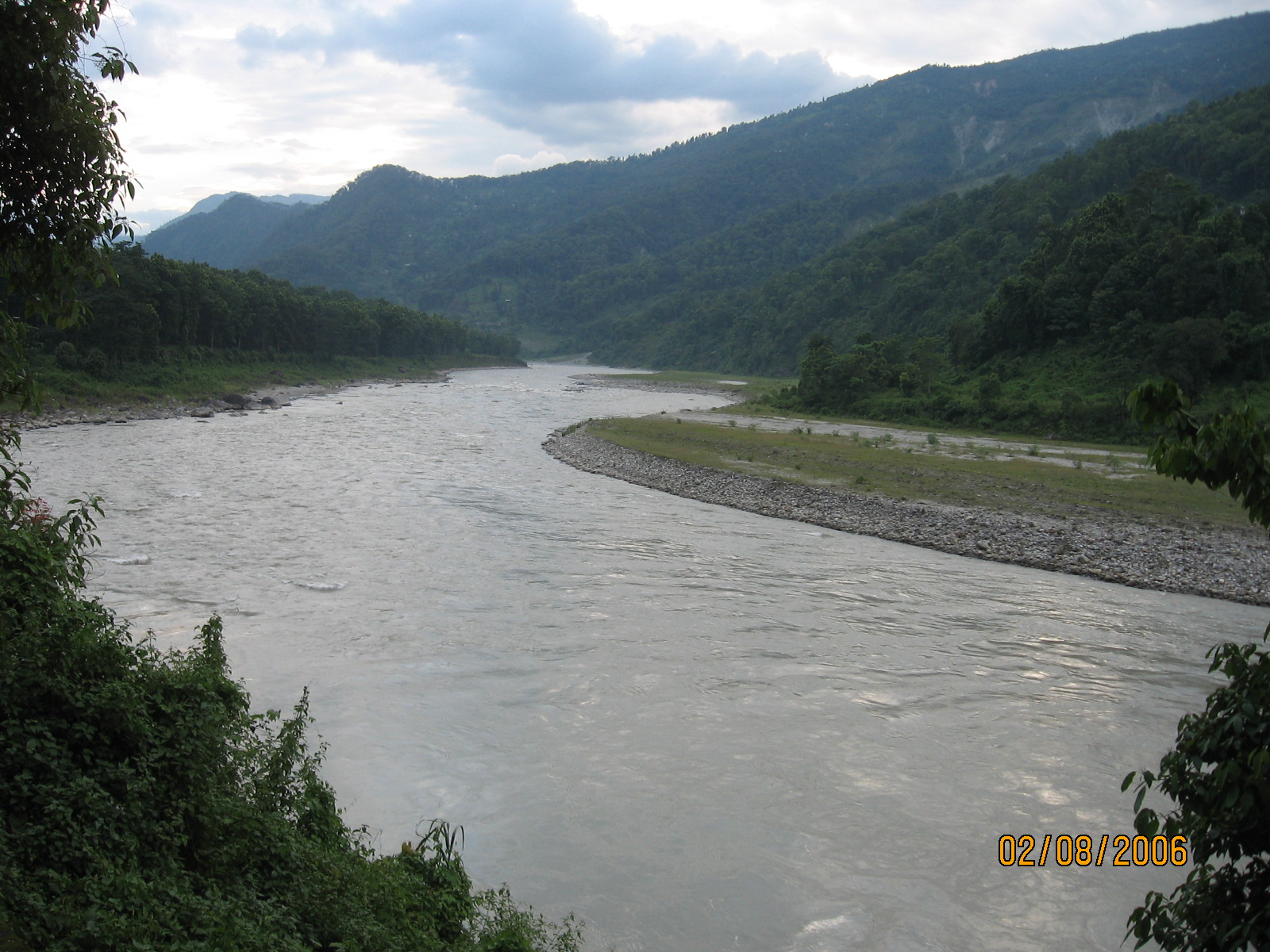

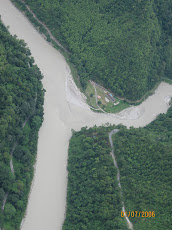
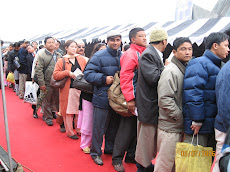
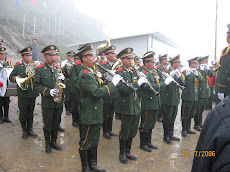

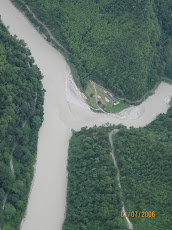
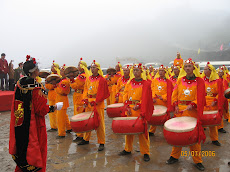
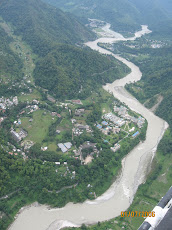

.JPG)






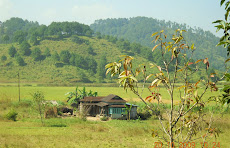
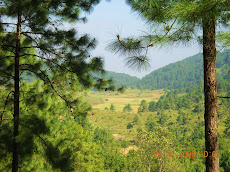


.jpg)


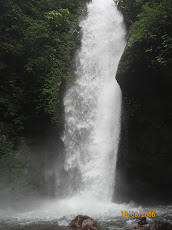
.JPG)
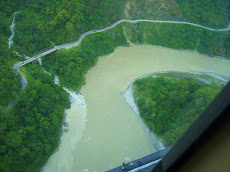


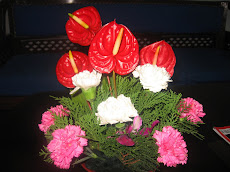










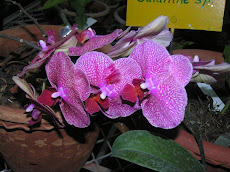


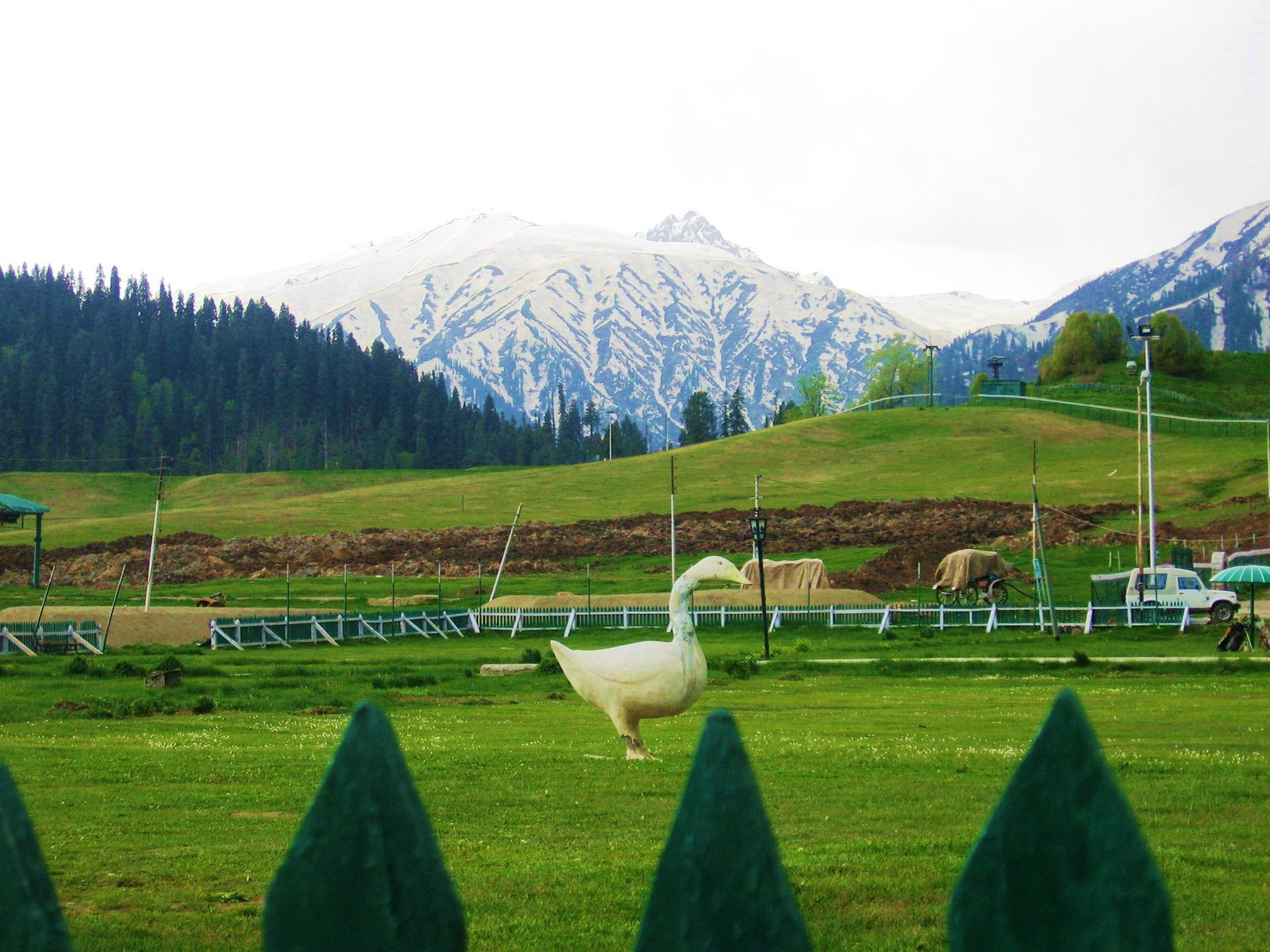




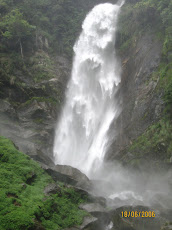
.JPG)


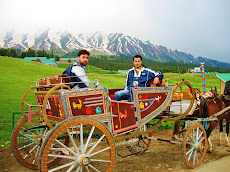


.JPG)